
Coin Encyclopedia
Search and identify coins from around the world — with country, denomination, metal, mint, history, and how to tell them apart.
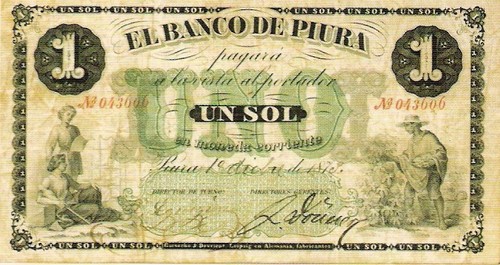
1 Sol (Gold)
A 19th-century Peruvian 1 Sol note from El Banco de Piura, with a seated torch-bearer and a standing laborer flanking a bold UN SOL.
Circulation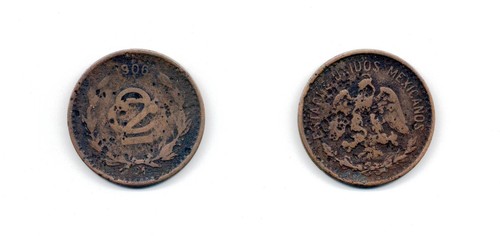
2 Centavos
A copper Mexican 2 centavos with a large numeral 2 framed by a laurel wreath on one side and the national eagle with spread wings on the other.
Circulation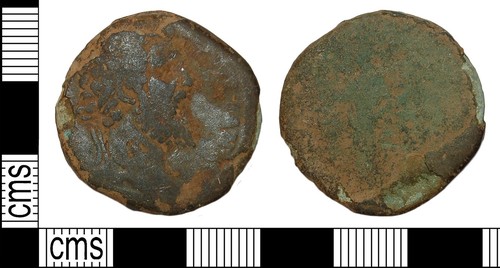
Sestertius of Didius Julianus
A large bronze/orichalcum sestertius of Didius Julianus, the emperor who reigned only weeks in 193 AD — rare, historically charged, and much sought after.
Ancient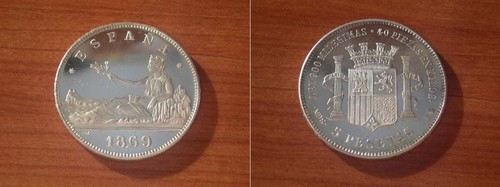
Duro (5 Pesetas)
A large .900 silver five-peseta crown struck under Spain's Provisional Government, with a profile head personifying Hispania and a crowned coat of arms reverse.
Modern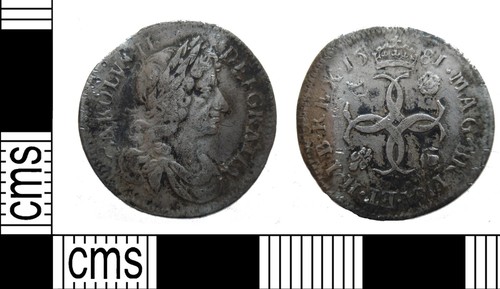
Charles II Fourpence
A small milled sterling silver fourpence of Charles II, with his laureate bust and a crowned cipher of interlinked C's flanked by the national emblems.
Milled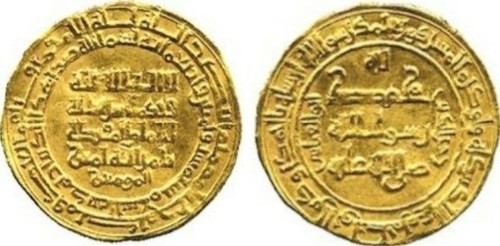
Gold Dinar of al-Muqtadi
An aniconic Abbasid gold dinar of Caliph al-Muqtadi, covered on both faces with Arabic calligraphy and ornamental borders, struck in the later 11th century.
Islamic (Medieval)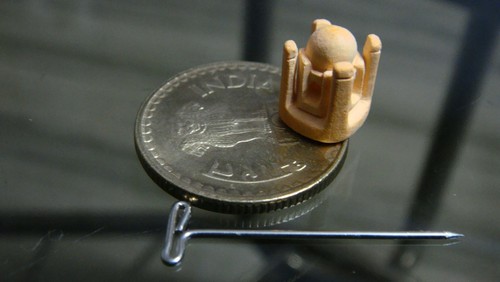
India 1 Rupee Commemorative
Copper-nickel Republic of India one rupee showing the Ashoka Lion Capital emblem, with the value and Devanagari legends on the reverse, from the late 20th century.
Modern India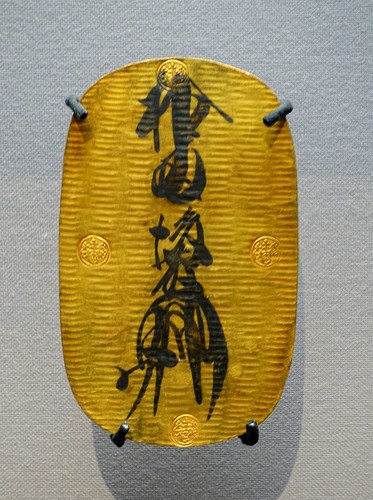
Keicho Oban
A large, thin oval Japanese gold oban of the Keicho era, hammer-marked with horizontal striations and bearing brush-inked ink signatures and paulownia crests.
Historic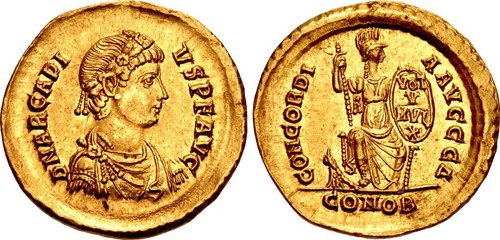
Solidus of Arcadius
A late Roman gold solidus struck for Arcadius, first emperor of the East after AD 395, showing his diademed profile facing right.
Ancient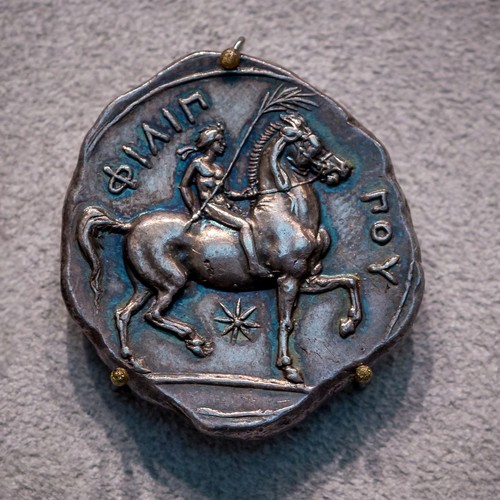
Philip II Tetradrachm
A large silver coin of the Macedonian kingdom showing the laureate head of Zeus and a youthful horseman, struck under and after Philip II.
Ancient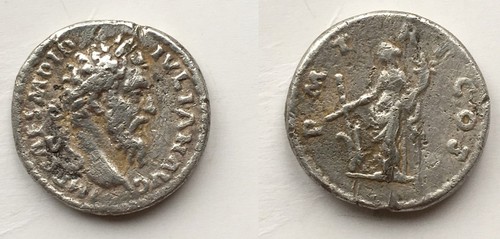
Denarius of Didius Julianus
A silver denarius of Didius Julianus, the short-lived emperor of 193 AD, bearing his laureate portrait and an imperial standing reverse.
Ancient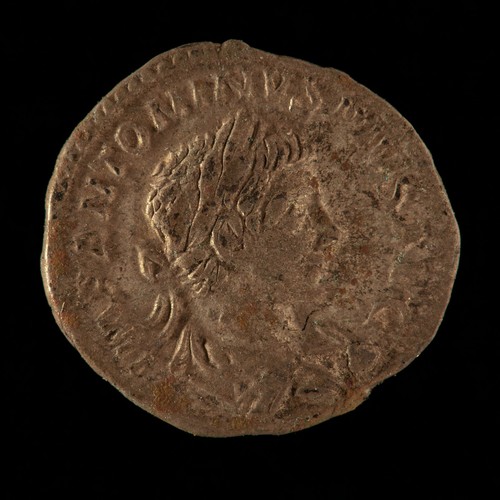
Denarius of Elagabalus
Silver denarius of the young Severan emperor Elagabalus (218–222 AD), with his laureate bust and a standing personified deity on the reverse.
Ancient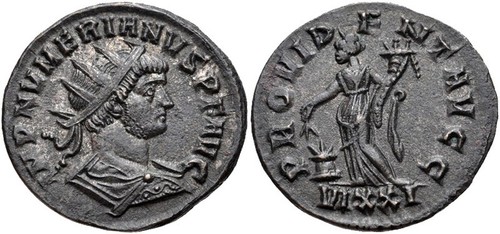
Antoninianus of Numerian
Late Roman radiate coin of the short-lived emperor Numerian (283-284 AD), showing his spiked crown and a Victory or standing deity on the reverse.
Ancient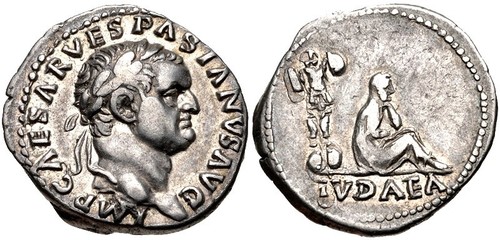
Vespasian Judaea Capta Denarius
Silver denarius of Emperor Vespasian (71–79 AD) with his laureate bust and a Judaea Capta reverse showing a mourning seated captive.
Ancient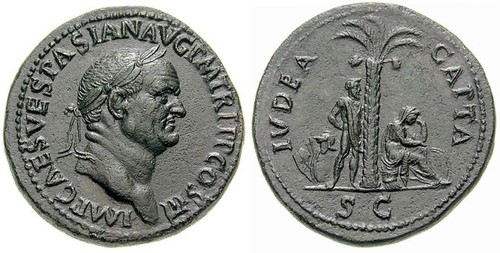
Sestertius of Vespasian (Iudaea Capta)
Large Roman bronze sestertius of Vespasian (AD 70–71) marking the conquest of Judaea, with a palm tree and mourning captives on the reverse.
Ancient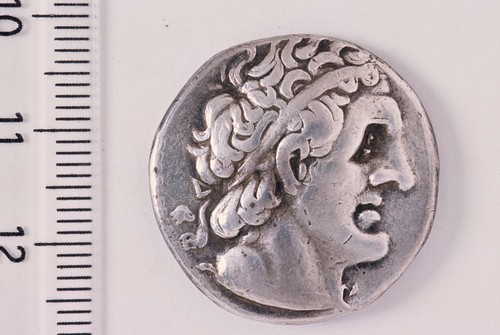
Ancient Hellenistic Tetradrachm
A large Hellenistic silver tetradrachm with a bearded, curly-haired head on the obverse and an eagle standing on a thunderbolt on the reverse.
Ancient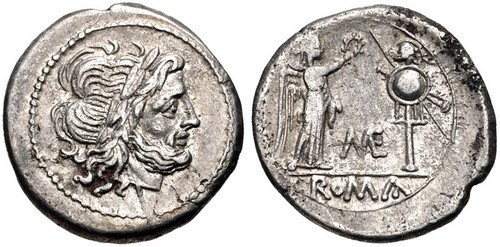
Roman Victoriatus
Silver Roman Republican victoriatus of the late 3rd–2nd century BC, with the laureate head of Jupiter and a Victory crowning a trophy above ROMA.
Ancient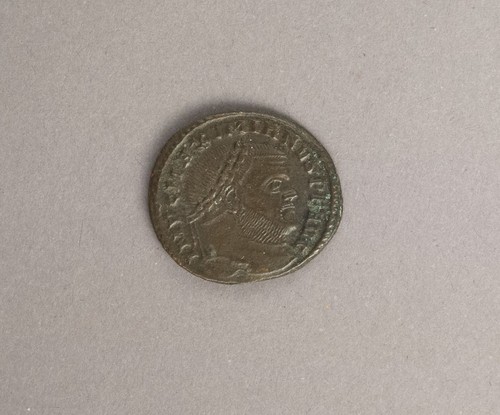
Nummus of Maximianus
A late-Roman bronze nummus (follis) of the emperor Maximianus, with his right-facing laureate portrait and a standing deity on the reverse.
Ancient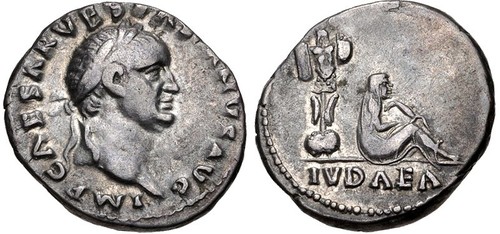
Denarius of Vespasian
Silver denarius struck under the emperor Vespasian (AD 69-79), founder of the Flavian dynasty, with his laureate portrait on the obverse.
Ancient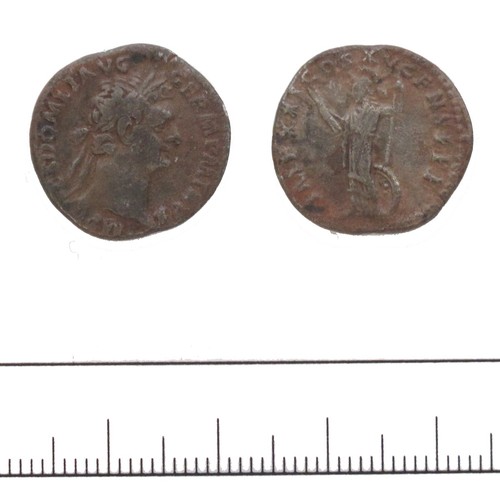
Denarius of Domitian
Silver denarius of the emperor Domitian (81-96 AD), with his laureate portrait on the obverse and, typically, the goddess Minerva on the reverse.
Ancient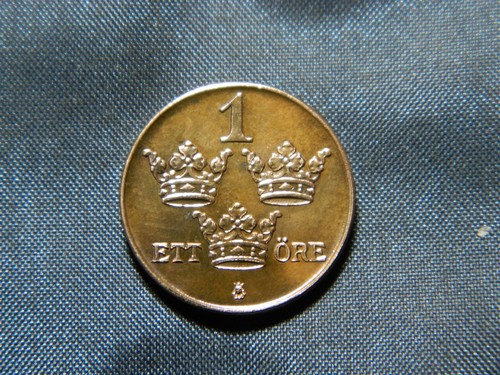
1 Öre
A small copper 1 öre of Sweden dated 1873, with a left-facing profile of King Oscar II, the legend SVERIGE OCH NORGE, and the value in a laurel wreath.
Modern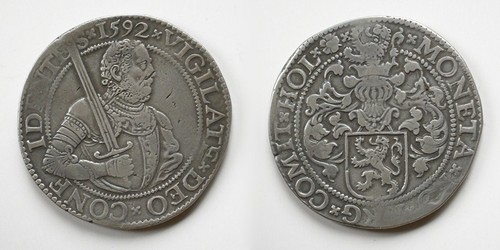
Prinsendaalder (Rijksdaalder)
A large silver rijksdaalder of the Dutch Republic showing an armored bust with sword, popularly named the Prinsendaalder after the Prince of Orange.
Early Modern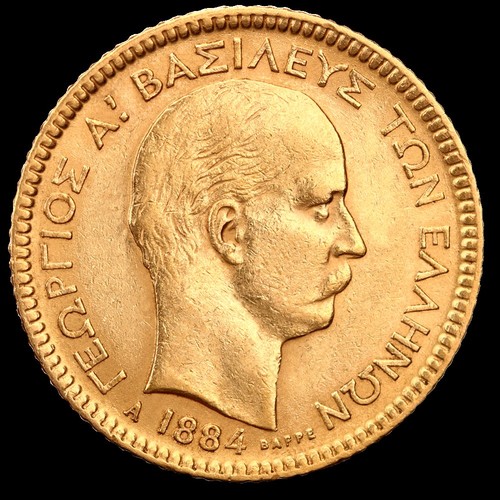
20 Drachmai
Greece's 1884 gold 20 Drachmai of King George I: a small Latin Monetary Union gold coin with the king's portrait and the crowned royal arms.
Modern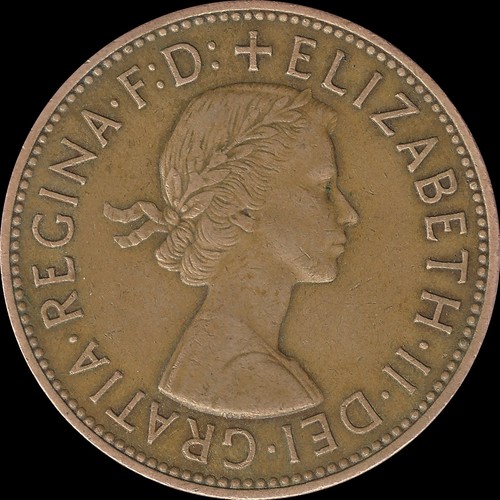
British Penny
Large bronze pre-decimal British penny showing King George VI in profile, struck for circulation in the 1930s through early 1950s.
World Coins