
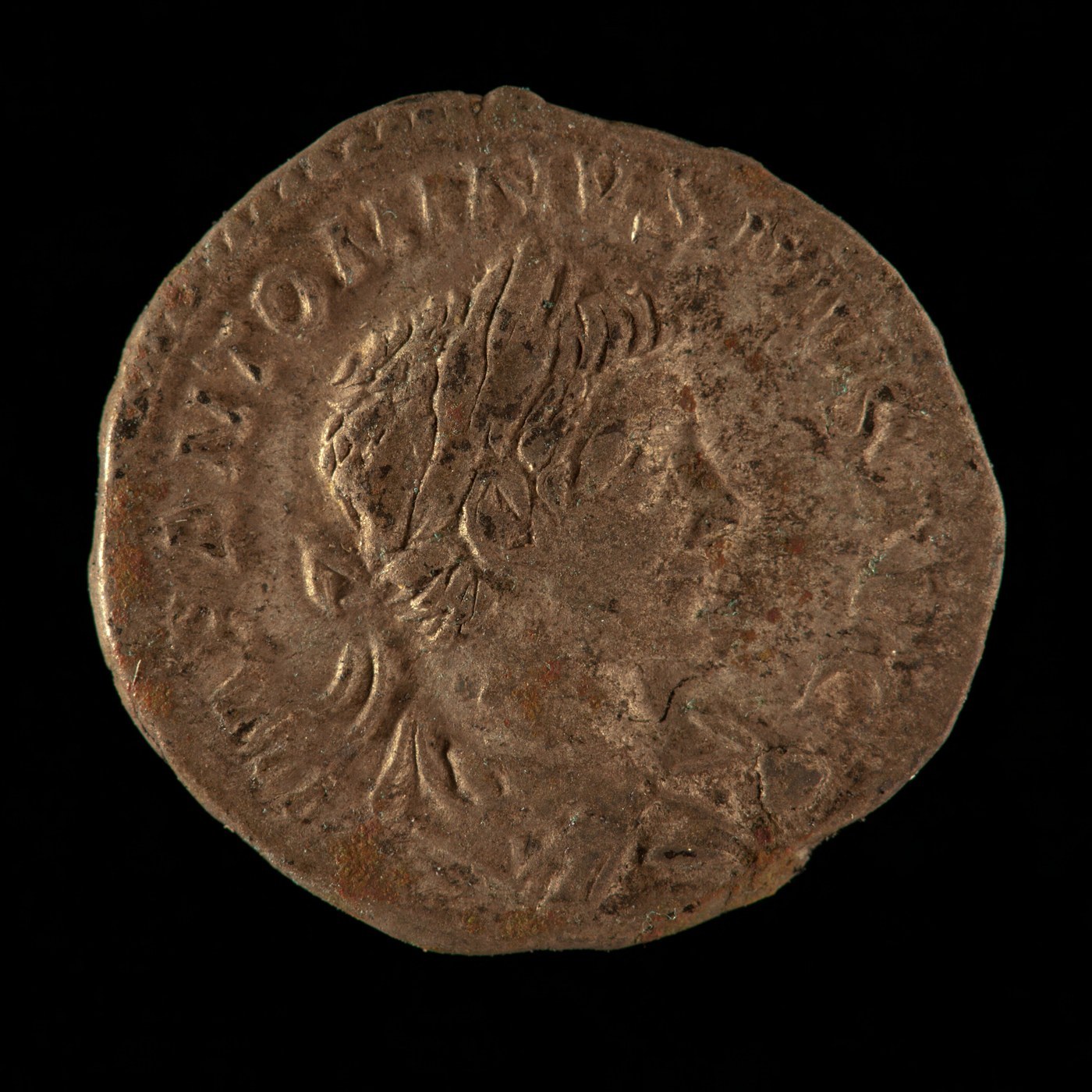
Denarius of Elagabalus
Silver denarius of the young Severan emperor Elagabalus (218–222 AD), with his laureate bust and a standing personified deity on the reverse.
- Country
- Roman Empire
- Denomination
- Denarius
- Metal
- Silver
Got a coin like this?
Identify any coin from a photo, free.
Overview
The Denarius of Elagabalus is a small silver coin of the Roman Empire struck during the short reign of the emperor Elagabalus (218–222 AD). The denarius was the standard everyday silver denomination of Rome, and issues of this ruler are among the more commonly encountered Severan-era silver coins today.
The example shown carries a portrait of Elagabalus facing right on the obverse and a standing female figure holding a staff on the reverse, a layout typical of imperial denarii that pair the emperor's likeness with a personified deity or virtue. Coins of this type circulated widely across the empire and survive in large numbers, making them a popular entry point into collecting Roman imperial silver.
History & Background
Elagabalus, born Varius Avitus Bassianus and ruling under the name Marcus Aurelius Antoninus, came to power in 218 AD at roughly fourteen years of age. He was hereditary priest of the Syrian sun god Elagabal at Emesa, and his brief reign became notorious in later Roman sources for religious innovation and court scandal. He was assassinated in 222 AD and succeeded by his cousin Severus Alexander.
The denarius by this period was a long-established denomination but had been progressively debased, so Severan-era coins contain noticeably less silver than the near-pure denarii of the early Empire. Most of Elagabalus's denarii were struck at Rome, with some issues attributed to an eastern mint. The reverse types promote the standard imperial messages of the age—loyalty, piety, prosperity, and the emperor's own solar cult—through personifications and deities, one of which appears as the standing figure with a staff on this coin.
How to Identify
Look first at the obverse: a youthful male head or bust of Elagabalus facing right, usually laureate and often draped, ringed by a Latin legend. Emperor legends on his denarii commonly include the name ANTONINVS with imperial titles such as IMP and AVG; reading the inscription and confirming a right-facing portrait is the key step in attribution.
The reverse of this example shows a standing female figure holding a long staff or scepter, a common way of depicting a Roman deity or personified virtue (types of this era include figures such as Fides, Pax, Providentia, Salus, and others). The surrounding legend names the concept or deity and helps pin down the exact reverse type. As a denarius it is a small, thin silver coin, roughly 18–20 mm across and generally around 2–3 grams, with a hand-struck look—slightly irregular flan, off-center details, and no milled edge.
Value & Collectibility
Denarii of Elagabalus are relatively plentiful, and common reverse types in worn to good-condition grades are among the more affordable authentic Roman silver coins, typically trading in the low tens to low hundreds of dollars depending on condition, strike, and portrait quality. Scarcer or more elaborate reverse types, and coins with sharp detail and pleasing toning, bring higher figures.
Value is driven mainly by eye appeal, centering, surface quality, and the specific reverse type rather than by rarity of the emperor, since his coinage is well represented in the market. Exact prices vary by dealer, auction, and grade, so treat any single figure as a range rather than a fixed number; independent attribution and, for higher-value pieces, third-party authentication are worthwhile.
Frequently asked questions
Who was Elagabalus?
He was a Roman emperor who reigned from 218 to 222 AD, ruling under the name Marcus Aurelius Antoninus. He came to the throne as a teenager and was hereditary priest of the Syrian sun god Elagabal, from which his common nickname derives.
What is the coin made of?
It is a silver denarius. By the Severan period the denarius was debased and contained noticeably less silver than early imperial issues, but it is still a silver coin rather than bronze or gold.
Who is the standing female figure on the reverse?
It is a personified deity or virtue holding a staff or scepter, a standard reverse motif for denarii of this era. The exact identity—such as a personification like Fides, Pax, Providentia, or Salus—is determined by reading the reverse legend.
Are denarii of Elagabalus rare?
No. His silver denarii are relatively common and are frequently available to collectors, so most examples are affordable, with scarcer reverse types and high-grade coins commanding more.
How big is the coin?
A denarius is small and thin, generally about 18 to 20 mm in diameter and roughly 2 to 3 grams, struck by hand so the flan and centering are often slightly irregular.
Denarius of Elagabalus guides
In-depth guides for identifying, valuing, and collecting Denarius of Elagabalus.
Other coins you may enjoy
Tetradrachm of Ptolemy XII
80-51 BC
Tetradrachm of Ptolemy I
305-283 BC
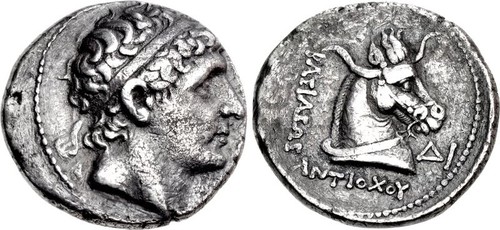
Tetradrachm of Antiochos I Soter
281-261 BC
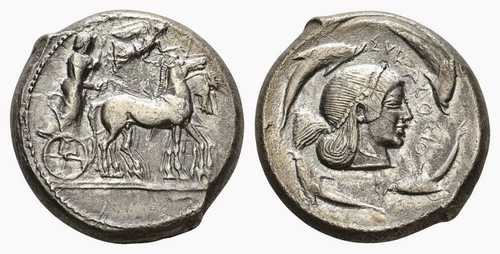
Syracuse Tetradrachm
c. 5th-4th century BC (Classical period)
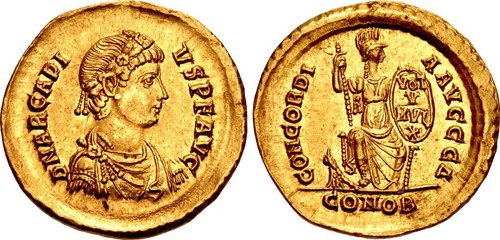
Solidus of Arcadius
AD 395-402
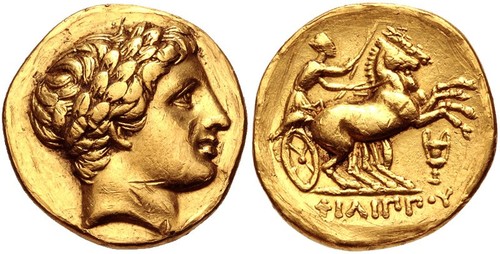
Philip III Gold Stater
323-317 BC
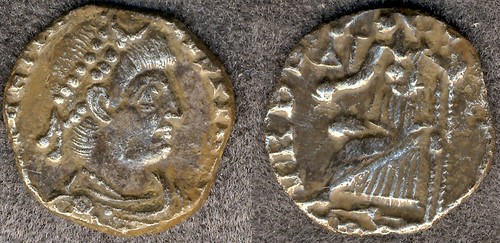
Siliqua of Gratian
AD 367-383
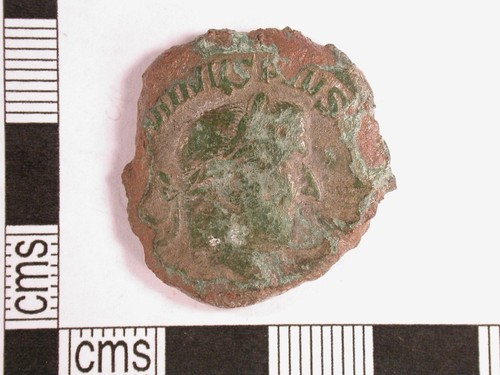
Sestertius of Maximinus Thrax
235-238 AD
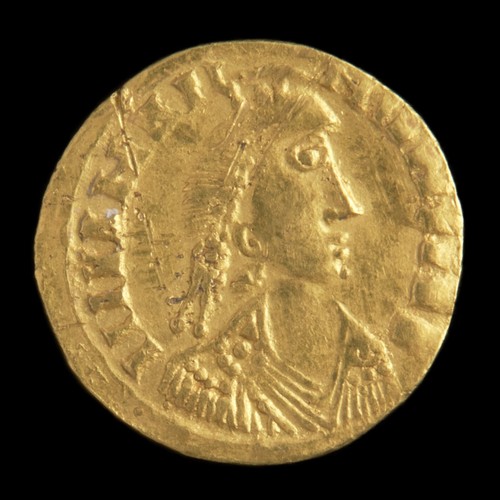
Solidus of Valentinian III
AD 425-455
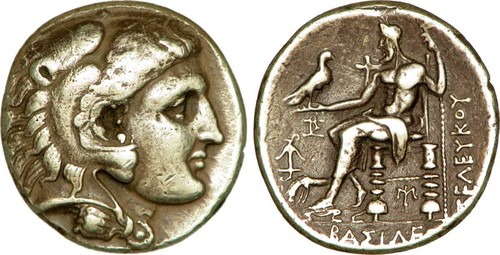
Seleucus I Nicator Tetradrachm
Late 4th-3rd century BC
Nummus of Magnentius
AD 350-353
Follis of Galerius
AD 308-310