
How to Identify the Denarius of Elagabalus
A collector's guide to attributing a silver denarius of Elagabalus (218–222 AD) by its obverse portrait, reverse deity, size, metal, and authenticity signs.
Read the full Denarius of Elagabalus encyclopedia entry →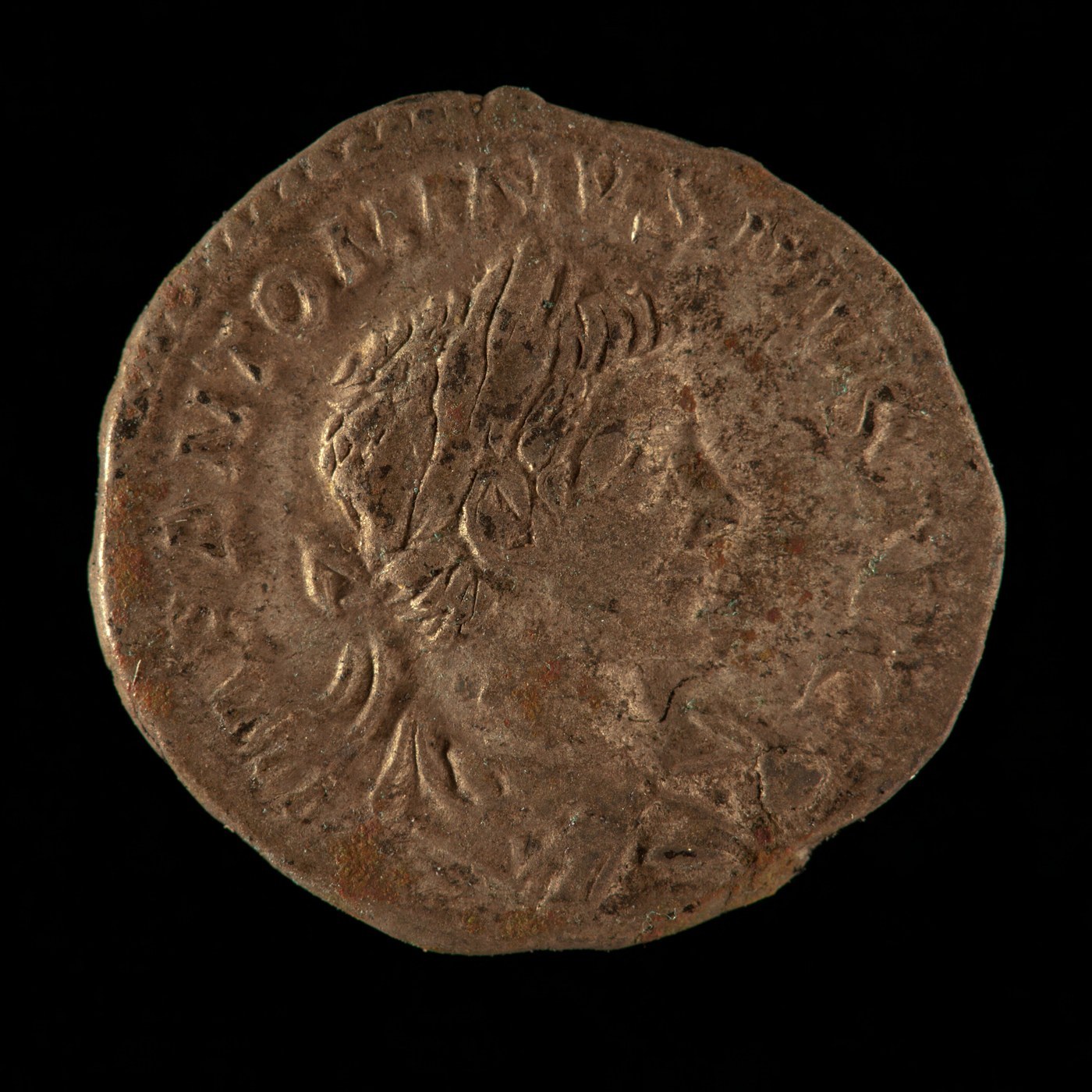
Start With the Obverse Portrait and Legend
Turn to the portrait side first. A denarius of Elagabalus shows a youthful male head or bust facing right, usually laureate and often draped, encircled by a Latin legend. His coins were issued under the name Antoninus, so look for ANTONINVS combined with imperial titles like IMP and AVG in the surrounding inscription. Reading even part of the legend, together with the right-facing young portrait, is the single most reliable attribution step; a left-facing bust or a bearded, older portrait points to a different ruler.
Read the Reverse Type
The reverse on this example is a standing female figure holding a long staff or scepter—a typical way of showing a Roman deity or personified virtue. Rather than guessing, read the reverse legend, which names the concept or deity (Severan reverses include figures such as Fides, Pax, Providentia, and Salus, among others). The combination of the standing figure's attributes—what she holds, whether she is veiled, what is at her feet—and the legend together fix the exact reverse type, which is what distinguishes one denarius of this emperor from another.
Check Size, Weight, Metal, and Fabric
A genuine denarius is small and thin: roughly 18 to 20 mm across and generally around 2 to 3 grams. It is silver, though Severan-era denarii are debased and can show a slightly grayish or lightly toned surface rather than bright white metal. Because these coins were struck by hand from individual dies, expect an irregular flan, some off-center detail, and a plain (non-milled) edge. A perfectly round, uniform, mirror-smooth coin with a seam on the edge is a warning sign of a cast copy.
Watch for Look-Alikes and Fakes
Denarii of other Severan rulers—Caracalla, Geta, Macrinus, Severus Alexander—share the same size and reverse repertoire, so the obverse legend is essential to avoid mis-attributing them to Elagabalus. Be cautious of tourist replicas and modern casts: telltale signs include a soft or grainy surface, bubbles or pitting from casting, unnaturally sharp uniform lettering, and incorrect weight. Ancient silver-plated forgeries (fourrees) also exist and may show base-metal core exposed at wear points.
Confirm the Attribution
For a firm identification, match the full obverse legend and the reverse legend and figure against a standard reference for Roman imperial coinage. For higher-value or uncertain pieces, weigh and measure the coin and consider independent expert opinion or third-party authentication, since condition, centering, and the specific reverse type—not the emperor alone—drive both attribution and value.
Frequently asked questions
How do I know the portrait is Elagabalus and not another emperor?
Look for a youthful, right-facing laureate bust and read the obverse legend, which uses the name ANTONINVS with titles such as IMP and AVG. Older or bearded portraits, or different names in the legend, indicate a different Severan ruler.
Do I need to identify the exact reverse figure?
For a precise attribution, yes. The standing female with a staff is a common deity or personification, and the reverse legend names which one, distinguishing this coin from other denarii of the same emperor.
How can I spot a fake?
Check that the coin is the right size (about 18 to 20 mm) and weight (roughly 2 to 3 grams), with a hand-struck, slightly irregular look and a plain edge. Casting bubbles, a seam on the edge, grainy surfaces, or exposed base metal at high points suggest a modern copy or an ancient plated forgery.
Is a darker or grayish surface a problem?
Not necessarily. Severan denarii are debased silver and often tone gray or acquire patina over centuries, so a muted surface can be entirely consistent with an authentic coin.