
Coin Encyclopedia
Search and identify coins from around the world — with country, denomination, metal, mint, history, and how to tell them apart.
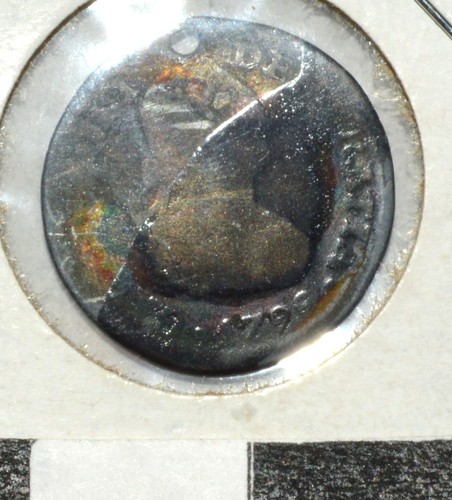
Spanish Colonial Half Real
The smallest milled silver coin of Spain's American empire: a tiny 1/2 real with a royal bust and the crowned arms between pillars.
Colonial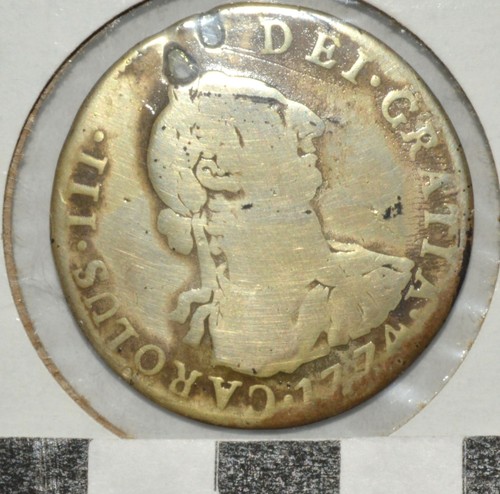
Spanish Colonial 4 Reales
A large silver colonial coin worth half a Spanish dollar, struck for Spain's American empire and bearing the crowned Spanish royal arms.
Colonial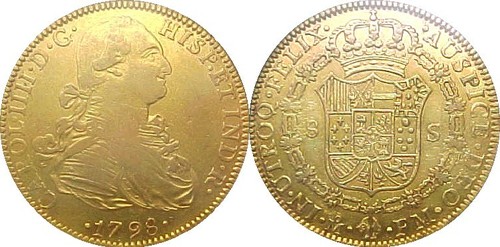
Spanish Doubloon (8 Escudos)
Large Spanish gold coin worth eight escudos, showing the right-facing bust of King Charles IV and a crowned Spanish shield with a cross.
World Coins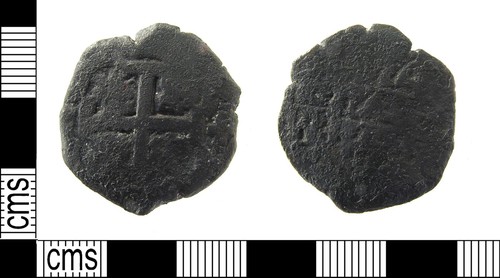
Spanish Colonial 1 Real (Bourbon)
A small silver coin of Spain's American colonies from the early Bourbon era, showing a cross with ornaments on one side and the crowned royal arms on the other.
Colonial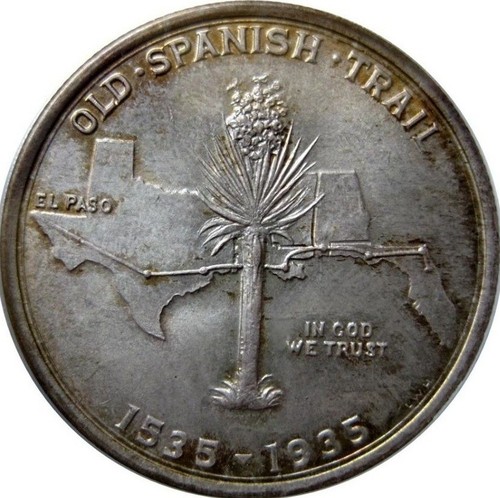
Old Spanish Trail Half Dollar
A 1935 U.S. silver commemorative half dollar marking 400 years of the Old Spanish Trail, with a longhorn cow's head punning on explorer Cabeza de Vaca.
Classic Commemorative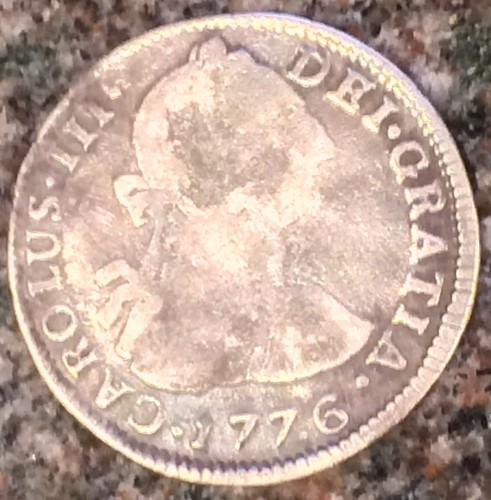
Spanish Colonial 2 Reales (Milled)
A small milled silver coin of the Spanish Empire, struck in colonial American mints; this example is dated 1776 and shows heraldic lions, castles and a crowned shield.
Colonial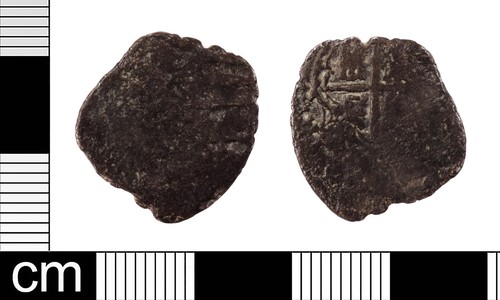
Spanish Colonial Cob 2 Reales
A crude hand-struck silver cob worth a quarter of a piece of eight, showing a cross on one side and the Habsburg Spanish arms on the other.
Cob Coinage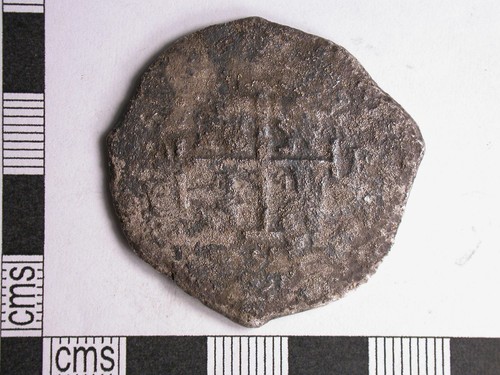
Spanish Colonial Cob 8 Reales
A hand-struck silver cob 8 reales of Spain's American colonies—the irregular, hammered “piece of eight” bearing the crowned Habsburg arms and Pillars of Hercules.
Cob Coinage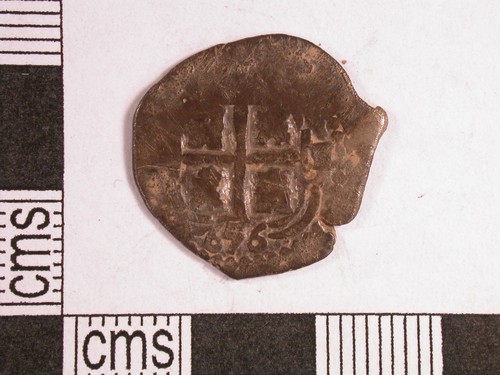
Spanish Colonial Cob 1 Real
A small, crudely hand-struck silver cob of one real, made in Spain's American colonies with heraldic shield-and-cross designs.
Cob Coinage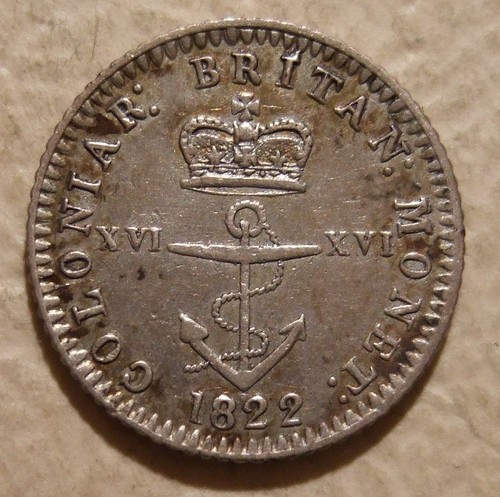
George IV One Sixteenth Spanish Dollar
A small George IV silver coin of the "Anchor Money" series, worth one-sixteenth of a Spanish dollar and marked with an anchor and Roman numeral XVI.
Colonial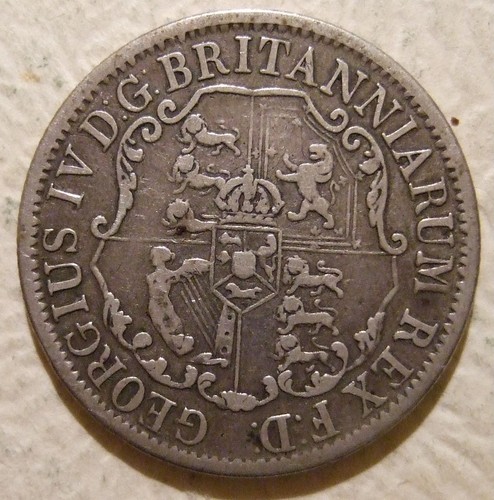
George IV One Quarter Spanish Dollar
An 1822 British colonial silver coin valued at one quarter of a Spanish dollar, part of the George IV "Anchor Money" issued for colonies in the Americas.
Colonial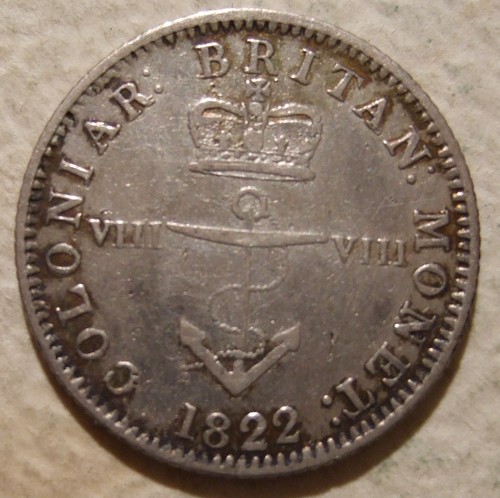
George IV One Eighth Spanish Dollar
Small 1822 British colonial silver coin from the George IV "Anchor Money," a fraction of the Spanish dollar used in the West Indies and Mauritius.
Colonial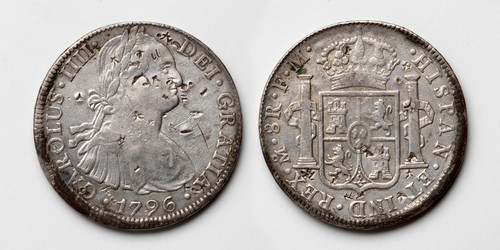
Spanish Colonial 8 Reales (Milled Bust)
The milled-bust Spanish colonial 8 reales—the classic “piece of eight,” a large silver coin bearing the Spanish king's portrait and royal arms.
Colonial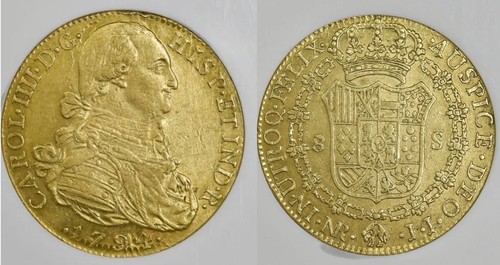
8 Escudos (Carolus)
The largest Spanish gold coin of the age, the 8 Escudos or doubloon, struck under the Habsburg Carolus rulers with the crowned quartered royal arms.
Early Modern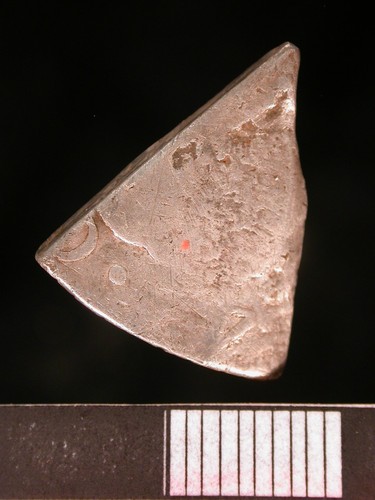
8 Reales (Portrait/Bust Type)
Large silver Spanish Empire dollar showing the bust of King Carlos III and a crowned coat of arms with lions and castles.
World Coins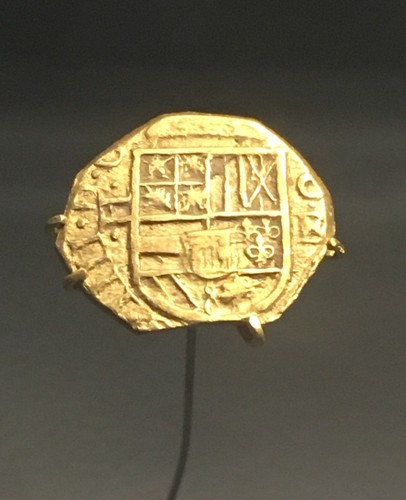
2 Escudos
A gold 2 Escudos of Habsburg Spain, the classic 'doubloon,' struck with a crowned coat of arms of castles and lions on both faces.
Early Modern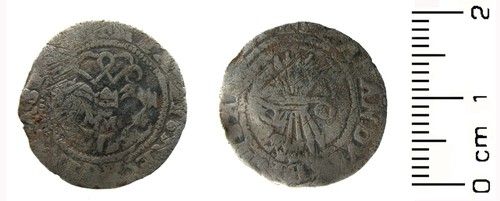
Real (Medieval)
A medieval Spanish silver real carrying the heraldic arms of the Iberian kingdoms — a lion for León paired with a castle or cross design.
Medieval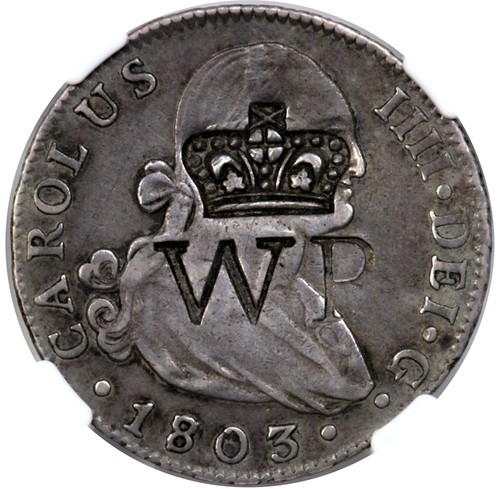
Counterstamped 2 Reales
A Spanish silver 2 reales dated 1803 that was later punched with a WR-and-crown counterstamp, giving it a second, borrowed life as legal tender.
Colonial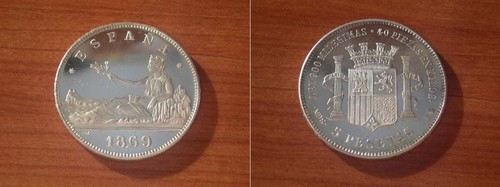
Duro (5 Pesetas)
A large .900 silver five-peseta crown struck under Spain's Provisional Government, with a profile head personifying Hispania and a crowned coat of arms reverse.
Modern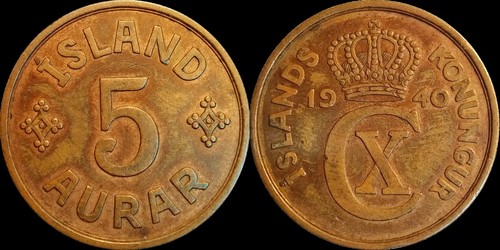
5 Aurar
Icelandic bronze 5 aurar of the Kingdom era, marked ÍSLAND with a crowned KONUNGDÓMUR ÍSLANDS reverse, struck 1926-1942.
World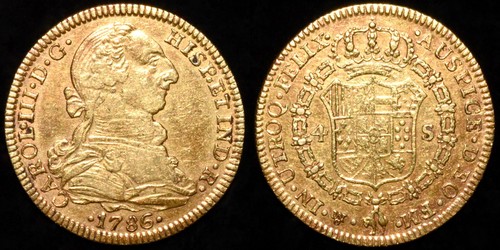
4 Escudos
Spanish Bourbon gold 4 Escudos of the 1780s, with an armored royal bust facing right and a crowned coat of arms on the reverse.
Early Modern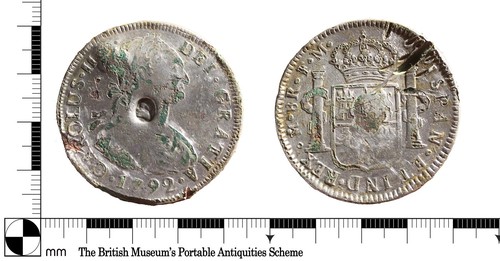
Counterstamped 8 Reales
A Charles IV silver 8 reales later punched with counterstamps and pierced with a central hole, layering a second life onto the classic Spanish dollar.
Colonial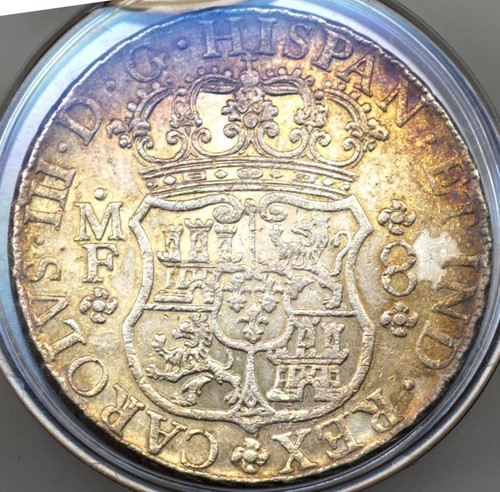
Pillar Dollar (Columnario)
Machine-struck Spanish colonial silver 8 reales showing two crowned globes between the Pillars of Hercules; a trusted world trade coin.
World Coins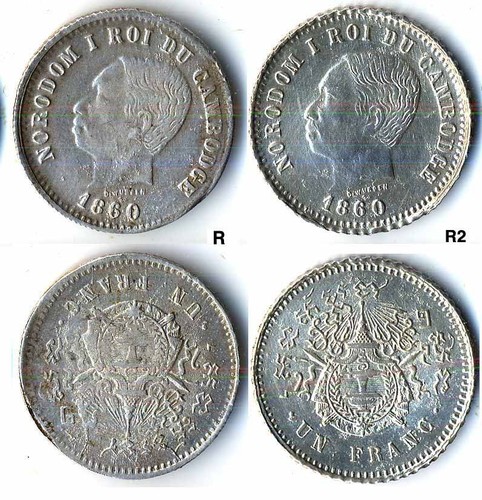
Cambodia One Franc
A mid-20th-century one-franc coin of the Kingdom of Cambodia, its obverse bearing a royal Norodom profile and its reverse a heraldic coat of arms.
Southeast Asia