Spanish Colonial Cob 8 Reales
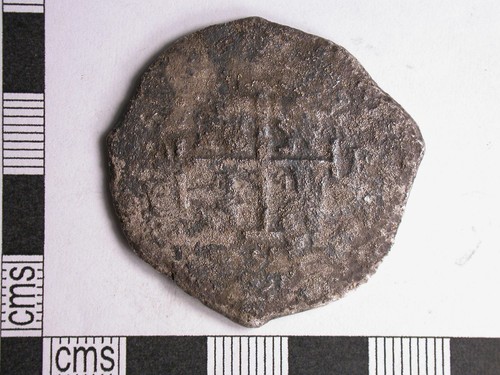
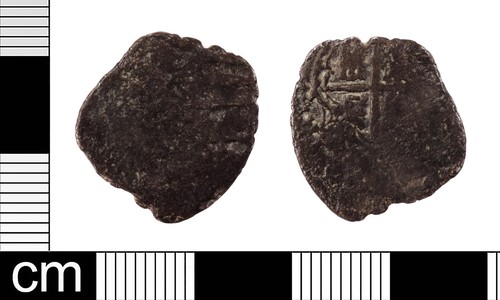
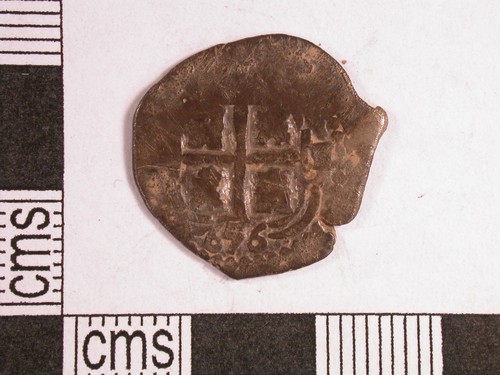
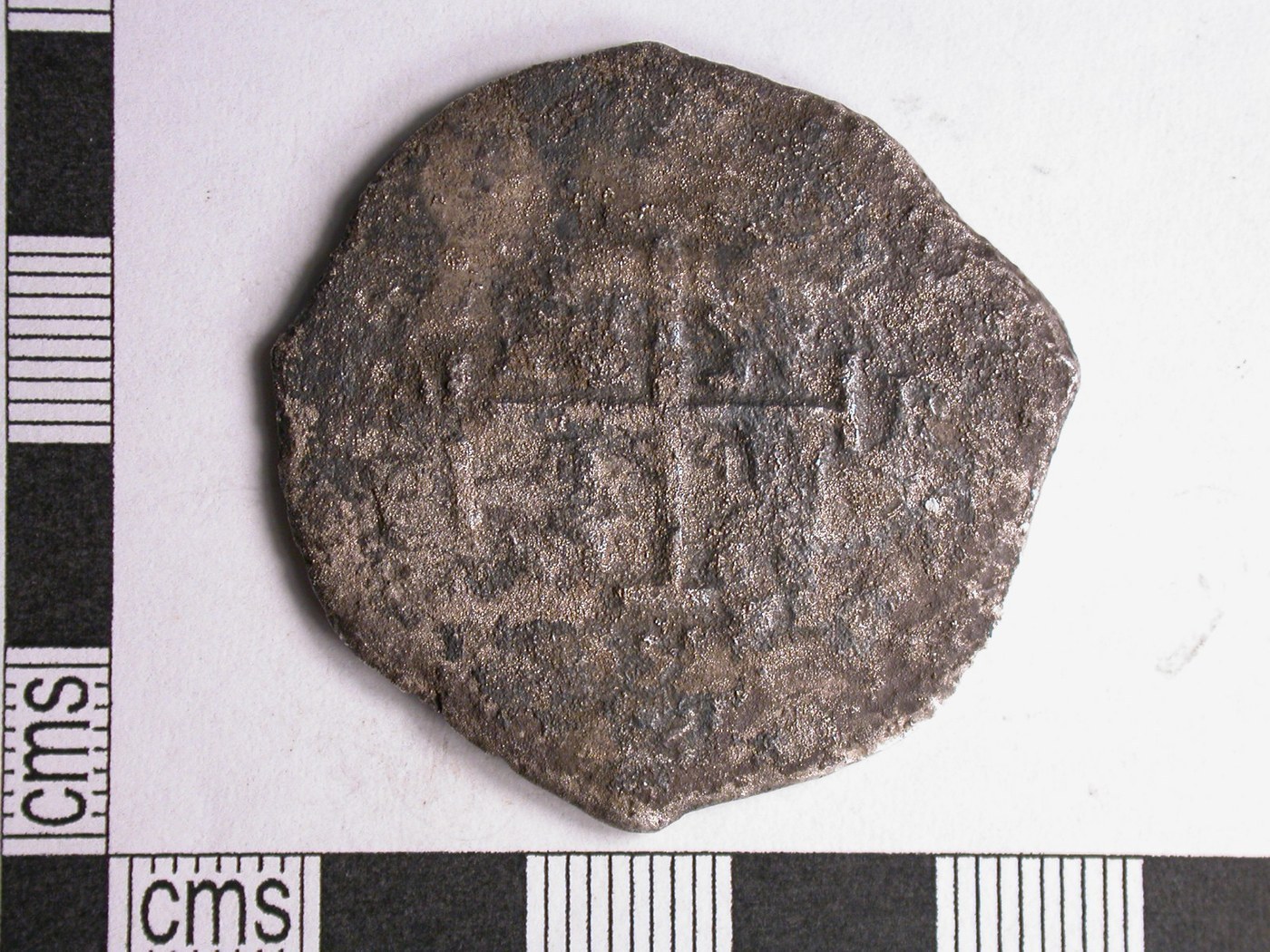
A hand-struck silver cob 8 reales of Spain's American colonies—the irregular, hammered “piece of eight” bearing the crowned Habsburg arms and Pillars of Hercules.
- Country
- Spain
- Denomination
- 8 Reales
- Metal
- Silver
Got a coin like this?
Identify any coin from a photo, free.
Overview
The Spanish colonial cob 8 reales is a large silver coin made by hand rather than machine, giving it the crude, irregular shape that defines the “cob” (Spanish macuquina). The example shown here belongs to the reign of Philip IV, roughly 1621–1665, and displays the crowned Habsburg coat of arms with its lions and castles on one face and a shield framed by the Pillars of Hercules over waves on the other.
As the eight-reales denomination, this is the original “piece of eight”—the highest common silver value of the Spanish colonial system. Cobs were struck to weight rather than to a neat round form, so no two are exactly alike in outline, centering, or the amount of design that landed on the flan. That handmade character is a large part of their appeal to collectors today.
History & Background
Cob coinage was produced at Spain's American mints—chiefly Potosí (in present-day Bolivia), Mexico City, and Lima—from the 16th century until milled (machine-struck) coinage gradually replaced it in the 18th century. Silver from the mountain of Potosí and the mines of New Spain was cast into bars, cut into planchets, adjusted to the correct weight, and struck between hand-held dies with a hammer. Speed and correct weight mattered more than appearance, since the coins were valued as bullion in trade.
The 1621–1665 dating places this type in the reign of Philip IV of the House of Habsburg. Cob 8 reales of this era flowed across the Atlantic in the treasure fleets and circulated throughout Europe, the Americas, Asia, and the wider world as the dominant international trade coin. Many surviving specimens come from documented shipwrecks, whose salvaged cargoes have supplied a large share of the cobs on the market.
How to Identify
Look for a thick, irregularly shaped silver coin, clearly hand-struck rather than round and even. An 8 reales cob is the largest common denomination, weighing on the order of 27 grams when full, though clipping and wear vary the figure. The surfaces are typically off-center, with parts of the design running off the edge of the flan.
One face shows the crowned Habsburg shield quartered with lions and castles (the arms of Castile and León) among other heraldic elements. The other shows a shield flanked by the two Pillars of Hercules rising from stylized waves, referencing the seas of the Spanish overseas empire. Legends, mint marks, assayer initials, and dates are often only partly visible because the dies were larger than the planchet; a complete, well-centered strike is unusual and prized.
Value & Collectibility
Cob 8 reales are among the most collected of all colonial coins, and value depends heavily on mint, how much of the design and legend struck up, centering, and overall condition. Heavily worn, off-center, or “sea-salvaged” pieces with corroded surfaces are the most affordable, while boldly struck coins showing a full shield, clear pillars, and readable date or assayer marks command strong premiums.
Shipwreck provenance can add interest, especially when a coin carries salvage documentation from a known wreck. Because so much rides on eye appeal and completeness of strike, and on the silver market, it is best to compare a specific coin against recent auction results for the same mint and grade rather than relying on a single price.
Frequently asked questions
What does “cob” mean?
“Cob” is the English term for these hand-struck colonial coins, from the Spanish *macuquina*. It refers to their crude, irregular shape produced by hammering a weight-adjusted silver blank between hand-held dies.
Is a cob 8 reales a “piece of eight”?
Yes. The 8 reales denomination is the original piece of eight. This cob version is the earlier, hand-made form that preceded the later round, machine-struck milled dollars.
Why is the coin so irregular and off-center?
Cobs were struck by hand to the correct weight, not to a neat round shape. The dies were often larger than the blank, so parts of the design ran off the edge and no two coins look exactly alike.
Why do many cobs look corroded or crusty?
Large numbers of surviving cobs were recovered from shipwrecks, where long exposure to seawater etched or encrusted the silver. Such “sea-salvaged” coins are common in the market.
How much is a cob 8 reales worth?
It varies widely with mint, strike, centering, and condition. Worn or corroded pieces are relatively affordable, while well-struck, well-centered examples bring much higher prices. Check recent records for comparable coins.
Spanish Colonial Cob 8 Reales guides
In-depth guides for identifying, valuing, and collecting Spanish Colonial Cob 8 Reales.