
How to Identify the Spanish Colonial Cob 8 Reales
A collector's walkthrough for identifying a hand-struck cob 8 reales by its shape, Habsburg arms, Pillars-and-waves reverse, weight, and authenticity cues.
Read the full Spanish Colonial Cob 8 Reales encyclopedia entry →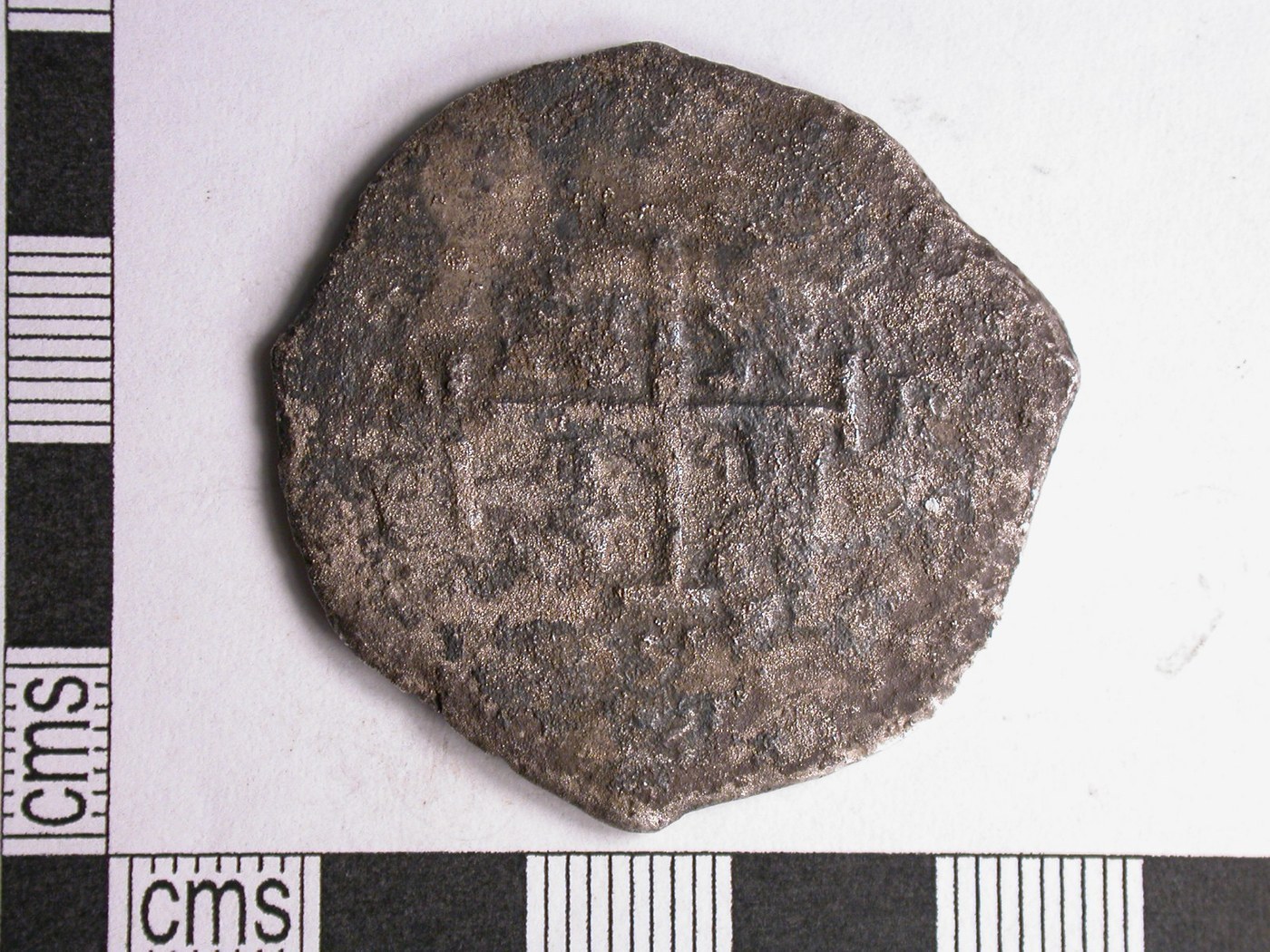
Start with shape and fabric. A genuine cob 8 reales is unmistakably hand-made: thick, lumpy, and irregular in outline rather than a neat disc. This crude fabric is the single most telling feature and separates cobs from the round, even milled coins that came later. Expect an off-center strike where part of the design runs off the flan.
Check size, weight, and metal. As the eight-reales denomination, this is the largest common cob, on the order of 27 grams of silver when full, though clipping, wear, and sea corrosion reduce that. The coin is silver and should not respond to a magnet. A wildly light weight, a magnetic reaction, or a soft, seam-lined surface points to a cast copy rather than a struck coin.
Read the two faces. One side carries the crowned Habsburg coat of arms—look for the quartered shield with the lions and castles of León and Castile beneath a crown. The other side shows a shield framed by the two Pillars of Hercules rising from waves, the emblem of the overseas empire. Because the dies were larger than the blank, expect legends, the mint mark, the assayer's initials, and the date to be only partly present; a coin where you can read even part of these is more identifiable and more valuable.
Watch for look-alikes. Later milled (machine-struck) 8 reales—the pillar dollar and the portrait bust dollar—use related heraldry but are round, even, and evenly lettered, so they are easy to tell from a cob. Modern tourist replicas, gilded or “treasure” souvenirs, and outright cast forgeries also circulate; these often show casting seams, bubbles, mushy detail, or repeated identical shapes, none of which fit a genuine hand-struck coin.
Authenticate with care. Genuine cobs show crisp, hammered detail where the dies met the metal, natural irregular edges, and toning consistent with age or sea recovery. Salvage encrustation is normal and does not signal a fake, but claimed shipwreck provenance is worth verifying with documentation. For a valuable purchase, a third-party grade or an experienced colonial-coin dealer's opinion is the safest confirmation of mint, era, and authenticity.
Frequently asked questions
How do I tell a cob from a milled 8 reales?
A cob is hand-struck: irregular, lumpy, and often off-center. Milled coins are round and evenly struck with regular lettering. If the coin is a neat disc, it is a later milled type, not a cob.
What is the fastest way to spot a fake cob?
Confirm it is non-magnetic silver of appropriate heft, and look at the surfaces. Casting seams, air bubbles, soft mushy detail, or several coins with identical outlines are signs of replicas rather than genuine hand-struck cobs.
Why can't I read the date or mint mark?
The dies were larger than the blank, so much of the legend and marks often fell off the flan. Partial or missing dates are normal on cobs; a coin with readable marks is unusually complete.
Does sea-salvage corrosion mean the coin is fake?
No. Many genuine cobs were recovered from shipwrecks and show etched or encrusted surfaces. Corrosion affects eye appeal and value but is not by itself a sign of a counterfeit.