Spanish Colonial Cob 2 Reales
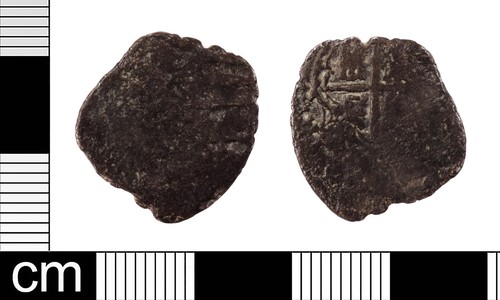
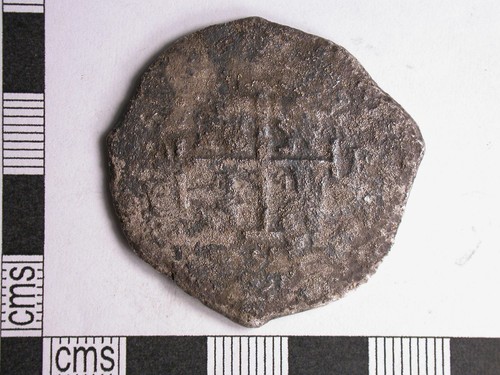
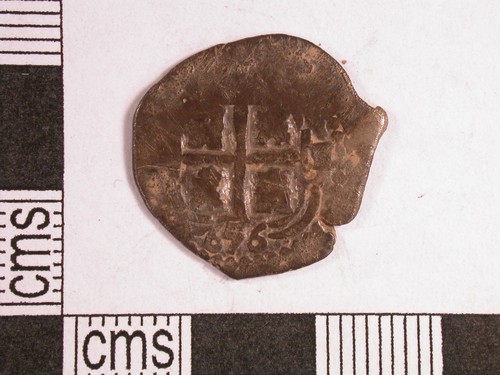
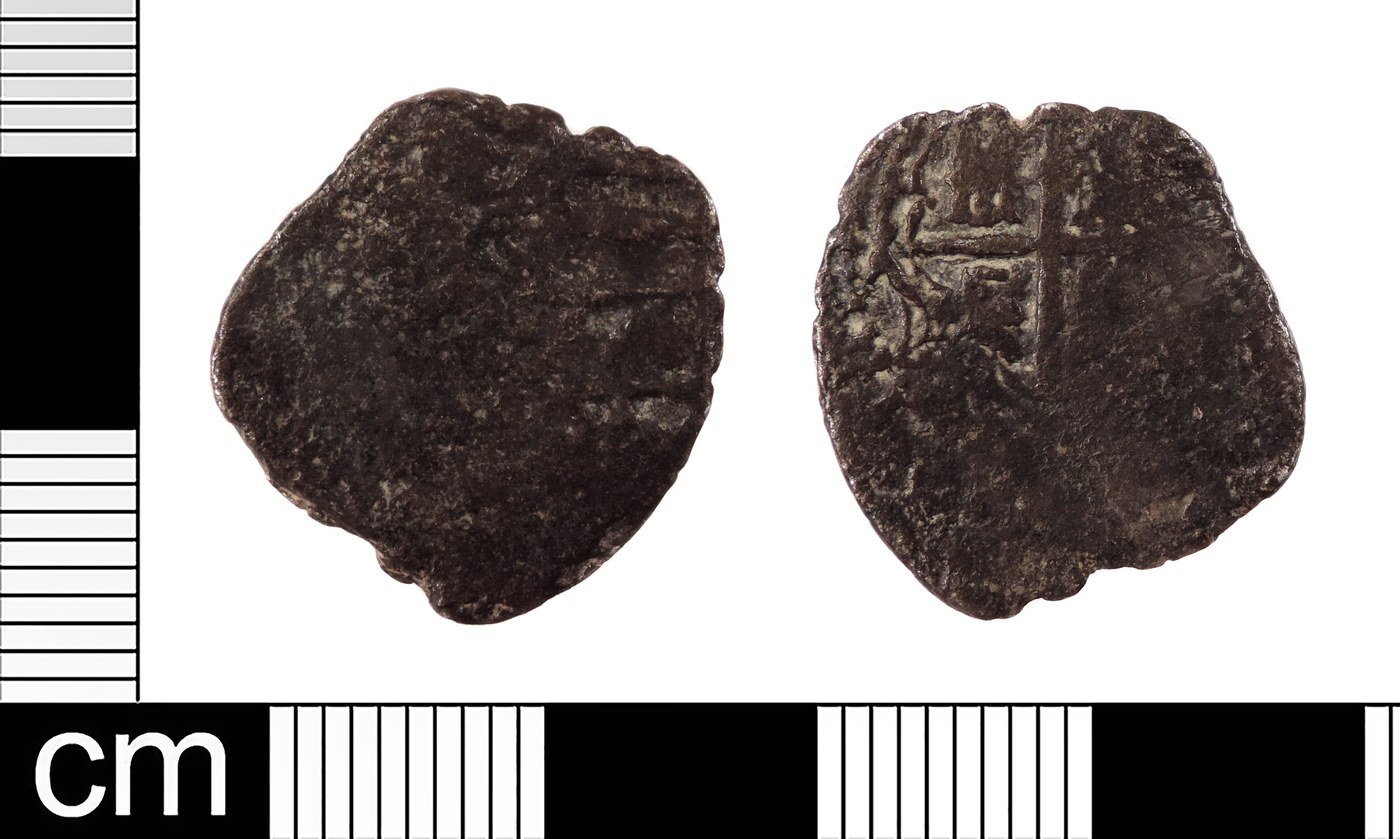
A crude hand-struck silver cob worth a quarter of a piece of eight, showing a cross on one side and the Habsburg Spanish arms on the other.
- Country
- Spain
- Denomination
- 2 Reales
- Metal
- Silver
Got a coin like this?
Identify any coin from a photo, free.
Overview
The Spanish Colonial cob 2 reales is a small, irregularly shaped silver coin from the era of hand-struck "cob" money. Cobs (from the Spanish cabo de barra, an end of a silver bar) were cut from cast strips and struck by hammer, so no two are alike in outline. The 2 reales sits low on the reales ladder, equal to one-quarter of the famous 8-reales "piece of eight."
The example shown carries an ornamented cross on one face and the heraldic Spanish royal coat of arms on the other, the standard pairing for cobs of this period. The blank was almost always larger than the dies, so the design is typically off-center and only partly visible, with legends and dates frequently running off the flan.
Struck across the reigns spanning roughly 1556 to 1665, these coins circulated throughout Spain's American empire and far beyond as trade money. Their crude look is authentic to how they were made, not a sign of damage.
History & Background
Spain established mints in its American colonies in the 16th century to turn the enormous silver output of mines in present-day Mexico, Bolivia and Peru into coin. The cob system produced money quickly by weight: silver was cast into bars, cut into rough planchets adjusted to the correct weight, and struck by hand between dies. Speed and correct weight mattered more than neat appearance.
The date range of about 1556 to 1665 covers the Habsburg kings from Philip II through Philip IV, when the cross-and-arms design was the norm for the smaller reales. The 2 reales, as a quarter of the 8-reales unit, was a common everyday denomination. These coins helped make Spanish silver the backbone of world trade, moving across the Atlantic to Europe and across the Pacific to Asia via the Manila galleons.
Cob coinage was gradually replaced by neater milled (machine-struck) coinage in the 18th century, but the cobs' central role in the early modern silver trade, and their frequent presence in shipwreck treasure, keeps them prominent among colonial collectors.
How to Identify
Look for the shape first. A genuine cob 2 reales is irregular and off-round, often clipped or angular, because it was cut from a bar and hammer-struck. The designs are almost always off-center, with parts of the legend or date missing. This is normal for the type, not evidence of harm.
The two faces of this piece show an ornamented cross on one side, its arms ending in decorative motifs and set within a border, and the quartered Spanish Habsburg coat of arms on the other. On many cobs the cross side is treated as the reverse and the shield side as the obverse. Surrounding Latin legends name the king and titles, though on a small cob only fragments usually survive.
Size and metal are key: the 2 reales is a small silver piece, larger than a 1/2 or 1 real but much smaller and lighter than the 4 and 8 reales. Where visible, small letters record the mint and the assayer. Because many cobs show no full date, the reign, mint and assayer marks (rather than a legible year) are often used to place the coin within the 1556-1665 window.
Value & Collectibility
As silver, a cob 2 reales always carries at least its metal value, with collector value layered on top. Modest, heavily off-center or worn examples commonly trade in the low tens to low hundreds of dollars, while well-centered cobs with clear cross, shield, mint mark and date bring stronger premiums.
Eye appeal drives price sharply on cobs: a coin that happens to show a legible date, a full mint mark or a bold shield can be worth several times a comparable piece where those details ran off the flan. Shipwreck-recovered cobs with documented provenance, and pieces certified by a grading service, can also command more.
Sea-salvage corrosion, cleaning, holes, mounts and tooling all reduce value. Because prices move with both the silver market and collector demand, treat any single number as a snapshot and compare recent sales of similar cobs by mint, reign and condition.
Frequently asked questions
Why is my cob 2 reales such an irregular shape?
That is how cobs were made. Silver was cut from a cast bar to the right weight and struck by hand, so the outline is rough and the design is usually off-center. The crude shape is authentic to the type and not a defect.
How much is a Spanish Colonial cob 2 reales worth?
It is always worth at least its silver content, with collector value on top. Worn or heavily off-center pieces often fall in the low tens to low hundreds of dollars, while cobs showing a clear date, mint mark and full shield bring more. Compare recent sales of similar cobs.
What is a 2 reales worth compared to a piece of eight?
The 2 reales equals one-quarter of an 8-reales coin, the famous piece of eight or Spanish dollar. It was a small everyday denomination in the reales system.
Why does mine have no visible date?
Cob planchets were larger than the dies, so legends and dates often ran off the edge. Many genuine cob 2 reales show no full date, and collectors instead use the reign, mint mark and assayer to place them in the 1556-1665 period.
Is my cob real silver?
Genuine cobs were struck in high-grade silver to a crown-set standard. A real example should weigh consistent with silver for its size; a specialist can confirm metal, weight and authenticity, which matters because cobs are widely faked.
Spanish Colonial Cob 2 Reales guides
In-depth guides for identifying, valuing, and collecting Spanish Colonial Cob 2 Reales.