Spanish Colonial Cob 1 Real
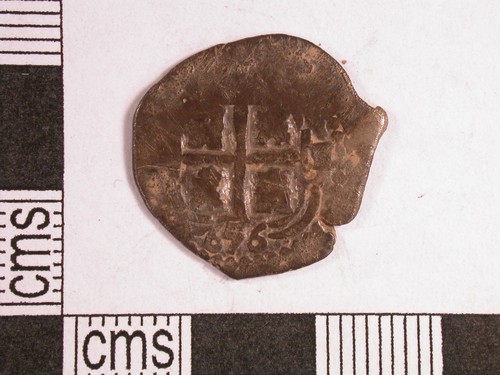
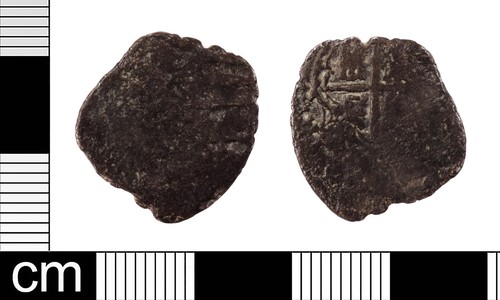
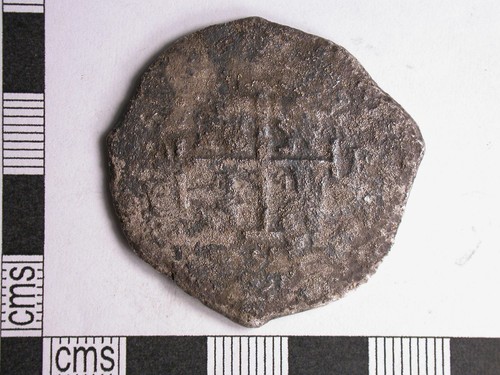
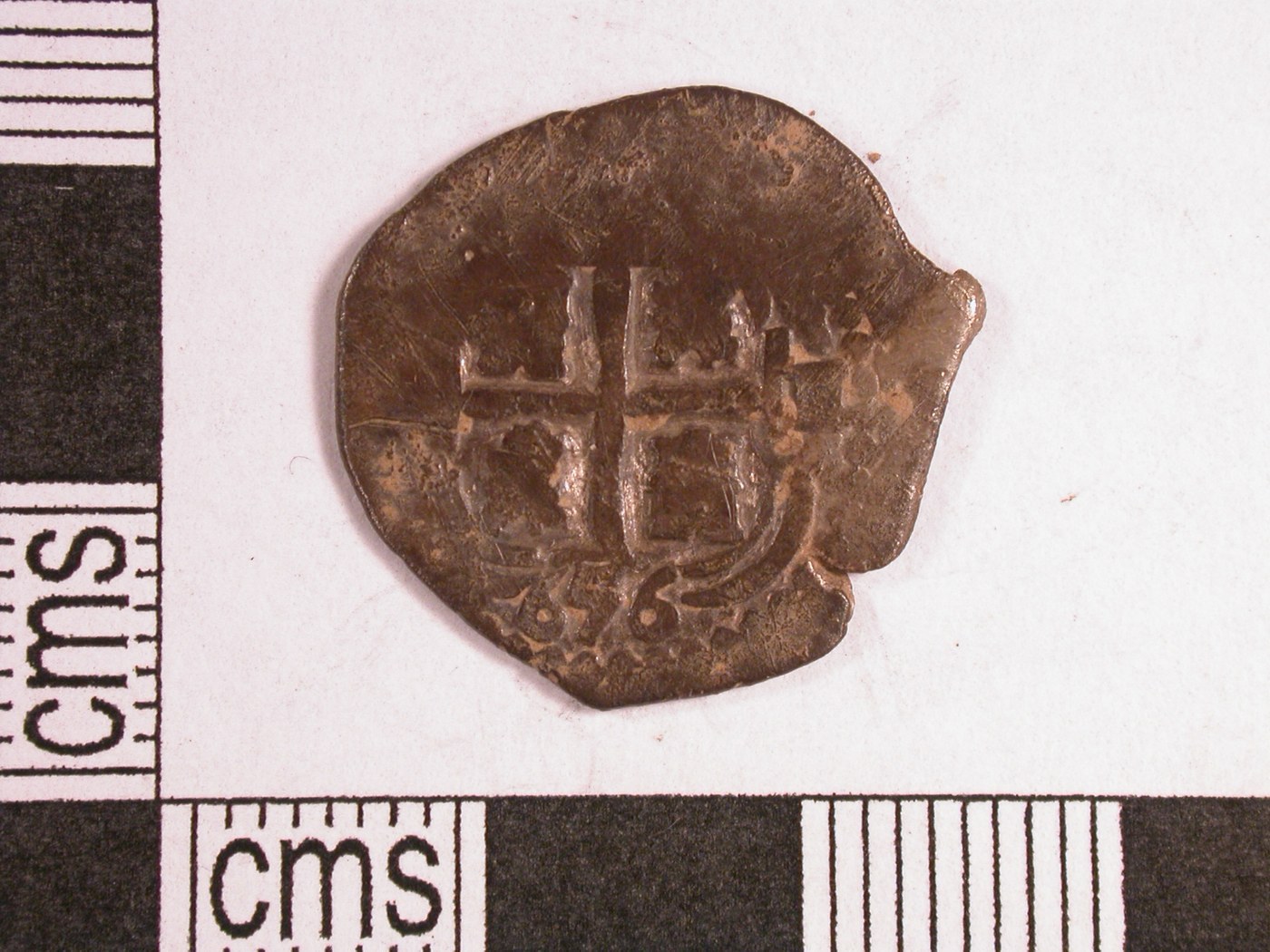
A small, crudely hand-struck silver cob of one real, made in Spain's American colonies with heraldic shield-and-cross designs.
- Country
- Spain
- Denomination
- 1 Real
- Metal
- Silver
Got a coin like this?
Identify any coin from a photo, free.
Overview
The Spanish Colonial cob 1 real is a small silver coin from the era of hand-struck "cob" coinage, worth one real, the base unit of the Spanish reales system that ran up to the famous 8-reales "piece of eight." Cobs were cut from a silver bar to roughly the right weight and struck by hand, so they are characteristically irregular in shape and rarely fully round.
The example shown carries heraldic designs on both faces: a coat of arms with a shield flanked by pillars on one side and a coat of arms built around a cross on the other. These devices, the crowned Spanish arms and a cross with castles and lions, are the standard imagery of colonial cob silver and tie the coin to the Spanish crown rather than to any single pictorial scene.
As the smallest of the commonly encountered cob reales after the half real, the 1 real is a compact, lightweight piece. Because it was struck by hand on odd-shaped planchets, no two are quite alike, and full legends or dates are often only partly visible.
History & Background
Spain minted silver reales in its American colonies from the 16th century, drawing on the enormous silver output of mines such as those at Potosi in present-day Bolivia and the mints of Mexico City and Lima. Cob coinage, struck by hand from cut pieces of silver, was the dominant method through much of the 17th century, and the 1621-1665 window corresponds to the reign of King Philip IV of Spain.
The reales were denominated in fractions and multiples of the 8-reales dollar (1/2, 1, 2, 4 and 8 reales), with the 1 real serving as the base unit. The crown set standards of weight and fineness so that a real from one colonial mint matched one from another, even though the crude striking left many coins off-center or only partly legible.
Cob coinage was gradually replaced by rounder, machine-milled coins in the 18th century. Cobs from the Philip IV era survive today as some of the most recognizable relics of the Spanish colonial silver trade, and many entered the historical record through shipwreck recoveries of treasure fleets.
How to Identify
Look first at the fabric of the coin. A genuine cob is irregular, off-round and unevenly struck, with a thick, hand-cut silver planchet, quite different from the neat circular coins made later by machine. This crude, hand-made appearance is itself a primary diagnostic.
Read the two faces. One side shows a coat of arms with a shield, here flanked by pillars; the other shows a coat of arms built around a cross, typically a cross with castles and lions in the angles. The crowned Spanish royal arms and the cross-and-quartering motif are hallmarks of colonial cob silver rather than portrait or pictorial coinage.
Because of the small size and off-center striking, legends, mint marks, assayer initials and dates are frequently only partly present. Where visible, small letters record the colonial mint and the assayer who certified the fineness. As a 1 real, the coin is small and light, larger than a half real but well below the 2, 4 and 8 reales.
Value & Collectibility
As a silver coin, a cob 1 real always carries at least the value of its silver content, with collector value added on top. Small denominations like the 1 real are generally more affordable than the large 8-reales cobs, and typical circulated examples often trade in the modest tens to low hundreds of dollars depending on strike, legibility and eye appeal.
Coins with clear legends, a readable date, an identifiable mint and assayer, and attractive surfaces command higher premiums, while heavily worn, corroded, clipped, holed or crudely struck pieces sell for less. Shipwreck-pedigreed cobs or those with documented provenance can carry added value.
Because prices move with both the silver market and collector demand, treat any single figure as a snapshot. For a specific coin, compare recent auction results for the same denomination, mint and grade rather than relying on a fixed price.
Frequently asked questions
What is a cob coin?
A cob is a hand-struck coin made by cutting a piece from a silver bar to about the right weight and striking it with hammer and dies. The result is irregular and off-round, which is normal for these coins rather than a sign of damage.
How much is a Spanish Colonial cob 1 real worth?
It is always worth at least its silver content, with collector value on top. Circulated examples often fall in the tens to low hundreds of dollars; clearer legends, a readable date and an identifiable mint bring more. Compare recent sales of similar cobs for a realistic figure.
Why is the coin not round?
Cobs were struck by hand on irregular planchets cut from silver bars, so an off-round, uneven shape is expected and authentic for this coinage rather than evidence of a problem.
Which king was on the throne for these coins?
The 1621-1665 date range corresponds to the reign of King Philip IV of Spain, during the height of the hand-struck cob coinage era in Spain's American colonies.
Why can't I read a full date on my cob?
Cobs were crudely and often off-center struck on small planchets, so legends, mint marks and dates are frequently only partly visible. Many cobs cannot be precisely dated from the coin alone.
Spanish Colonial Cob 1 Real guides
In-depth guides for identifying, valuing, and collecting Spanish Colonial Cob 1 Real.