
How to Identify the Spanish Colonial Cob 1 Real
A collector's walkthrough for confirming a Spanish colonial cob 1 real by its crude fabric, heraldic designs, size, mint marks and authenticity.
Read the full Spanish Colonial Cob 1 Real encyclopedia entry →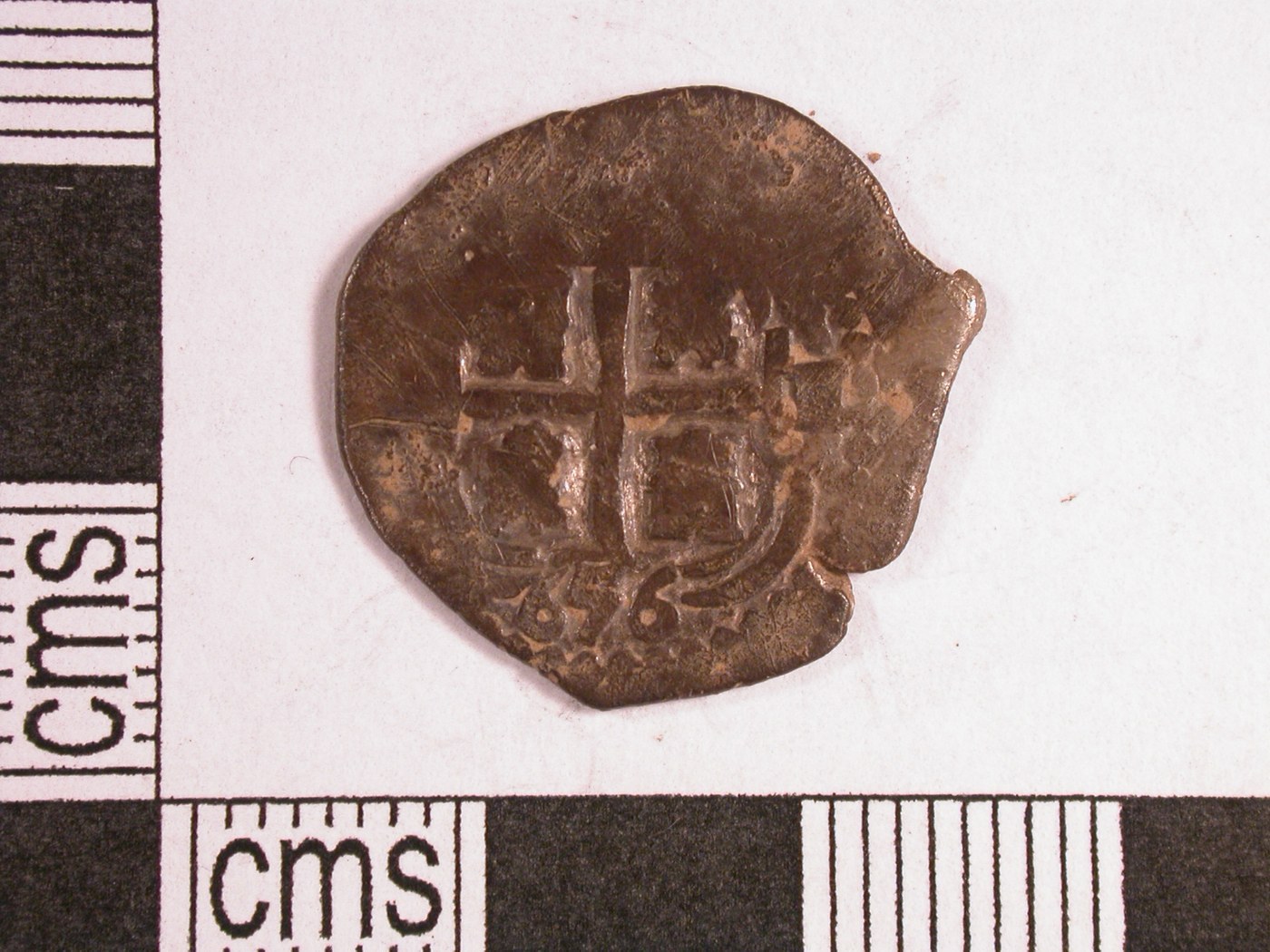
Start with the fabric and size. A cob 1 real is a small, thick, irregular silver piece, cut and struck by hand rather than machine-made, so an off-round shape and uneven edges are expected. Weigh and measure it: the 1 real is the small base unit, clearly lighter than the 2, 4 and 8 reales but larger than a half real. A coin that is much too light, magnetic, or suspiciously smooth and round deserves a closer look.
Read both faces. This type shows a coat of arms with a shield flanked by pillars on one side and a coat of arms built around a cross, typically with castles and lions in the angles, on the other. These heraldic Spanish royal devices, not a portrait or a globe scene, are the core diagnostics for colonial cob silver.
Hunt for mint and assayer marks, but expect gaps. Because cobs were struck off-center on small planchets, legends, mint letters, assayer initials and dates are often only partly present. Where visible, small letters near the shield or in the legend identify the colonial mint (such as Potosi, Mexico City or Lima) and the assayer; many cobs simply cannot be fully attributed from the visible detail.
Separate look-alikes. Do not confuse the small 1 real with its larger cob siblings (2, 4 and 8 reales), which are heavier and broader, or with later rounder milled colonial coins. Cobs are also among the most copied colonial coins, so be alert to cast reproductions and modern souvenir copies.
Authenticate before you assume. Genuine cobs show hand-struck detail, honest silver surfaces and hammer-strike character, not the seams, bubbles or mushy detail of a cast copy. Confirm weight, diameter and silver content, be cautious of pieces that are too regular or too perfect, and for anything valuable seek third-party grading or an expert opinion rather than relying on the design alone.
Frequently asked questions
How do I tell a cob 1 real from a larger cob denomination?
By size and weight. The 1 real is the small base unit; the 2, 4 and 8 reales are progressively larger and heavier. Weighing and measuring the coin quickly places it within the reales ladder.
Is the irregular shape a sign of a fake?
No. Off-round, uneven shapes are normal and expected for hand-struck cobs. Fakes are more often betrayed by cast seams, bubbles, soft detail or a suspiciously regular, machine-made look.
Why can't I find a mint mark or date on my cob?
Cobs were struck off-center on small planchets, so much of the legend, mint mark and date is frequently missing. Partial or absent markings are common and do not by themselves indicate a problem.
Should I clean a cob before identifying it?
No. Cleaning damages original surfaces and reduces value. Identify and authenticate the coin as-is and leave any conservation to a professional.