
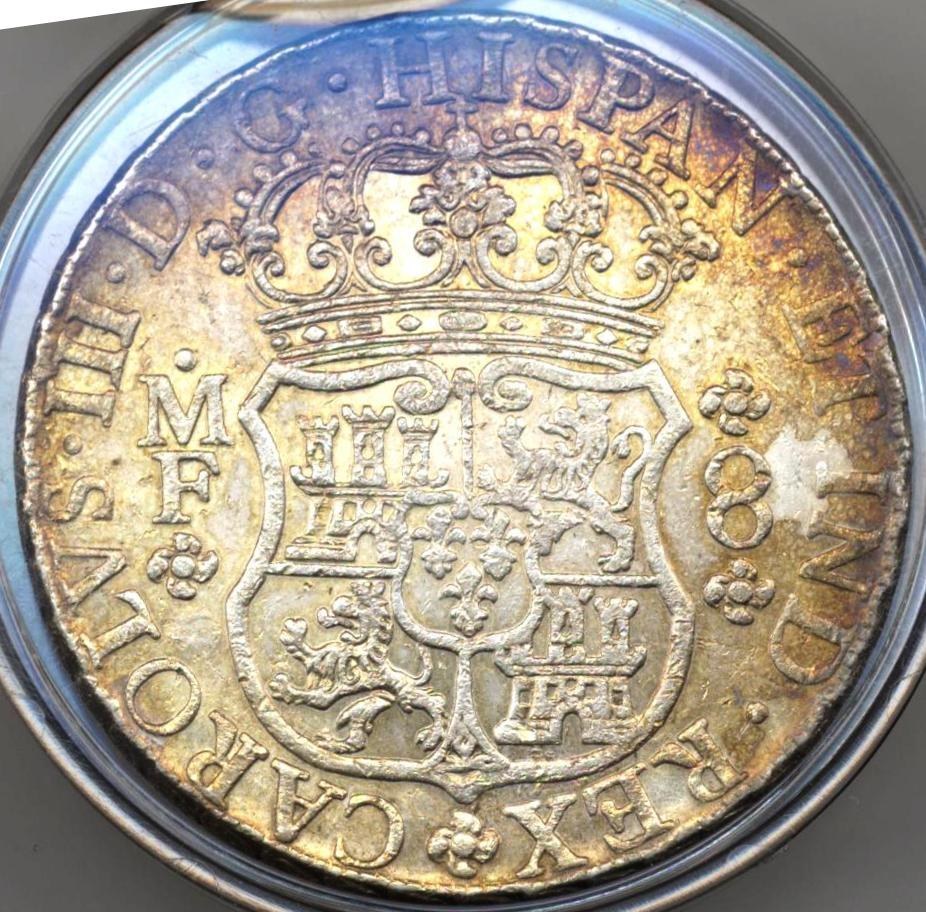
Pillar Dollar (Columnario)
Machine-struck Spanish colonial silver 8 reales showing two crowned globes between the Pillars of Hercules; a trusted world trade coin.
- Country
- Spanish Empire
- Denomination
- 8 Reales
- Metal
- Silver
Got a coin like this?
Identify any coin from a photo, free.
Overview
The Pillar Dollar, known in Spanish as the Columnario, is a large machine-struck silver eight reales coin issued by the Spanish Empire from its colonial mints in the Americas. The example shown is dated 1765, placing it in the reign of Charles III. Its familiar name comes from the pair of crowned columns — the Pillars of Hercules — that frame the coin's most distinctive side.
One face carries the crowned Spanish royal coat of arms flanked by the pillars, while the other displays two crowned hemispheres, or globes, set over sea waves between the two columns, each column wrapped with a banner reading PLVS VLTRA. This "two worlds" imagery represents the Old World and the New World united under the Spanish crown, and it gives the coin its other nickname, Dos Mundos.
Struck in high-grade silver at a standard weight of roughly 27 grams, the Columnario circulated far beyond Spanish territory and became one of the most widely accepted trade coins of the eighteenth century.
History & Background
The Pillar Dollar type was introduced in 1732 as part of a reform that replaced the crude, irregularly shaped hand-hammered "cob" coinage with round, uniform, machine-struck coins produced on screw presses. The new milled coinage was harder to clip or counterfeit and projected the prestige of the Spanish crown across its global empire.
Columnarios were struck at several colonial mints, most prolifically at Mexico City, and also at Potosí, Lima, Guatemala, and Santiago. The 1765 date on this coin falls under King Charles III, whose Latinized name appears in the legend; earlier pillar issues named Philip V and Ferdinand VI. The type was produced until the early 1770s, when a new design featuring the king's portrait bust replaced the pillar arrangement.
Because of its dependable silver content and consistent size, the Pillar Dollar became a benchmark international trade coin. It circulated widely in colonial North America, the Caribbean, Europe, and Asia, and it is frequently cited as an ancestor of the United States silver dollar and of the "pieces of eight" of popular legend.
How to Identify
The defining feature is the pillar side: two tall crowned columns representing the Pillars of Hercules, each draped with a banner bearing the motto PLVS VLTRA ("further beyond"). Between them sit two crowned hemispheres above stylized sea waves, encircled by the legend VTRAQVE VNVM ("both are one") along with the date and, at the base, a small mint mark and assayer initials. The opposite side shows the crowned Spanish coat of arms flanked by pillars, with a legend naming the reigning king and his titles as ruler of Spain and the Indies.
The coin is large and heavy, typically around 38 to 40 millimeters across and close to 27 grams of high-grade silver. Genuine pieces have an ornamented, decorated edge — often described as a tulip or laurel pattern — rather than plain reeding, an anti-clipping feature that is a useful authenticity check.
The mint mark identifies where the coin was struck: an "Mo" monogram for Mexico City (the most common), "P" for Potosí, "LM" or LIMA for Lima, "G" for Guatemala, and "S" for Santiago. Small assayer letters appear alongside the mint mark and vary by year and location.
Value & Collectibility
Value depends heavily on mint, date, grade, and originality. Coins from Mexico City, the highest-output mint, are the most available and in worn but problem-free condition typically trade in the low-to-mid hundreds of dollars, with well-detailed examples reaching into the four figures. Issues from scarcer mints such as Santiago or Guatemala, and certain dates, command significant premiums.
Many surviving Columnarios show chopmarks — small punched merchant stamps applied during Asian trade — as well as cleaning, holing, or edge damage, all of which affect price. Original surfaces and a strong strike are prized, and problem coins sell at a discount to clean examples of the same date and mint.
Because the type has long been popular, replicas, cast copies, and both period and modern counterfeits exist. For higher-value pieces, third-party grading and authentication are strongly recommended before buying or selling. Treat any specific figures here as general context rather than a firm quote.
Frequently asked questions
Why is it called a Pillar Dollar?
The name comes from the two crowned columns, the Pillars of Hercules, that frame the globes on one side of the coin. In Spanish it is called the Columnario for the same reason.
What do the two globes represent?
The two crowned hemispheres stand for the Old World and the New World united under the Spanish crown, which is why the coin is also nicknamed Dos Mundos, or "two worlds."
Is a Pillar Dollar real silver?
Yes. Genuine pieces were struck in high-grade silver at a standard weight of roughly 27 grams, which is one reason they were trusted as an international trade coin.
What does PLVS VLTRA mean?
It is a Latin motto meaning "further beyond," displayed on banners wrapped around the two pillars and long associated with Spanish overseas expansion.
Which king issued the 1765 coin?
A pillar dollar dated 1765 was struck during the reign of Charles III, whose Latinized name and royal titles appear in the coin's legend.
Pillar Dollar (Columnario) guides
In-depth guides for identifying, valuing, and collecting Pillar Dollar (Columnario).
Other coins you may enjoy
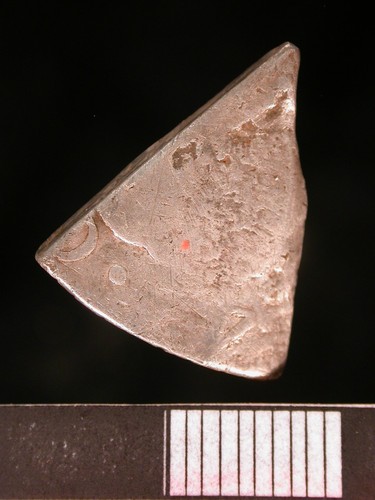
8 Reales (Portrait/Bust Type)
1759-1788
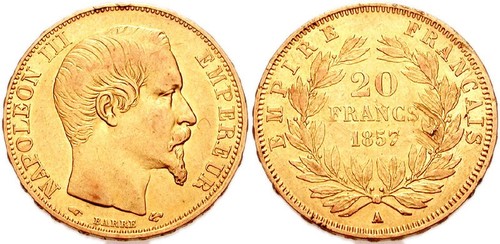
Napoleon III 20 Francs
1852-1870
British Penny
1937-1952
Shilling of James I
1603-1625
British Shilling
1837-1901 (Victoria); example dated 1887
Australian Florin
1910-1963
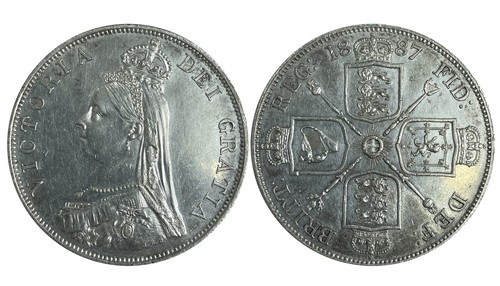
British Double Florin
1887-1890
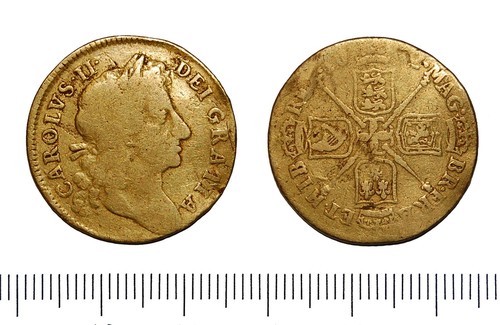
Gold Guinea
1663-1813
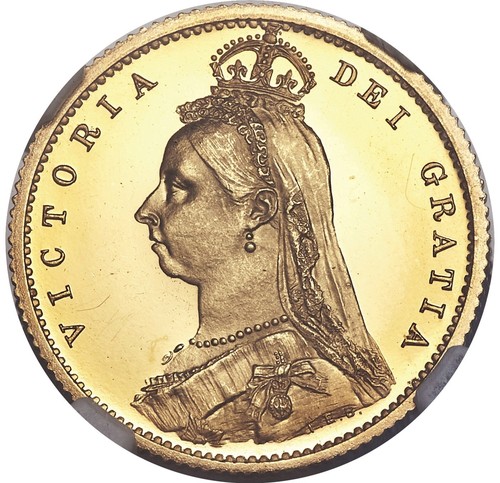
Half Sovereign
1817-1937
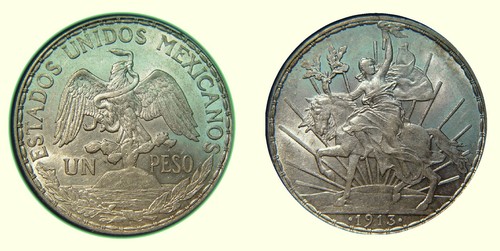
Mexican 1 Peso
1910-1914
Japanese 5 Yen
Meiji era (example dated Meiji 30 / 1897)
Japanese 20 Yen
1870 (Meiji 3)