
Coin Encyclopedia
Search and identify coins from around the world — with country, denomination, metal, mint, history, and how to tell them apart.
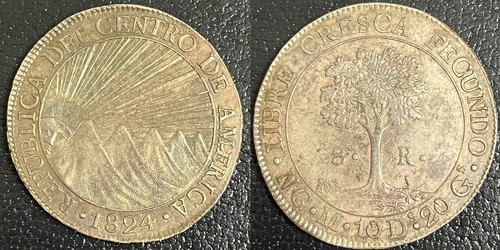
Central American Republic 8 Reales
A silver 8 reales of the Central American Republic, showing a rayed sun rising over mountains on one side and a tree on the other, dated 1824.
Circulation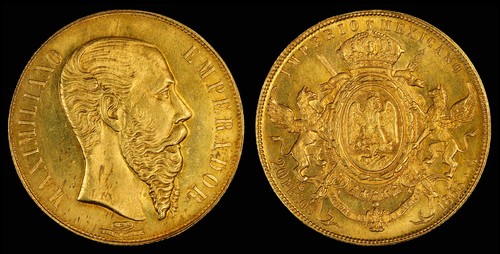
Empire 20 Pesos
A gold 20 pesos of the Second Mexican Empire, showing a bearded imperial portrait, the legend IMPERIO MEXICANO, and a crowned heraldic coat of arms.
Circulation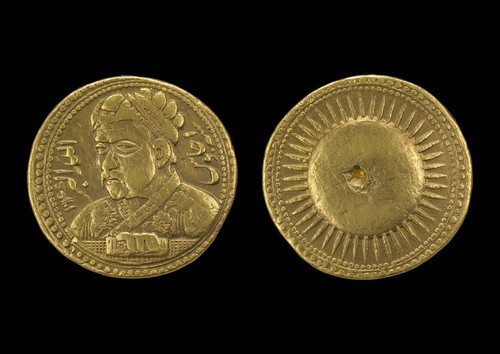
Unattributed Gold Coin
A gold-colored coin of uncertain origin: a portrait with East Asian calligraphy on one face and a radiating sunburst within a decorative border on the other.
Unknown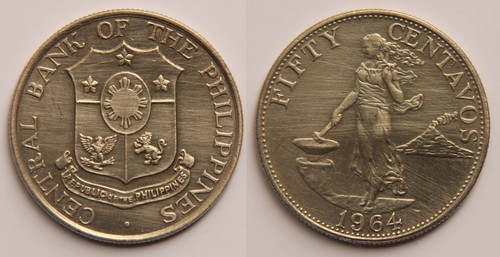
Philippines 50 Centavos
A 1960s Philippine 50-centavos coin in copper-nickel, its obverse showing an allegorical woman with a torch and its reverse the national coat of arms.
Southeast Asia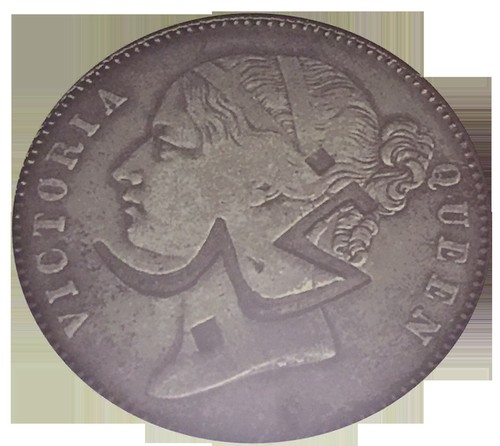
Najd Silver Coin
Silver trade coin catalogued to Najd, central Arabia, bearing a left-facing Victoria Queen bust and an 1862 date in the British India rupee style.
Arabia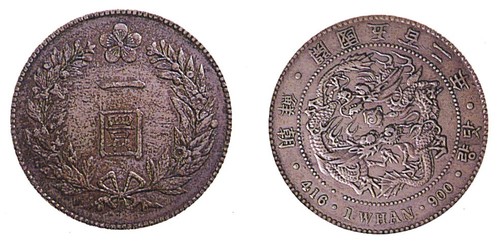
1 Hwan
A late-Joseon Korean bronze coin of one hwan, carrying a chrysanthemum-and-cartouche obverse and a traditional dragon motif with East Asian characters on the reverse.
Historic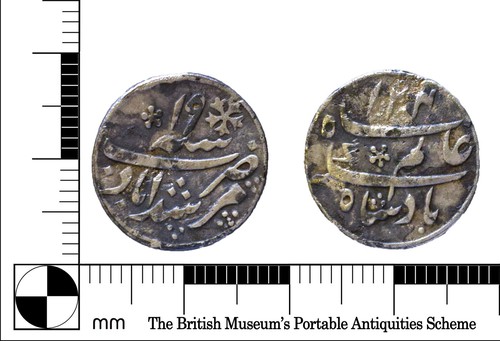
Mughal Islamic Rupee
A hand-struck silver rupee of the Mughal Empire, filled edge to edge with Persian and Arabic script naming the emperor, mint, and regnal year.
Islamic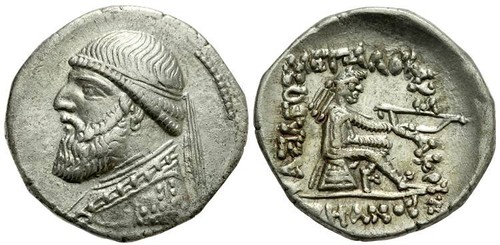
Parthian Drachm
Silver drachm of the Parthian (Arsacid) Empire, pairing a bearded royal profile with a seated archer holding a bow, struck in the era of Mithradates II.
Ancient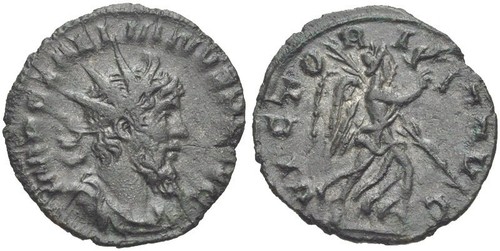
Antoninianus of Laelianus
Rare billon antoninianus of the short-lived Gallic usurper Laelianus, showing his radiate-crowned bust and a Roman deity or personified virtue.
Ancient Coins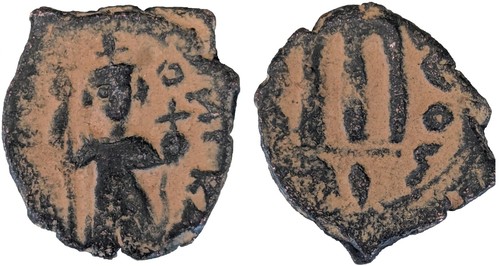
Byzantine Follis
Large bronze follis of the Byzantine Empire, this example under Constans II (from 641 AD), with an imperial portrait and a big M value mark topped by a cross.
Medieval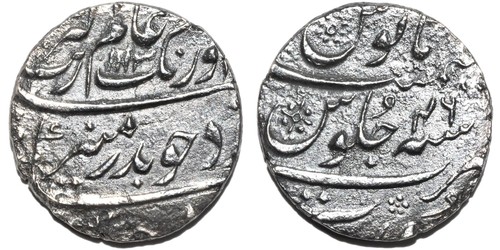
Mughal Rupee (Akbar)
A hand-struck Mughal silver rupee of Emperor Akbar dated AH 1003 (AD 1594), covered on both faces with flowing Persian calligraphy and ornamental borders.
Historic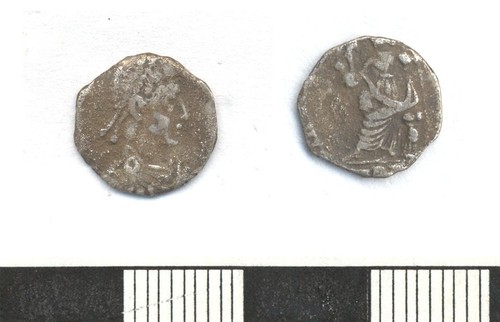
Roman Siliqua
Small late-Roman silver coin of the 4th century AD, with an emperor's portrait facing right and a standing robed figure on the reverse.
Ancient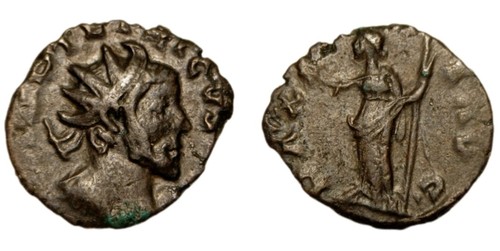
Antoninianus of Tetricus I
A billon antoninianus of the Gallic emperor Tetricus I (270–273 AD), showing his radiate portrait and a standing figure of Pax on the reverse.
Ancient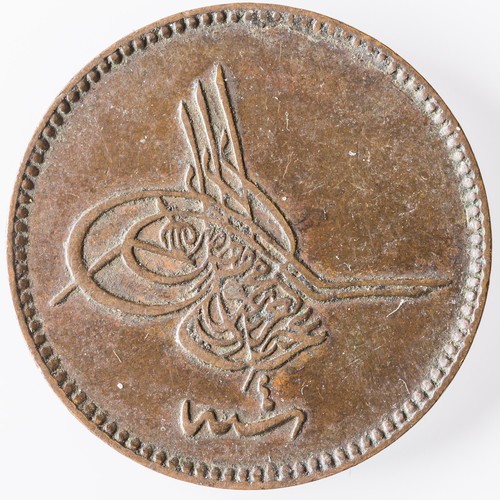
10 Para
Small Ottoman silver 10 Para dated AH 1280 (1863-1864), with the sultan's calligraphic tughra on one side and an ornamental Arabic-script inscription on the other.
Early Modern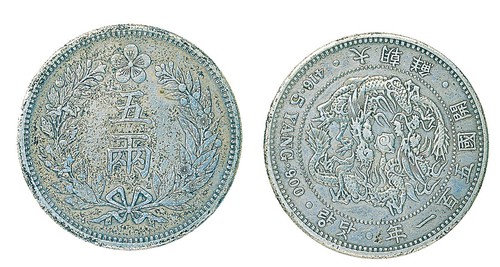
5 Yang
A late-Joseon Korean 5 Yang in bronze: a floral, chrysanthemum-and-taegeuk obverse paired with a coiled dragon and ornamental characters on the reverse.
Historic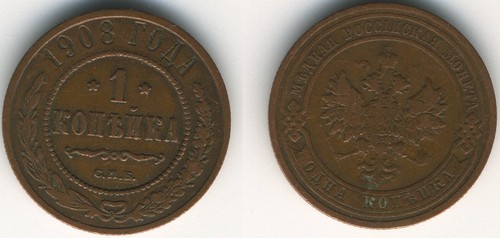
1 Kopeck
Small copper 1 Kopeck of Imperial Russia dated 1908, with the value in a wreath on one side and the crowned double-headed eagle on the other.
Modern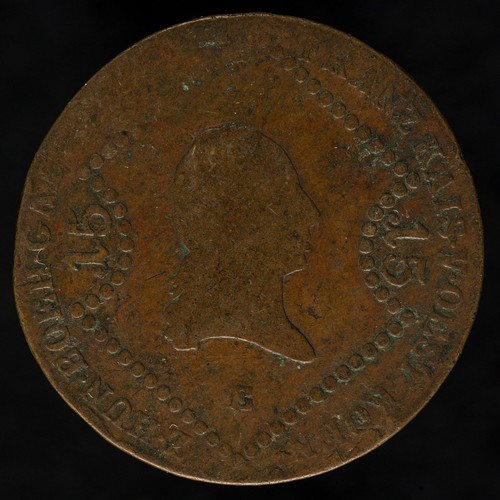
Austria-Hungary 15 Kreuzer
A large copper 15 Kreuzer of 1807 struck under Emperor Franz I, showing his crowned laureate profile on the obverse.
Circulation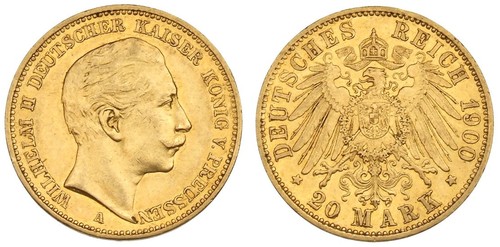
German 20 Mark Gold
German Empire gold 20 mark of Prussia, with Kaiser Wilhelm I's bust and the imperial eagle; a small .900 gold coin from the pre-WWI Goldmark era.
Bullion/gold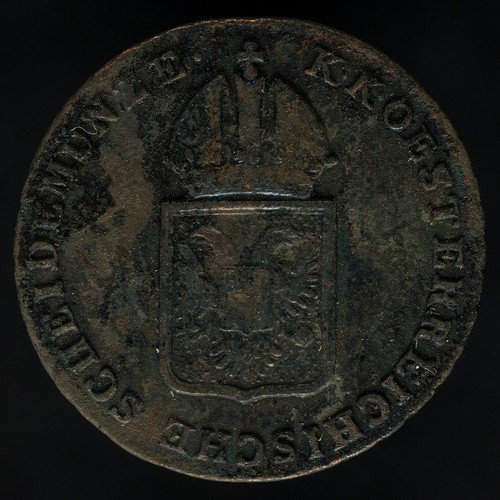
Austria-Hungary 1/4 Kreuzer
A small copper 1/4 Kreuzer of the Austrian Empire dated 1816, showing Emperor Franz I in crowned right-facing profile.
Circulation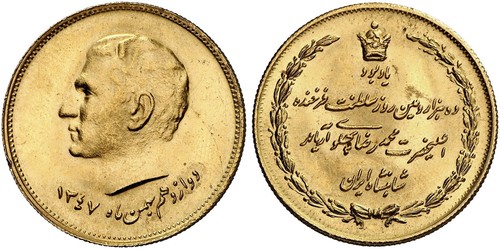
Pahlavi Reign Gold Medal
A gold medal of Pahlavi-era Iran, its obverse a left-facing royal portrait and its reverse the Lion and Sun beneath a crown, dated 1971.
Persia / Iran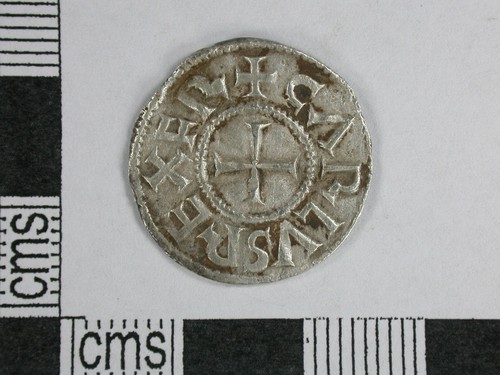
Denier of Charlemagne
A hand-struck silver denier of Charlemagne, king of the Franks: a central cross ringed by the CARLVS REX FR legend, with a royal monogram design on the reverse.
Medieval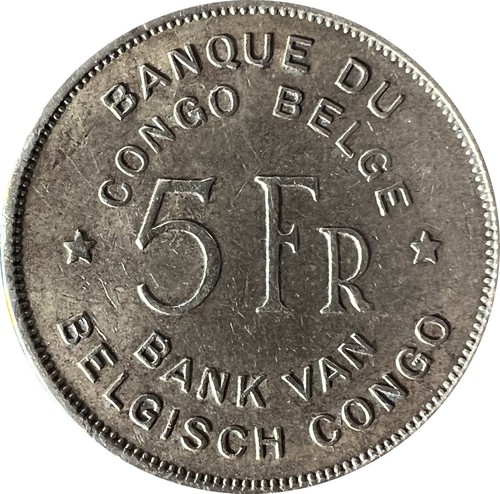
Congo 5 Francs
A modern circulation coin of the Democratic Republic of Congo, showing the central bank name and the value 5 Francs with decorative devices.
World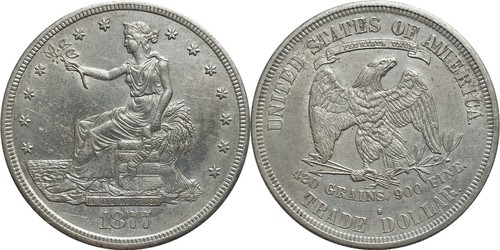
Trade Dollar
U.S. 90% silver dollar struck 1873–1885 for trade with Asia, showing a seated Liberty facing the sea and an eagle holding arrows and an olive branch.
Dollar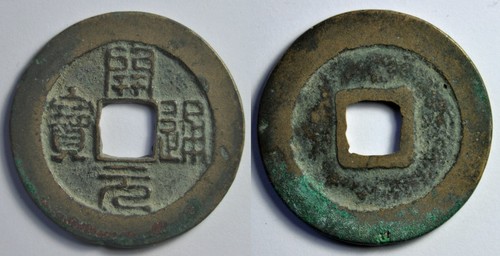
Kai Yuan Tong Bao
A Tang-dynasty Chinese bronze cash coin with the four seal-script characters Kai Yuan Tong Bao around a central square hole.
Cash Coin