
Trade Dollar
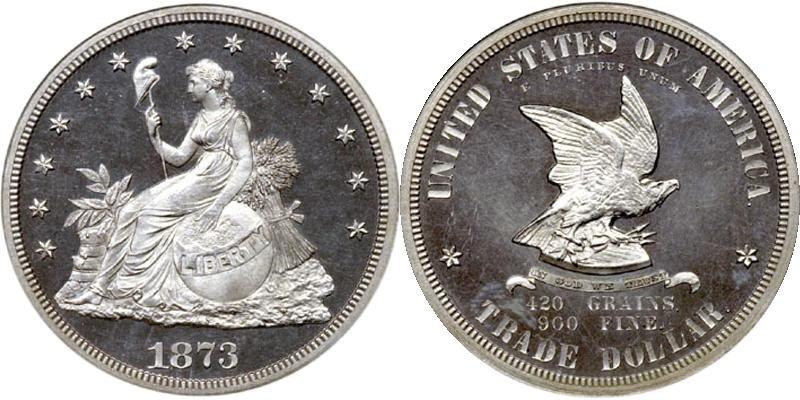
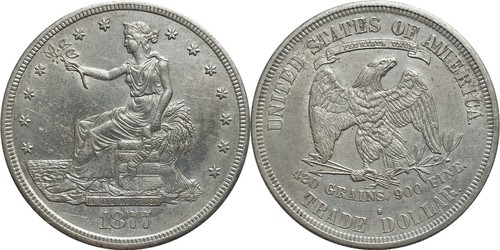
U.S. 90% silver dollar struck 1873–1885 for trade with Asia, showing a seated Liberty facing the sea and an eagle holding arrows and an olive branch.
- Country
- United States
- Denomination
- 1 dollar
- Metal
- Silver
Got a coin like this?
Identify any coin from a photo, free.
Overview
The Trade Dollar is a United States silver dollar issued from 1873 through 1885, made specifically for merchants trading in the Far East rather than for everyday domestic use. It is slightly heavier than the standard silver dollar of the era, carrying 420 grains of 90% silver so it could compete with the Mexican and other silver dollars widely accepted in Chinese ports.
The obverse shows Liberty seated on bales of merchandise, facing left toward the sea and extending an olive branch, with a ribbon reading LIBERTY behind her and thirteen stars around the rim. The reverse displays an American eagle with outstretched wings clutching three arrows and an olive branch, above the guaranteed weight and fineness. The example shown here is dated 1877, from the middle of the series' active production years.
History & Background
By the early 1870s the price of silver was falling and American silver interests, along with merchants in the China trade, wanted a coin that could circulate in Asian markets dominated by heavier foreign silver dollars. The Coinage Act of 1873 authorized the Trade Dollar, designed by Chief Engraver William Barber, with a weight of 420 grains deliberately set above the 412.5 grains of the standard silver dollar. Many pieces that reached China were stamped with merchants' chopmarks — small punches verifying the silver — and chopmarked survivors are common today.
The coin's history at home was troubled. It was originally given legal tender status for small amounts, but in 1876 Congress revoked that status, leaving Trade Dollars circulating domestically at a discount and causing hardship for workers paid in them. Business-strike production for circulation ended in 1878, after which the Mint struck only proofs for collectors through 1883. Two later dates, the rare 1884 and 1885, were produced clandestinely and are among the most famous rarities in American numismatics.
How to Identify
The obverse is the key diagnostic. Liberty is seated on bales of goods, facing left toward the ocean, holding an olive branch in her extended right hand; a ribbon inscribed LIBERTY lies across the bale behind her. Thirteen stars ring the rim, the date sits at the bottom, and the base bears the motto IN GOD WE TRUST. This seaward-facing, olive-branch pose distinguishes the Trade Dollar from the contemporaneous Seated Liberty dollar, whose Liberty holds a shield and Liberty pole.
The reverse shows an eagle with outstretched wings perched on a bundle of arrows and an olive branch, with UNITED STATES OF AMERICA above and the denomination TRADE DOLLAR below. A defining feature is the inscription of the coin's guaranteed weight and fineness — 420 GRAINS. 900 FINE. — arced above the eagle, wording found on no other U.S. dollar. E PLURIBUS UNUM appears on a ribbon above the eagle's head.
Physically the coin is 90% silver (with 10% copper), about 38.1 mm in diameter and 27.2 g, with a reeded edge. Mint marks, when present, sit on the reverse below the eagle, above the D in DOLLAR: S for San Francisco, CC for Carson City, and none for Philadelphia. Many genuine examples carry Chinese merchant chopmarks punched into the surfaces.
Value & Collectibility
Value depends heavily on date, mint mark, condition, and whether the coin is chopmarked. Common circulated dates from San Francisco and Carson City typically trade at a moderate premium over their silver content, while chopmarked examples — once shunned — are now collected in their own right and can be modestly more or less than unmarked coins depending on the buyer. Proof-only dates from 1879 through 1883 command substantial premiums.
The series contains celebrated rarities: the 1884 and 1885 Trade Dollars exist in tiny numbers and rank among the most valuable U.S. coins, selling for six and seven figures at auction. Because the Trade Dollar is a heavily counterfeited type — including modern silver and base-metal copies aimed at both collectors and the bullion market — any potentially valuable example should be weighed, measured, and authenticated by a reputable third-party grading service. Treat all figures here as general context rather than firm prices.
Frequently asked questions
Why was the Trade Dollar made?
It was struck for American merchants trading in Asia, especially China, where heavier foreign silver dollars were the standard. Its 420-grain weight was set to compete with those coins rather than for domestic use.
Is the Trade Dollar made of silver?
Yes. It is 90% silver and 10% copper, weighing about 27.2 grams — slightly more than the standard U.S. silver dollar of the same period, which the reverse states as 420 GRAINS. 900 FINE.
What are the small stamps on some Trade Dollars?
Those are chopmarks — punches applied by Chinese and other Asian merchants to verify the silver as the coin passed through trade. Chopmarked Trade Dollars are common and are collected today.
Where is the mint mark on a Trade Dollar?
On the reverse below the eagle, above the D in DOLLAR. You may see S (San Francisco) or CC (Carson City); no mint mark means it was struck in Philadelphia.
Which Trade Dollars are rare?
The proof-only dates of 1879–1883 carry strong premiums, and the 1884 and 1885 issues — made in tiny numbers — are among the most valuable U.S. coins. Any such coin should be professionally authenticated.
Trade Dollar guides
In-depth guides for identifying, valuing, and collecting Trade Dollar.
Other coins you may enjoy
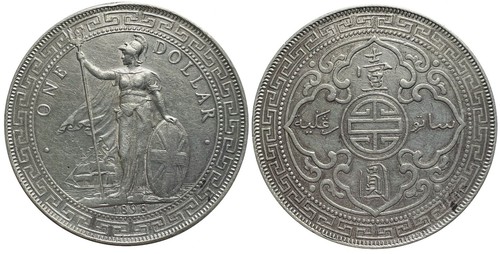
British Trade Dollar
1895–1935
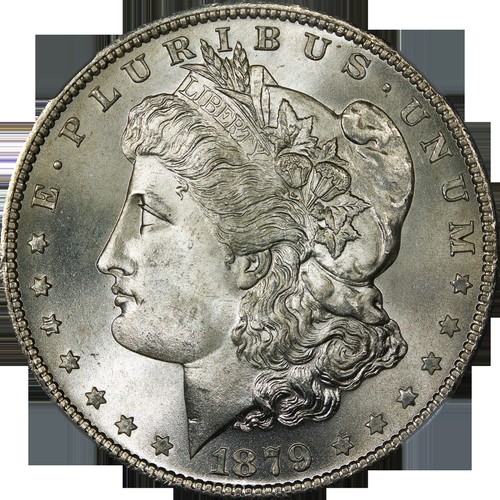
Morgan Dollar
1878–1904, 1921
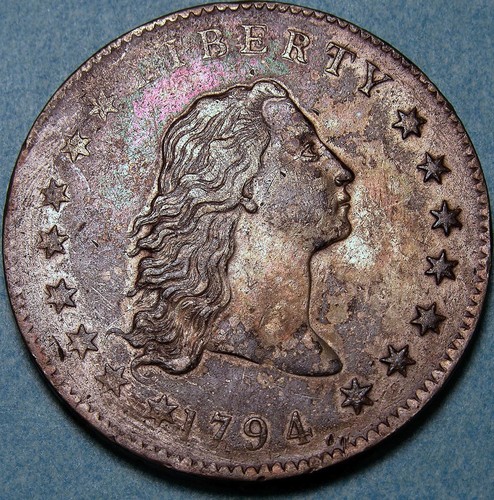
Flowing Hair Dollar
1794–1795
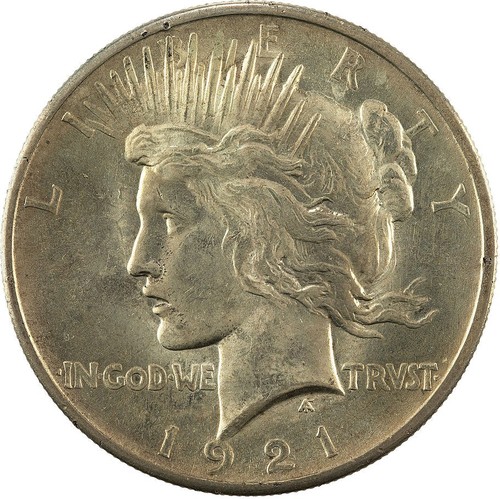
Peace Dollar
1921–1928, 1934–1935
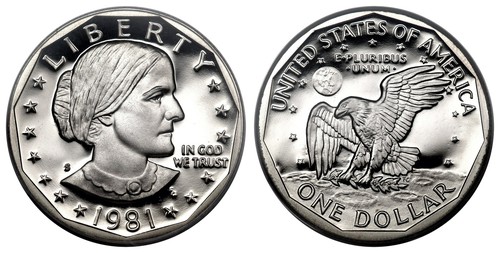
Susan B. Anthony Dollar
1979–1981, 1999
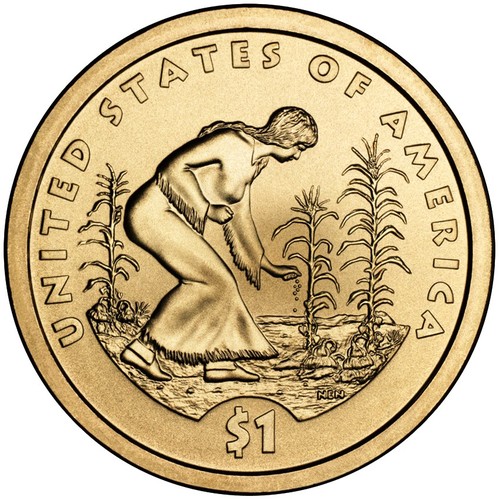
Native American Dollar
2009–present
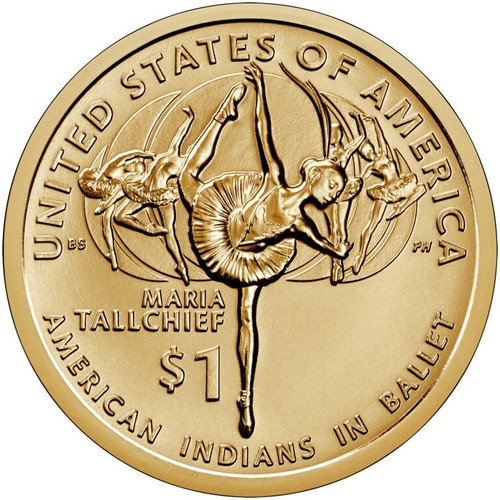
Native American Dollar - Tallchief
2023
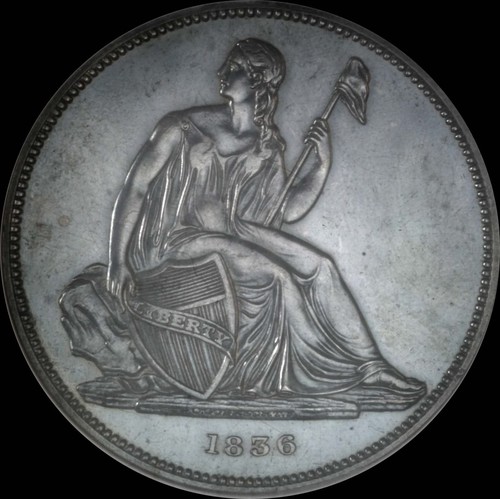
Gobrecht Dollar
1836
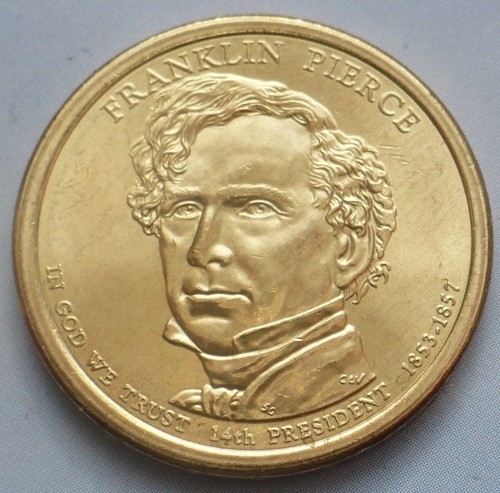
Franklin Pierce Presidential Dollar
2010
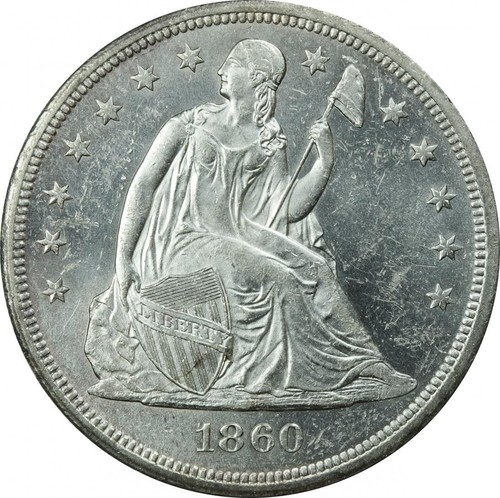
Seated Liberty Dollar
1840-1873
Sacagawea Dollar
2000–2008
Benjamin Franklin Founding Father Commemorative Silver Dollar
2006