Unattributed Gold Coin
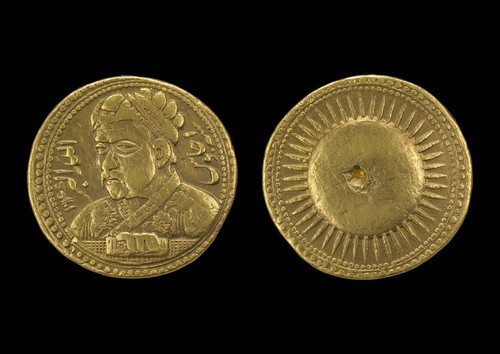
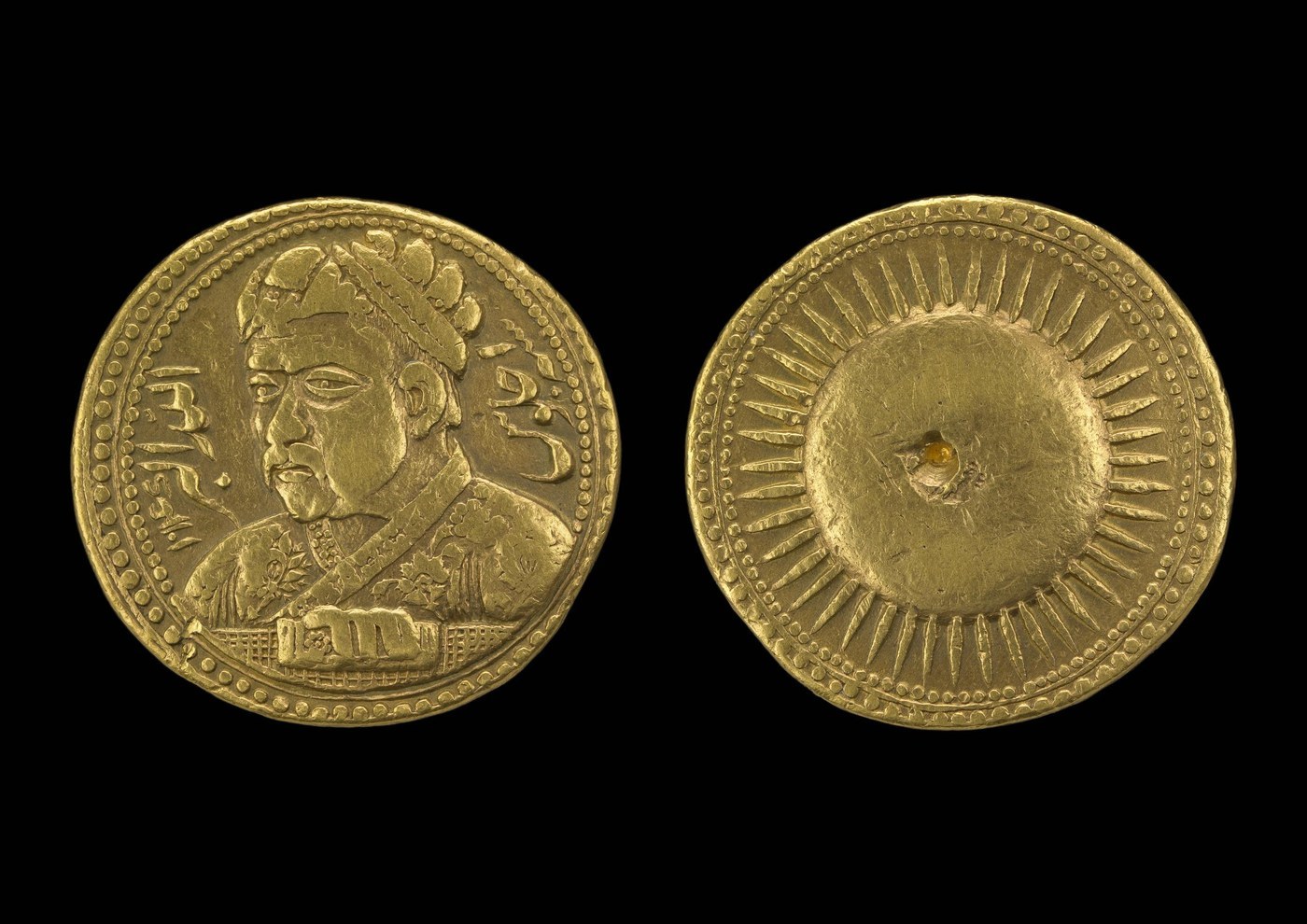
A gold-colored coin of uncertain origin: a portrait with East Asian calligraphy on one face and a radiating sunburst within a decorative border on the other.
- Country
- East Asia
- Denomination
- Unknown
- Metal
- Gold
Got a coin like this?
Identify any coin from a photo, free.
Overview
The coin pictured has not been attributed to a specific country, issuer, or date. What can be described are its visible features: one face carries a portrait accompanied by East Asian calligraphy, while the other shows a radiating sunburst pattern enclosed by a decorative border. The piece is gold in color, but nothing about the images alone confirms its fineness, weight, or whether it is a struck coin, a token, a medal, or a modern novelty.
Because the inscriptions have not been read and no denomination or mint is identified, this entry is best treated as a placeholder for an unattributed object rather than a description of a known series. The portrait-and-sunburst combination is common across many East Asian and world issues, so surface appearance alone is not enough to name it.
Anyone holding a coin like this should approach it as an identification project: gather measurements, translate the legends, and compare against reference catalogs before assigning any country, date, or value.
History & Background
No reliable history can be given for this piece because it has not been attributed. Portrait obverses paired with sunburst or radiant-ray reverses appear across a wide span of history, from imperial and republican coinages of East Asia to commemorative medals, bullion rounds, and decorative tokens. Without reading the calligraphy or confirming the denomination, it is not possible to place the object in a particular period or political context.
It is worth noting that radiating-ray and portrait motifs are also widely used on non-monetary items: souvenir medallions, gaming or amusement tokens, religious or good-fortune charms, and modern fantasy or replica pieces. Several of these are produced in gold color without being legal-tender coins, and some deliberately imitate the look of historic currency.
Until the legends are translated and the physical specifications are checked, the responsible position is that the origin and date are unknown. Any historical narrative attached to it before attribution would be speculation.
How to Identify
Begin with objective measurements, since appearance alone cannot attribute this piece. Record the diameter and thickness in millimeters, the weight in grams, and check whether the coin is attracted to a magnet (genuine gold is not). These figures, taken together, are often enough to narrow or exclude many candidates.
Next, document and translate the legends. Photograph the portrait side and its East Asian calligraphy clearly, and note whether the script appears to be Chinese, Japanese, Korean, or another system. The characters typically encode the issuing authority, denomination, and date (often in a reign-era or cyclical form), which are the keys to attribution. Describe the sunburst reverse and its decorative border precisely, including any small symbols, numerals, or maker's marks along the rim.
Be cautious about the gold color, which does not prove gold content. Many pieces with this look are brass, gilt, or clad rather than precious metal. Do not assume denomination, country, or value from the design; only a matched catalog reference, confirmed by measurements and translated legends, should be treated as an attribution.
Value & Collectibility
No dependable value can be assigned to an unattributed piece. Value would depend entirely on what the coin turns out to be, whether its metal is actually gold, and its condition, none of which is established here. Two visually similar coins can differ enormously in worth if one is precious-metal currency and the other a gilt token or replica.
The first question that affects value is metal content. If testing (specific gravity, XRF, or a professional assay) confirms real gold, the piece carries at least a bullion floor tied to its weight and fineness. If it is brass, gilt, or clad, its metal value is minimal and any worth is purely collectible or novelty.
Because attribution and metal are both unresolved, treat any figure with strong caution and avoid buying or selling on the assumption that it is valuable gold currency. The prudent path is to confirm identity and metal first through measurements, legend translation, and, if warranted, professional testing or third-party grading.
Frequently asked questions
What coin is this?
It has not been attributed. From the images it shows a portrait with East Asian calligraphy on one side and a radiating sunburst within a decorative border on the other, but no country, denomination, or date has been confirmed.
Is it real gold?
Unknown. The piece is gold in color, but color alone does not prove gold content. It could be gold, gilt, brass, or clad. Only weighing, measuring, and testing (specific gravity or XRF) can confirm the metal.
How can I find out what it is?
Record the diameter, thickness, and weight, check whether it is magnetic, and get a clear photo of the calligraphy so the legend can be translated. Those details, matched to a catalog, are what attribute a coin.
What is the sunburst on the back?
A radiating-ray or sunburst pattern is a decorative motif used on many coins, medals, and tokens across East Asia and the wider world. On its own it is not enough to identify the issuer.
What is it worth?
There is no reliable value for an unattributed piece. Worth depends on what it actually is and whether it is truly gold. Confirm the metal and identity before treating it as valuable.
Unattributed Gold Coin guides
In-depth guides for identifying, valuing, and collecting Unattributed Gold Coin.