1 Kopeck
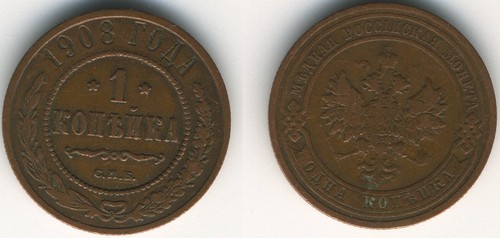
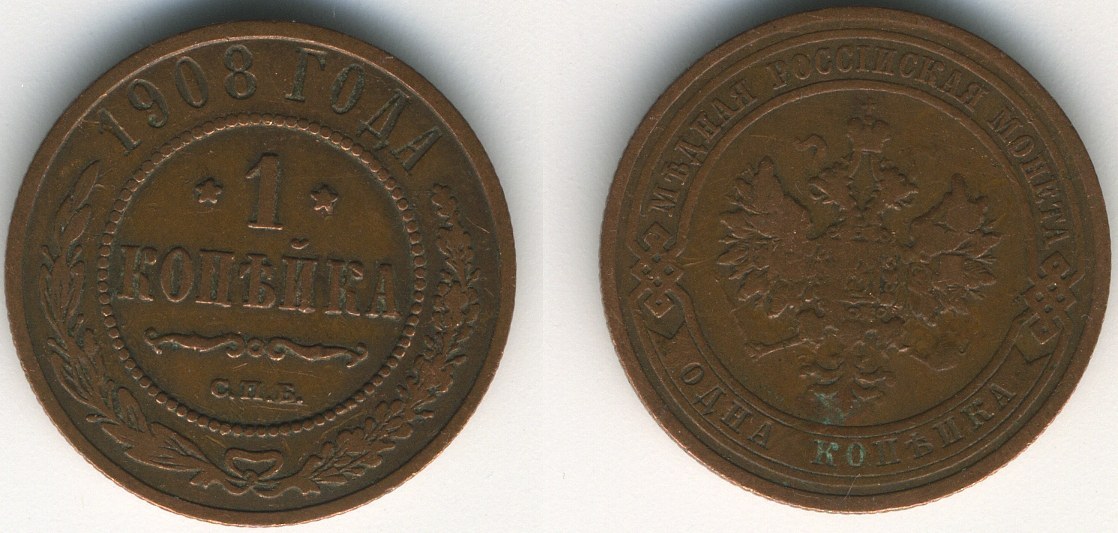
Small copper 1 Kopeck of Imperial Russia dated 1908, with the value in a wreath on one side and the crowned double-headed eagle on the other.
- Country
- Russia
- Denomination
- 1 Kopeck
- Metal
- Copper-bronze
Got a coin like this?
Identify any coin from a photo, free.
Overview
The 1 Kopeck of 1908 is a small copper coin of the Russian Empire, struck during the reign of Tsar Nicholas II. It belongs to the long-running Imperial copper series that circulated across Russia in the decades before the 1917 revolution, and the 1908 date places it firmly in the late Imperial period.
One face displays the denomination, reading 1 КОПѢЙКА (1 Kopeck), framed within a wreath together with the date 1908. The other carries the Imperial double-headed eagle beneath crowns, encircled by Cyrillic legend including РОССІЯ (Russia). It is a workaday minor coin rather than a precious-metal issue, made of copper and modest in size.
For collectors it is valued as an accessible and recognizable piece of Tsarist coinage. Common in circulated grades, it is often collected as a type example of pre-revolutionary Russian copper or as part of a date run, with condition and originality driving most of the interest.
History & Background
During the reign of Nicholas II (1894-1917), the Russian Empire maintained a coinage system in which the ruble was divided into 100 kopecks, with the smallest denominations struck in copper. The 1 Kopeck was the base unit of this copper coinage, produced in large numbers for everyday transactions across the empire.
The 1908-dated coin sits within the standardized copper series that had been in use since the late nineteenth century, bearing the Imperial arms and the value in a wreath. Coins like this passed through the hands of ordinary Russians in the years leading up to the upheavals of the First World War and the revolutions of 1917.
The fall of the monarchy in 1917 and the founding of the Soviet state brought this Imperial coinage to an end, replacing the Tsarist eagle with new revolutionary designs. As a result, the 1908 1 Kopeck survives today as a small, tangible relic of the final years of the Russian Empire.
How to Identify
One side shows the denomination written in Cyrillic as 1 КОПѢЙКА, set inside a wreath with the date 1908 below. The use of the old-style spelling and the wreath frame is a reliable marker of the Imperial copper series and distinguishes it from later Soviet kopecks.
The other side carries the Imperial double-headed eagle, crowned and holding the orb and scepter, surrounded by Cyrillic legend that includes РОССІЯ (Russia). The eagle, not a ruler's portrait, appears on these small copper pieces, so there is no bust of the Tsar to look for on this denomination.
The coin is small and made of copper, typically around 21-22 mm in diameter and only a few grams in weight, with the warm brown or reddish tone of aged copper. Key identifiers are the 1 КОПѢЙКА value in a wreath, the date 1908, the crowned double-headed eagle, and the РОССІЯ legend, which together confirm a late Imperial Russian 1 Kopeck.
Value & Collectibility
The 1908 1 Kopeck is a common Imperial copper coin, so most circulated examples are affordable, typically trading in the low single-digit dollar range depending on condition and market. Its value rests on collector demand and grade rather than on any precious-metal content, since it is base copper.
Condition drives the spread. Heavily worn, corroded, or cleaned coins sit at the bottom of the range, while pieces retaining sharp detail, original surfaces, and especially any red or brown mint luster command clear premiums. Attractive, problem-free copper is scarcer than well-worn examples and is worth more to collectors.
Because exact prices vary with grade, eye appeal, and demand, treat these as general ranges rather than fixed quotes. Corrosion and harsh cleaning are common on old copper and reduce value, so original, undamaged coins are preferred, and high-grade certified examples can bring substantially more than typical circulated pieces.
Frequently asked questions
What is the 1908 Russian 1 Kopeck made of?
It is a copper coin, part of the Imperial Russian copper series. It contains no silver or gold, so its value comes from collector interest and condition rather than precious-metal content.
Who ruled Russia when this coin was made?
It was struck under Tsar Nicholas II, the last emperor of Russia, whose reign ran from 1894 to 1917. The 1908 date places it in the late Imperial period before the revolution.
Why is there an eagle instead of a portrait?
The small copper kopeck denominations carry the Imperial double-headed eagle and the РОССІЯ legend rather than a ruler's bust. The eagle was the arms of the Russian Empire.
What does КОПѢЙКА mean?
It is the Cyrillic word for kopeck, the coin's denomination. On this piece it reads 1 КОПѢЙКА, meaning one kopeck, set within a wreath alongside the date.
Is the 1908 1 Kopeck rare or valuable?
It is a common circulation coin, so most examples are inexpensive. Value depends on grade: worn coins are modest, while sharp, original pieces with copper luster bring higher premiums.
1 Kopeck guides
In-depth guides for identifying, valuing, and collecting 1 Kopeck.