
Coin Encyclopedia
Search and identify coins from around the world — with country, denomination, metal, mint, history, and how to tell them apart.
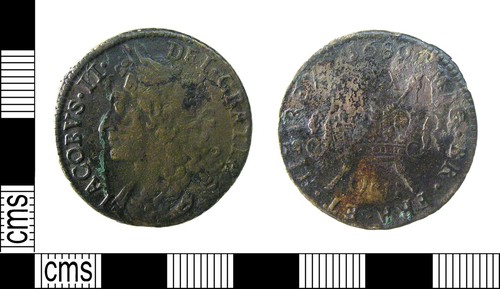
Irish Gun Money Shilling
A base-metal Irish emergency shilling struck for James II in 1689-1690, with his laureate bust and a crowned reverse dated by month, here October 1689.
Emergency Coinage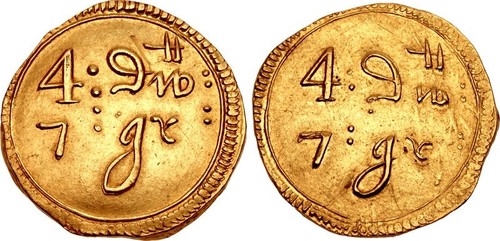
Irish Pistole
A rare hammered gold emergency coin of 1640s Ireland, marked with its weight in pennyweights and grains rather than a portrait, and rated as a pistole.
Hammered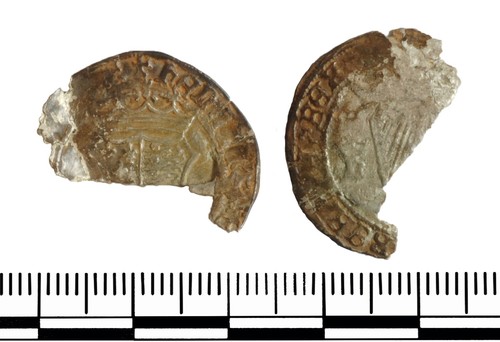
Irish Groat of Henry VIII
A hand-hammered silver fourpence struck for Ireland under Henry VIII, famed for introducing the crowned harp to Irish coinage.
Hammered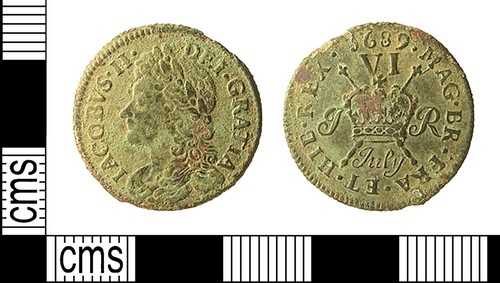
Irish Gun Money Sixpence
A base-metal emergency sixpence struck for James II in Ireland during the Williamite War, its brass alloy cast from melted guns, bells, and scrap.
Emergency Coinage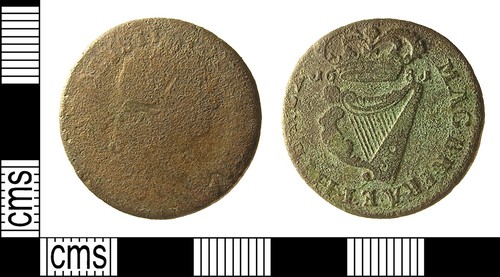
Irish Halfpenny of Charles II
A milled copper halfpenny struck for Ireland under Charles II, with his right-facing laureate bust and a crowned Irish harp on the reverse.
Milled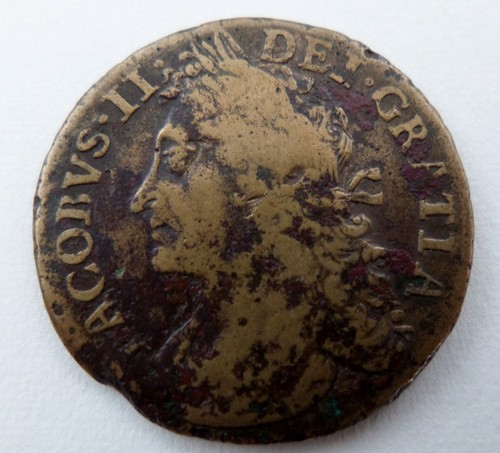
Irish Gun Money Halfcrown (30 Pence)
Emergency base-metal halfcrown struck for James II in Ireland during 1689–1690, valued at 30 pence and carrying his portrait and, on many issues, the month of striking.
Emergency Coinage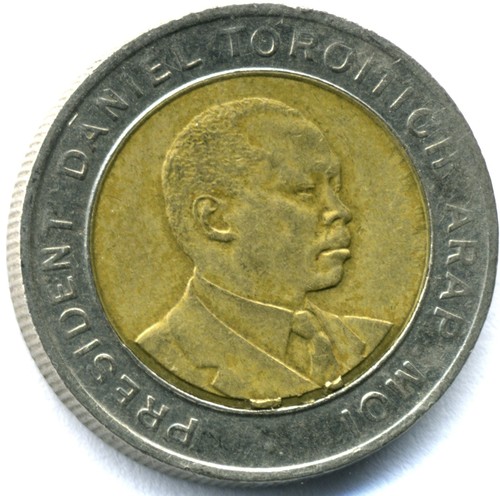
Kenya 5 Shillings
A modern bimetallic Kenyan coin pairing a President's portrait with the national coat of arms and the bold value 5 shillings.
World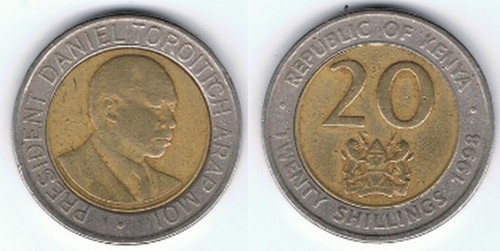
Kenya 20 Shillings
A modern bimetallic Kenyan circulation coin showing a president's portrait on the obverse and the national coat of arms on the reverse.
World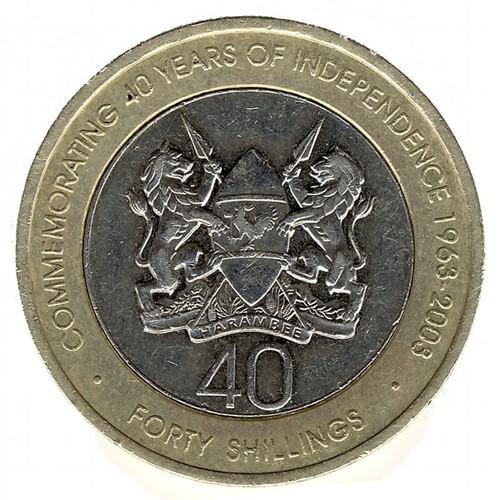
Kenya 40 Shillings
A bimetallic Kenyan commemorative coin denominated 40 shillings, pairing a presidential portrait with the national coat of arms.
World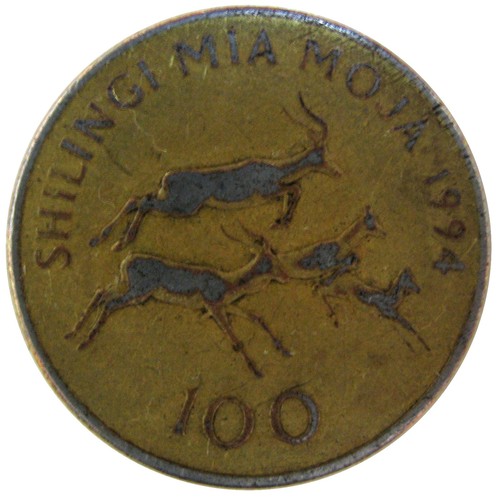
Tanzania 100 Shillings
A golden brass Tanzanian coin worth 100 shillings, showing a lively scene of running antelope with the Swahili legend SHILINGI MIA MOJA.
World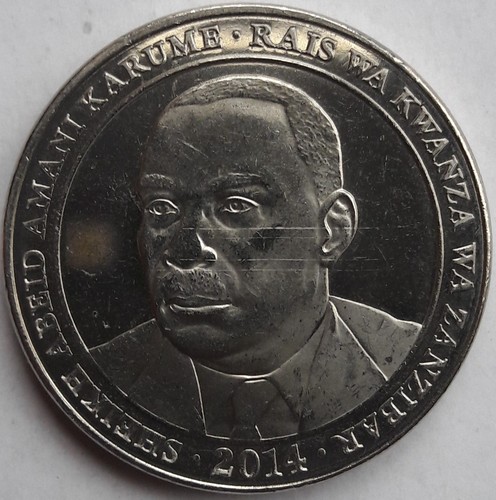
Tanzania 500 Shillings
A modern base-metal circulating coin of Tanzania carrying a right-facing portrait long associated with the nation's founding president and a Kiswahili legend.
World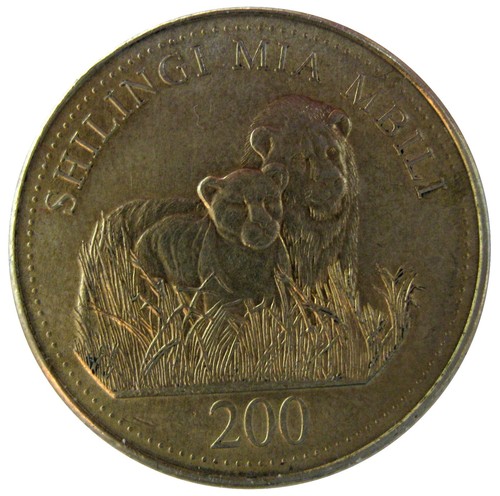
Tanzania 200 Shillings
A golden-brass circulating coin of the United Republic of Tanzania, showing a large African animal in grass with a bold 200 and a Swahili shilling legend.
World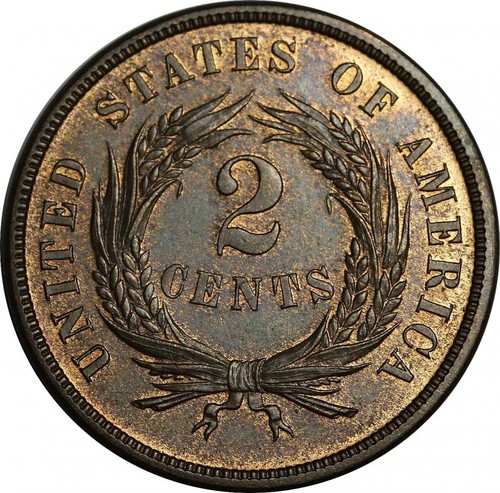
Two Cent Piece
America's only two-cent coin, struck in bronze from 1864 to 1873, and the first U.S. coin to carry the motto "IN GOD WE TRUST."
Two Cent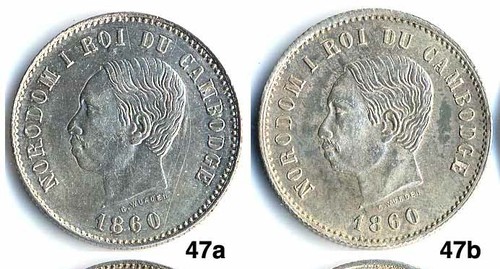
Cambodia Two Francs
A crown-sized Cambodian Two Francs of King Norodom I, its obverse a royal profile and DEUX FRANCS reverse over a crowned coat of arms; dated 1860 but long restruck.
Southeast Asia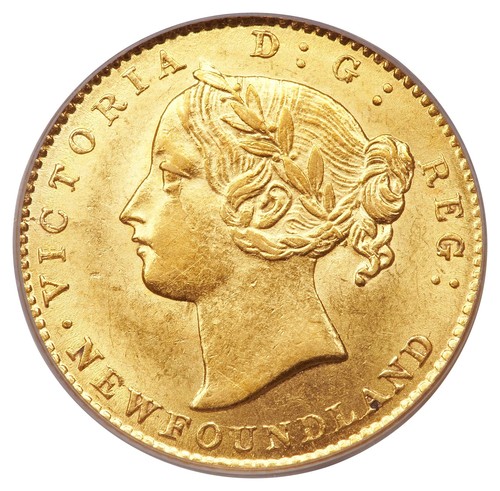
Newfoundland Two Dollars
Small gold two-dollar coin of the colony of Newfoundland; the only circulating coin ever denominated in dollars, cents, and pence together.
Canadian & Provincial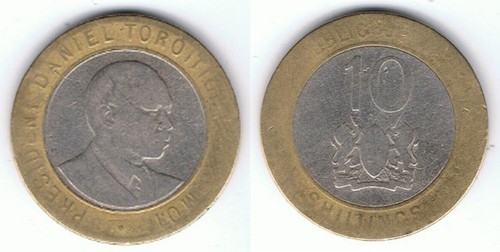
Kenya 10 Shillings
A modern bimetallic circulating coin of the Republic of Kenya bearing President Jomo Kenyatta on the obverse and the national coat of arms on the reverse.
World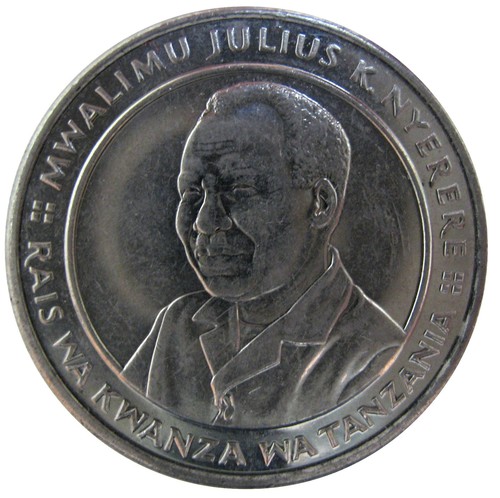
Tanzania 10 Shillings
A base-metal Tanzanian coin bearing President Julius Nyerere on the obverse and the national coat of arms with the value 10 on the reverse.
World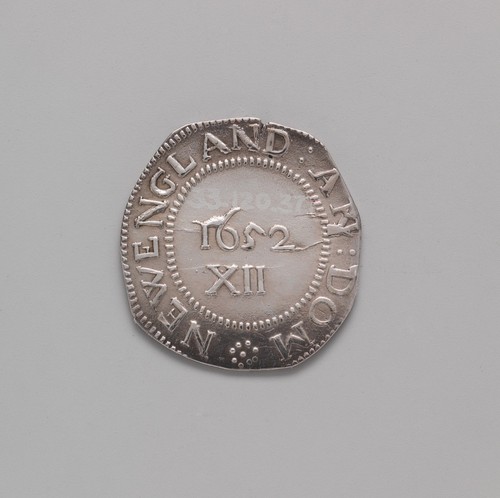
English Shilling
English silver shilling of William III, showing his right-facing laureate bust and a crowned cruciform-shield reverse; this example is dated 1692.
World Coin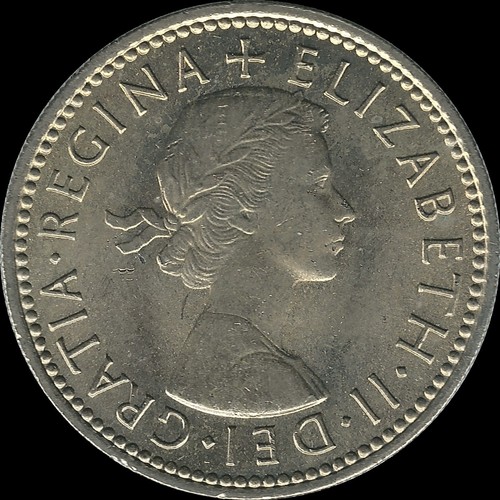
British Shilling
Small Victorian silver shilling showing Queen Victoria's crowned, veiled Jubilee portrait and a crowned heraldic shield reverse.
World Coins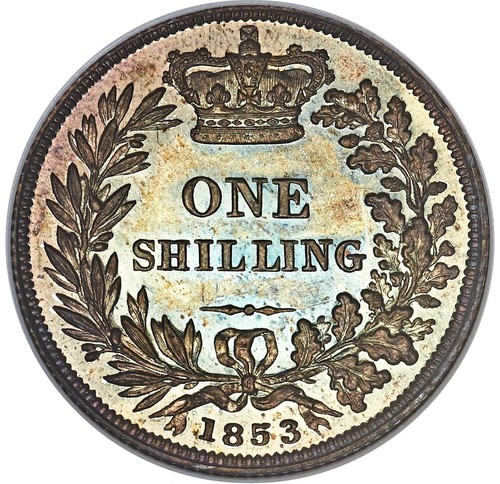
Shilling of Victoria
A milled sterling-silver British shilling of Queen Victoria, worth twelvepence, with the queen's head on the obverse and a crowned 'ONE SHILLING' reverse.
Milled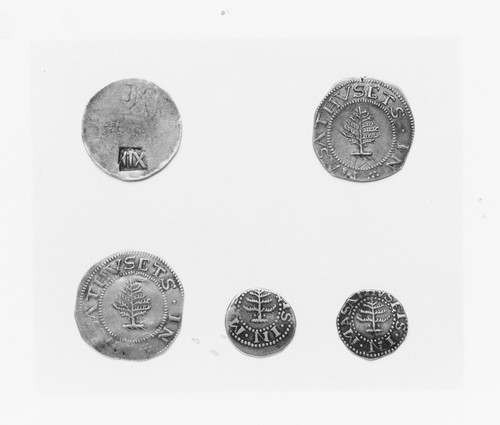
Scottish Shilling
A historical Scottish silver shilling featuring the thistle, Scotland's national emblem, in a heraldic design on one face and as a growing plant on the other.
World Coin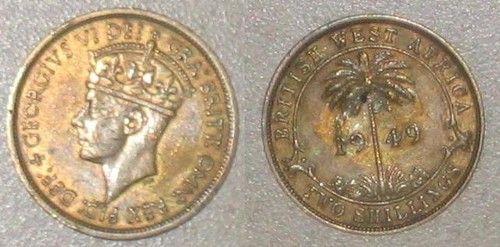
British West Africa 2 Shillings
A colonial copper-nickel two-shilling piece of British West Africa, showing King George VI and a palm-tree reverse.
World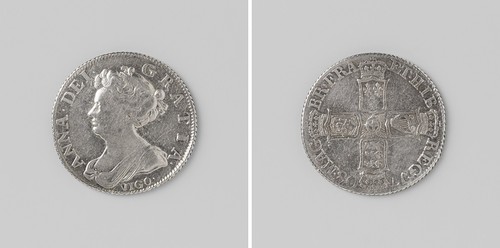
Shilling of Anne
A machine-struck silver shilling of Queen Anne, with her draped bust facing right and a reverse of crowned shields bearing the royal arms in a cross.
Milled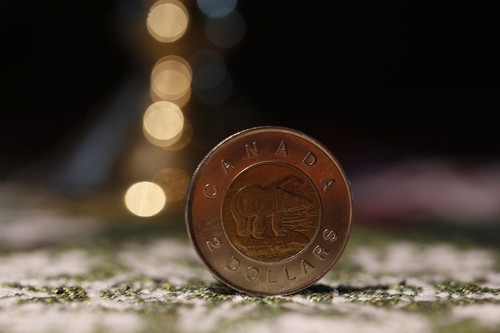
Canadian Two Dollar (Toonie)
Canada's bimetallic $2 coin, introduced in 1996 with a polar bear design; universally nicknamed the 'toonie' after the loonie dollar.
Canadian & Provincial