
Coin Encyclopedia
Search and identify coins from around the world — with country, denomination, metal, mint, history, and how to tell them apart.
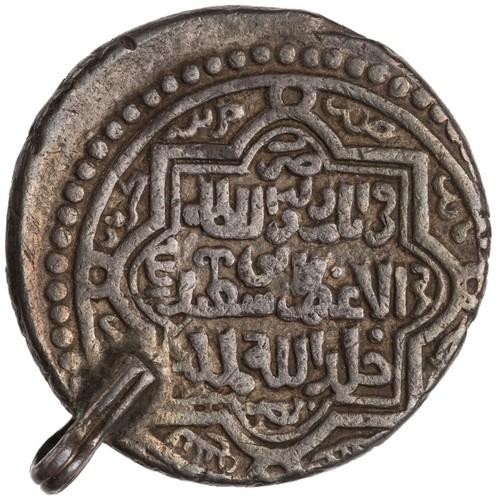
Barakah Copper Fals
A medieval Islamic copper fals carrying purely Arabic calligraphy, including the pious word barakah (“blessing”), with no portrait or figural image.
Islamic (Medieval)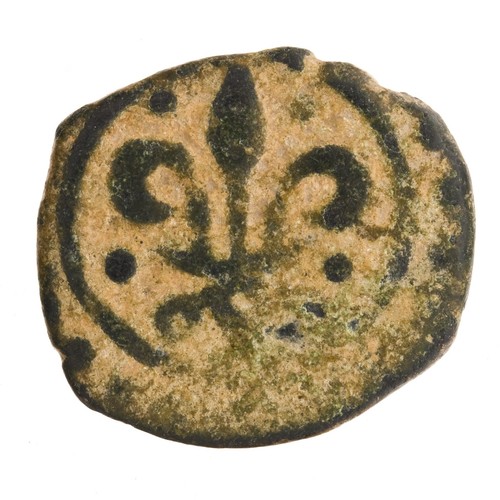
Copper Fals of Muzaffar Hajji
A worn medieval Islamic copper fals bearing Arabic calligraphy and the name of the ruler al-Muzaffar Hajji, an aniconic base-metal coin used as everyday small change.
Islamic (Medieval)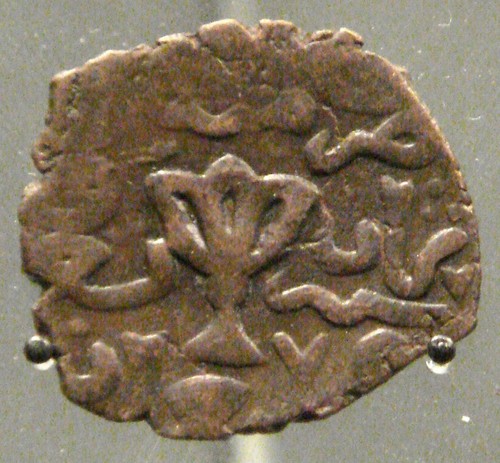
Copper Fals of Barquq
A hand-struck Mamluk copper fals of Sultan Barquq, struck at Damascus (1382–1389 CE), covered entirely in Arabic calligraphy with no figural imagery.
Islamic (Medieval)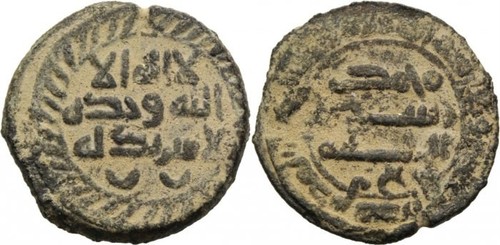
Abbasid Copper Fals
A hand-struck Abbasid copper fals dated AH 219 (834–835 CE), covered entirely in linear Arabic inscriptions with no portrait or figural imagery.
Islamic (Medieval)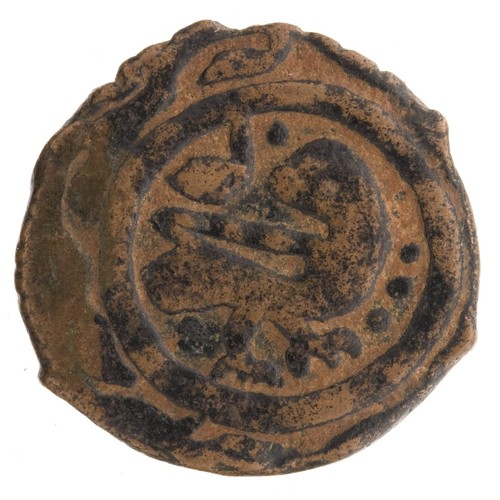
Copper Fals of as-Salih Salih
A hand-struck medieval Islamic copper fals attributed to as-Salih Salih, covered on both faces in Arabic calligraphy with no portrait or figural imagery.
Islamic (Medieval)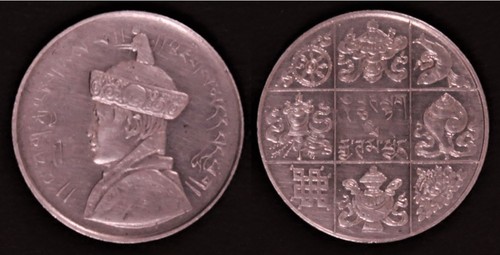
India Half Rupee (Copper)
Copper coin bearing a lion design with the English legend 'HALF RUPEE INDIA' and the date 1947, dated to the year of Indian independence.
Modern India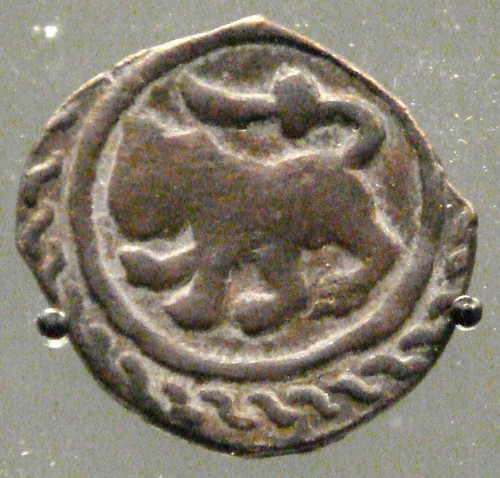
Copper Fals of Shaban II
A Mamluk copper fals struck under Sultan al-Ashraf Sha'ban II of Egypt, decorated with geometric ornament and Arabic legends rather than any figural image.
Islamic (Medieval)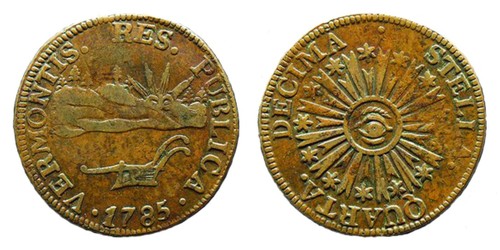
Río de la Plata Copper Real
A copper real of the Río de la Plata showing the Sol de Mayo sun and a PROVINCIAS legend, dated 1785 — a provincial-style piece from the Argentine region.
Colonial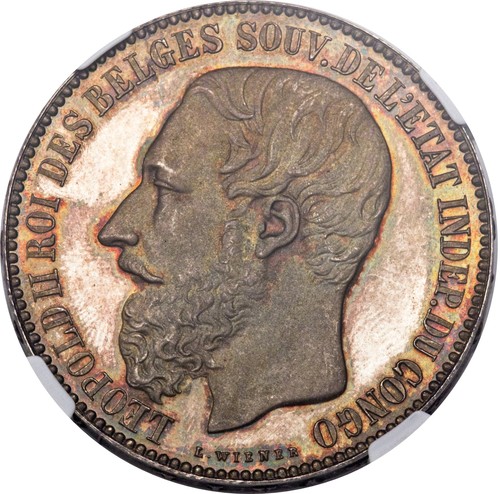
Belgian Congo 5 Francs (Copper)
A copper 5 Francs piece dated 1887 with a radiant star obverse and a crowned heraldic reverse reading CONGO BELGE, widely regarded as a fantasy or novelty type.
World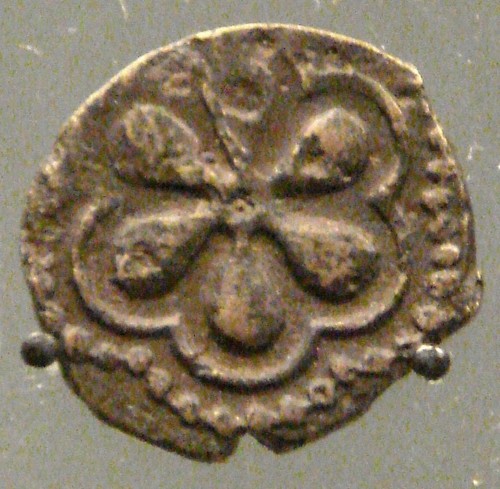
Copper Fals of Muhammad ibn Qalawun
A hand-struck Mamluk copper fals of Sultan al-Nasir Muhammad ibn Qalawun, covered in geometric ornament and Arabic inscriptions, struck about 1310–1341 CE.
Islamic (Medieval)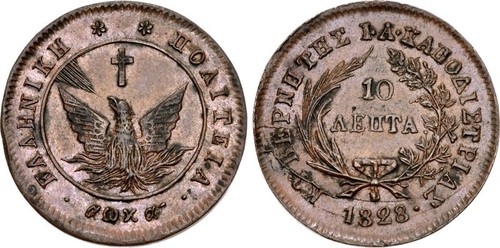
10 Lepta (Phoenix)
A copper 10 lepta of the first independent Greek state, dated 1828, showing the Phoenix rising from flames beneath a cross against the value within an oak wreath.
Modern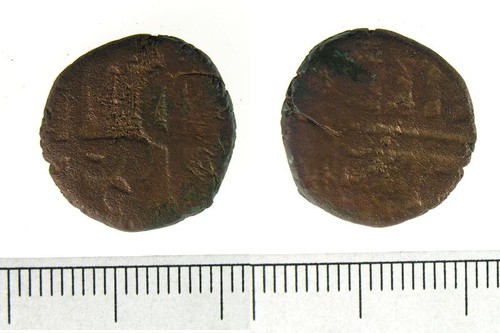
Indian Paisa
A hand-struck copper paisa from early 19th-century India, its legends worn smooth by age and circulation. A humble base-metal coin of everyday commerce.
Princely & Presidency States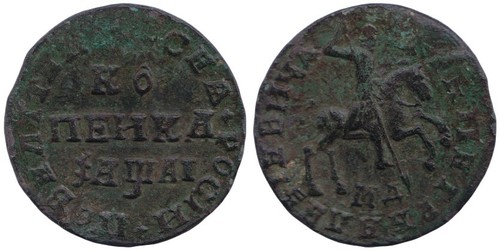
Kopek (Peter I)
An early copper kopek of Peter the Great, showing a profile of Peter I and Cyrillic legends on one side and the Russian double-headed eagle on the other.
Early Modern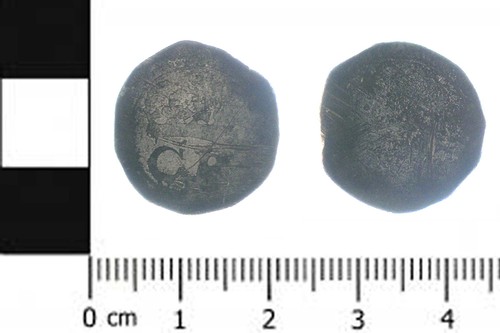
Scottish Coin (Uncertain)
A worn hammered copper-alloy Scottish coin, apparently of the reign of Charles I, showing a bearded profile and a heraldic reverse with lettering.
Hammered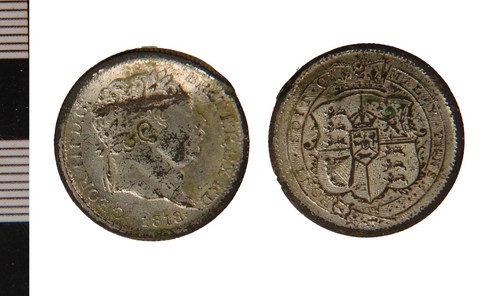
British Bank Token
Copper token of the late George III period bearing the king's left-facing bust and a quartered royal-arms reverse, dated 1819.
British Isles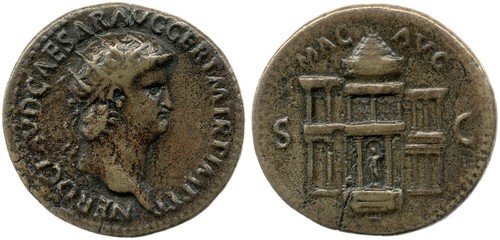
Bronze As of Nero
A Roman bronze as struck under the emperor Nero (54–68 AD), bearing his laureate portrait on the obverse and an imperial reverse type.
Ancient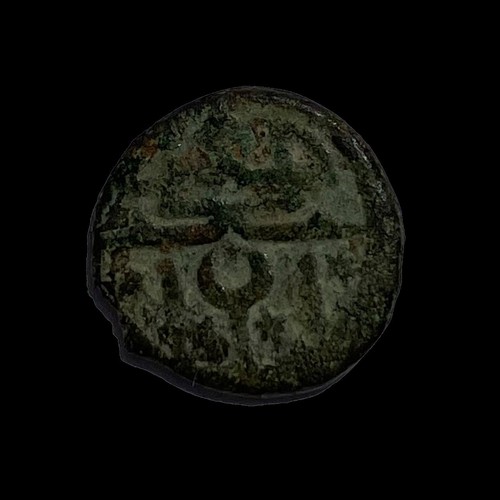
Ottoman Manghir
The manghir was the small copper coin of the Ottoman Empire, used for everyday change; this example bears a tughra and dates to the reign of Murad II.
Medieval Islamic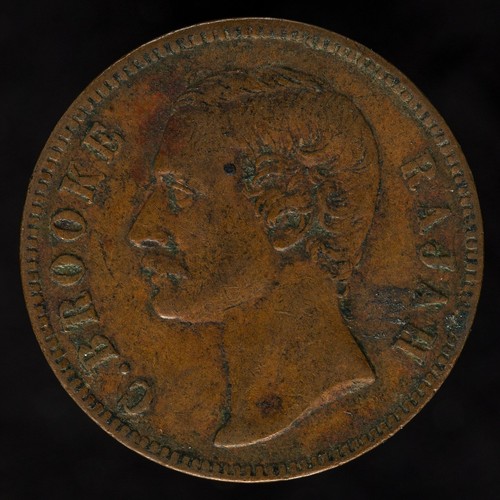
Sarawak One Cent
A large copper cent of the Brooke Rajahs of Sarawak, showing the Rajah's portrait on the obverse and SARAWAK ONE CENT with a wreath and the year 1870.
Colonial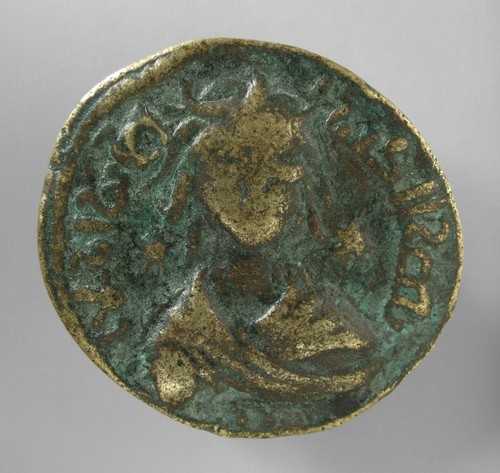
Artuqid Bronze Dirham
A 12th-century bronze coin of the Artuqid Turkmen dynasty, struck with Arabic inscriptions inside ornamental borders across eastern Anatolia.
Medieval Islamic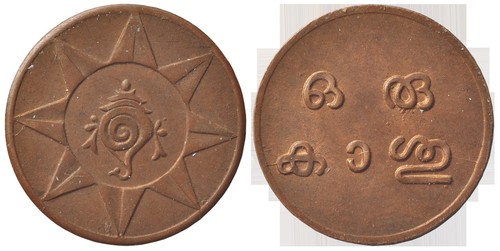
Travancore One Cash
A tiny copper coin of the princely state of Travancore, carrying the state's conch-shell emblem on one side and its cash value in local script on the other.
Princely & Presidency States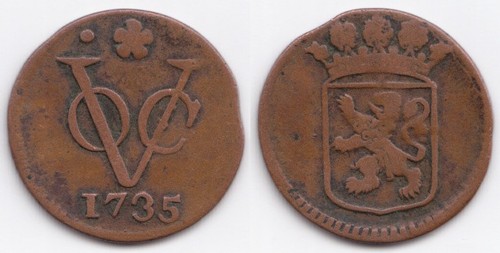
Dutch East Indies Duit
Small copper duit of the Dutch East India Company (VOC), showing the interlaced VOC monogram and a crowned provincial coat of arms, dated 1735.
Southeast Asia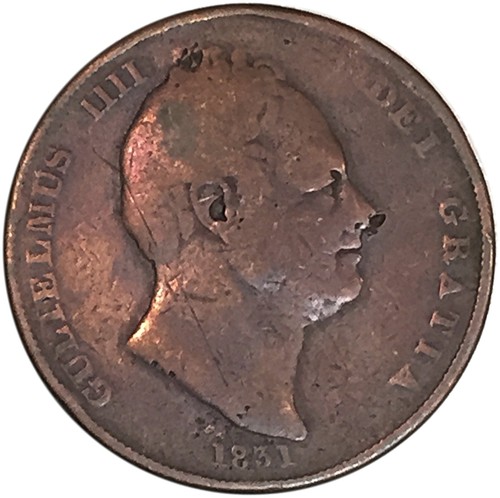
Penny of William IV
A large copper penny of King William IV, struck in the 1830s, with the king's right-facing head and the Latin legend GULIELMUS IIII D:G.
Milled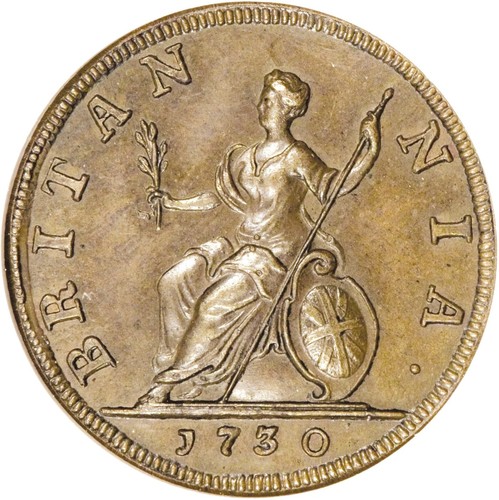
British Farthing
Small copper farthing of King George II, with his laureate bust facing left and a seated Britannia on the reverse; struck in the 1730s.
British Isles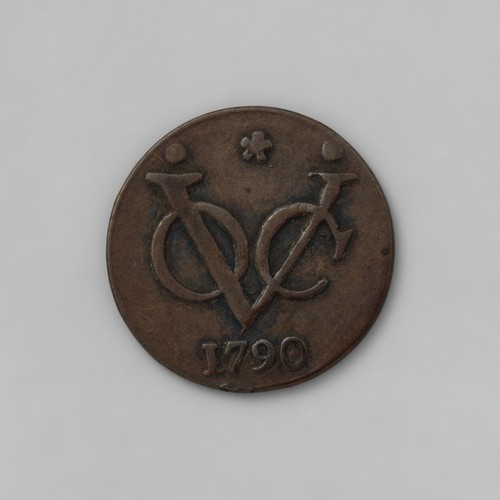
Duit (VOC)
A small copper duit struck for the Dutch East India Company (VOC), showing the crowned VOC monogram and the date 1790 on the obverse.
Early Modern