
Coin Encyclopedia
Search and identify coins from around the world — with country, denomination, metal, mint, history, and how to tell them apart.
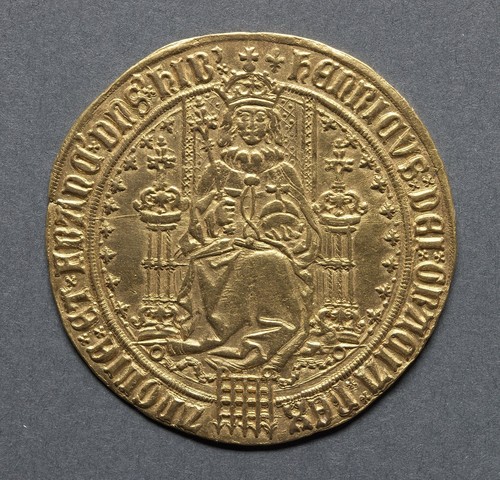
Henry VII Sovereign
The first English gold sovereign, struck under Henry VII, showing the crowned king enthroned in majesty on an elaborate Gothic throne.
Medieval Coins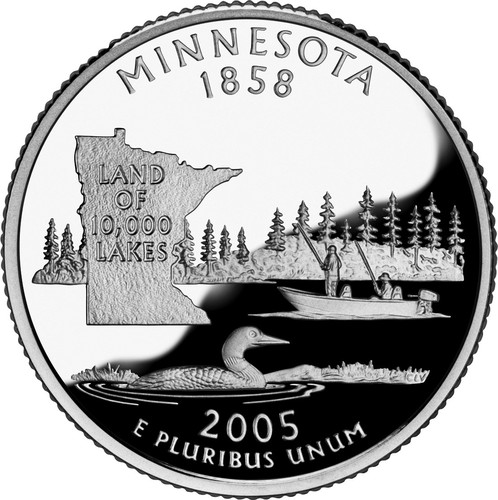
Minnesota State Quarter
2005 U.S. 25-cent coin in the 50 State Quarters series, showing Minnesota's outline, a common loon, anglers in a boat, and pines above 1858.
Quarter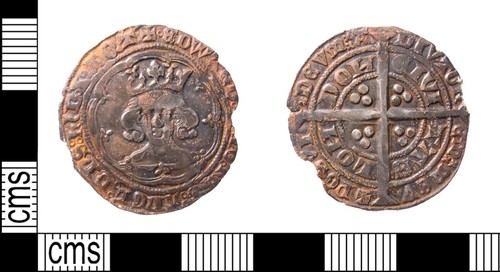
Edward III Groat
Hammered silver fourpence of King Edward III, showing a crowned bust of the king and a long cross with pellets in the quarters.
Medieval Coins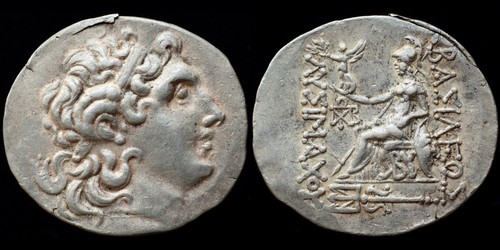
Lysimachos Gold Stater
Gold stater of Lysimachos, king in Thrace and Macedon c. 305-281 BC, with a deified head of Alexander the Great and an enthroned Athena reverse.
Ancient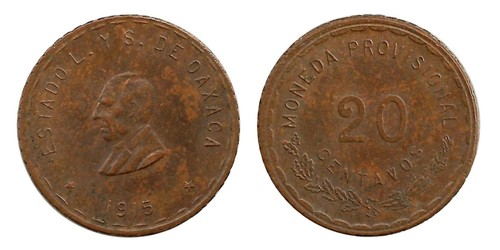
Oaxaca 20 Centavos
A copper 20 centavos struck by revolutionary-era Oaxaca in 1915, showing a profiled bust on a round base and a large numeral 20 with the Mexican eagle.
Revolutionary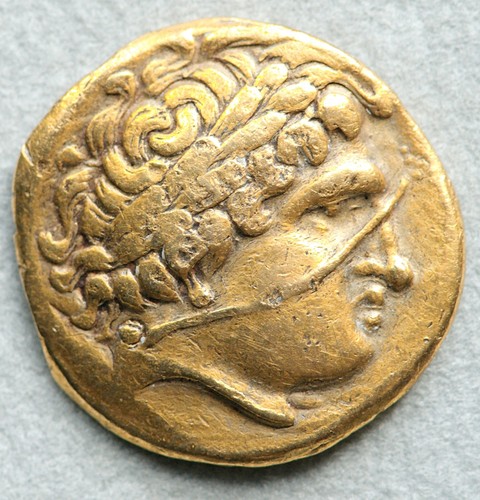
Gallic Imitation Stater
A gold stater struck by the tribes of Gaul, whose stylized head and single horse descend from Greek Macedonian prototypes reworked into abstract Celtic art.
Ancient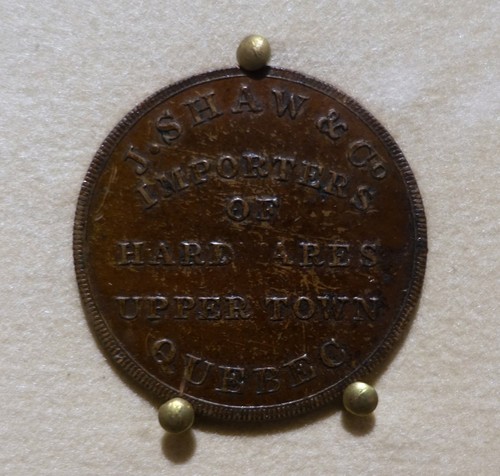
J. Shaw & Co. Hardware Token
Copper halfpenny-sized merchant token advertising J. Shaw & Co., importers of hardware in Upper Town, issued around the 1850s.
Canadian & Provincial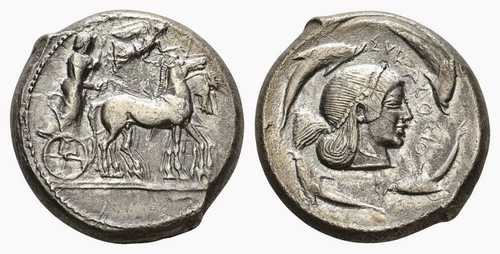
Syracuse Tetradrachm
Classical silver tetradrachm of Syracuse in Sicily, showing a racing four-horse chariot on one side and a right-facing nymph's head on the other.
Ancient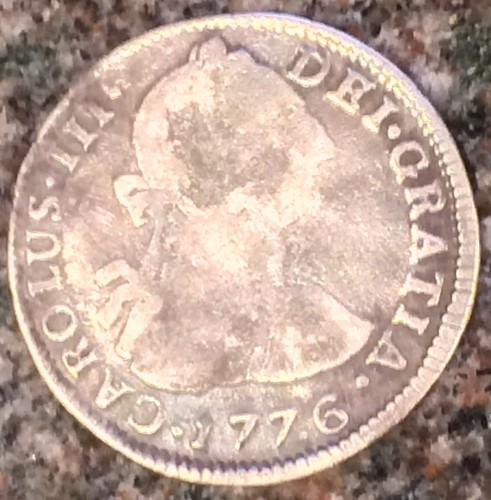
Spanish Colonial 2 Reales (Milled)
A small milled silver coin of the Spanish Empire, struck in colonial American mints; this example is dated 1776 and shows heraldic lions, castles and a crowned shield.
Colonial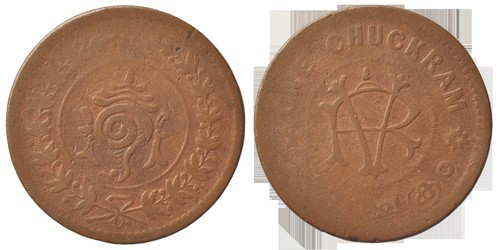
Travancore One Chuckram
Small copper one-chuckram coin of the princely state of Travancore, with the royal conch-shell emblem and a local-script denomination reverse.
Princely & Presidency States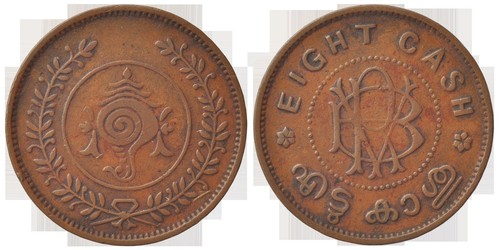
Travancore Eight Cash
Small copper 8 Cash of Travancore State, southern India, showing the princely conch-shell emblem within a floral wreath and a denomination in local script.
Princely & Presidency States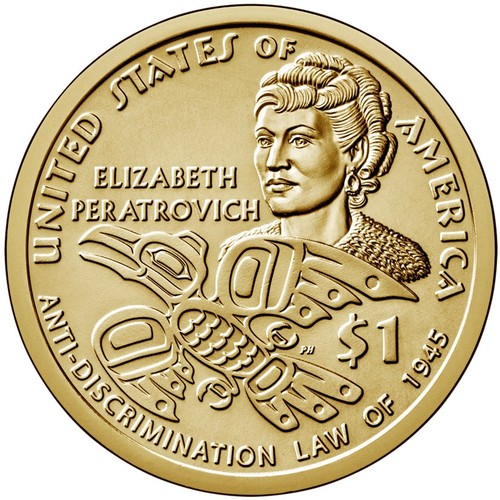
Native American Dollar - Peratrovich
The 2020 U.S. golden dollar in the Native American series, honoring Tlingit civil rights leader Elizabeth Peratrovich and the 1945 Alaska Anti-Discrimination Law.
Dollar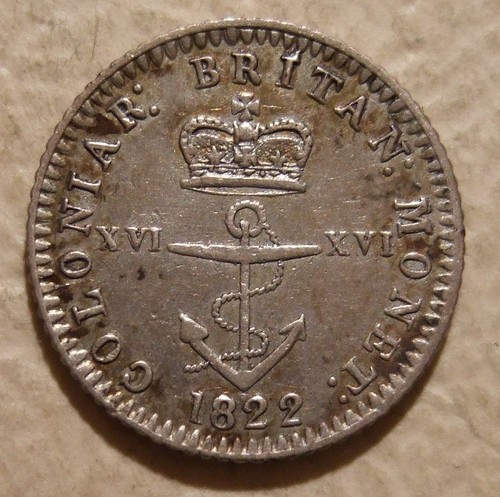
George IV One Sixteenth Spanish Dollar
A small George IV silver coin of the "Anchor Money" series, worth one-sixteenth of a Spanish dollar and marked with an anchor and Roman numeral XVI.
Colonial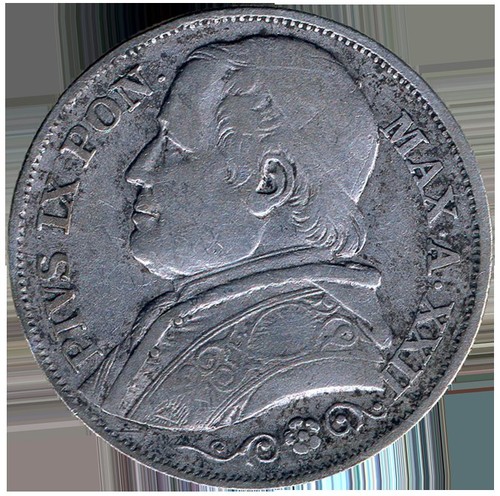
2 Lire
Silver 2 Lire of the Papal States struck under Pope Pius IX, part of the Italian lira system adopted by Rome in the 1860s.
Modern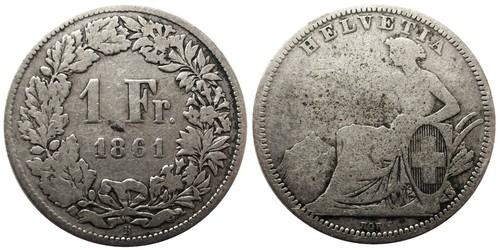
Swiss 1 Franc
A silver Swiss 1 Franc dated 1861, with the figure of Helvetia and the national coat of arms on one side and the value '1 Fr' in wreaths on the other.
Circulation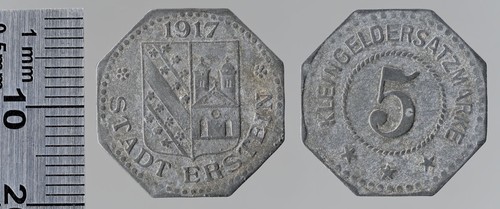
Erstein Notgeld 5 Pfennigs
A World War I emergency small-change coin issued by the town of Erstein in 1917, with the civic coat of arms on one side and a large 5 on the other.
Token/notgeld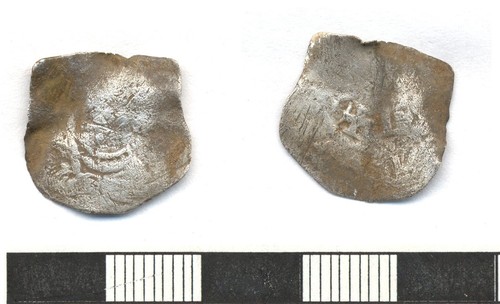
Tealby Penny
Silver penny of Henry II, the Tealby or Cross-and-Crosslets type, with a crowned royal bust and a voided cross bearing small crosslets in its angles.
Medieval Coins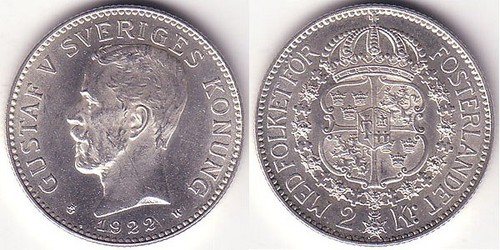
2 Kronor
Silver 2 kronor of Sweden showing King Gustaf V in left profile and the crowned national arms, this piece dated 1922.
World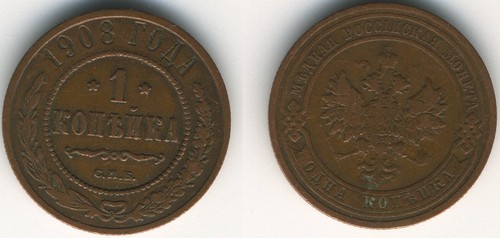
1 Kopeck
Small copper 1 Kopeck of Imperial Russia dated 1908, with the value in a wreath on one side and the crowned double-headed eagle on the other.
Modern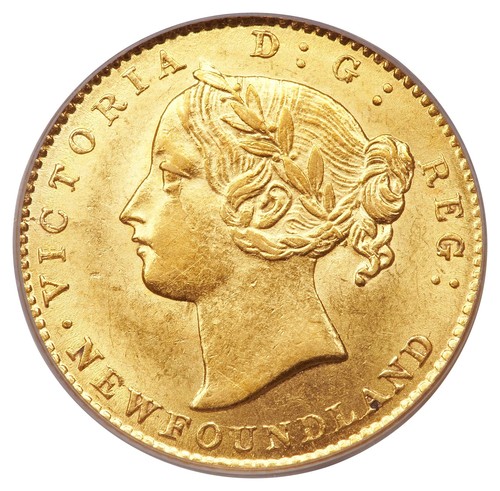
Newfoundland Two Dollars
Small gold two-dollar coin of the colony of Newfoundland; the only circulating coin ever denominated in dollars, cents, and pence together.
Canadian & Provincial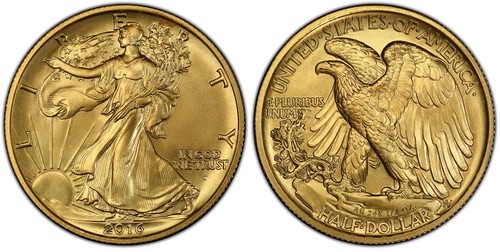
Walking Liberty Half Dollar Centennial Gold
A 2016-W gold collector coin marking the centennial of the 1916 Walking Liberty half dollar, struck in 1/2 oz of 24-karat gold at West Point.
Half Dollar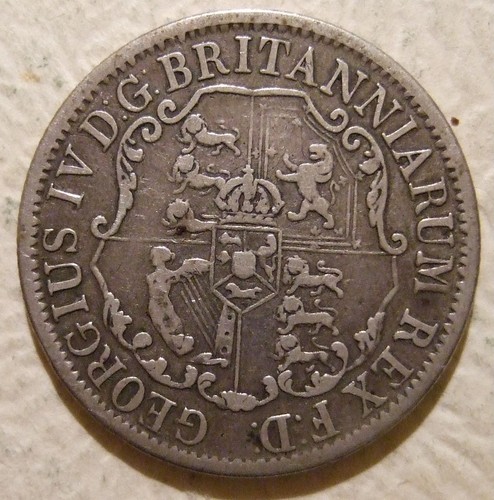
George IV One Quarter Spanish Dollar
An 1822 British colonial silver coin valued at one quarter of a Spanish dollar, part of the George IV "Anchor Money" issued for colonies in the Americas.
Colonial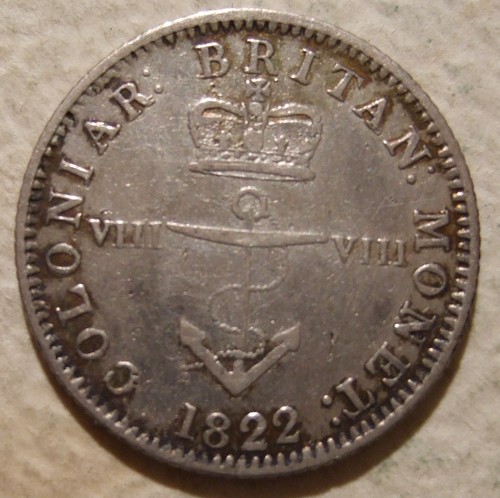
George IV One Eighth Spanish Dollar
Small 1822 British colonial silver coin from the George IV "Anchor Money," a fraction of the Spanish dollar used in the West Indies and Mauritius.
Colonial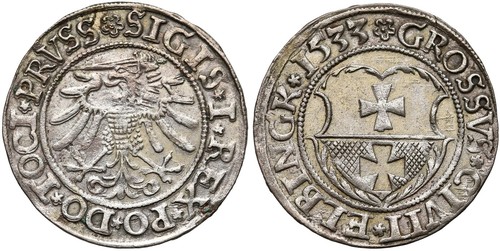
Grosz Miejski
A silver city grosz struck at Elbląg in 1533, pairing the town's crowned coat of arms with an eagle and civic inscriptions under the Polish crown.
Early Modern