
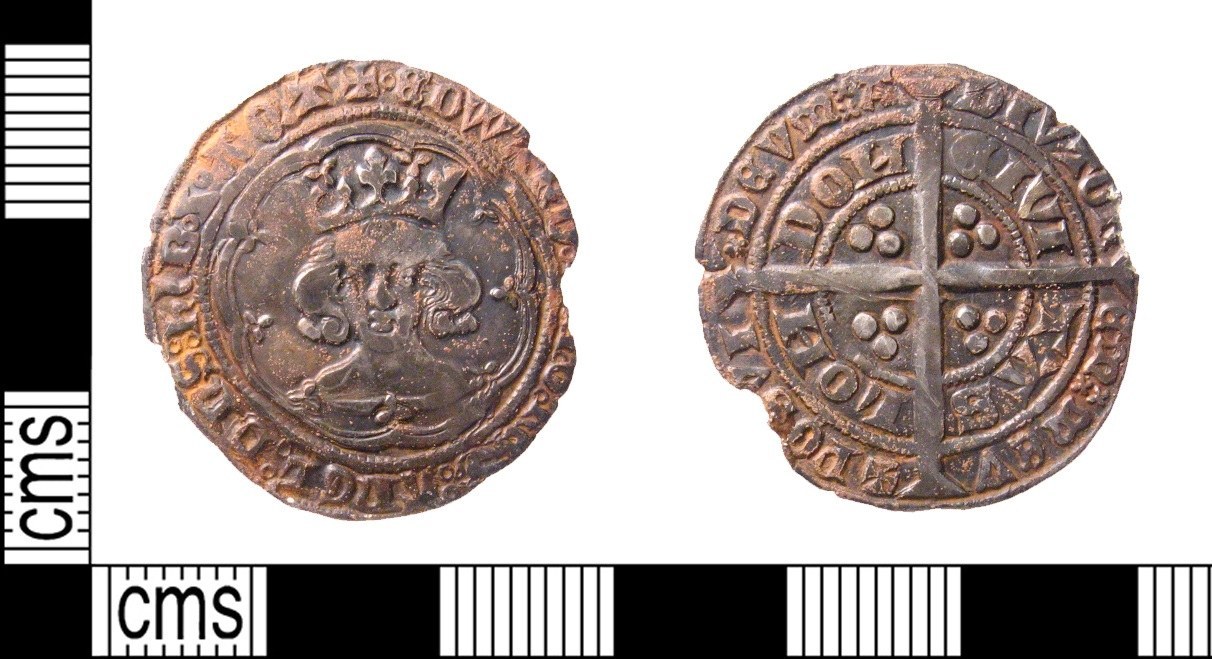
Edward III Groat
Hammered silver fourpence of King Edward III, showing a crowned bust of the king and a long cross with pellets in the quarters.
- Country
- England
- Denomination
- Groat
- Metal
- Silver
Got a coin like this?
Identify any coin from a photo, free.
Overview
The Edward III groat is a hammered silver coin of medieval England worth four pence (a "groat," from the Old French gros, meaning a large or thick coin). The example shown carries a crowned bust of the king on the obverse and a long cross with groups of pellets dividing the field into quarters on the reverse, the classic layout of English groats of the period.
Struck during the reign of Edward III (1327-1377), the groat was the largest everyday silver denomination of its day and sat above the penny and halfpenny in the English coinage. Its broad, portrait-bearing face and bold cross reverse make it one of the most recognizable and widely collected medieval English silver coins.
History & Background
An English groat had first been attempted under Edward I in 1279 but did not take hold. Edward III successfully reintroduced the four-penny groat in 1351 as part of his reforms of the coinage, and it went on to become a lasting fixture of English money for centuries. The new denomination met a need for a larger silver coin to serve a growing economy and expanding trade.
Edward III's long reign is divided by numismatists into a series of coinage periods, and his groats are commonly described as belonging to the pre-Treaty, Treaty, and post-Treaty periods of the 1350s to 1370s, reflecting changes tied to his wars and diplomacy with France. Groats were struck at English mints, principally London, and the type set the pattern of a crowned royal bust and a long-cross reverse that later English kings continued to follow.
How to Identify
Look for a broad, thin hammered silver coin roughly 25-27 mm across, considerably larger than a medieval penny, with a crowned facing bust of the king on the obverse set within a border of arcs (a tressure). The surrounding Latin legend names the king, typically opening with a form of EDWARD DEI GRA REX ("Edward, by the grace of God, King").
The reverse shows a long cross reaching to the edge of the coin, with a group of three pellets in each of the four quarters, and legends arranged in two concentric rings. The inner legend usually gives the mint, such as CIVITAS LONDON for London, while the outer records a pious motto. Because the coins are hand-struck, expect slightly irregular flans, uneven centering, and individual variation from die to die.
Value & Collectibility
Edward III groats are among the more attainable pieces of medieval English silver, and worn but identifiable examples are often modestly priced, while sharply struck coins with a clear portrait, full legends, and pleasing surfaces command higher premiums. Scarcer mints, periods, and die varieties can be worth considerably more than common London issues.
Condition (grade), completeness of the legends and cross, the specific coinage period and mint, and overall eye appeal all drive value. Because hammered coins vary so much individually, treat any figure as approximate and compare against recent sales of similar coins or consult a specialist dealer or catalogue rather than relying on a single price.
Frequently asked questions
What is an Edward III groat worth as money?
A groat was worth four pence in the medieval English system, making it the largest common silver denomination of Edward III's reign, above the penny and halfpenny.
Why is it called a groat?
The name comes from the Old French *gros*, meaning a large or thick coin. It described the new, broader silver piece that was bigger than the everyday penny.
When were Edward III groats made?
Edward III reigned from 1327 to 1377, and he reintroduced the four-penny groat in 1351. Most surviving groats date from the 1350s through the 1370s.
Is the coin solid silver?
Yes. Edward III groats were struck in silver of the sterling standard used for English coinage, so a genuine piece is a solid silver coin rather than a base-metal or plated one.
What do the words on the coin mean?
The obverse legend names the king as Edward, king by the grace of God. The reverse carries the mint name, such as CIVITAS LONDON for London, together with a Latin religious motto around the cross.
Edward III Groat guides
In-depth guides for identifying, valuing, and collecting Edward III Groat.
Other coins you may enjoy
Edward IV Ryal
c. 1465-1470
Penny of Offa
c. 757-796 (8th century)
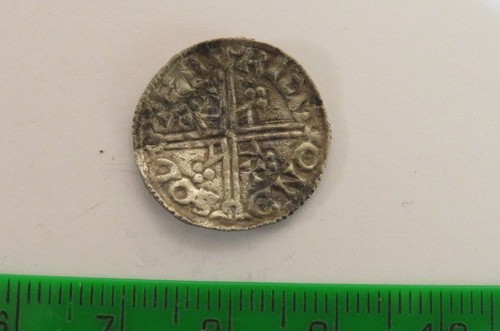
Medieval Penny
c. 8th-15th century
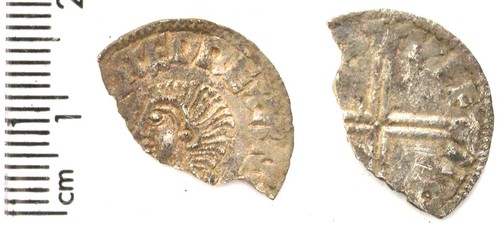
Penny of Aethelred II
978-1013
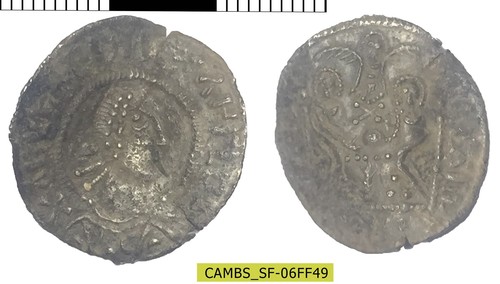
Penny of Alfred the Great
c. 871-899 (late 9th century)
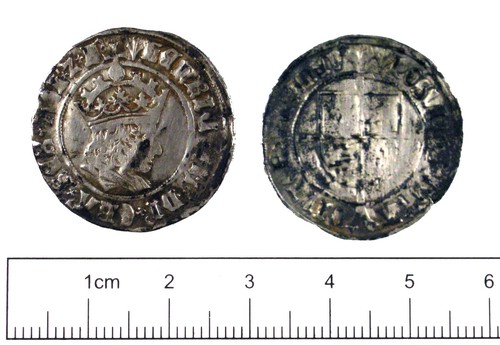
Henry VII Groat
1485-1509
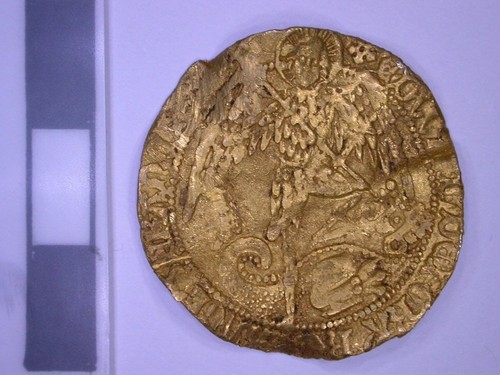
Edward V Angel
1483
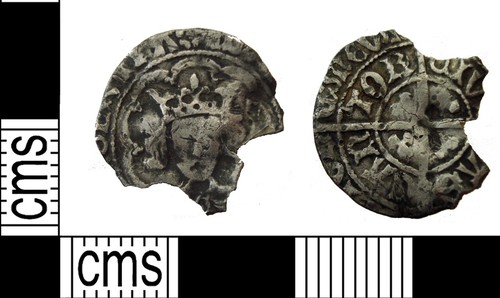
Edward IV Half Groat
1461-1483
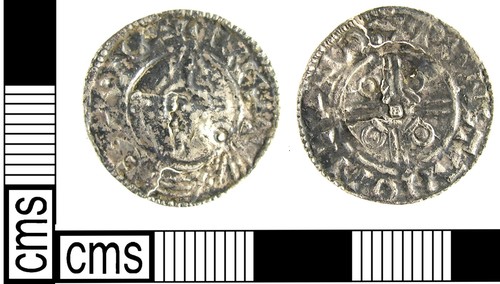
Penny of Cnut
1024-1030
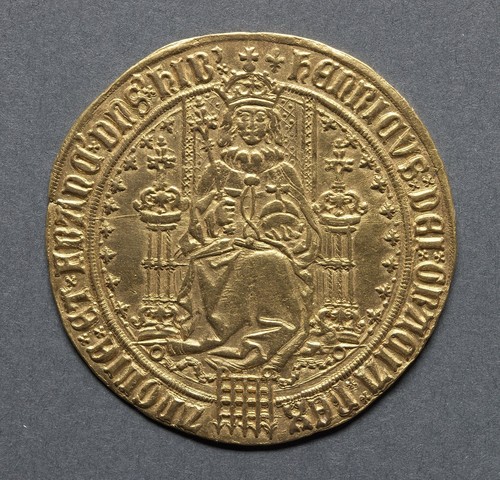
Henry VII Sovereign
1485-1509
Long Cross Penny
1247-1279 (13th century)
Anglo-Saxon Styca
8th-9th century