
How to Identify the Edward III Groat
Collector checks for the medieval silver fourpence: size and fabric, crowned bust, long-cross reverse, mint and legends, look-alikes, and fakes.
Read the full Edward III Groat encyclopedia entry →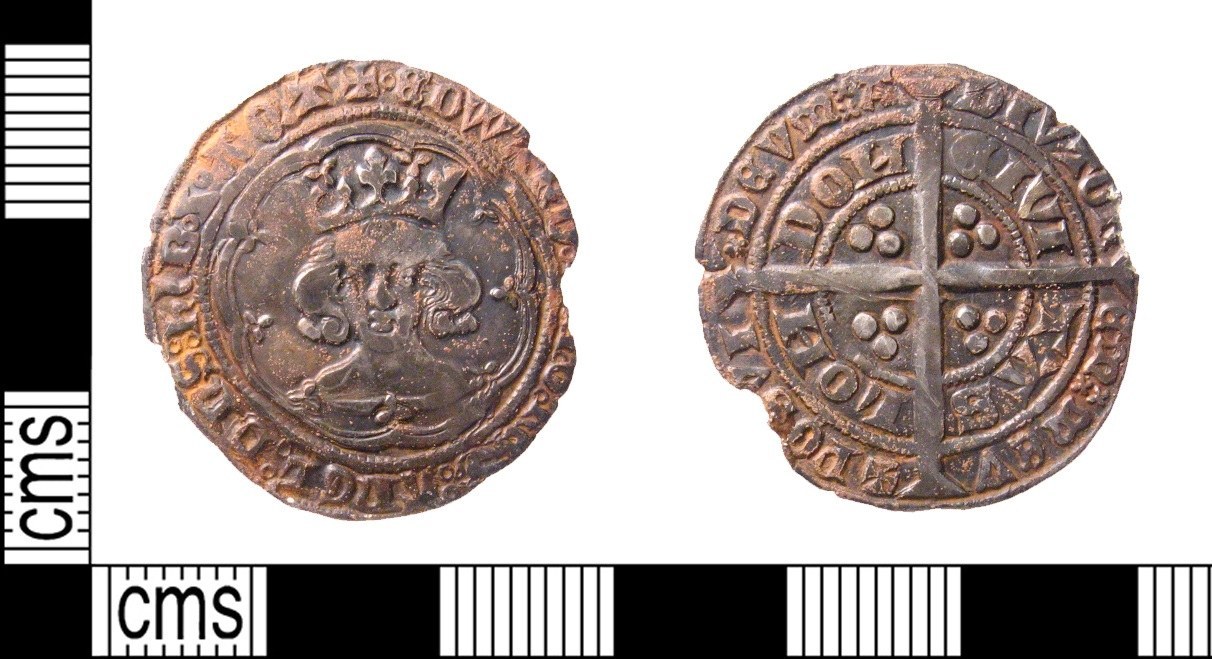
Start with size and fabric. A groat is a broad, thin, hand-hammered silver coin, roughly 25-27 mm across, clearly larger than a penny but not a heavy, thick piece. If your coin is small like a penny, or thick and chunky, it is a different denomination. Genuine examples are struck, not cast, so the flan is often slightly irregular and the strike a little off-center.
Read the obverse. Edward III groats show a crowned bust of the king facing the viewer, enclosed by a tressure of arcs, with a Latin legend around the edge naming the ruler, usually beginning with a form of EDWARD DEI GRA REX. The style is formal and stylized rather than a lifelike portrait; note the shape of the crown, the arcs of the tressure, and any small marks in the legend, which can help pin down the period.
Read the reverse. Expect a long cross that runs to the edge of the coin, dividing the field into four quarters, each filled with a group of three pellets. Two concentric legends surround it: the inner ring typically gives the mint (for example CIVITAS LONDON), and the outer ring carries a pious Latin motto. Identifying the mint name and comparing the bust style and punctuation to a reference lets you place the coin within Edward III's coinage periods.
Separate it from look-alikes. Later English kings kept the same crowned-bust-and-long-cross formula, so groats of Richard II, the Henrys, and others can look similar at a glance; the legend naming Edward is the key. The smaller halfgroat (twopence) shares the design but is noticeably smaller, and the penny is smaller still. Continental gros coins use a comparable idea but different legends and saints' imagery.
Authenticate with care. Because these are popular, collectable coins, cast copies and modern forgeries exist. Favor coins with crisp, hand-struck detail over soft, blurry surfaces or a visible casting seam, check that diameter and weight sit in the expected range for a silver groat, and be cautious of pieces that look too smooth or too perfectly round. For anything of real value, or for a metal-detecting find, seek a specialist opinion and follow local rules on reporting and provenance.
Frequently asked questions
How do I tell a groat from a penny or halfgroat?
Size is the quickest guide. The groat (fourpence) is the broadest of the three at roughly 25-27 mm, the halfgroat (twopence) is noticeably smaller, and the penny smaller again, though all can share the crowned bust and long-cross design.
How do I know it is Edward III and not a later king?
Read the obverse legend. Many English kings used the same crowned-bust-and-cross formula, so the name in the inscription, a form of EDWARD, is what identifies it as Edward III rather than a similar-looking successor.
Where was my groat minted?
Check the inner reverse legend, which usually names the mint, such as CIVITAS LONDON for London. Matching that legend and the coin's style to a catalogue also helps place it within Edward III's coinage periods.
How can I spot a fake groat?
Genuine coins are hammered, with sharp, slightly uneven detail and irregular flans; casts look soft and may show seams or bubbles. Confirm the silver appearance, diameter, and weight fit the type, and get expert help before paying a significant sum.