
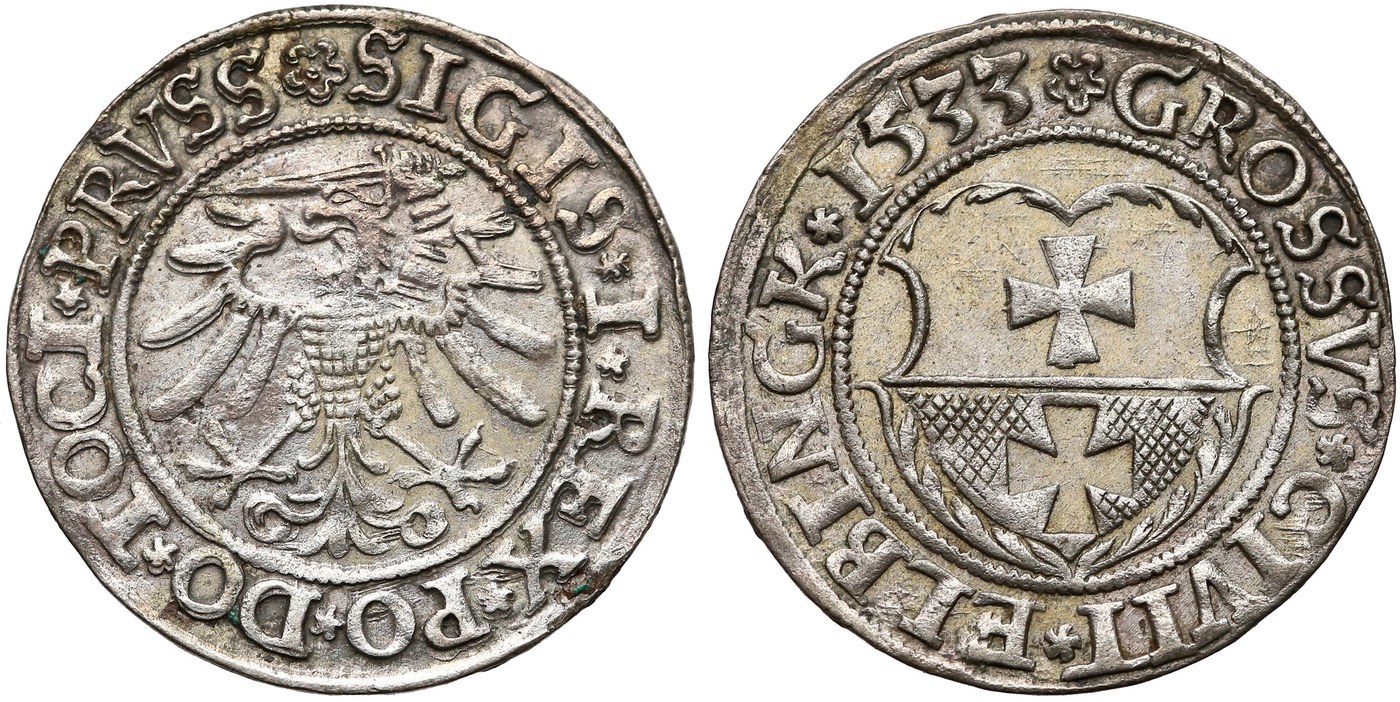
Grosz Miejski
A silver city grosz struck at Elbląg in 1533, pairing the town's crowned coat of arms with an eagle and civic inscriptions under the Polish crown.
- Country
- Poland
- Denomination
- Grosz
- Metal
- Silver
Got a coin like this?
Identify any coin from a photo, free.
Overview
The Grosz Miejski, or city grosz, is a small silver denomination struck by the town of Elbląg (Elbing) in Royal Prussia, a region under the Polish crown. The observed piece is dated 1533 and shows the crowned coat of arms of Elbląg on the obverse and an eagle with civic legends on the reverse.
This is municipal coinage: money issued in the name of a city rather than solely in the name of a monarch, though struck under royal authority. Such civic grosze circulated as everyday small change in the busy Baltic port towns of the period, and today they are collected as tangible pieces of the region's rich urban and trading history.
As a period silver coin roughly the size of a modern small coin, a genuine example feels light but solid, and its worn surfaces reflect real circulation nearly five centuries ago.
History & Background
In the early sixteenth century Elbląg was a prosperous Hanseatic-linked port in Royal Prussia, a territory that had come under the Polish crown after the wars with the Teutonic Order. Cities such as Elbląg, Gdańsk (Danzig), and Toruń (Thorn) enjoyed privileges that allowed them to strike their own coinage while acknowledging the Polish king, at this date Sigismund I the Old.
The 1533 city grosz belongs to this tradition of privileged municipal minting. It carries the town's own arms and name alongside the eagle associated with Prussian and royal authority, expressing the dual identity of a self-governing city that was nonetheless part of the wider Polish realm.
Coins of this type document a period when the Baltic grain and timber trade made these towns wealthy and gave them the standing to issue money in their own name. They remained in local circulation as small silver change and are now studied and collected as artifacts of Royal Prussian civic autonomy.
How to Identify
The obverse displays the coat of arms of Elbląg surmounted by a crown, framed by an inscription. The Elbląg civic arms are the central heraldic device, and the crown above them signals the royal authority under which the city struck the coin. The surrounding legend names the town and typically includes the date.
The reverse shows an eagle (the Orzeł) accompanied by city inscriptions, the two together confirming both the Prussian/royal association and the municipal issuer. The coin is small, thin silver, hand-struck rather than machine-milled, so the flan is often slightly irregular and the strike can be off-center.
Key identifiers are the crowned Elbląg arms on one side, the eagle with civic legends on the other, the small silver format, the 1533 date, and the hand-hammered fabric typical of the era. The city name in the legends is the surest way to attribute the piece to Elbląg rather than to another Royal Prussian mint.
Value & Collectibility
As a small circulated silver coin nearly five centuries old, the Elbląg city grosz carries modest but real collector value tied to its history rather than to bullion content, which is slight. Typical worn examples generally trade in the range of a few tens of dollars, with the exact figure depending heavily on grade, strike quality, and legibility of the legends and date.
Condition drives the spread. Because these were hand-struck on small thin flans, many survivors are weakly struck, off-center, or worn nearly smooth; a coin with a clear crowned shield, sharp eagle, and readable date and city name is worth a clear premium over a tired, corroded, or holed piece. Attractive original patina helps, while cleaning, corrosion, and damage reduce value.
Prices vary widely with market conditions and demand for Royal Prussian and Polish civic coinage, so treat these as general ranges rather than fixed quotes. Well-preserved and correctly attributed examples, especially those certified or from known collections, can bring notably more.
Frequently asked questions
What is a Grosz Miejski?
It is a city grosz, a silver coin issued in the name of a town rather than only a monarch. The observed piece was struck by Elbląg in Royal Prussia in 1533 under the authority of the Polish crown.
Which city struck this coin?
Elbląg (Elbing), a port city in Royal Prussia under the Polish crown. Its crowned coat of arms appears on the obverse and its name appears in the surrounding inscriptions.
What do the two sides show?
The obverse shows the crowned coat of arms of Elbląg, and the reverse shows an eagle with civic inscriptions. Together they express the city's self-government within the Polish realm.
Is it made of silver?
Yes, it is a small silver coin of the period. The silver content is modest given its small size, so its value comes mainly from history and condition rather than metal.
Is the 1533 city grosz valuable?
It is a collectible historic coin of generally modest value. Worn pieces are affordable, while sharp, legible, well-preserved examples command higher premiums. Grade and clear legends matter most.
Grosz Miejski guides
In-depth guides for identifying, valuing, and collecting Grosz Miejski.
Other coins you may enjoy
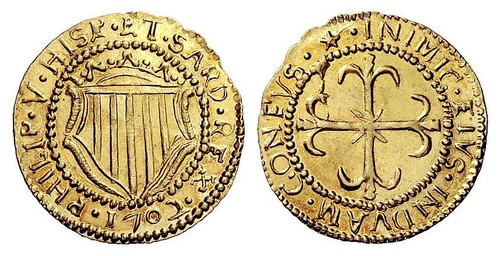
Scudo (Philip V)
c. 1701–1708
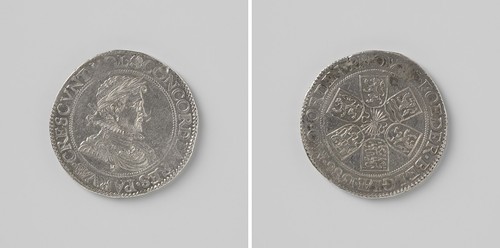
Rijksdaalder van Leicester
1580s-1590s
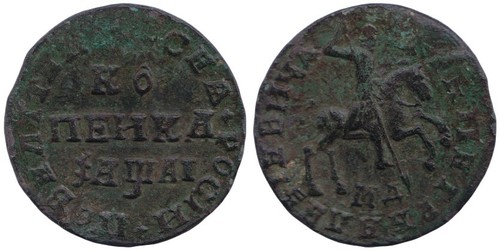
Kopek (Peter I)
c. 1704–1718 (observed 1711)
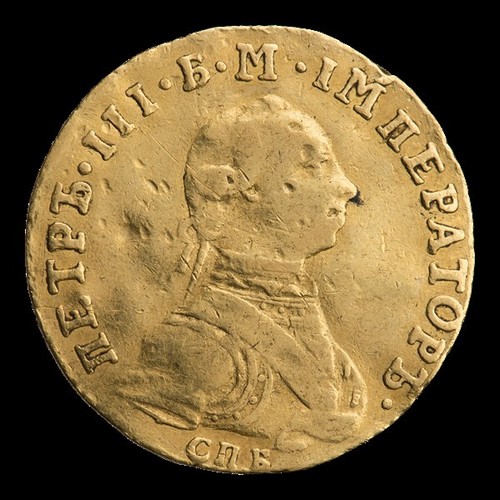
Imperial Chervonets
1762
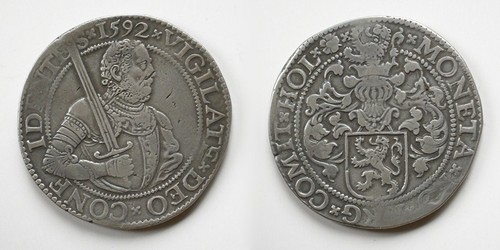
Prinsendaalder (Rijksdaalder)
1592
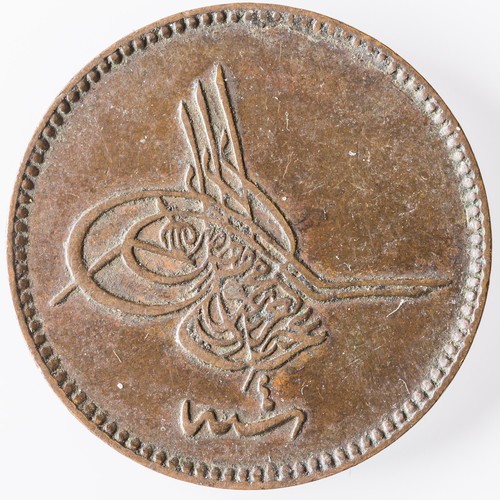
10 Para
AH 1280 (1863-1864 CE)
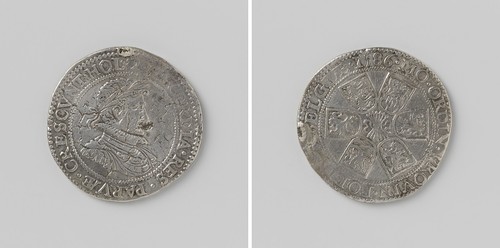
Halve Rijksdaalder van Leicester
1580s-1590s
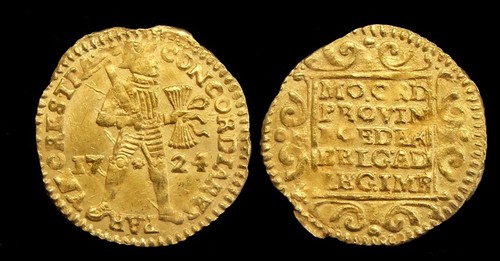
Gouden Dukaat
1724
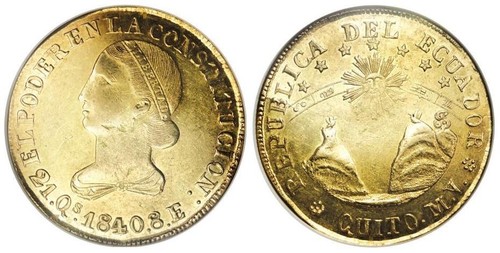
Escudo (Joanna and Charles V, contemporary copy)
1516-1558
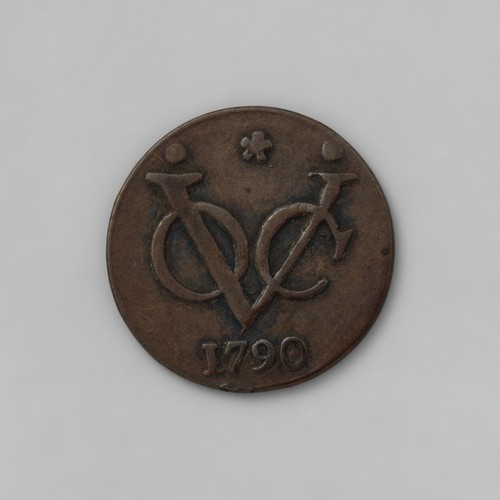
Duit (VOC)
1790
4 Escudos
1780s
Tymf
1663