
How to Identify the Grosz Miejski
A collector's guide to confirming the Elbląg city grosz by its crowned civic arms, eagle reverse, city legends, 1533 date, and small hand-struck silver fabric.
Read the full Grosz Miejski encyclopedia entry →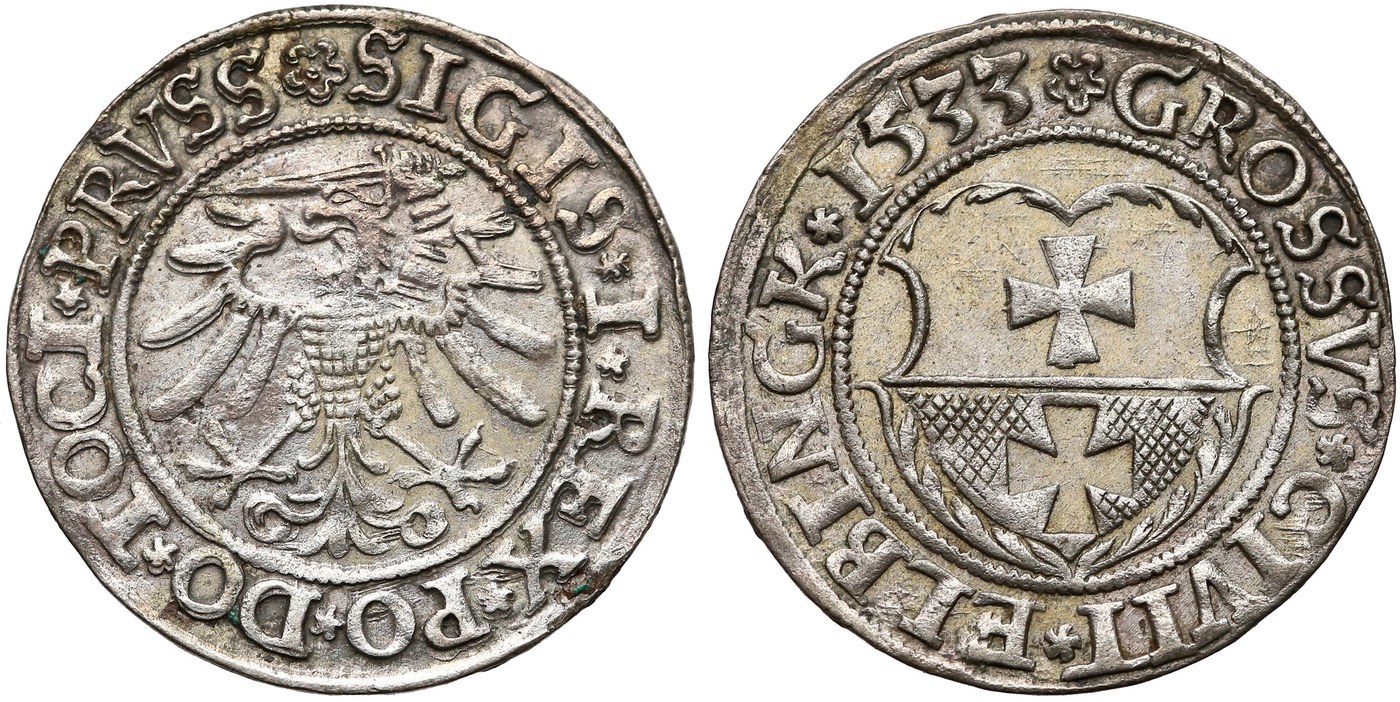
Read the Obverse Arms and Crown
Start with the obverse. A genuine Elbląg city grosz shows the town's coat of arms surmounted by a crown, ringed by an inscription that names the city and usually carries the date. The crown above the shield indicates the royal authority under which the town struck, while the arms identify the municipal issuer. If the main device is a monarch's bust rather than a crowned civic shield, you are looking at a different type of grosz.
Confirm the Eagle and Civic Legends on the Reverse
The reverse must show an eagle (the Orzeł) together with city inscriptions. Read those legends carefully, because the city name is what pins the coin to Elbląg rather than to another Royal Prussian mint such as Gdańsk or Toruń, which used related designs. The eagle plus the town name on the same side is the diagnostic pairing for this civic issue.
Check Size, Metal, and Fabric
Expect a small, thin silver coin, hand-struck rather than milled. The flan is often slightly irregular, the strike can be off-center or uneven, and the edges are plain and sometimes ragged. Genuine period silver shows a soft gray tone or old patina and is non-magnetic. A perfectly round, sharp-edged, machine-even coin of this design should raise suspicion, as should any piece that is magnetic or feels like base metal.
Read the Date and Rule Out Look-Alikes
Locate the 1533 date in the legends and confirm it matches the style of the lettering and design. Royal Prussian cities struck grosze and larger denominations across many years and reigns, so verify both the date and the denomination rather than assuming from the design alone. Larger, heavier pieces with similar arms may be higher denominations, not a grosz; match the small module and the city name together.
Authentication Cautions
Hand-struck coins of this age are frequently worn, cleaned, or repaired, and cast copies and tourist replicas exist. Compare the arms, crown, eagle, and lettering to trusted reference images, and be wary of soft mushy detail, casting seams, file marks on the edge, or a wrong weight. Cleaning and corrosion reduce value, so favor coins with honest original surfaces, and for better examples consider third-party authentication before paying a premium.
Frequently asked questions
How do I know it is an Elbląg coin and not another city's?
Read the inscriptions. Several Royal Prussian towns used similar arms-and-eagle designs, but only the legends name the issuing city. Confirm the Elbląg name and its distinctive crowned arms to attribute it correctly.
What does the crown over the shield mean?
It signals that the city struck the coin under royal authority, in this case the Polish crown. The arms identify the municipal issuer while the crown marks the sovereign framework it belonged to.
How can I tell a genuine hand-struck coin from a fake?
Look for a slightly irregular flan, an uneven or off-center strike, plain edges, and soft silver patina. Cast seams, file marks, a magnetic response, or suspiciously perfect roundness are warning signs of a replica.
Does wear ruin the value?
Light wear is normal and expected on a coin this old. Value falls most when the date, city name, or main devices become illegible, or when the coin is cleaned, corroded, holed, or damaged. Clear legends matter most.