
Coin Encyclopedia
Search and identify coins from around the world — with country, denomination, metal, mint, history, and how to tell them apart.
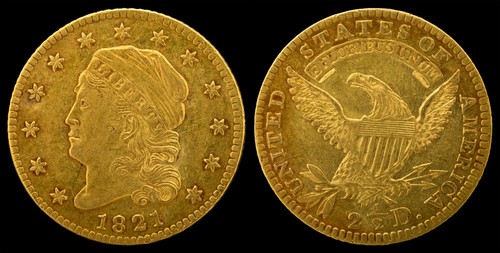
Capped Head Quarter Eagle
A rare early U.S. $2.50 gold coin struck 1821–1834, showing a left-facing capped Liberty head amid stars and a heraldic eagle with shield and E PLURIBUS UNUM.
United States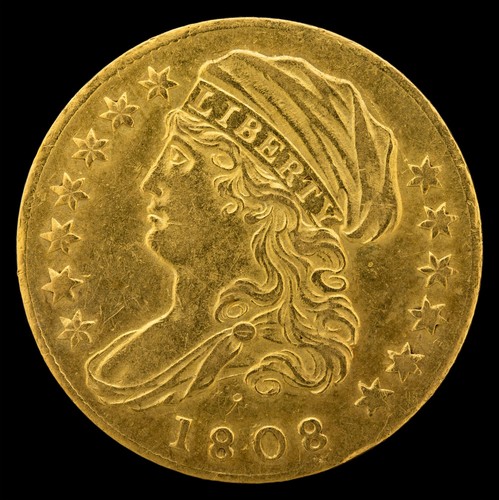
Capped Bust Quarter Eagle
A one-year U.S. gold $2.50 piece struck only in 1808, with John Reich's capped Liberty obverse and a heraldic eagle reverse. A classic rarity.
Quarter Eagle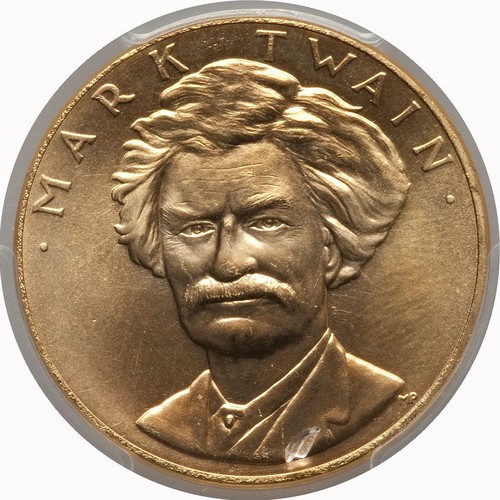
American Arts Commemorative Series Gold Medallion
A U.S. Treasury gold bullion medallion series (1980–1984) honoring American artists; the photographed 1981 one-ounce piece features author Mark Twain.
Bullion Medallion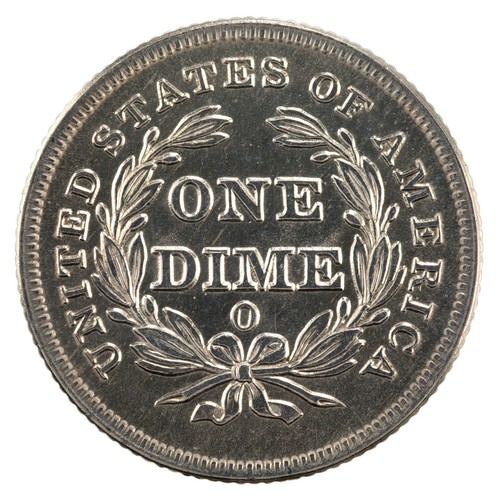
Seated Liberty Dime
A U.S. silver ten-cent coin showing Liberty seated with a pole and shield; the early No Stars type has a plain obverse and a laurel-wreath ONE DIME reverse.
Dime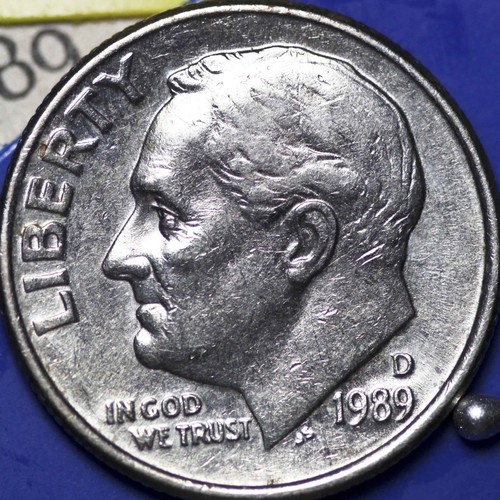
Roosevelt Dime
The circulating U.S. ten-cent coin honoring Franklin D. Roosevelt, shown here as a 1965 copper-nickel clad issue with a torch, olive, and oak reverse.
Dime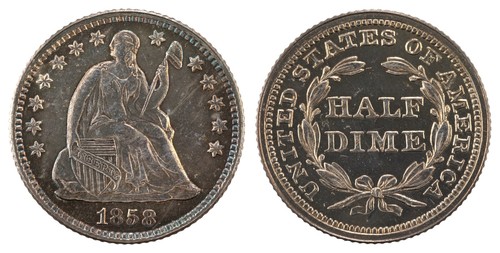
Seated Liberty Half Dime
A tiny 90% silver five-cent piece showing Liberty seated with a shield and Liberty pole; the reverse wreath frames HALF DIME. First struck 1837.
Half Dime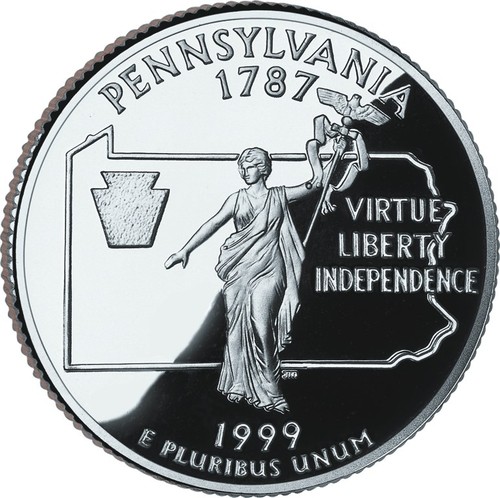
Pennsylvania State Quarter
1999 U.S. 25-cent piece, second in the 50 State Quarters series, showing the Commonwealth statue, state outline, and a keystone for Pennsylvania.
Quarter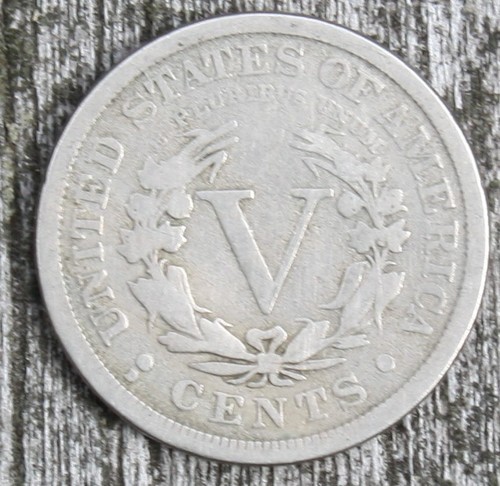
Liberty Head Nickel
U.S. five-cent piece struck 1883–1912, showing a left-facing Liberty head ringed by stars, with a Roman-numeral "V" reverse; the 1913 issue is a legendary rarity.
Nickel Five Cent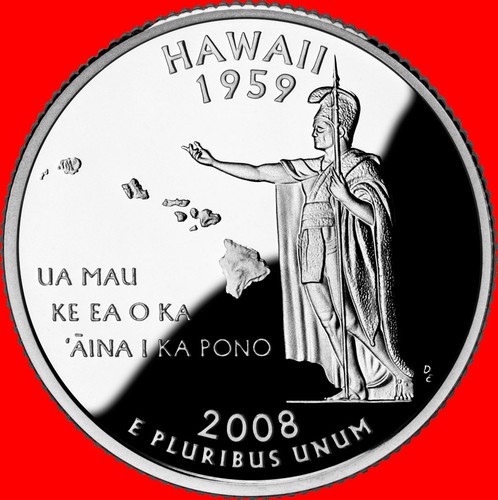
Hawaii State Quarter
The 2008 Hawaii State Quarter, final coin in the 50 State Quarters series, showing King Kamehameha I reaching over the islands.
Quarter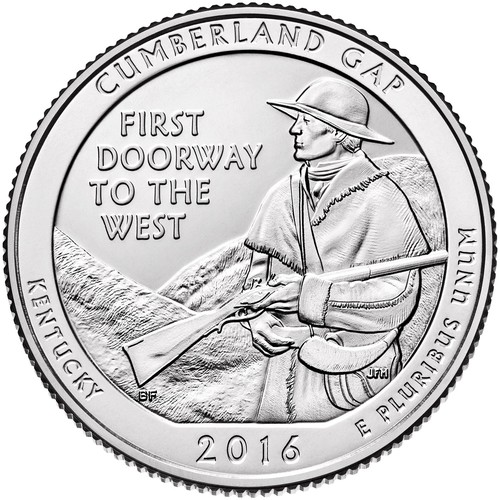
Cumberland Gap Quarter
2016 U.S. copper-nickel clad quarter for Cumberland Gap National Historical Park, Kentucky, showing a frontiersman with a long rifle and "First Doorway to the West."
Quarter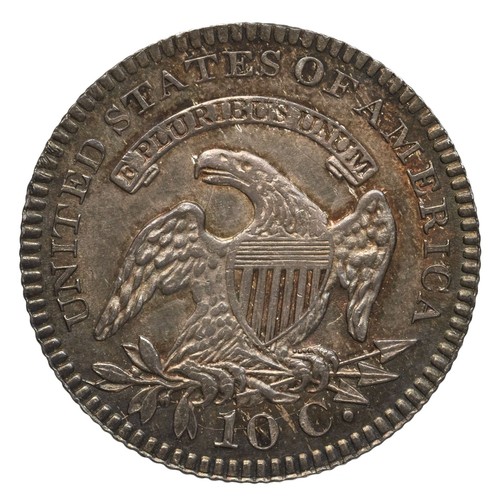
Capped Bust Dime
An early U.S. silver ten-cent piece showing Liberty in a cloth cap over a shield-breasted eagle, struck at Philadelphia from 1809 to 1837.
Dime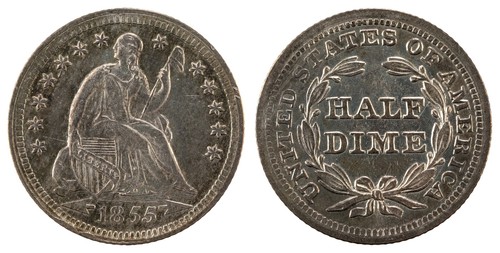
Seated Liberty Half Dime with Arrows
A tiny silver five-cent piece: Liberty seated with a shield, small arrows flanking the date to mark a reduced weight, over a wreath reverse.
Half Dime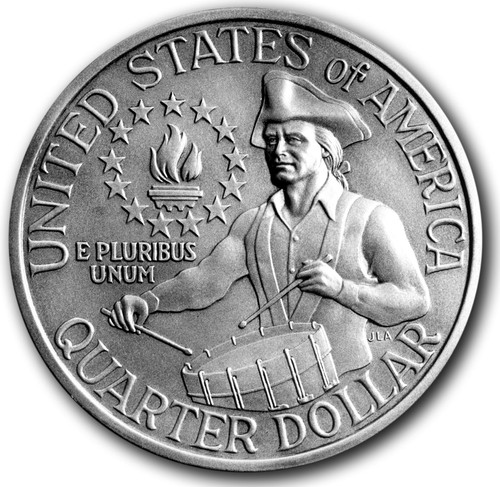
Bicentennial Quarter
U.S. 25-cent coin issued for the 1976 Bicentennial, pairing Washington's portrait with a Colonial drummer and the dual date 1776-1976.
Quarter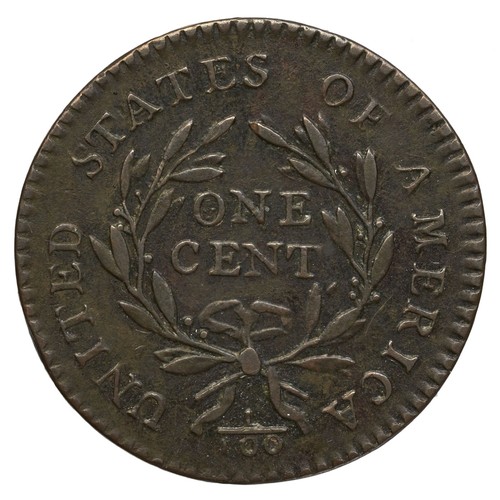
Liberty Cap Large Cent
An early U.S. copper cent (1793-1796) showing Liberty with a cap on a pole, flowing hair, and a wreath reverse.
Large Cent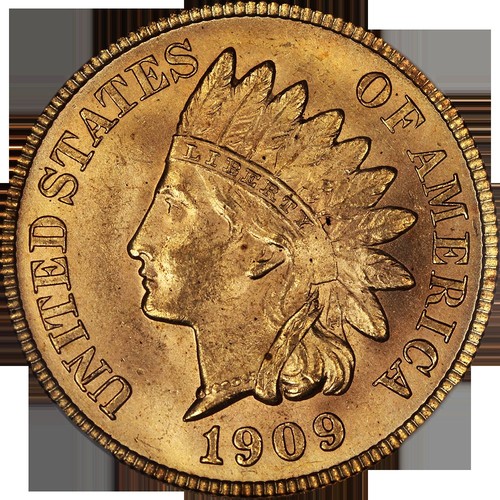
Indian Head Cent
Classic U.S. one-cent piece struck 1859–1909, showing Liberty in a feathered headdress; later dates like 1909 are bronze with an oak-wreath-and-shield reverse.
Small Cent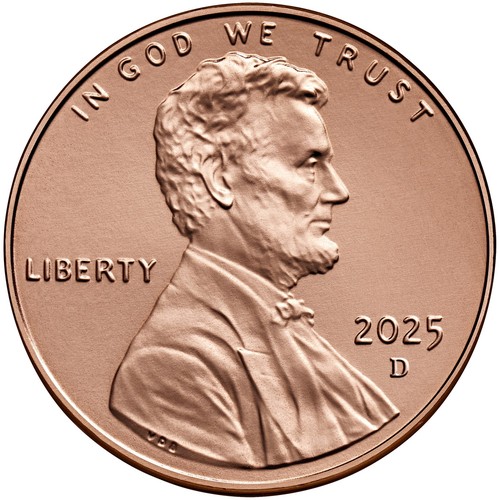
Lincoln Shield Cent
The current U.S. one-cent coin, struck since 2010, pairing Lincoln's profile with a Union Shield reverse on a copper-plated zinc planchet.
Small Cent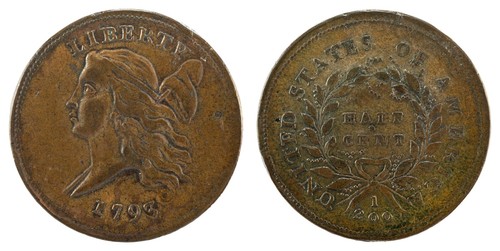
Liberty Cap Half Cent
The first U.S. half cent, struck only in 1793, showing Liberty in a cap facing left with a wreath reverse. A famous one-year copper key date.
Half Cent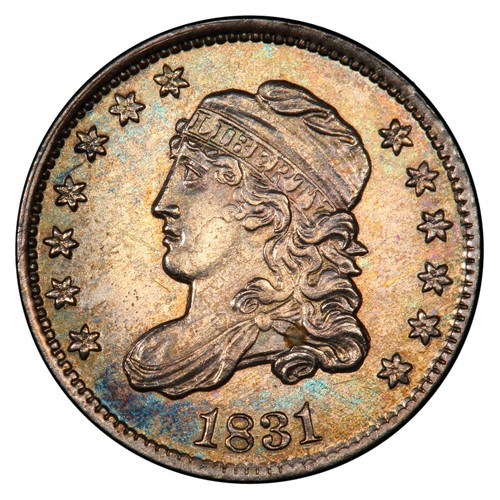
Capped Bust Half Dime
A small early U.S. silver five-cent piece showing Liberty in a Phrygian cap and a shielded eagle reverse, struck at Philadelphia from 1829 to 1837.
Half Dime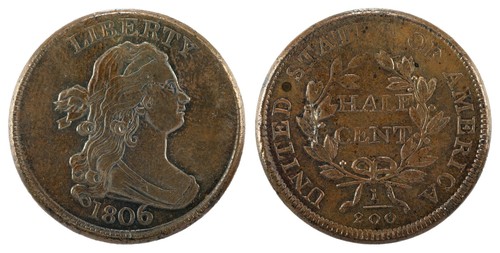
Draped Bust Half Cent
An early U.S. copper half cent showing draped Liberty with flowing hair; the smallest denomination the Mint ever struck, made 1800–1808.
Half Cent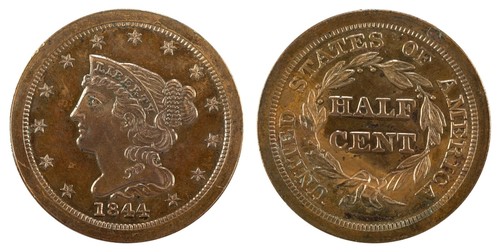
Braided Hair Half Cent
The final U.S. half cent design, a small copper coin showing Liberty with braided hair and a coronet, paired with a wreath reverse, struck 1840–1857.
Half Cent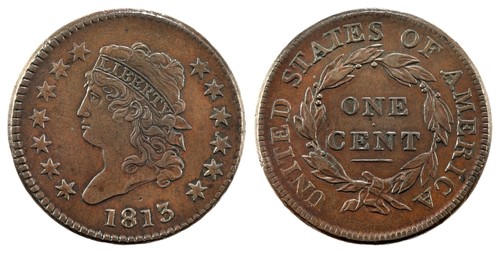
Classic Head Large Cent
A pure-copper U.S. large cent struck 1808–1814, showing John Reich's classical left-facing Liberty ringed by stars over a wreath reverse.
Large Cent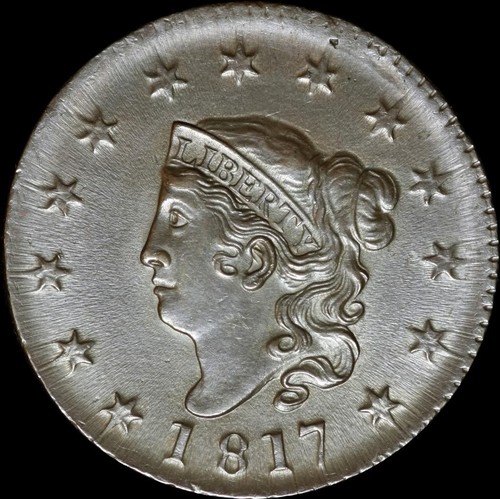
Coronet (Matron Head) Large Cent
A pure-copper U.S. one-cent piece from 1816–1839, showing Liberty in a beaded coronet on the obverse and ONE CENT inside a wreath.
Large Cent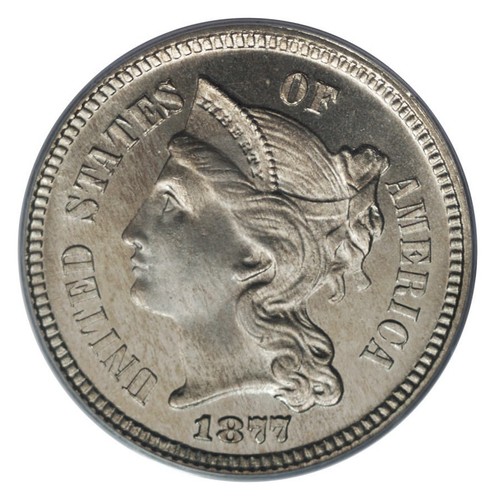
Three Cent Nickel
A small copper-nickel three-cent coin with a Liberty head obverse and a Roman numeral III inside a wreath; struck at Philadelphia from 1865 to 1889.
Three Cent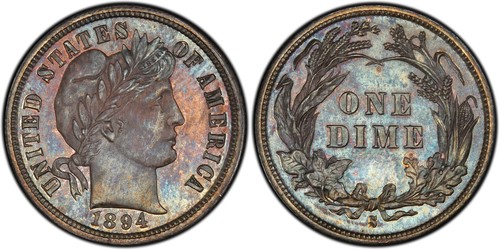
Barber Dime
U.S. ten-cent silver coin struck 1892–1916, showing a right-facing Liberty head and a wreath enclosing "ONE DIME" on the reverse.
Dime