Three Cent Nickel
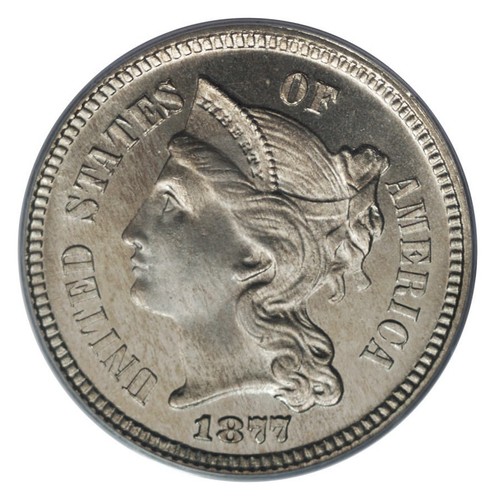
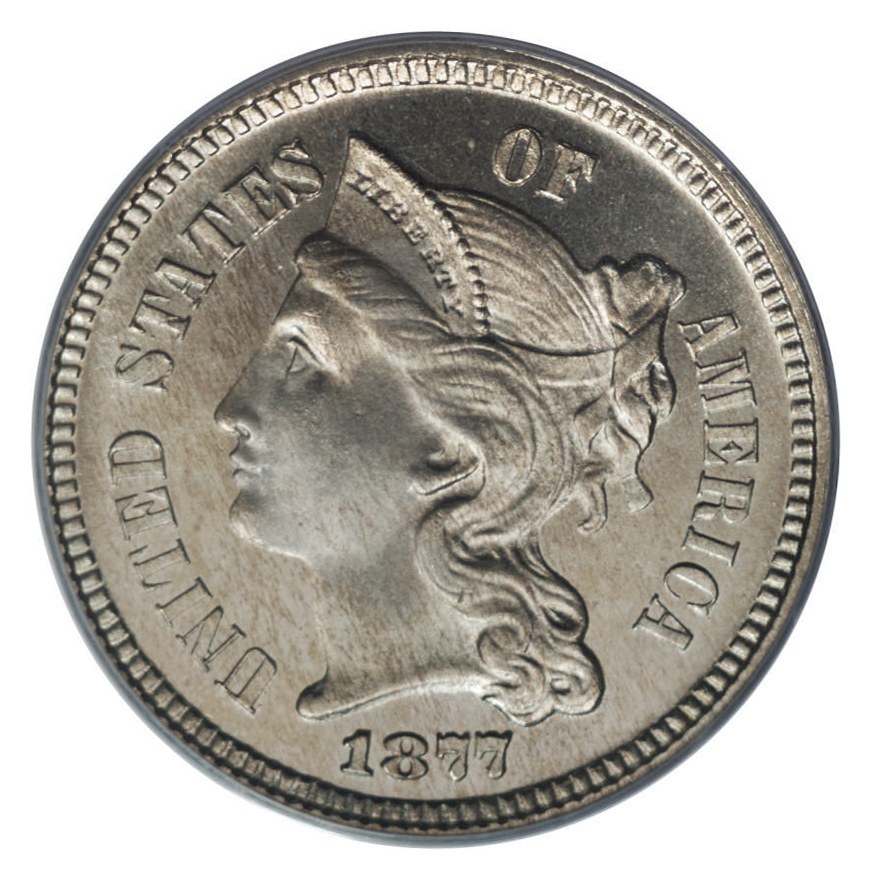
A small copper-nickel three-cent coin with a Liberty head obverse and a Roman numeral III inside a wreath; struck at Philadelphia from 1865 to 1889.
- Country
- United States
- Denomination
- 3 Cents
- Metal
- Copper-Nickel (75% Copper, 25% Nickel)
Got a coin like this?
Identify any coin from a photo, free.
Overview
The Three Cent Nickel is a small United States coin denominated at three cents and struck in a copper-nickel alloy. It was produced from 1865 through 1889 at the Philadelphia Mint, making it one of several unusual odd-denomination coins issued during the 19th century.
The obverse displays a left-facing head of Liberty, and the reverse shows the Roman numeral III enclosed in a wreath, expressing the three-cent value. The 1866 example seen here is an early date from the series' most heavily produced period, shortly after the coin was introduced.
Because it circulated alongside the earlier silver three-cent piece for a time and carries a denomination no longer in use, the Three Cent Nickel is a distinctive type coin that collectors seek to represent this brief chapter of American coinage.
History & Background
The Three Cent Nickel was authorized by the Act of March 3, 1865, in the aftermath of the Civil War. During the war, coins had largely vanished from circulation and the public relied on paper fractional currency, including three-cent notes. The new copper-nickel three-cent coin was intended in part to help retire that small-denomination paper money.
Mint Engraver James B. Longacre designed the piece, pairing a classical Liberty head with a numeral-and-wreath reverse. The coin was struck from an alloy of 75% copper and 25% nickel, the same durable base-metal composition adopted for other coinage of the era, rather than the silver used in the older three-cent "trime."
Mintages were substantial in the coin's early years, including 1865 and 1866, then declined markedly over time as the denomination fell out of favor. Production continued at low levels through the 1870s and 1880s until the series ended in 1889, when the three-cent denomination was discontinued.
How to Identify
Look first at the two central devices. The obverse shows a left-facing head of Liberty wearing a coronet, surrounded by "UNITED STATES OF AMERICA" with the date below. The reverse carries a large Roman numeral III at its center, enclosed within a wreath. The numeral, not a written word or Arabic figure, is the quickest confirmation of this denomination.
The coin is small and thin, roughly 17.9 mm in diameter, with a plain (smooth) edge. Its copper-nickel composition gives it a pale gray, tan, or slightly whitish tone rather than the bright silver look of the earlier three-cent piece. All examples were struck at the Philadelphia Mint, so a genuine coin carries no mint mark.
Dates run from 1865 to 1889. The 1866 date shown here belongs to the series' high-mintage early years. Later dates in the 1870s and 1880s were made in far smaller numbers, so reading the date accurately is important for placing any given coin within the series.
Value & Collectibility
Values depend chiefly on date and condition. The early high-mintage years such as 1865 and 1866 are the most available and are generally modest in circulated grades, with premiums rising for well-struck, original, or uncirculated examples. As an obsolete odd-denomination type, even common dates carry collector interest above face value.
Several later dates, particularly low-mintage issues of the 1880s and certain proof-only or near-proof-only years, are scarcer and command higher premiums. Because mintages vary so widely across the series, date is often the single biggest factor in value.
Eye appeal also matters: even color, sharp detail in the Liberty head and wreath, and surfaces free of cleaning, corrosion, or damage all raise value. Ranges are broad, so consult recent price guides and auction records for current figures rather than relying on a single fixed number.
Frequently asked questions
What is a Three Cent Nickel worth?
It depends on date and condition. Common early dates like 1865 and 1866 are modest in circulated grades, while scarce low-mintage dates from the 1880s and choice uncirculated examples bring higher premiums. Check current price guides for ranges.
Why is this coin called a "nickel" if it is only three cents?
The name refers to its metal, not its value. It is struck in a copper-nickel alloy of 75% copper and 25% nickel, distinguishing it from the earlier silver three-cent piece.
Does the Three Cent Nickel have a mint mark?
No. Every Three Cent Nickel was struck at the Philadelphia Mint, which used no mint mark for this series, so a genuine coin will not carry one.
What does the III on the back mean?
The Roman numeral III is the denomination, indicating a value of three cents. It sits at the center of the reverse inside a wreath.
How is this different from the silver three-cent piece?
The silver three-cent piece (the "trime") is smaller and brightly silver with a star or shield design, while the Three Cent Nickel is a pale copper-nickel coin with a Liberty head and a Roman numeral III in a wreath.
Three Cent Nickel guides
In-depth guides for identifying, valuing, and collecting Three Cent Nickel.