
Coin Encyclopedia
Search and identify coins from around the world — with country, denomination, metal, mint, history, and how to tell them apart.
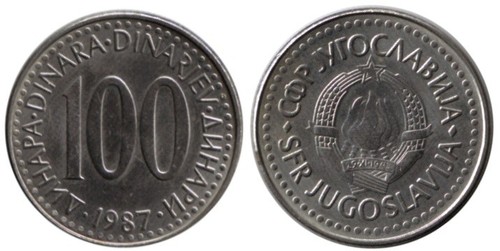
100 Dinara
A copper-nickel 100 Dinara circulation coin of socialist Yugoslavia dated 1987, with a big numeral 100 on one face and the Yugoslav state emblem on the other.
Modern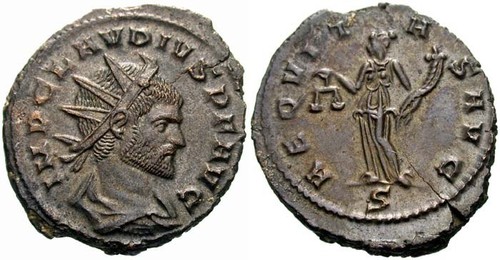
Antoninianus of Claudius II
A billon antoninianus of the Roman emperor Claudius II Gothicus (268–270 AD), showing his radiate bust on one side and a standing deity on the other.
Ancient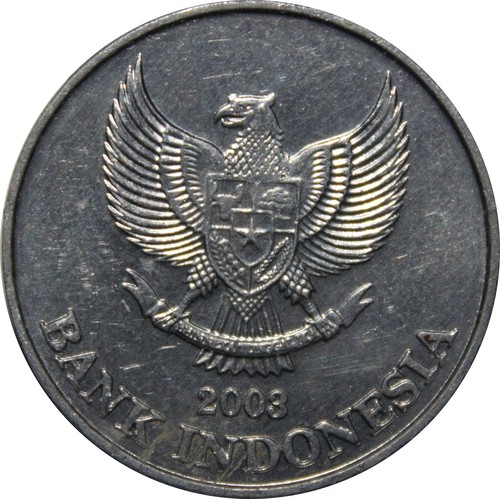
Indonesia 200 Rupiah
A lightweight aluminium Indonesian 200-rupiah coin: the Garuda Pancasila emblem on one side and a perched Bali Starling (Jalak Bali) with the value 200 on the other.
Southeast Asia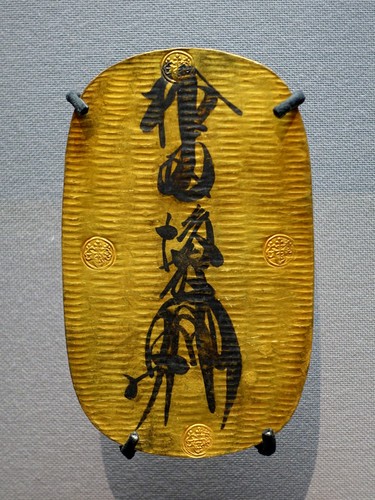
Keicho Koban
A thin oval Japanese gold coin worth one ryo, its surface covered in fine parallel striations with stamped cartouches and Goto mint marks.
Historic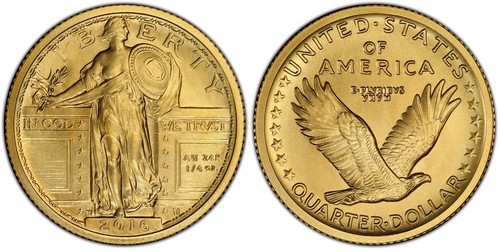
Standing Liberty Quarter Centennial Gold
A 2016 U.S. quarter-dollar struck in 1/4 oz of .9999 fine gold, reviving Hermon MacNeil's Standing Liberty design for its 100th anniversary.
Quarter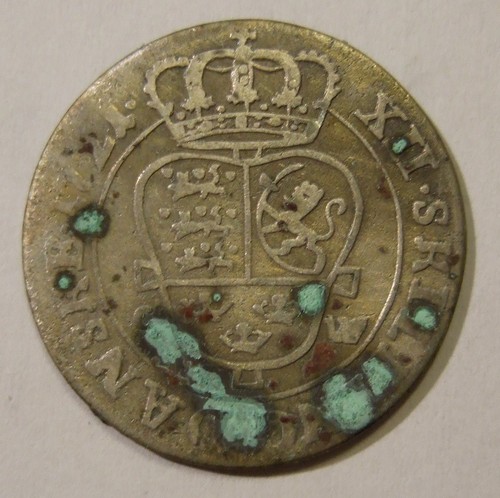
12 Skilling
An early-modern Danish 12 skilling dated 1721, showing a crowned shield with a lion on one face and ornamental legend and value on the other.
Early Modern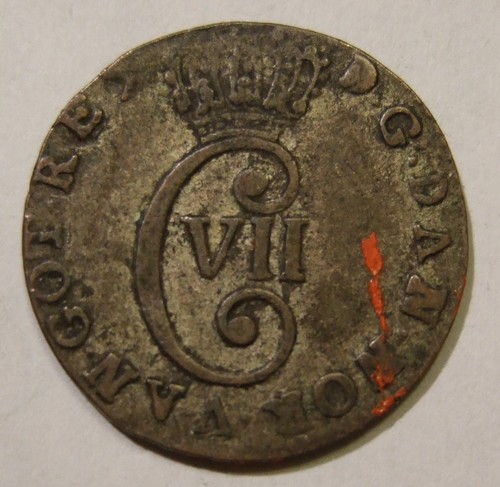
4 Skilling
A Danish copper 4 skilling of 1783, with a crown above a numeral on one face and an ornamental circular pattern framing the date on the other.
Early Modern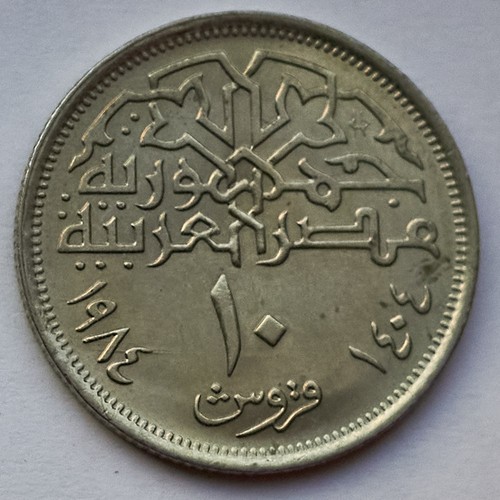
Egyptian 10 Piastres Commemorative
A cupro-nickel Egyptian 10 piastres commemorative dated 1984, showing a domed mosque on one face and Arabic legends throughout.
World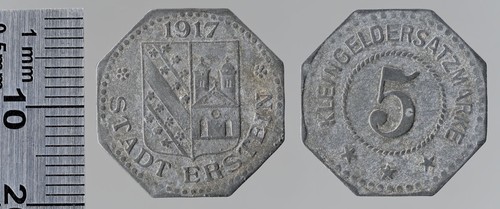
Erstein Notgeld 5 Pfennigs
A World War I emergency small-change coin issued by the town of Erstein in 1917, with the civic coat of arms on one side and a large 5 on the other.
Token/notgeld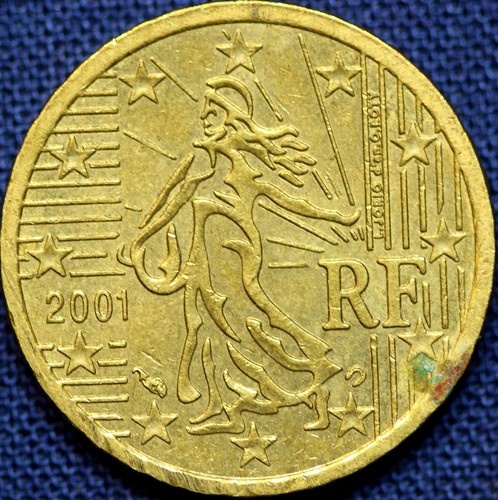
France 10 Cent Euro
France's gold-coloured 10 euro cent: the striding Sower for the French Republic on one side, a European map and the value 10 on the other.
Circulation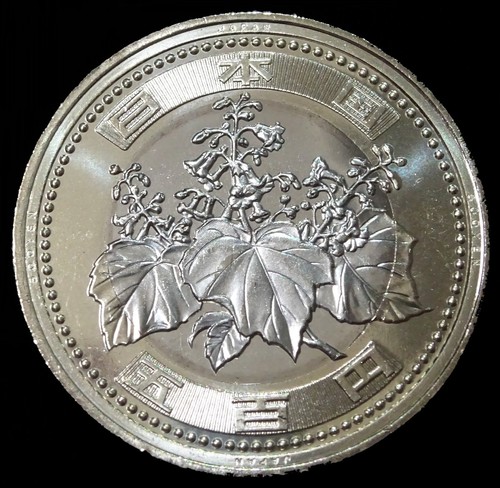
500 Yen Bicolor Clad
Japan's large two-tone 500 yen circulation coin, with a floral blossom design and pearl-like beading on one face and bold value numerals on the other.
Circulation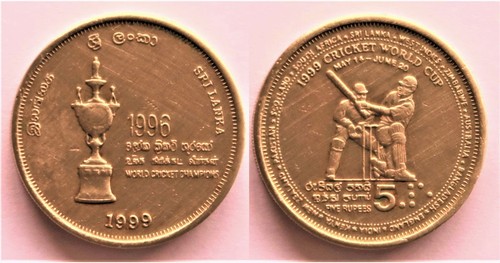
Sri Lanka 5 Rupees
Sri Lanka's 1999 copper-nickel five rupees marking the Cricket World Cup, showing the tournament trophy on one face and a batsman at the crease on the other.
South Asia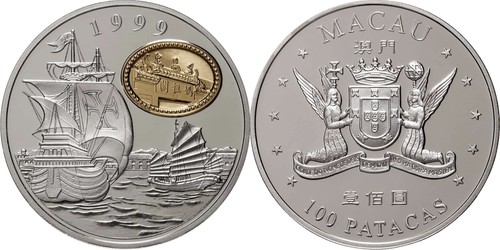
Macao 100 Patacas Return to China Commemorative
A 1999 Macao 100 patacas commemorative marking the return to China: a Portuguese ship with a gold center on one side, the Macao coat of arms on the other.
Commemorative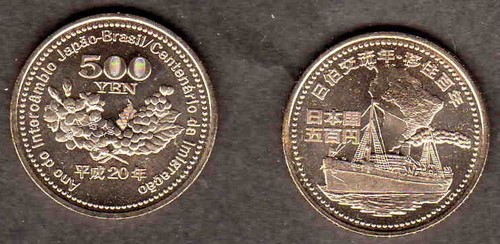
500 Yen Japanese Immigration Commemorative
A 2008 Japanese 500 yen commemorative marking 100 years of Japanese immigration to Brazil, with two figures on one side and a ship on the other.
Commemorative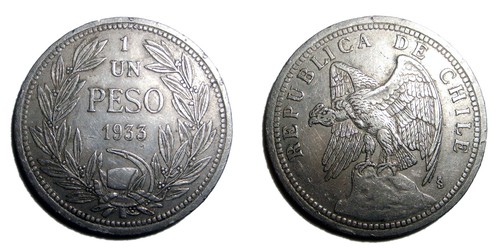
Chilean Peso (1875 Type)
A silver one-peso coin of Chile: the national coat of arms with its lone star and laurel wreaths on one side, and a large bird in flight on the other.
Circulation
Bhutan 10 Sengtrum
A 1979 cupro-nickel minor coin of the Kingdom of Bhutan, worth one-tenth of a ngultrum, with the national arms on one face and an ornamental gateway on the other.
Himalayan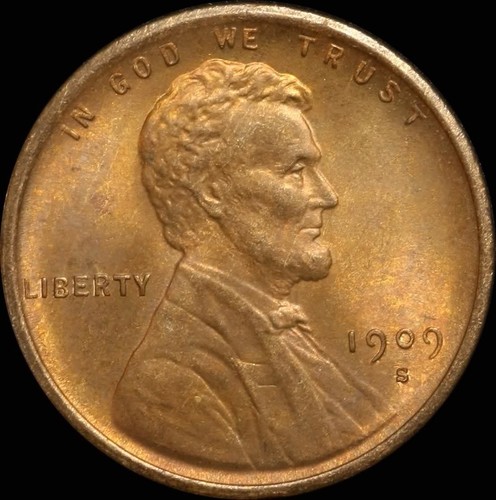
Lincoln Wheat Cent
U.S. one-cent coin struck 1909–1958 with Lincoln's profile and a pair of wheat ears framing ONE CENT; the 1909-S here is a scarce first-year San Francisco issue.
Small Cent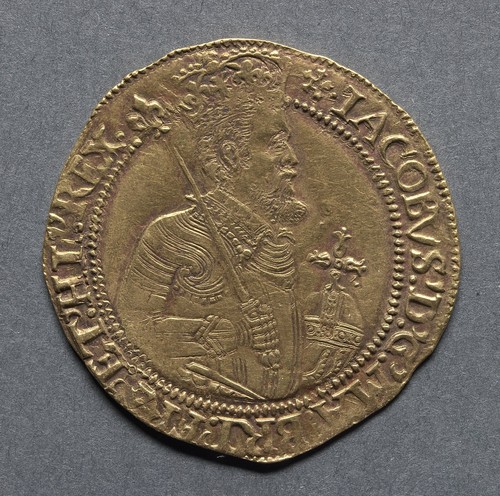
Unite of James I
A hammered gold pound coin of James I, named to celebrate the union of England and Scotland under one crown.
Hammered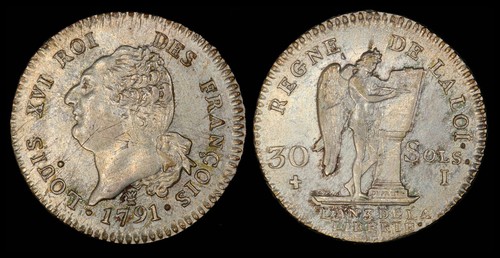
French 30 Sols
A silver coin of the early French Revolution showing Louis XVI as constitutional king on one side and a standing Liberty on the other.
Revolutionary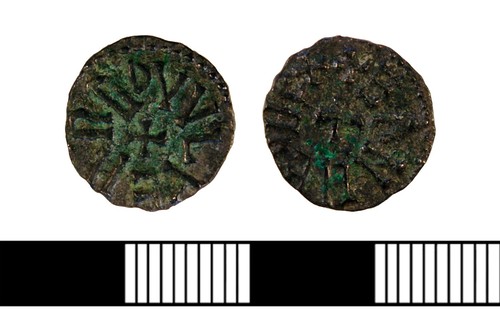
Styca of Eanred
Small base-metal coin of King Eanred of Northumbria, with a cross and legend on one face and a central symbolic motif on the other.
Medieval Coins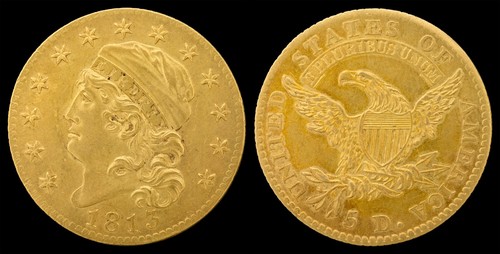
Capped Head Half Eagle
A U.S. five-dollar gold coin struck 1813–1834, showing a left-facing capped Liberty with stars and a heraldic eagle bearing a shield and E PLURIBUS UNUM.
United States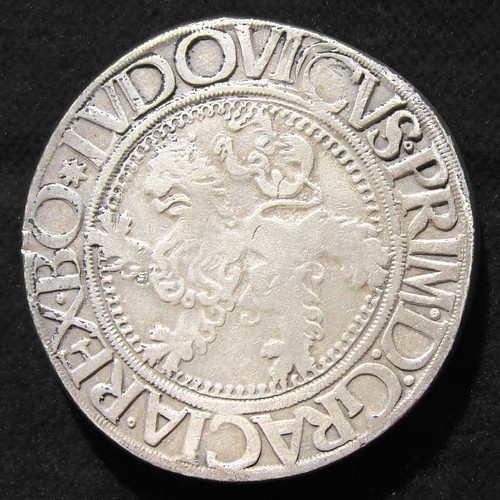
Joachimsthaler (Thaler)
A large early-16th-century Bohemian silver thaler from Joachimsthal, dated 1525; the coin whose name gave rise to the words 'thaler' and 'dollar'.
Early Modern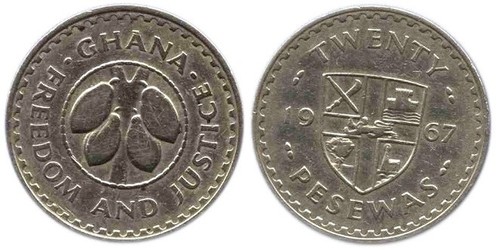
Ghana 20 Pesewas
A one-year 1967 Ghanaian coin bearing a national eagle and the motto FREEDOM AND JUSTICE, with the country's coat-of-arms shield on the reverse.
World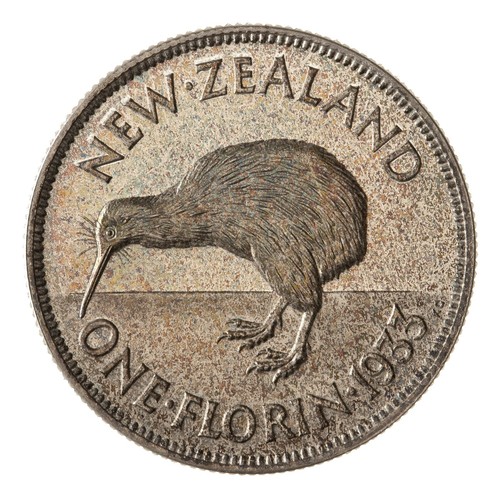
New Zealand Florin
New Zealand's silver two-shilling coin; this 1933 first-year example shows a kiwi and the legend NEW ZEALAND ONE FLORIN.
New Zealand