
Macao 100 Patacas Return to China Commemorative
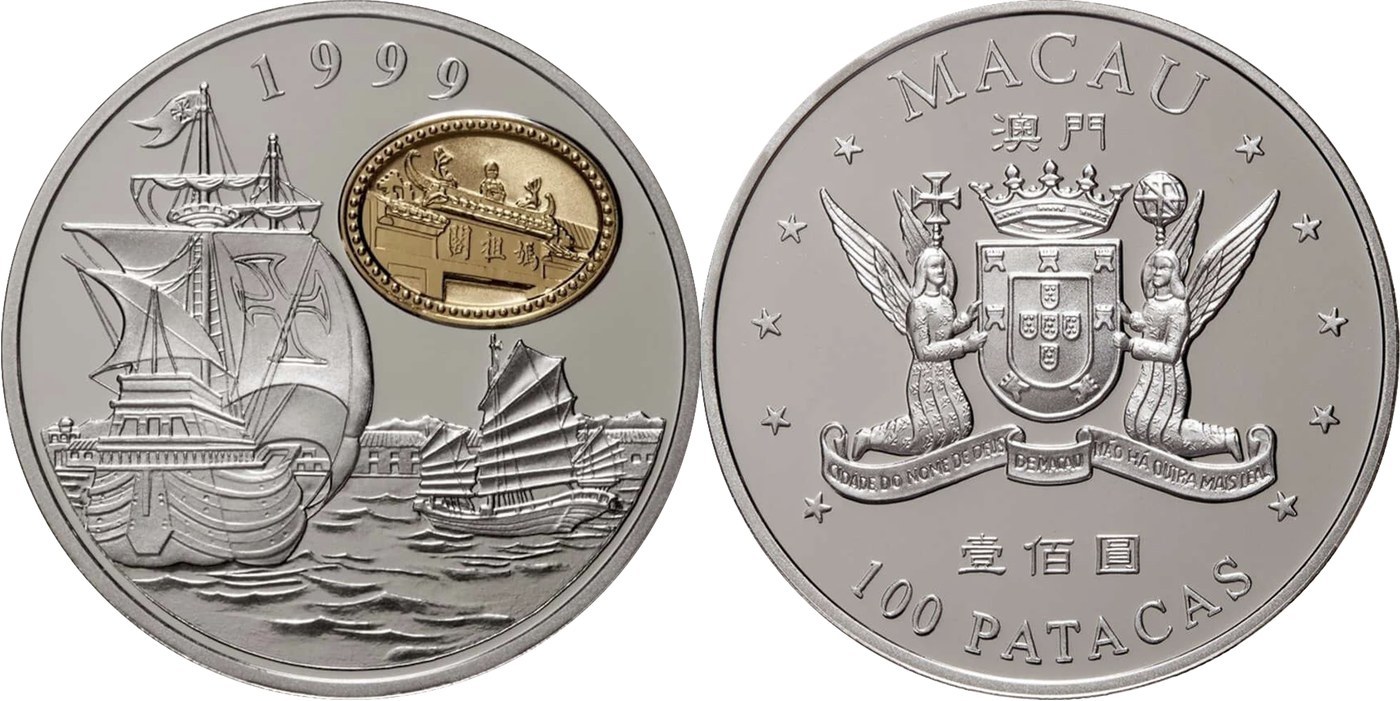
A 1999 Macao 100 patacas commemorative marking the return to China: a Portuguese ship with a gold center on one side, the Macao coat of arms on the other.
- Country
- Macao
- Denomination
- 100 Patacas
- Metal
- Silver with Gold Inset
Got a coin like this?
Identify any coin from a photo, free.
Overview
The Macao 100 Patacas Return to China Commemorative is a large silver coin with a gold inset issued for the highest patacas denomination and struck to mark Macao's transfer of sovereignty to the People's Republic of China in 1999. One face shows a Portuguese sailing ship set against Macao's harbor and its landmarks, with a small gold vignette worked into the center of the design. The other face carries the Macao coat of arms flanked by heraldic supporters and surrounded by stars.
As a bimetallic silver-and-gold piece of the 100 patacas denomination, it belongs to the class of prestige commemoratives rather than everyday circulating money. The gold inset at the heart of the ship side is the coin's signature feature and gives it a two-tone look that is uncommon among ordinary patacas coins.
The example pictured is dated 1999, the year Macao passed from Portuguese administration to Chinese sovereignty. It is collected today as a historical keepsake of that handover and for its silver and gold content.
History & Background
Macao was administered by Portugal for centuries before its return to Chinese sovereignty, and the pataca has served as its unit of currency. The Portuguese ship on this coin recalls that long maritime connection, when carracks and other sailing vessels linked Macao to the wider Portuguese trading world, while the harbor and landmarks behind it locate the scene in Macao itself.
The 1999 date is central to the coin's meaning. On 20 December 1999 Macao formally became a Special Administrative Region of the People's Republic of China, and commemorative coins of the 100 patacas denomination were issued around that event to mark the transition. Pairing the Portuguese ship with the established Macao coat of arms placed the handover in the context of the territory's history under Portuguese administration.
Because it was made as a commemorative rather than for circulation, the coin was produced in limited quantity as a collector and presentation item, typically distributed in official packaging. That origin, together with the 1999 handover theme, is what defines it within the Macao series.
How to Identify
Start with the ship side. The central device is a Portuguese sailing ship shown against Macao's harbor and skyline, and set into the middle of that scene is a small gold vignette. The combination of a full-rigged Portuguese vessel with a distinct gold inset at its center is the fastest way to recognize this specific coin, since the two-tone silver-and-gold treatment is unusual.
Turn to the other side for the Macao coat of arms. Expect a shield supported on either side by heraldic figures, with stars arranged around the design and lettering that names Macao and states the 100 patacas denomination. The date, here 1999, appears within the design and ties the piece directly to the year of the return to China.
Physically this is a substantial silver commemorative with a gold inset rather than a light circulation coin. Confirm the type by the full set of features together: the Portuguese ship with harbor landmarks and a gold center on one side, the Macao arms with supporters and stars on the other, the 100 patacas denomination, and the 1999 date.
Value & Collectibility
Value for this coin comes from three directions at once: its silver body, its gold inset, and its appeal as a dated commemorative of the 1999 Macao handover. Because it was issued as a limited collector piece rather than for circulation, it trades as a numismatic item well above the face value of 100 patacas, with precious-metal content providing a floor.
Condition and completeness matter a great deal for modern commemoratives. Examples kept in their original mint packaging with any certificate, showing clean, unhandled surfaces on both the silver field and the gold inset, sit at the top of the range. Fingerprints, spotting, scratches, or a missing case reduce desirability.
Actual prices depend on preservation, whether the original packaging survives, and the prevailing silver and gold markets, so values are best checked against recent sales of comparable 1999 Macao 100 patacas pieces rather than a fixed figure. For higher-value examples, independent authentication and the original documentation are worthwhile.
Frequently asked questions
What does this coin commemorate?
It marks Macao's return to Chinese sovereignty in 1999, when the territory passed from Portuguese administration to become a Special Administrative Region of the People's Republic of China. The Portuguese ship and the Macao coat of arms together frame that handover.
Why does the coin have gold in the middle?
It is a bimetallic commemorative: a silver coin with a gold inset worked into the center of the ship side. The two-tone treatment is a prestige feature typical of collector issues and is one of the coin's most recognizable traits.
Is the ship a specific vessel?
The design shows a Portuguese sailing ship set against Macao's harbor and landmarks, evoking the maritime link between Portugal and Macao rather than documenting one named vessel. It is a symbolic scene tied to the territory's history.
Was this coin used as money?
It carries a 100 patacas denomination but was issued as a limited commemorative and presentation piece, not for everyday circulation. Most examples were sold to collectors in official packaging.
What is on the reverse?
The reverse shows the Macao coat of arms: a shield with heraldic supporters on either side and stars arranged around it, along with lettering naming Macao and stating the 100 patacas denomination and the 1999 date.
Macao 100 Patacas Return to China Commemorative guides
In-depth guides for identifying, valuing, and collecting Macao 100 Patacas Return to China Commemorative.
Other coins you may enjoy
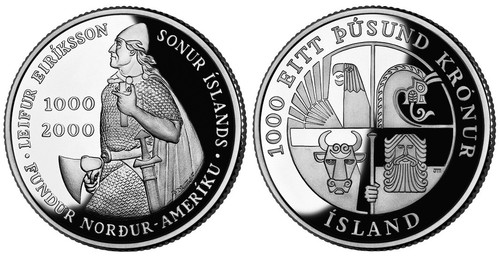
Leif Erikson Commemorative 1000 Króna
2000
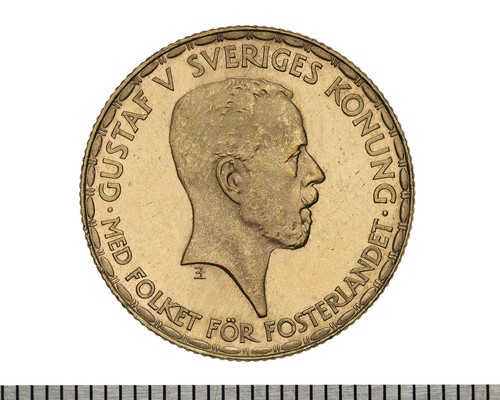
Swedish Gold Commemorative
Early 20th century
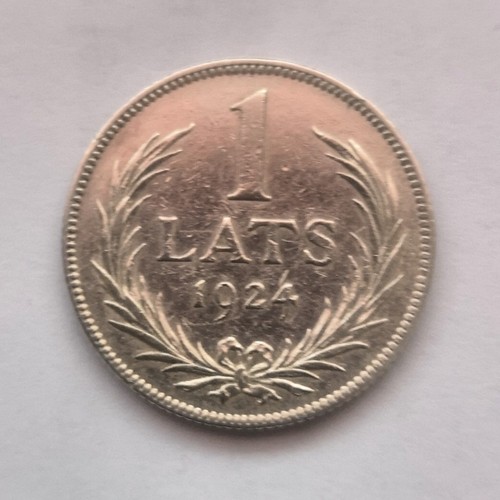
1 Lats (Christmas Bells)
2012
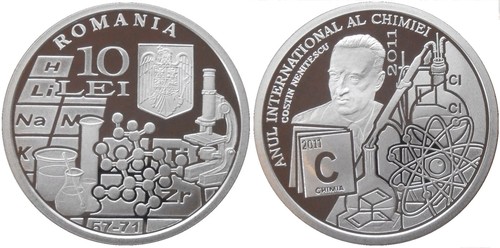
Romania International Year of Chemistry Commemorative
2011
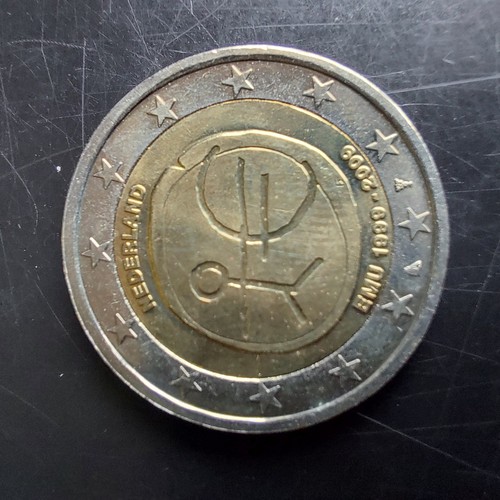
1 Euro (10 Years EMU)
1999-2009
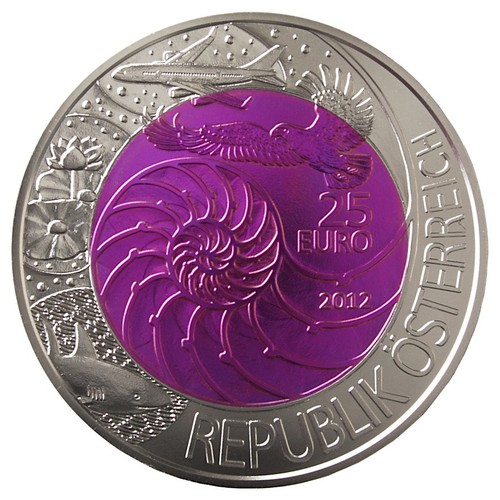
25 Euro (Bionik)
2012
100 Forint (Commemorative)
commemorative issue
2 Euro (150 Years PSP)
2018
3 Roubles (First All-Russian Coins)
1982
10 Euro (Royal Marriage)
2002
Swiss Shooting Thaler
1934
Sachsen-Weimar-Eisenach 5 Mark Wedding Commemorative
1903-1910