
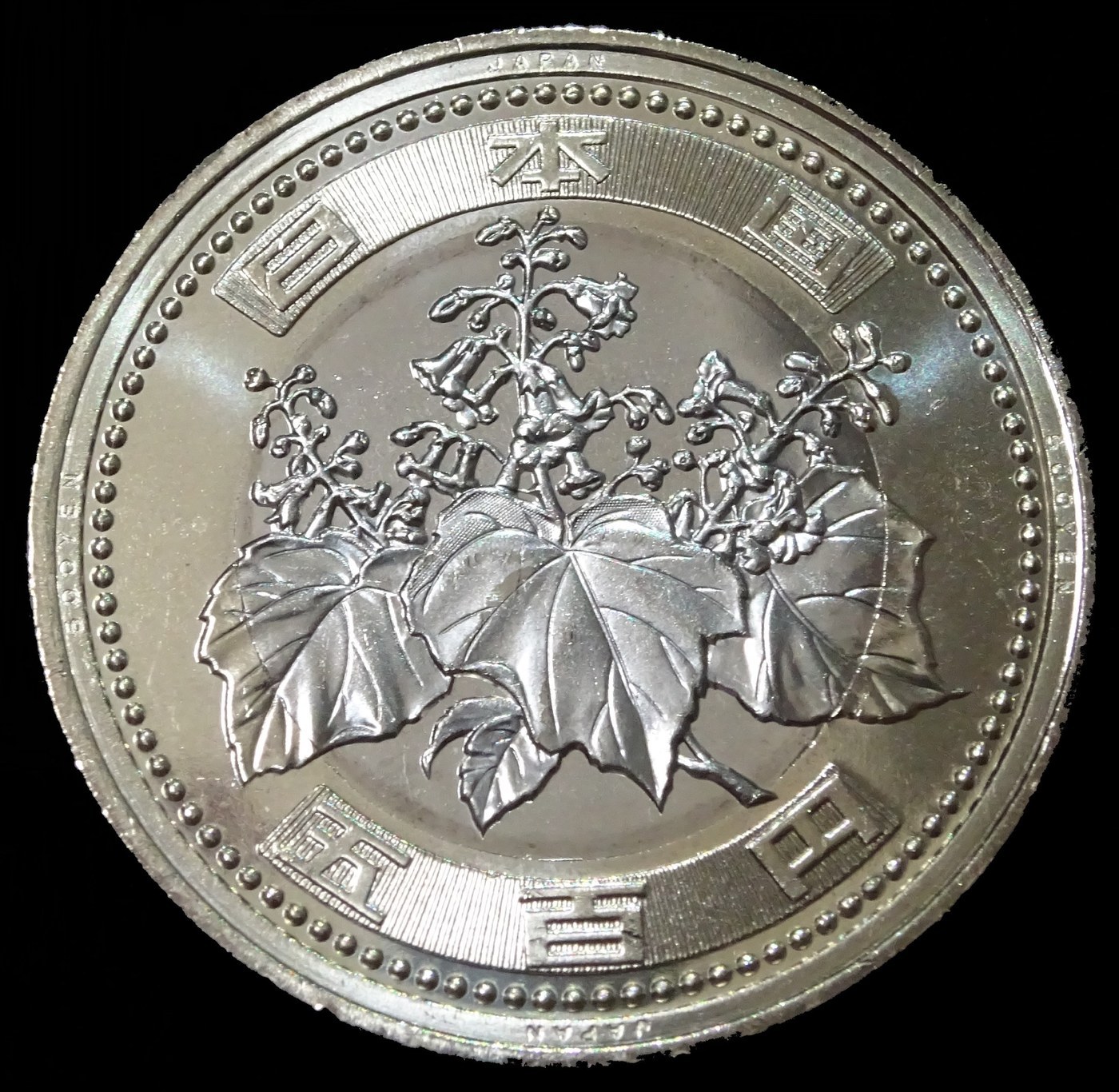
500 Yen Bicolor Clad
Japan's large two-tone 500 yen circulation coin, with a floral blossom design and pearl-like beading on one face and bold value numerals on the other.
- Country
- Japan
- Denomination
- 500 Yen
- Metal
- Bicolor Clad
Got a coin like this?
Identify any coin from a photo, free.
Overview
The 500 Yen Bicolor Clad is Japan's highest-value circulating coin, a large two-tone (bimetallic) piece that pairs a silvery center with a golden outer ring. It is instantly recognizable as the biggest coin in ordinary Japanese pocket change, and its bicolor construction is a deliberate anti-counterfeiting feature that sets the modern version apart from the earlier single-color 500 yen.
The example pictured shows a floral design of blossoms and flowers accented with fine pearl-like beading on one face, and the denomination together with official Japanese inscriptions and marks on the other. The plant motif is the traditional botanical device long carried by the 500 yen, rendered here with delicate detail across the two-tone surface.
As a circulation coin rather than a bullion or precious-metal issue, it is made of base-metal alloys and is worth its face value of 500 yen in commerce. It is collected mainly as an example of modern minting technology and Japanese coin design rather than for any metal content.
History & Background
Japan introduced a 500 yen coin in 1982 to replace the 500 yen banknote, and the denomination has gone through successive versions as anti-counterfeiting needs grew. The first coins were cupronickel; a nickel-brass golden-toned version followed around the turn of the century to add security features after fakes and altered foreign coins appeared in vending machines.
The bicolor (bimetallic) 500 yen represents the most recent stage of that evolution, introduced in the Reiwa era (from 2021). Combining a silver-colored center disc with a golden ring, it layers several defenses into a single coin, including micro-lettering, fine edge work and a latent (hidden) image, making it one of the more sophisticated circulating coins in the world.
Throughout these changes the coin has kept its familiar plant-and-value design language, so the modern bicolor piece reads as a continuation of the long-running 500 yen series rather than a wholly new coin. All versions are struck by the Japan Mint for everyday circulation.
How to Identify
Identify the coin first by size and color scheme: the 500 yen is a large coin with a distinct two-tone look, a silvery inner disc set inside a golden outer ring. Among current Japanese coins its diameter is the greatest, so it stands out immediately from the smaller 100, 50, 10, 5 and 1 yen pieces.
Read the two faces. One side carries a floral design of blossoms and flowers framed by fine pearl-like beading, the ornamental botanical motif traditional to the 500 yen. The opposite side shows the large value and Japanese inscriptions, including the country name and the year expressed in a Japanese era date, together with small official marks and leaf or plant devices around the numerals.
Confirm the modern bicolor type by its security details: micro-engraved lettering, a bimetallic ring-and-center construction, and helical or slanted edge lettering and grooves rather than a plain milled edge. These features, plus the base-metal (non-precious) alloys, distinguish the genuine circulation coin from novelty copies. The exact issue year is read directly from the era-dated inscription.
Value & Collectibility
As a current circulation coin, the 500 Yen Bicolor Clad is worth its face value of 500 yen when spent in Japan, and ordinary examples carry no premium beyond that. It is made of base-metal alloys, so there is essentially no bullion value driving its price.
Collector interest is modest and centers on condition and issue year. Uncirculated pieces, coins from mint sets, or specific dates can attract small premiums, and the first years of the bicolor type may hold extra appeal as the newest design. Heavily circulated coins are generally kept or spent at face value.
Because values track condition, date and set packaging rather than metal, treat any single figure with caution and compare against recent sales of the same year and grade. For pristine or set examples, original mint packaging and clean surfaces add the most to desirability.
Frequently asked questions
Is the 500 Yen Bicolor Clad made of gold and silver?
No. The gold and silver appearance comes from two different base-metal alloys used for the ring and the center, not from precious metals. It is a circulation coin worth its face value, not a bullion piece.
Why is the 500 yen coin two colors?
The bicolor (bimetallic) construction is an anti-counterfeiting measure. Combining a golden outer ring with a silvery center, alongside micro-lettering and special edge work, makes the coin harder to fake or imitate with altered foreign coins.
What is the flower on the coin?
One face carries the traditional floral design of the 500 yen series, blossoming flowers rendered with fine pearl-like beading. It is an official plant motif that has long identified the denomination, shown here across the two-tone surface.
How can I tell the year it was made?
The year is inscribed on the value side using a Japanese era date rather than a Western calendar year. Reading the era name and number and converting it gives the exact year of issue.
Is it worth more than 500 yen?
For ordinary circulated coins, no. It is spendable at face value. Uncirculated examples, mint-set coins or particular dates can carry small collector premiums, but most pieces are valued at 500 yen.
500 Yen Bicolor Clad guides
In-depth guides for identifying, valuing, and collecting 500 Yen Bicolor Clad.
Other coins you may enjoy
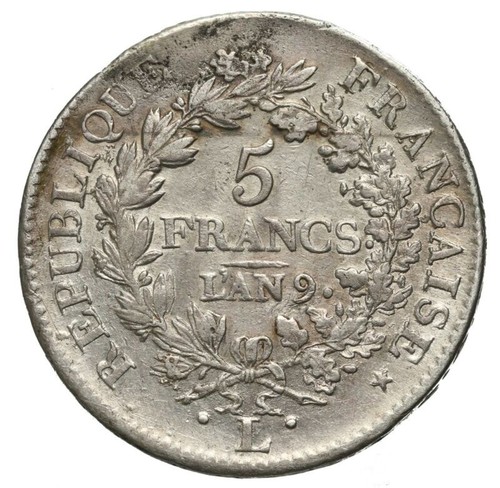
5 Francs (First Republic)
L'an 9 (1800–1801)
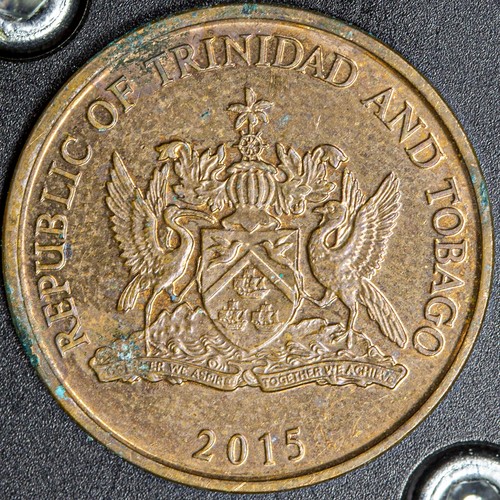
Trinidad and Tobago Dollar
2015
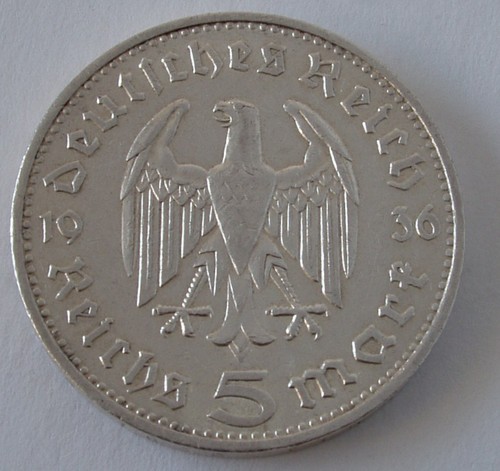
German 5 Reichsmark (Hindenburg)
1935–1936 (Hindenburg type with swastika)
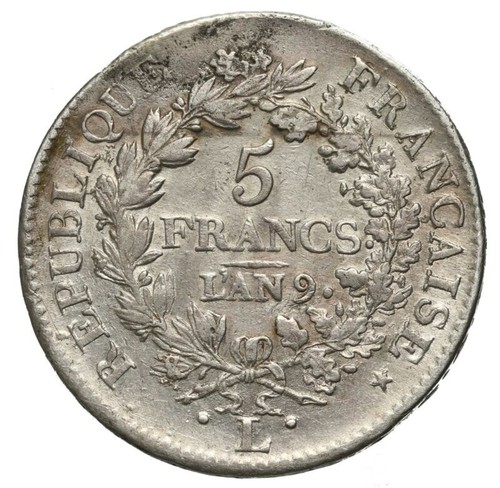
5 Francs Semeuse
1960–1969
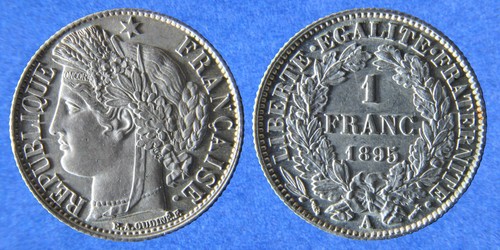
French Cérès 1 Franc
1849–1895
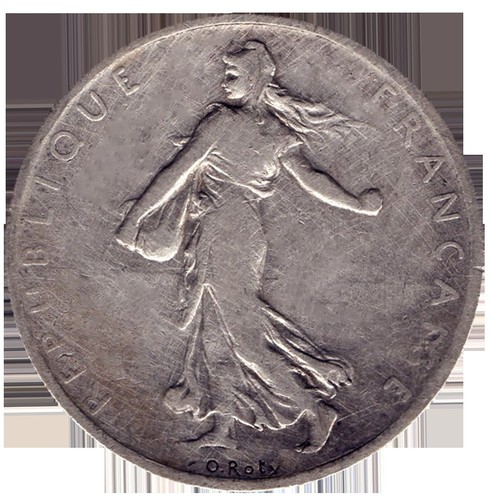
French Semeuse 2 Francs
1898–1920 (silver issues; pictured example dated 1899)
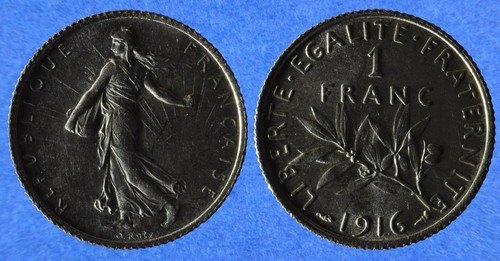
French Semeuse 1 Franc
1898–1920 (silver Semeuse 1 franc type)
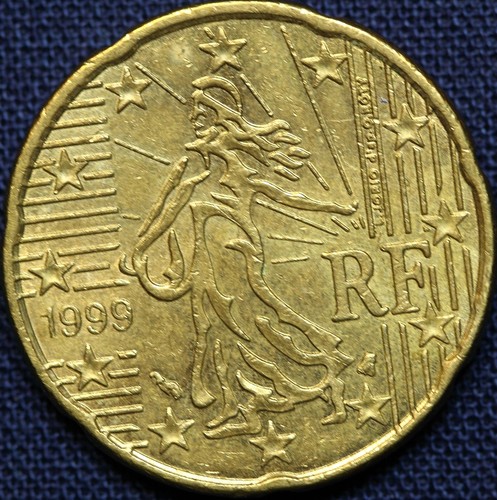
France 50 Cent Euro
1999–present
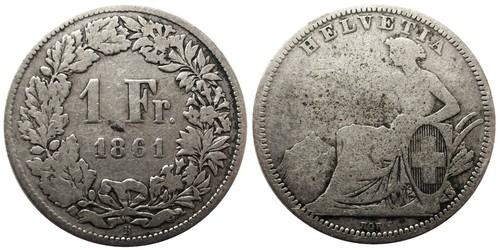
Swiss 1 Franc
1861
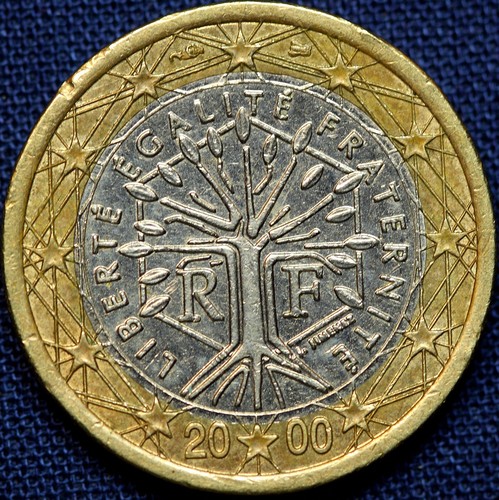
France 20 Centimes
1962–2001 (Fifth Republic, Marianne / Lagriffoul type)
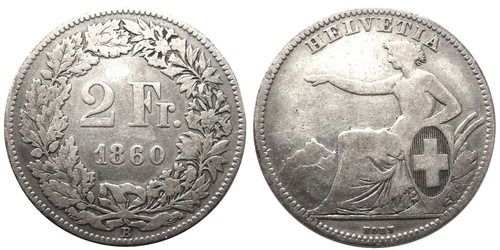
Swiss 2 Francs
1860
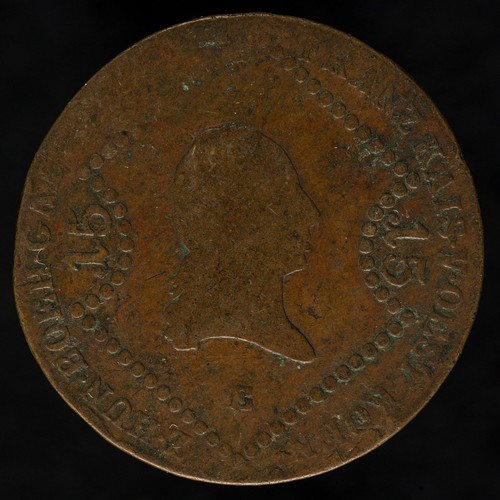
Austria-Hungary 15 Kreuzer
1807