
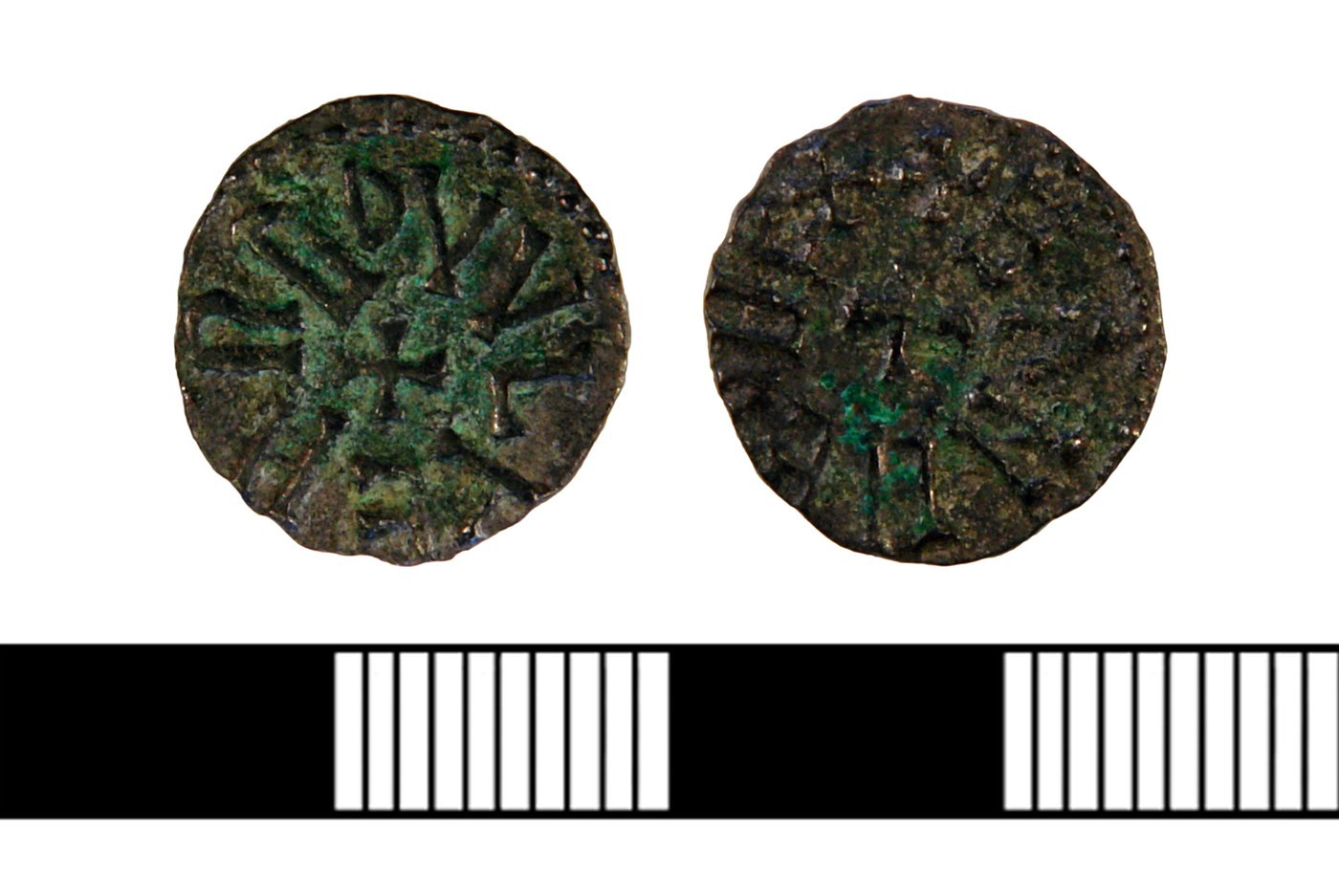
Styca of Eanred
Small base-metal coin of King Eanred of Northumbria, with a cross and legend on one face and a central symbolic motif on the other.
- Country
- England
- Denomination
- Styca
- Metal
- Bronze
Got a coin like this?
Identify any coin from a photo, free.
Overview
The Styca of Eanred is a small, thick base-metal coin of the Anglo-Saxon kingdom of Northumbria, and the example shown carries a cross with linear elements and an encircling legend on the obverse, with a central symbolic device on the reverse. Stycas were the everyday small change of northern England in the ninth century, struck in a debased alloy that by Eanred's reign was essentially a copper-based bronze or brass rather than silver.
Eanred ruled Northumbria in the earlier ninth century, and his stycas are among the most frequently encountered coins of the series. Rather than a portrait, the design relies on the king's name and a moneyer's name arranged around simple central motifs, most often a cross, pellet cluster, or small ornamental symbol. These coins survive in large numbers and are a popular, affordable introduction to genuine Anglo-Saxon coinage.
History & Background
Eanred was king of Northumbria in the first half of the ninth century, traditionally dated to roughly 810-840, during a period when the kingdom retained its own distinctive coinage separate from the silver pennies circulating farther south in England. The styca had evolved from the earlier silver sceat, but repeated debasement stripped out most of the precious metal, leaving a small coin of copper alloy sometimes containing only traces of silver.
The series is organized around named moneyers, the officials responsible for striking, whose names appear in the legend on one face while the king's name appears on the other. Eanred's coins were produced in quantity and continued a monetary tradition carried on by his successors, including Aethelred II and the later "derivative" and irregular issues. The Northumbrian styca coinage effectively ended in the middle decades of the ninth century amid political upheaval and the arrival of Viking forces in the north.
How to Identify
Look for a small, fairly thick coin roughly 12-15 mm across and only a few grams in weight, made of a dull brown, coppery, or brassy base metal rather than bright silver. One face shows a central cross or ornamental motif with straight linear elements, framed by a legend that includes the king's name, typically rendered in forms such as EANRED REX. The lettering is often crude and can run partly retrograde or blundered, which is normal for the series.
The other face carries a central symbolic device, which may read as a small cross, a cluster of pellets, an annulet, or a stylized ornament, surrounded by the name of a moneyer. Legends and motifs vary considerably from die to die because each was cut by hand, so expect differences in spelling, letter shape, and centering between genuine coins. Surfaces are usually earthen-toned or lightly corroded, reflecting long burial.
Value & Collectibility
Stycas of Eanred were struck in very large numbers and are among the more common Anglo-Saxon coins, so most circulated examples are modestly priced and accessible to beginning collectors. Value is driven chiefly by legibility of the legends, sharpness of the central motifs, surface quality, and the specific moneyer, with clearer, better-preserved coins commanding higher prices than worn or corroded pieces.
Scarcer moneyers, unusual symbols, and well-centered strikes with fully readable inscriptions add premiums, while heavily corroded, chipped, or blundered coins sit at the lower end. Because the metal is base and the coins small, condition and eye appeal matter more than bullion content. Modern reproductions and misattributions exist, so treat any single figure as approximate and confirm against recent specialist sales.
Frequently asked questions
Who was Eanred?
Eanred was a king of Northumbria, a kingdom in northern England, ruling in the earlier ninth century (traditionally about 810-840). His name appears in the legend on the coin.
Is a styca made of silver?
By Eanred's reign the styca was a base-metal coin, essentially a copper-based bronze or brass with little or no silver. Earlier related coins held more silver, but the styca was heavily debased.
Why is there no king's portrait?
Northumbrian stycas relied on inscriptions and simple central motifs rather than a bust. The king's name sits around one face and a moneyer's name around the other.
Are these coins rare?
No. Eanred's stycas were produced in large quantities and survive in great numbers, which makes them one of the more affordable and available genuine Anglo-Saxon coins.
Why do the letters look crude or misspelled?
Dies were cut by hand and legends were often blundered or partly reversed. This is normal for the styca series and does not by itself mean a coin is fake.
Styca of Eanred guides
In-depth guides for identifying, valuing, and collecting Styca of Eanred.
Other coins you may enjoy
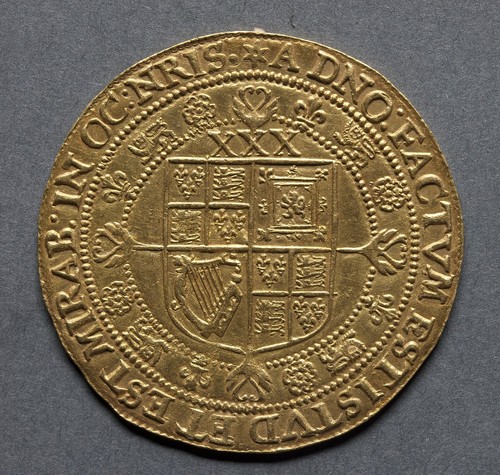
Edward IV Ryal
c. 1465-1470
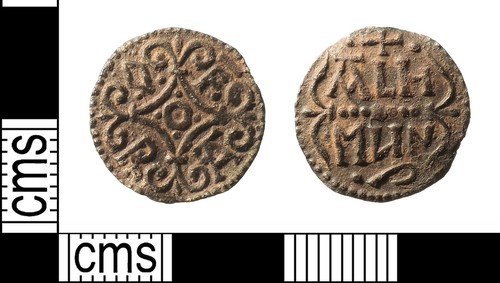
Penny of Offa
c. 757-796 (8th century)
Medieval Penny
c. 8th-15th century
Penny of Aethelred II
978-1013
Penny of Alfred the Great
c. 871-899 (late 9th century)
Henry VII Groat
1485-1509
Edward V Angel
1483
Edward IV Half Groat
1461-1483
Penny of Cnut
1024-1030
Henry VII Sovereign
1485-1509
Long Cross Penny
1247-1279 (13th century)
Anglo-Saxon Styca
8th-9th century