
Coin Encyclopedia
Search and identify coins from around the world — with country, denomination, metal, mint, history, and how to tell them apart.
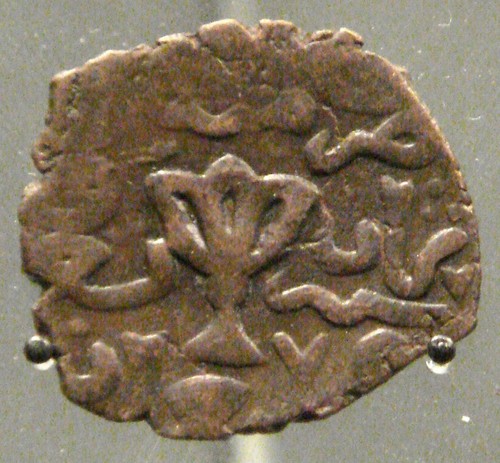
Copper Fals of Barquq
A hand-struck Mamluk copper fals of Sultan Barquq, struck at Damascus (1382–1389 CE), covered entirely in Arabic calligraphy with no figural imagery.
Islamic (Medieval)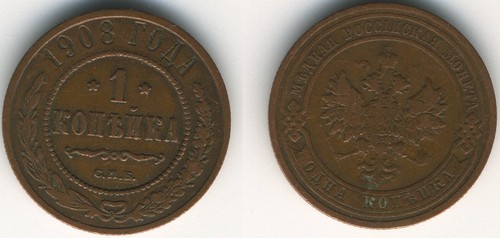
1 Kopeck
Small copper 1 Kopeck of Imperial Russia dated 1908, with the value in a wreath on one side and the crowned double-headed eagle on the other.
Modern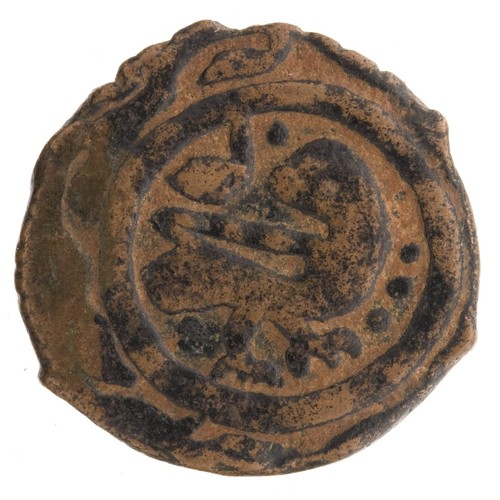
Copper Fals of as-Salih Salih
A hand-struck medieval Islamic copper fals attributed to as-Salih Salih, covered on both faces in Arabic calligraphy with no portrait or figural imagery.
Islamic (Medieval)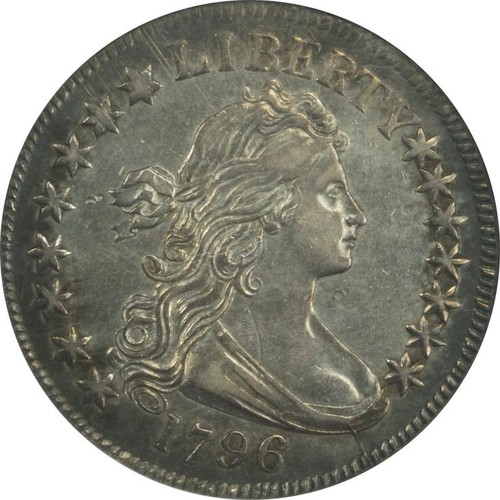
Draped Bust Half Dollar
Early U.S. silver fifty-cent piece of 1796–1807. The pictured 1796 Small Eagle with 15 stars is among the rarest of all American coins.
Half Dollar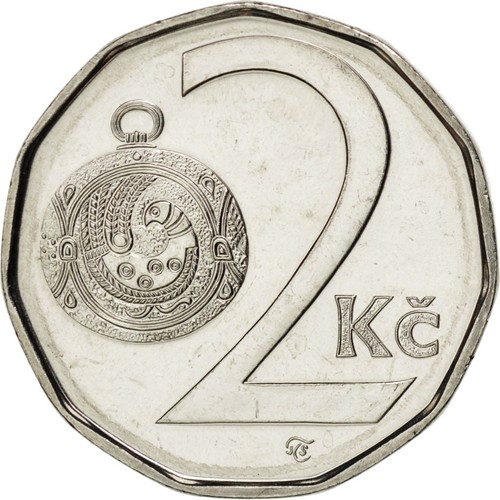
2 Koruny
A circulating Czech Republic coin introduced in 1993, known by its eleven-sided shape, the Czech heraldic lion, and a Great Moravian jewel motif beside 2 Kč.
Modern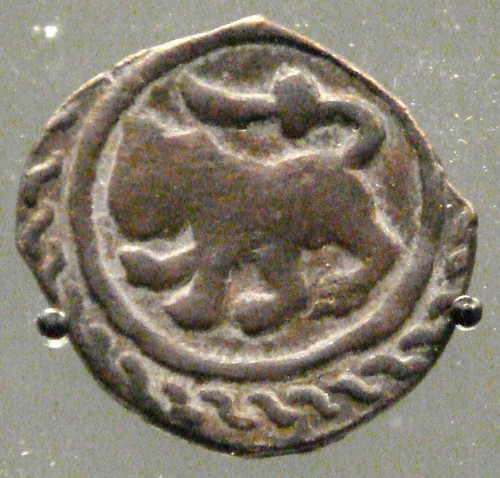
Copper Fals of Shaban II
A Mamluk copper fals struck under Sultan al-Ashraf Sha'ban II of Egypt, decorated with geometric ornament and Arabic legends rather than any figural image.
Islamic (Medieval)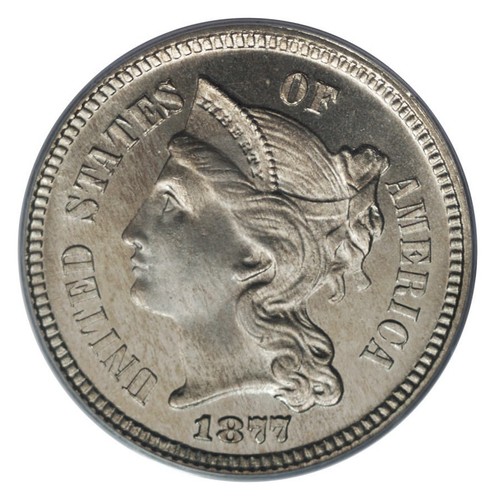
Three Cent Nickel
A small copper-nickel three-cent coin with a Liberty head obverse and a Roman numeral III inside a wreath; struck at Philadelphia from 1865 to 1889.
Three Cent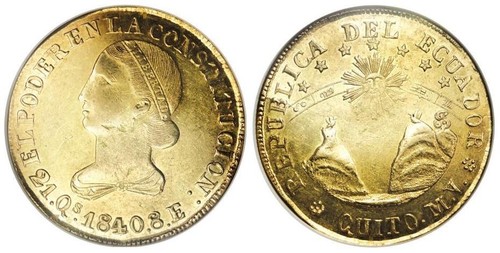
Escudo (Joanna and Charles V, contemporary copy)
A contemporary gilded copper-alloy copy imitating a Spanish gold escudo of Joanna and Charles V, made to pass as the real Habsburg gold coin.
Early Modern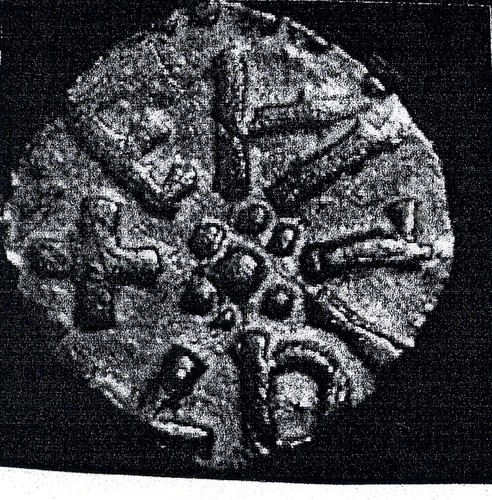
Styca of Aethelred
Small base-metal coin of the Anglo-Saxon kingdom of Northumbria, naming King Aethelred, with a central device and legend on one face and a cross on the other.
Medieval Coins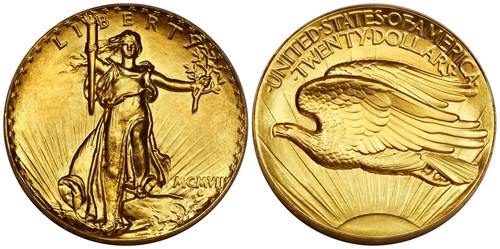
Ultra High Relief Double Eagle
Augustus Saint-Gaudens' 1907 $20 gold pattern struck in sculptural ultra high relief, with striding Liberty and a soaring eagle.
Gold Type Coin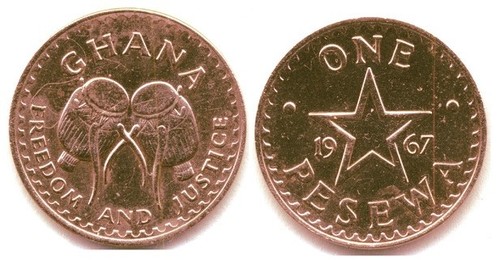
Ghana 1 Pesewa
A small copper-colored 1 pesewa coin of Ghana dated 1967, showing twin eagle heads and 'FREEDOM AND JUSTICE' on one side and a star on the other.
World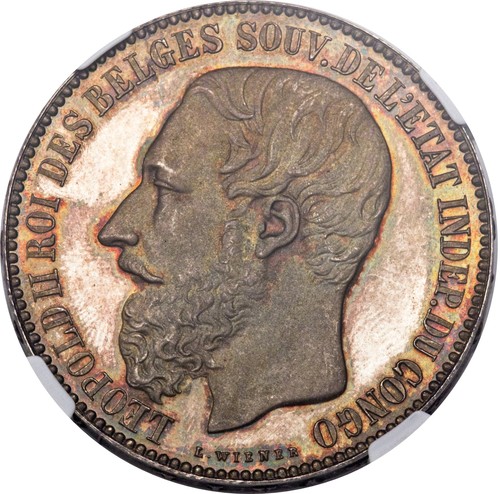
Belgian Congo 5 Francs (Copper)
A copper 5 Francs piece dated 1887 with a radiant star obverse and a crowned heraldic reverse reading CONGO BELGE, widely regarded as a fantasy or novelty type.
World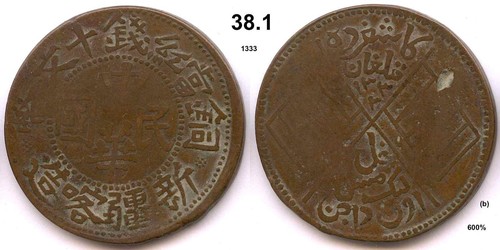
Aksu Mint 10 Cash
A struck copper 10 cash coin from the Aksu mint in Xinjiang, with Chinese characters and a denomination mark in a circular layout, without a central hole.
Cash Coin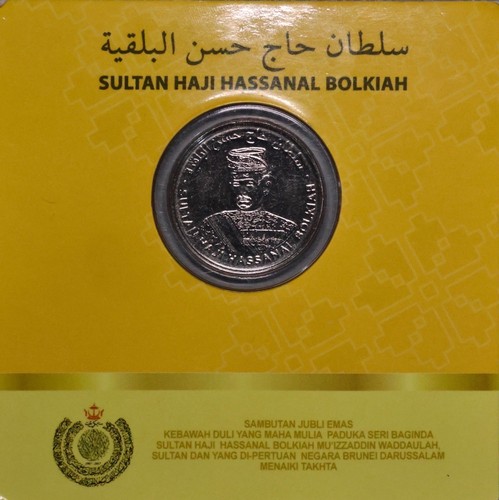
Brunei Golden Jubilee 50 Cents
A copper-nickel 50-cent coin from Brunei's 2017 Golden Jubilee, showing a palm-leaf design with Arabic text and a reverse with the value and a floral motif.
Southeast Asia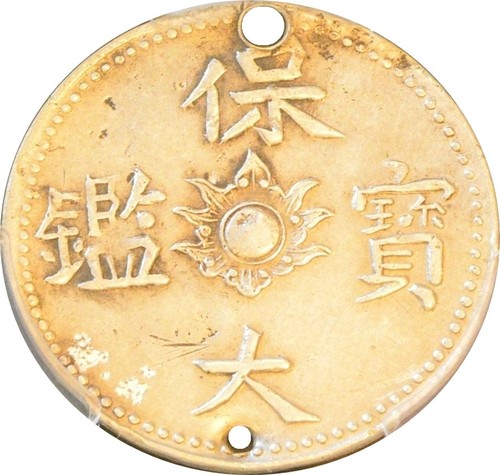
Vietnam 2 Tien - Bao Dai
A gold 2 Tien of Vietnam's last emperor, Bao Dai (1926-1945), its face bearing a radiant sun motif and Chinese-Vietnamese court inscriptions.
Southeast Asia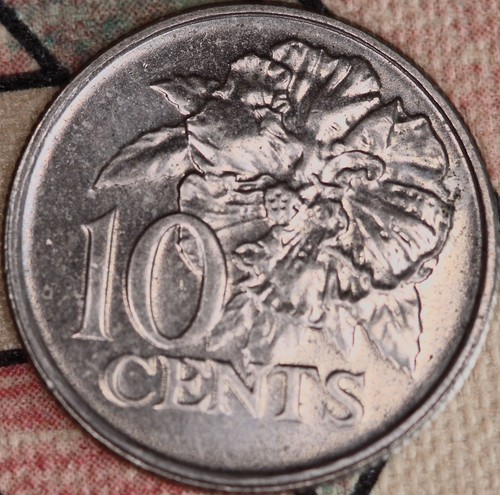
Trinidad and Tobago 10 Cents
A copper-nickel 10-cent coin of Trinidad and Tobago: the national coat of arms on the obverse and the denomination on the reverse.
Circulation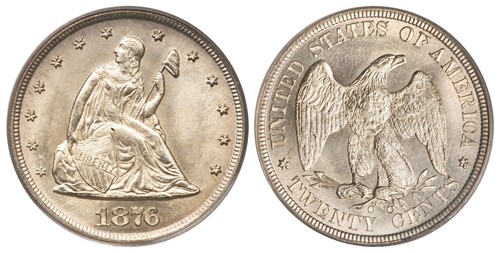
Twenty Cent Piece
A short-lived U.S. silver coin worth twenty cents, showing a seated Liberty and a soaring eagle, struck only from 1875 to 1878.
Twenty Cent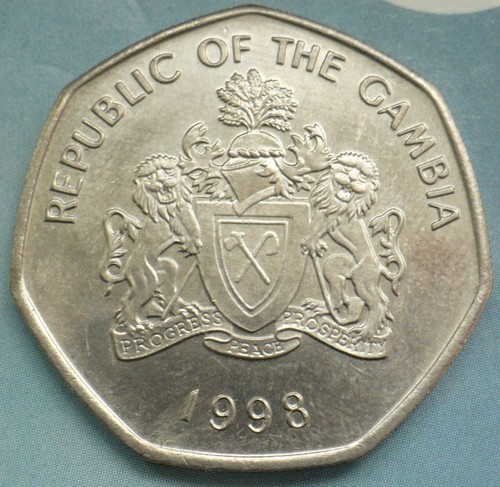
Gambia 1 Dalasi
A distinctive octagonal copper-nickel coin of The Gambia, showing the national coat of arms and the bold value 1 Dalasi dated 1998.
World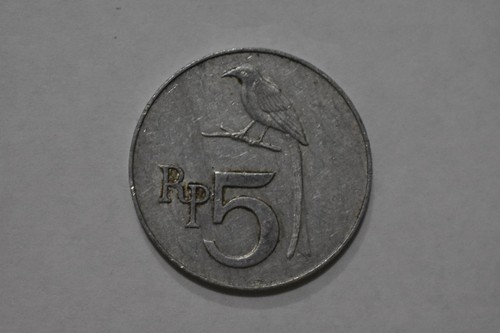
Indonesia 5 Rupiah
A lightweight aluminum 5-rupiah coin of the Republic of Indonesia dated 2003, carrying the Garuda eagle emblem and the legend Bank Indonesia.
Southeast Asia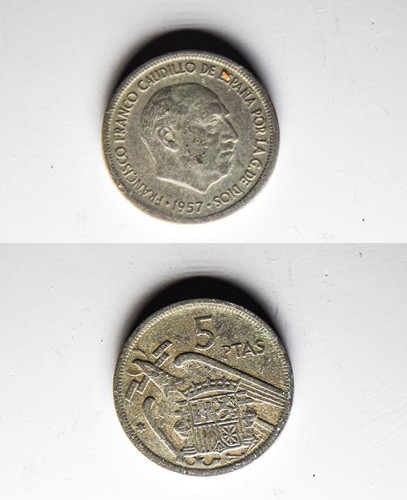
25 Pesetas (Franco)
Spain's common Franco-era 25 pesetas, a silvery copper-nickel coin bearing the national coat of arms and the value 25; dated 1957 but struck into the 1970s.
Modern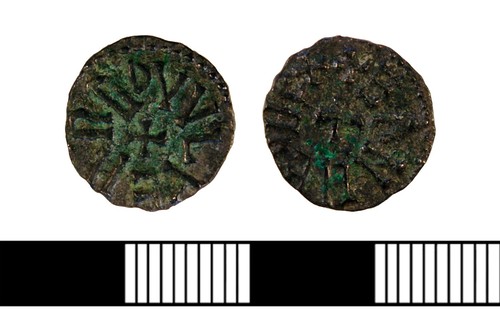
Styca of Eanred
Small base-metal coin of King Eanred of Northumbria, with a cross and legend on one face and a central symbolic motif on the other.
Medieval Coins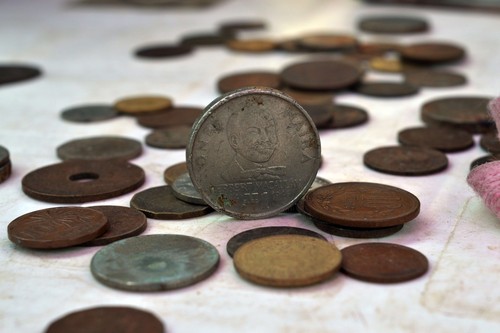
Nigeria 1 Naira
Nigeria's copper-nickel 1 Naira showing the nationalist Herbert Macaulay on the obverse and the national coat of arms on the reverse.
World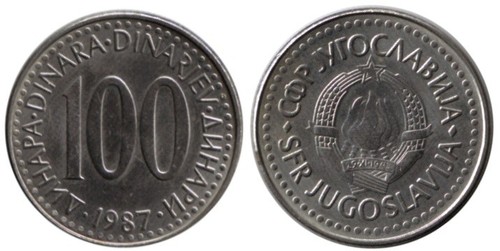
100 Dinara
A copper-nickel 100 Dinara circulation coin of socialist Yugoslavia dated 1987, with a big numeral 100 on one face and the Yugoslav state emblem on the other.
Modern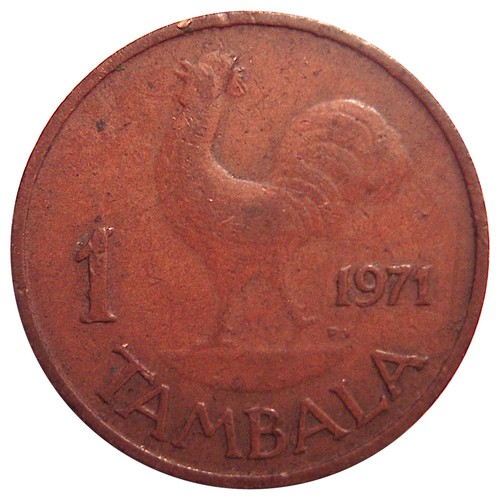
Malawi 1 Tambala
Malawi's small copper-bronze 1 tambala of 1971, showing President Hastings Kamuzu Banda on the obverse and a standing cockerel on the reverse.
World