
Coin Encyclopedia
Search and identify coins from around the world — with country, denomination, metal, mint, history, and how to tell them apart.
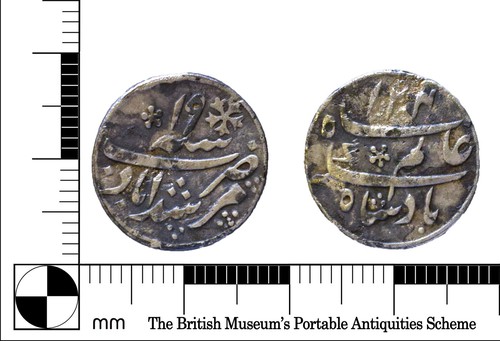
Mughal Islamic Rupee
A hand-struck silver rupee of the Mughal Empire, filled edge to edge with Persian and Arabic script naming the emperor, mint, and regnal year.
Islamic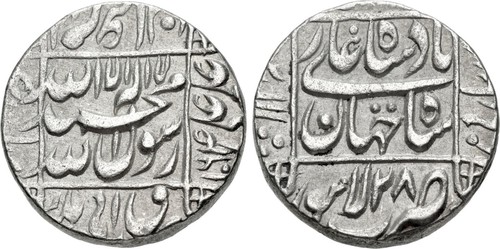
Shah Jahan Rupee
Hand-struck silver rupee of Mughal emperor Shah Jahan, all-Persian calligraphy in ornate cartouches, dated AH 1064 (AD 1653-1654).
Mughal India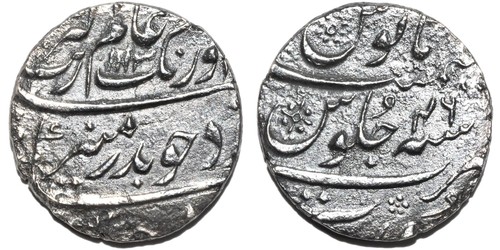
Mughal Rupee (Akbar)
A hand-struck Mughal silver rupee of Emperor Akbar dated AH 1003 (AD 1594), covered on both faces with flowing Persian calligraphy and ornamental borders.
Historic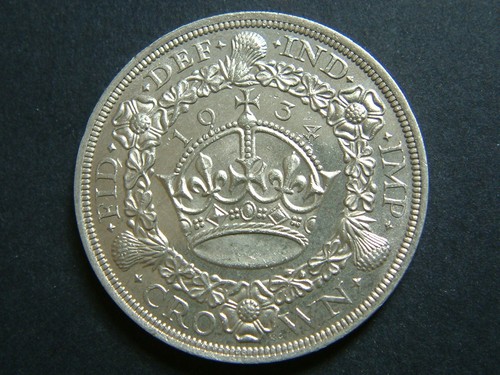
British Crown
A large George V silver crown of the 1927–1936 'wreath' type, showing the king's profile and a royal crown framed by an ornamental wreath.
British Isles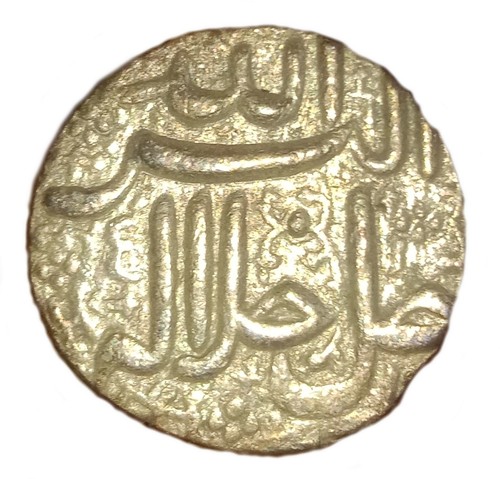
Silver Rupee of Ahmadabad
Hand-struck Mughal silver rupee of Emperor Akbar from the Ahmadabad mint in Gujarat, dated Regnal Year 47.
Mughal India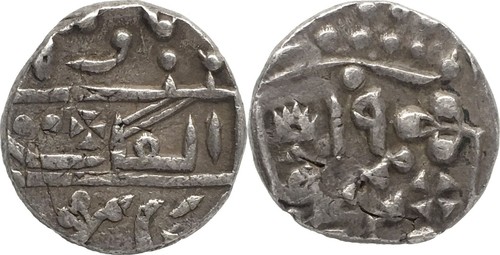
Kotah State Rupee
Silver rupee of the princely state of Kotah in Rajputana, struck with Persian and Devanagari legends and the state's katar-dagger emblem.
Princely & Presidency States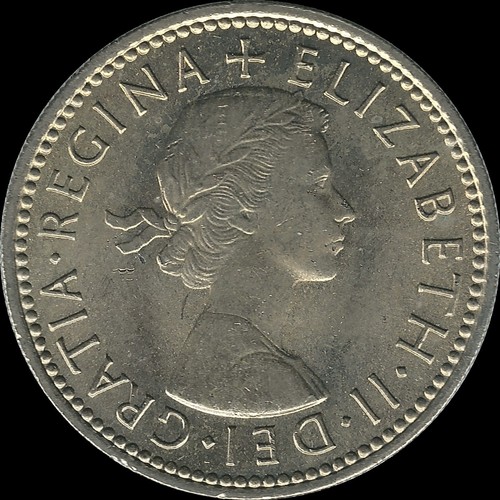
British Shilling
Small Victorian silver shilling showing Queen Victoria's crowned, veiled Jubilee portrait and a crowned heraldic shield reverse.
World Coins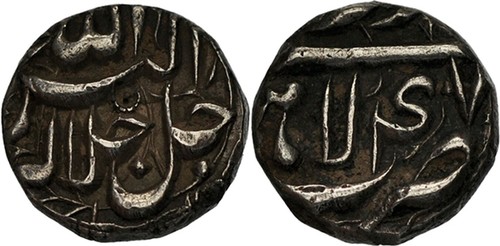
Mughal Quarter-Rupee
A small hammered Mughal silver quarter-rupee inscribed in Persian, struck at the Lahore mint and dated Ilahi 47 (AD 1602-1603).
Historic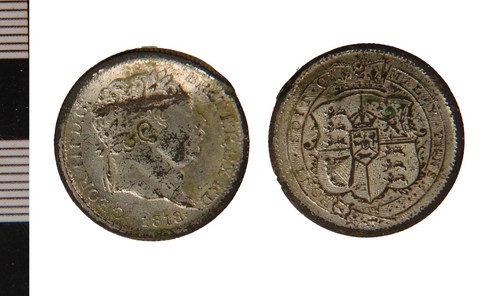
British Bank Token
Copper token of the late George III period bearing the king's left-facing bust and a quartered royal-arms reverse, dated 1819.
British Isles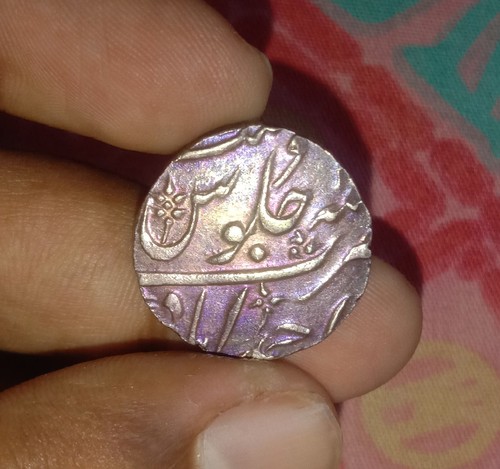
Silver Rupee of Bombay Presidency
British East India Company silver rupee struck at Bombay in the name of Mughal emperor Akbar II, bearing Persian legends.
Princely & Presidency States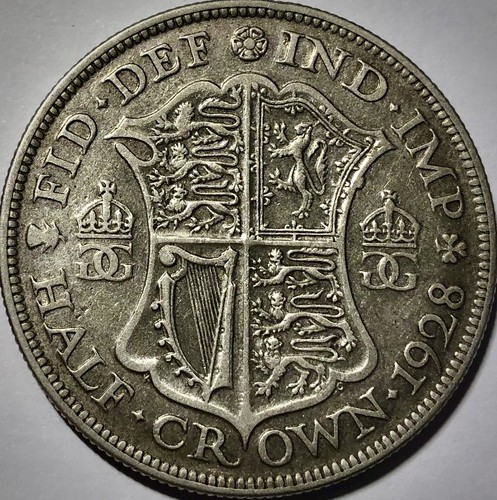
British Half Crown
British silver half crown of King George V, worth two shillings and sixpence, with the king's bare left-facing head and a crowned shield of arms.
British Isles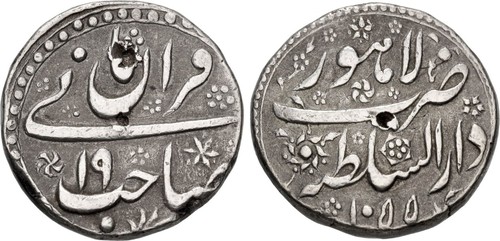
Shah Jahan Half Rupee
Silver half rupee of Mughal emperor Shah Jahan, dated AH 1055, carrying Persian-script inscriptions and ornamental borders instead of any portrait.
Mughal India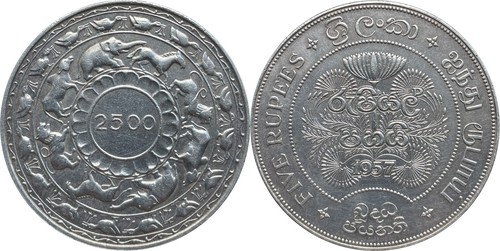
Ceylon 5 Rupees
A 1957 Ceylon silver 5 Rupees marking 2500 years of Buddhism, with a large 2500 on one side and RUPEES CEYLON with the 1957 date on the other.
Commemorative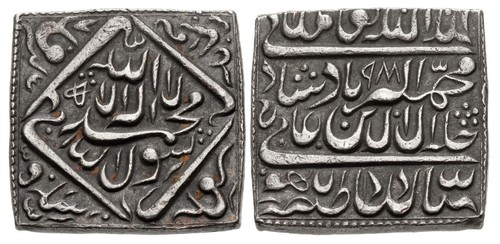
Mughal Square Rupee Token
A square silver-colored token copying a Mughal square rupee, with Persian and Islamic inscriptions and an AH 988 date, produced as a later reproduction.
Token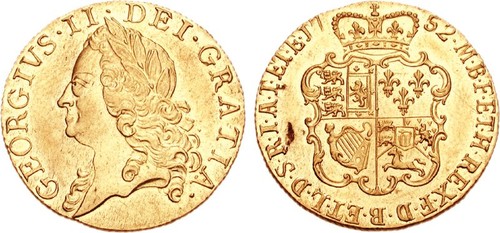
Guinea of George II
A milled gold guinea of Great Britain struck during the reign of George II, with a left-facing royal bust and a crowned heraldic shield reverse.
Milled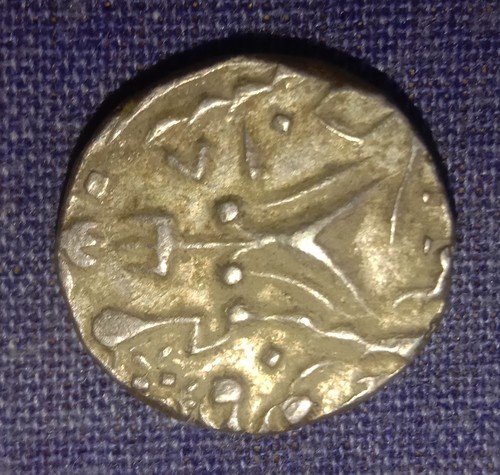
Silver Rupee of Bhopal State
Silver rupee of the princely state of Bhopal, struck at the Daulatgarh mint in the name of Mughal emperor Muhammad Akbar II, marked by a trident symbol.
Princely & Presidency States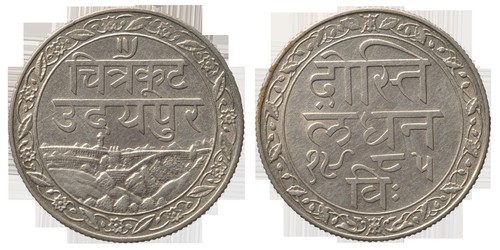
Mewar Chitrakut Half Rupee
A silver half rupee of the princely state of Mewar (Udaipur), dated VS 1985 (c. 1928), with Devanagari legends including the denomination अर्धरुपये.
Princely & Presidency States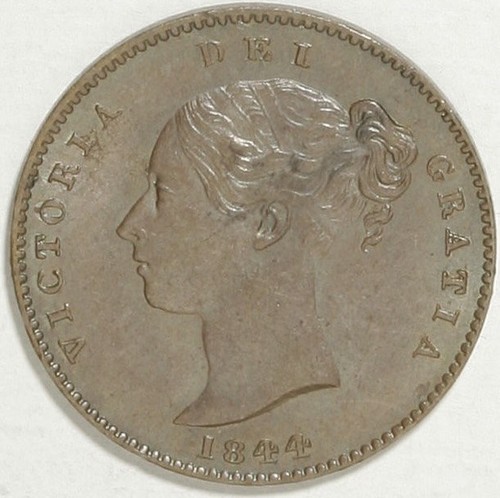
British Third Farthing
A tiny 1844 Victoria copper coin: young left-facing queen's bust obverse, crowned value reverse. One of Britain's smallest denominations, struck for Malta.
Circulation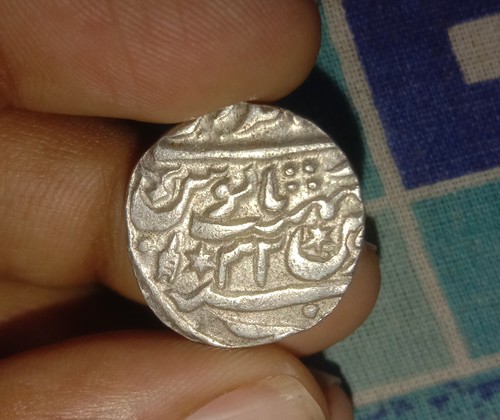
Silver Rupee of Bharatpur State
Silver rupee of the Jat princely state of Bharatpur, struck at the Mahe Indrapur mint in the name of the Mughal emperor Akbar II.
Asian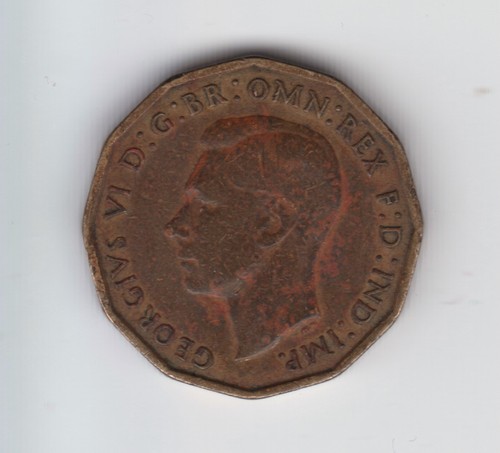
British Brass Threepence
Chunky twelve-sided nickel-brass threepence of George VI, showing his head and a thrift plant reverse; the example shown is dated 1942.
British Isles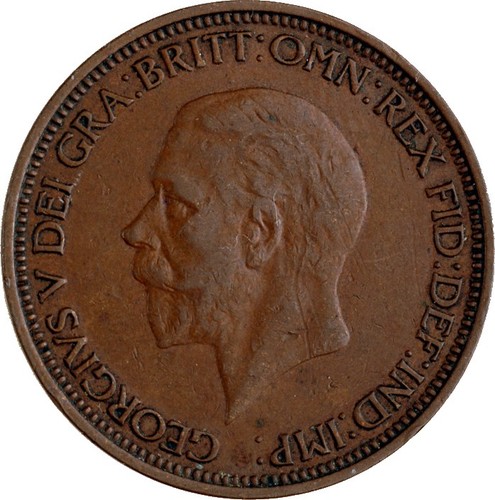
British Pre-Decimal Halfpenny
Bronze British halfpenny worth 1/480 of a pound. The George V type shows the king's profile and a seated Britannia with trident.
British Isles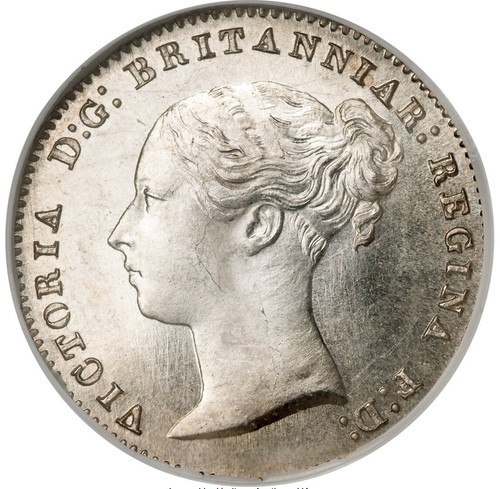
British Silver Threepence
Tiny sterling-silver threepence of Queen Victoria; the young-head type shown here dates to 1858 and is one of Britain's smallest circulating coins.
British Isles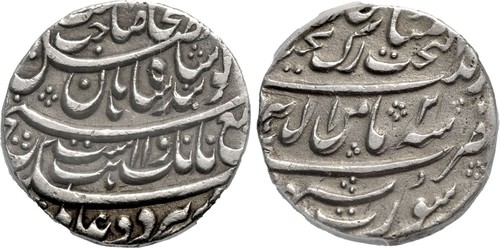
Banda Singh Bahadur Sikh Rupee
A hand-struck silver rupee of the early Sikh Khalsa, issued in the name of the Sikh Gurus during Banda Singh Bahadur's short-lived sovereignty, dated Khalsa Era Year 2.
Asian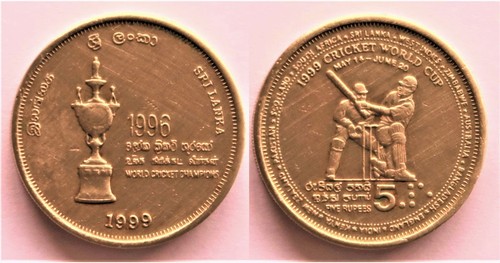
Sri Lanka 5 Rupees
Sri Lanka's 1999 copper-nickel five rupees marking the Cricket World Cup, showing the tournament trophy on one face and a batsman at the crease on the other.
South Asia