Silver Rupee of Bharatpur State
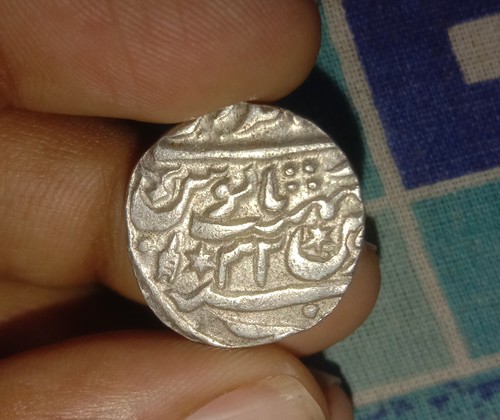
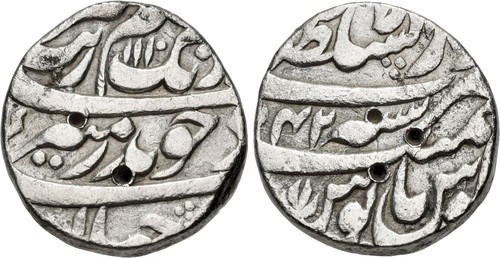
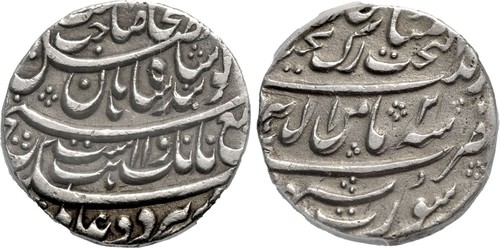
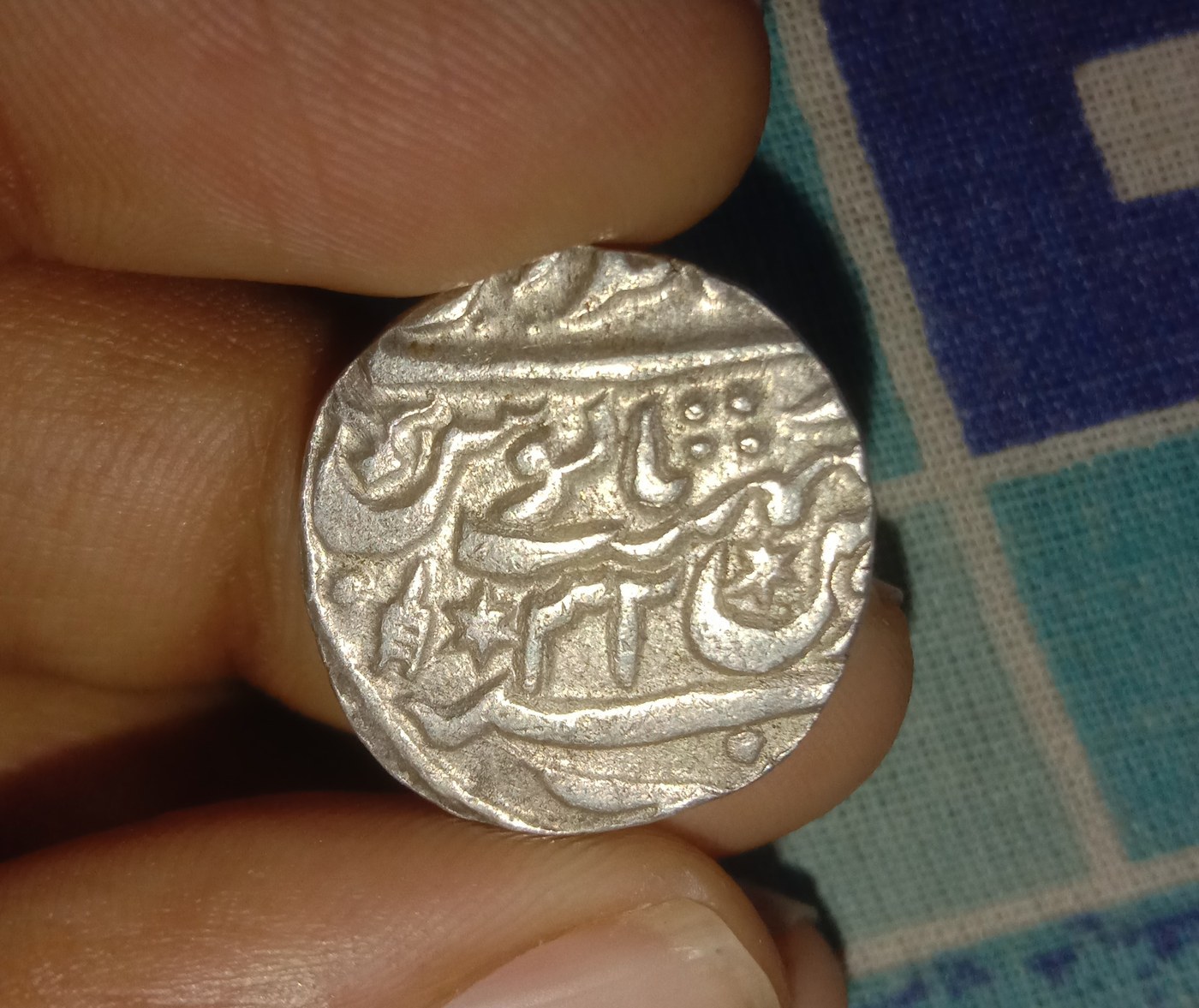
Silver rupee of the Jat princely state of Bharatpur, struck at the Mahe Indrapur mint in the name of the Mughal emperor Akbar II.
- Country
- Bharatpur State (India)
- Denomination
- Rupee
- Metal
- Silver
Got a coin like this?
Identify any coin from a photo, free.
Overview
The Silver Rupee of Bharatpur State is a princely-state coin issued by the Jat kingdom of Bharatpur in the region of Braj, in what is today eastern Rajasthan. Like many Indian states of its era, Bharatpur struck its rupees in the name of the reigning Mughal emperor rather than its own ruler, and this type carries the name and titles of Akbar II (reigned 1806–1837), the nominal Mughal sovereign in Delhi.
The coins were produced at Bharatpur's own mint, which appears on the coinage under the formal name Mahe Indrapur (also rendered Mahindrapur). The result is a broad, thin silver rupee of the traditional Mughal-style fabric, covered in Persian calligraphy on both faces with no portrait or pictorial design.
For collectors, the type sits at the intersection of two popular fields: Mughal-style silver coinage and the independent coinage of the Indian princely states. It documents the way regional rulers continued to invoke a fading Mughal authority well into the nineteenth century, even as real power in the region passed to the Jat rulers and, increasingly, to the British East India Company.
History & Background
Bharatpur emerged as a powerful Jat state in the eighteenth century under rulers such as Suraj Mal, controlling a strategically important region between Delhi, Agra, and the Rajput states. Its rulers built the formidable fortress of Bharatpur and, like other regional powers of the period, asserted their status in part through the issue of their own coinage struck at a local mint.
Following the collapse of effective Mughal central power, princely states across northern India continued to strike coins in the name of the Mughal emperor as a matter of tradition and legitimacy, even when the emperor exercised no real authority over them. Bharatpur followed this convention, and rupees of this type name Akbar II, who reigned from 1806 to 1837 as a largely powerless sovereign pensioned by the British East India Company in Delhi.
Bharatpur itself came under mounting British pressure in the early nineteenth century, culminating in the celebrated siege of 1825–26, after which the state functioned within the framework of British paramountcy. Coinage in the Mughal name continued into this period, gradually giving way over the nineteenth century as British Indian currency became dominant across the subcontinent.
How to Identify
This is a round, broad, thin silver rupee struck in the Mughal tradition, with flowing Persian (Nastaliq-style) inscriptions filling both faces and no images, portraits, or Latin lettering. The obverse carries the name and honorific titles of the Mughal emperor Akbar II together with a regnal year, while the reverse names the mint and typically includes the regnal year of striking and formulaic phrasing.
The key diagnostic for this state issue is the mint name Mahe Indrapur (Mahindrapur), the formal name under which the Bharatpur mint appears on the coinage. Bharatpur rupees also commonly bear small distinguishing symbols or privy marks in the field that specialists use to separate them from Mughal imperial rupees and from the coinage of neighboring states that were also struck in the emperor's name.
In size and weight the coin follows the long-standing Indian rupee standard of roughly eleven to twelve grams of silver, similar in fabric to Mughal and other princely-state rupees of the period. Because the calligraphy is dense and often struck slightly off-flan, reading the full mint name and regnal year usually requires patience and comparison against catalogued examples of Bharatpur coinage.
Value & Collectibility
As a princely-state silver rupee, this type is collected within the broad and active field of Indian states numismatics. Common, well-circulated examples with partial legends are generally accessible in price, while pieces with a full, sharp strike showing the complete mint name and regnal year command higher premiums among specialists.
Value is driven chiefly by the clarity of the inscriptions, the state of preservation, and the specific regnal year and variety, rather than by silver content alone. Because many princely rupees of the Mughal-name type look broadly similar, attribution to Bharatpur through the Mahe Indrapur mint name and its characteristic marks is essential to establishing what a given coin actually is and what it is worth.
As with all historic South Asian silver, cross-checking weight, fabric, and calligraphy against reference material, and buying from dealers experienced in princely-state coinage, is the best protection against misattributed or altered pieces.
Frequently asked questions
Why does a Bharatpur coin name the Mughal emperor instead of the local ruler?
Like many Indian princely states, Bharatpur struck its rupees in the name of the reigning Mughal emperor as a matter of tradition and legitimacy, even after the emperor had lost real power over the region.
Who was Akbar II?
Akbar II was the Mughal emperor from 1806 to 1837. By his reign the Mughals were largely figurehead rulers pensioned by the British East India Company, though their name still appeared on coinage across northern India.
What is the Mahe Indrapur mint?
Mahe Indrapur, also rendered Mahindrapur, is the formal mint name under which the Bharatpur state mint appears on its coinage. Reading this name is the main way to attribute a rupee to Bharatpur.
Is there a portrait on the coin?
No. In keeping with Mughal-tradition coinage, the rupee carries only Persian calligraphic inscriptions naming the emperor, the mint, and the regnal year, with no portrait or pictorial design.
Silver Rupee of Bharatpur State guides
In-depth guides for identifying, valuing, and collecting Silver Rupee of Bharatpur State.