
How to Identify the Silver Rupee of Bharatpur State
A collector's guide to attributing a Bharatpur rupee: reading the Mahe Indrapur mint name, the Akbar II legend, and the marks that separate it from look-alikes.
Read the full Silver Rupee of Bharatpur State encyclopedia entry →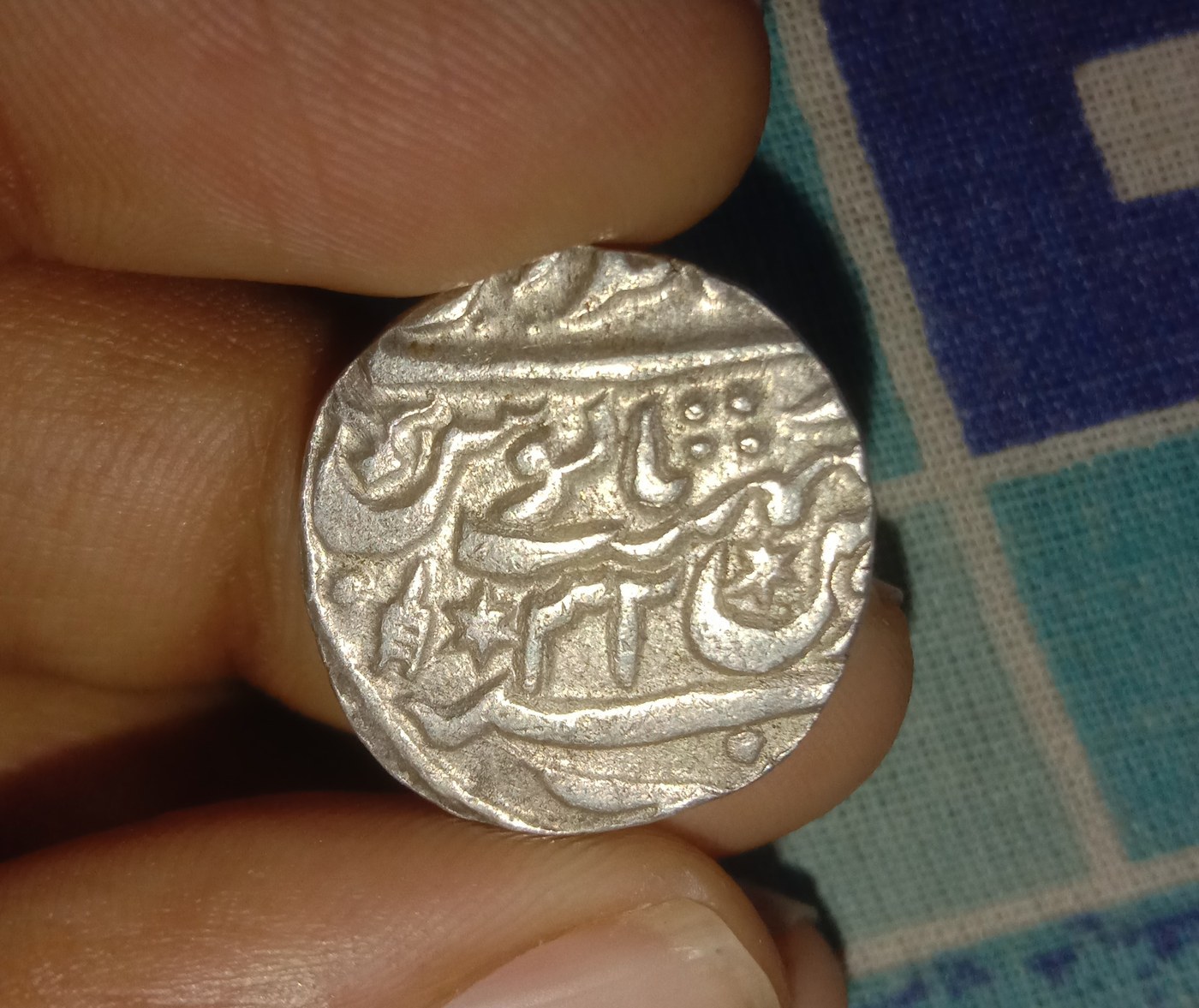
Start With the Fabric
Confirm first that you are holding a Mughal-tradition silver rupee: a round, comparatively broad and thin coin, roughly eleven to twelve grams of silver, densely covered in flowing Persian script on both faces with no portrait, image, or Latin lettering. Machine-milled edges, a bust, or English legends point instead to British Indian or other coinage, not a Bharatpur state rupee.
Read the Emperor's Name (Obverse)
The obverse carries the name and honorific titles of the Mughal emperor together with a regnal year. On this type the emperor is Akbar II (reigned 1806–1837). Identifying the ruler's name narrows the date window, but by itself it does not prove the coin is from Bharatpur, because many states struck rupees in the same emperor's name during the same years.
Find the Mint Name (Reverse)
The decisive step is locating the mint name on the reverse. Bharatpur's mint appears in the legend as Mahe Indrapur (Mahindrapur). This mint name, not the emperor's name, is what actually attributes the coin to Bharatpur State. Dense calligraphy and off-flan striking often hide part of the name, so compare the visible letters against catalogued Bharatpur examples rather than guessing.
Check the Symbols and Marks
Bharatpur rupees frequently carry small privy marks or symbols in the field that specialists use to distinguish the state's output and its individual issues. Note any such marks and their placement; together with the mint name and regnal year they help pin down the specific variety and separate genuine Bharatpur pieces from Mughal imperial rupees and from neighboring states' Mughal-name coinage.
Authentication Cautions
Because so many princely rupees of this era share a near-identical look, misattribution is the most common problem, not outright forgery. Weigh the coin, examine the metal and edge for signs of casting or plating, and treat any coin whose mint name has been conveniently re-tooled or over-struck with caution. When value matters, have the attribution confirmed by a dealer or reference experienced in Indian princely-state coinage.
Frequently asked questions
How do I know a rupee is from Bharatpur and not another state?
The emperor's name alone is not enough, since many states used it. Look for the mint name Mahe Indrapur (Mahindrapur) in the reverse legend, which is what specifically identifies Bharatpur State coinage.
The inscription is hard to read. Is that normal?
Yes. These rupees have dense Persian calligraphy and were often struck slightly off-center, so part of the mint name or date frequently falls off the flan. Comparing against catalogued examples is the usual way to read them.
Does weighing the coin help identify it?
Weight confirms it belongs to the traditional rupee standard of roughly eleven to twelve grams of silver, which supports a Mughal-tradition attribution, but weight alone cannot distinguish Bharatpur from other states striking similar rupees.
What is the biggest risk when buying one?
Misattribution rather than fakery. A coin can be genuine silver yet wrongly labeled, so verify the Bharatpur mint name and marks, and buy from sellers experienced in princely-state coinage.