
Coin Encyclopedia
Search and identify coins from around the world — with country, denomination, metal, mint, history, and how to tell them apart.
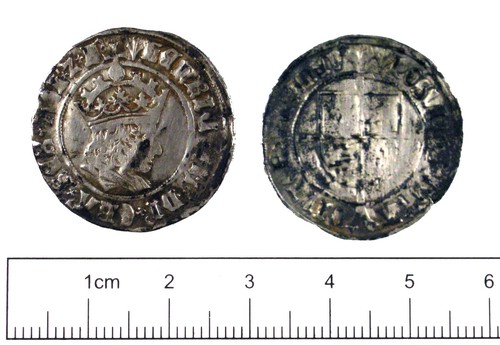
Henry VII Groat
Hammered silver fourpence of Henry VII, first Tudor king, showing a crowned royal portrait on one side and a shield of the English arms on the other.
Medieval Coins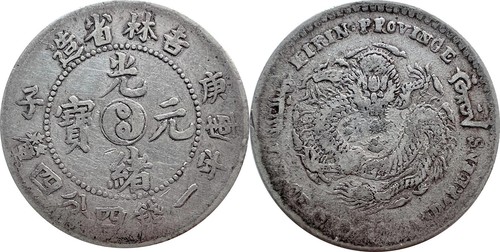
Guangxu Yuanbao 20 Cents
A machine-struck Qing silver 20 cents of the Guangxu era, with a coiled dragon on one face and a yin-yang (taiji) symbol on the other.
Circulation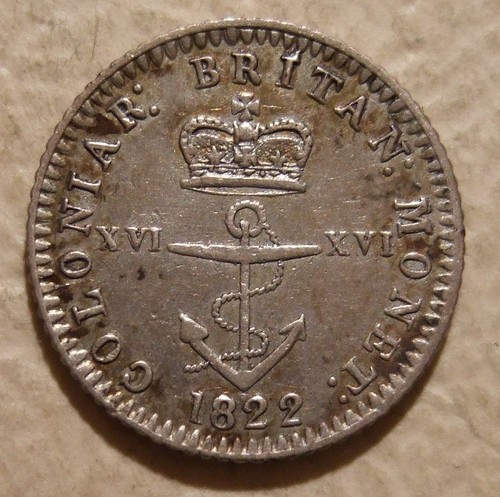
George IV One Sixteenth Spanish Dollar
A small George IV silver coin of the "Anchor Money" series, worth one-sixteenth of a Spanish dollar and marked with an anchor and Roman numeral XVI.
Colonial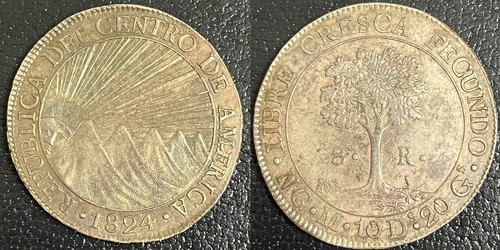
Central American Republic 8 Reales
A silver 8 reales of the Central American Republic, showing a rayed sun rising over mountains on one side and a tree on the other, dated 1824.
Circulation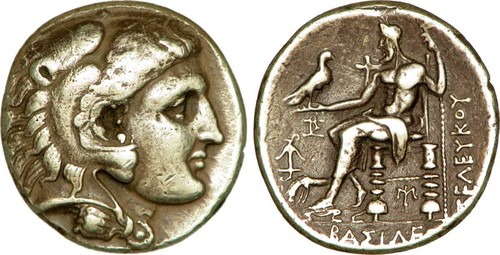
Seleucus I Nicator Tetradrachm
Large silver tetradrachm of Seleucus I Nicator, founder of the Seleucid Empire, showing a horned Alexander-type head and a mounted figure with a spear.
Ancient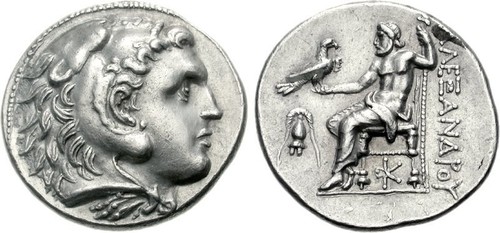
Antigonos II Gonatas Tetradrachm
Silver tetradrachm of the Macedonian king Antigonos II Gonatas, c. 275-270 BC, with a bearded royal head and a seated Nike holding a wreath.
Ancient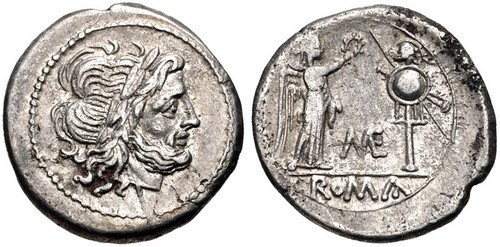
Roman Victoriatus
Silver Roman Republican victoriatus of the late 3rd–2nd century BC, with the laureate head of Jupiter and a Victory crowning a trophy above ROMA.
Ancient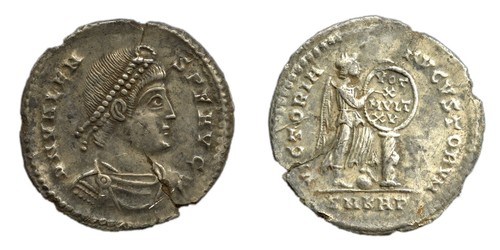
Arles Miliarensis
A late Roman silver miliarensis of the 4th century AD, with a diademed imperial portrait and an armed standing figure holding spear and shield.
Ancient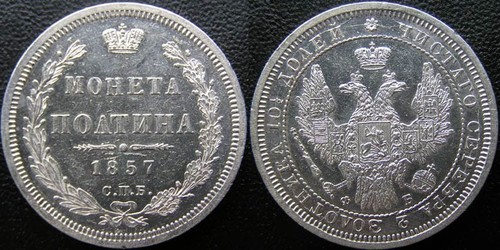
Poltina (½ Rouble)
Silver half-rouble of Imperial Russia dated 1857, marked ПОЛТИНА on one side and bearing the crowned double-headed eagle of the Romanov empire.
Modern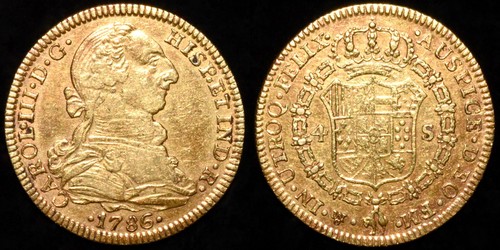
4 Escudos
Spanish Bourbon gold 4 Escudos of the 1780s, with an armored royal bust facing right and a crowned coat of arms on the reverse.
Early Modern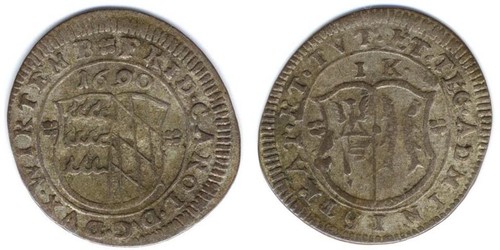
Württemberg Kreuzer
A small silver 1 Kreuzer of the Duchy of Württemberg, dated 1690, with a heraldic coat of arms and a crowned shield over scrollwork.
German States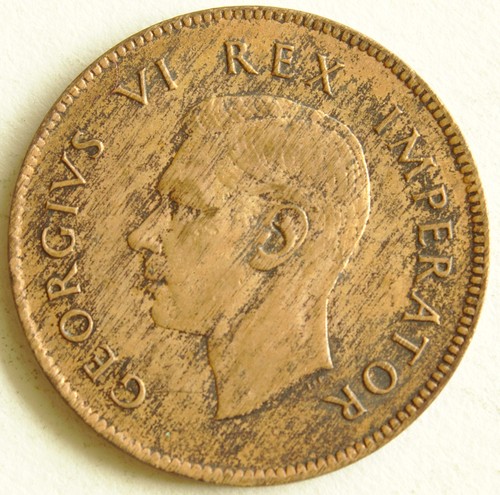
South Africa Farthing
The smallest bronze coin of the Union of South Africa, a quarter-penny with a crowned royal portrait and a South African bird reverse.
World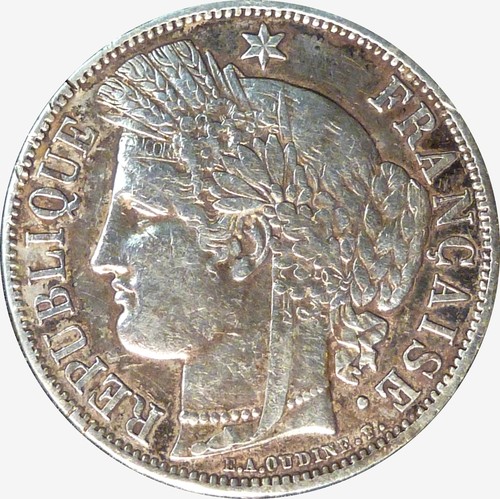
5 Francs Ceres
France's large silver 5 francs bearing the wreathed head of Cérès, goddess of the harvest, with the value framed by laurel on the reverse.
Circulation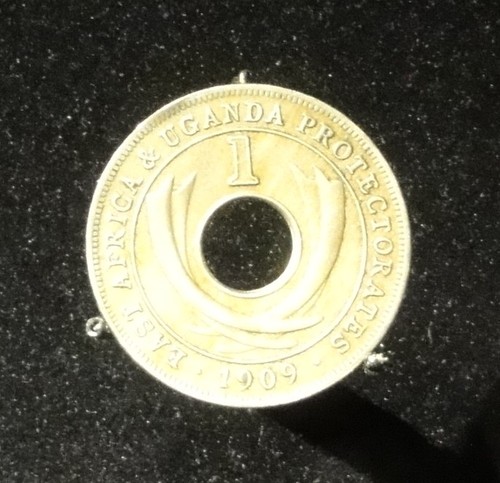
East Africa Protectorate 1 Cent
A small holed one-cent coin of the British East Africa Protectorate, struck in base metal with a crowned, portrait-free design around a central hole.
World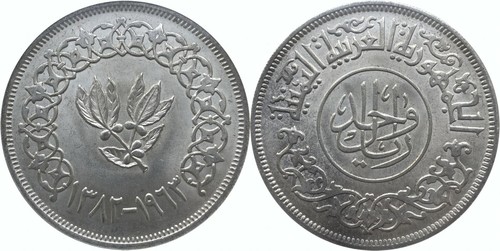
North Yemen 1 Rial
Silver 1 Rial of the Yemen Arab Republic (North Yemen), dated 1963, with a floral wreath obverse and an ornamental Arabic inscription on the reverse.
World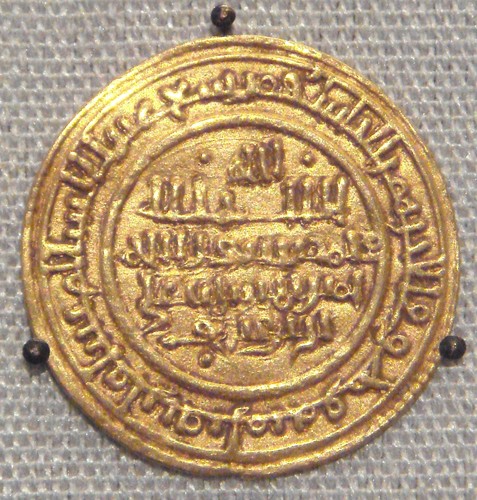
Almoravid Gold Dinar
Pure-gold dinar of the Almoravid dynasty, struck in Islamic Spain and North Africa with concentric Arabic legends; this piece is dated 1116 CE.
Medieval Islamic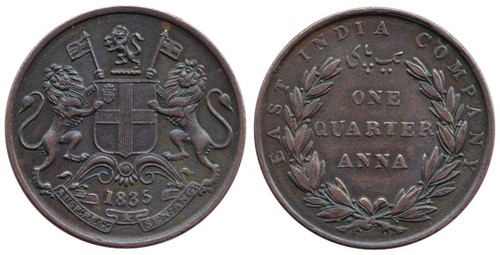
East India Company Quarter Anna
Large copper 1/4 anna of the East India Company dated 1835, with a heraldic lion-and-shield obverse and a laurel-wreath reverse.
British India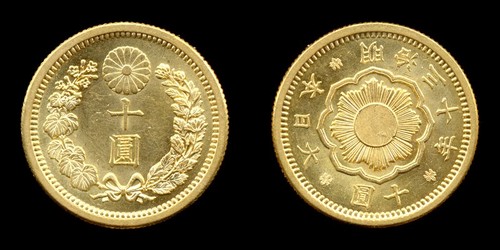
10 Yen (Gold)
A Japanese gold 10 Yen of the Meiji era, its obverse a radiant chrysanthemum sunburst, its reverse a wreath framing imperial crests; dated Meiji 30 (1897).
Circulation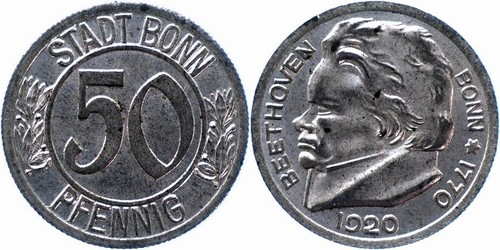
Bonn Notgeld 50 Pfennig
A German emergency-money (Notgeld) 50 Pfennig of the city of Bonn, dated 1920, with the civic arms on the obverse and a Beethoven profile on the reverse.
Token/notgeld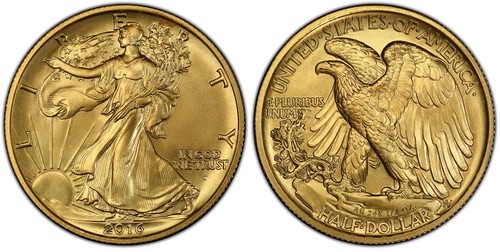
Walking Liberty Half Dollar Centennial Gold
A 2016-W gold collector coin marking the centennial of the 1916 Walking Liberty half dollar, struck in 1/2 oz of 24-karat gold at West Point.
Half Dollar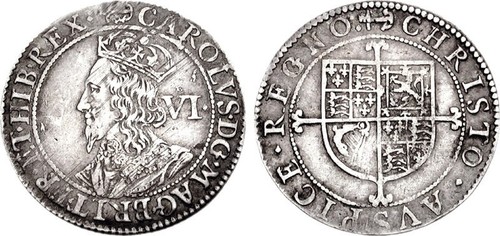
Charles I Sixpence
A hammered Stuart silver sixpence of Charles I, showing his crowned profile bust and a shield of arms, struck during the troubled decade of the English Civil War.
Hammered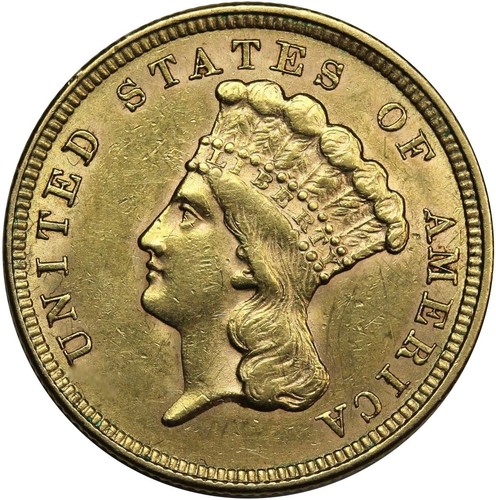
Three-Dollar Gold Piece
An unusual U.S. gold coin of the $3 denomination struck 1854–1889, showing a Liberty head in a feathered Indian-style headdress. The photo shows the 1854 first year.
Gold Type Coin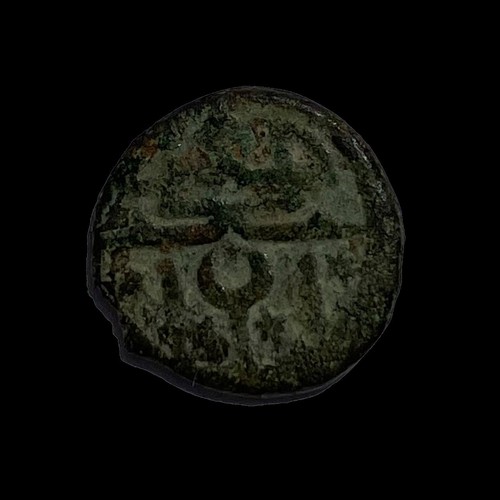
Ottoman Manghir
The manghir was the small copper coin of the Ottoman Empire, used for everyday change; this example bears a tughra and dates to the reign of Murad II.
Medieval Islamic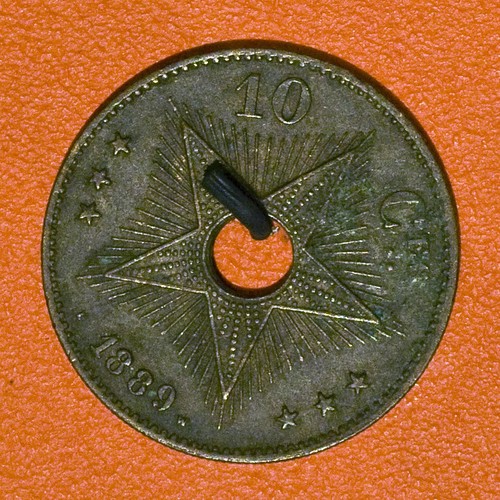
Congolese Commemorative Coin
An 1889 holed copper 10-centime coin of the Congo Free State, with a radiant five-pointed star, the value 10 C, and a ring of small stars.
World