
Coin Encyclopedia
Search and identify coins from around the world — with country, denomination, metal, mint, history, and how to tell them apart.
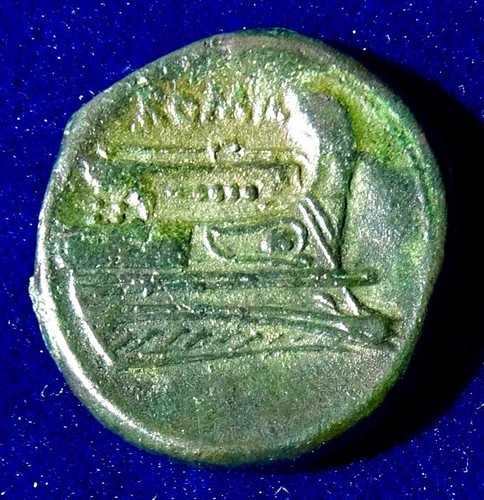
Roman Republic Semuncia
Smallest Roman Republican bronze denomination, worth half an uncia, struck around 217-215 BC with a Mercury head and a galley prow.
Ancient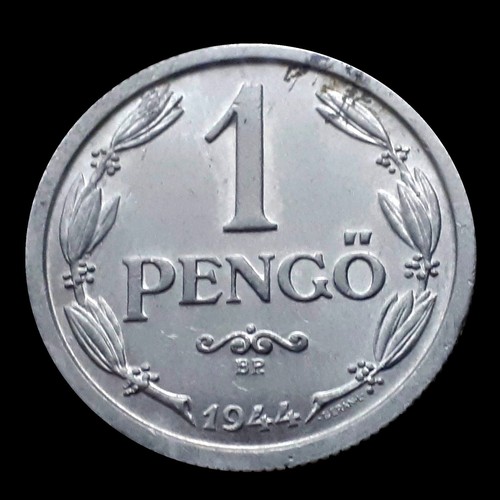
1 Pengő
Wartime Hungarian one pengő struck in lightweight aluminum, with an ornamental laurel-wreath design on one side and the value with the 1944 date on the other.
Modern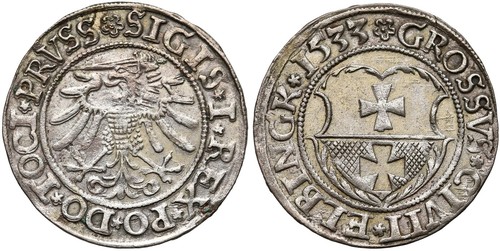
Grosz Miejski
A silver city grosz struck at Elbląg in 1533, pairing the town's crowned coat of arms with an eagle and civic inscriptions under the Polish crown.
Early Modern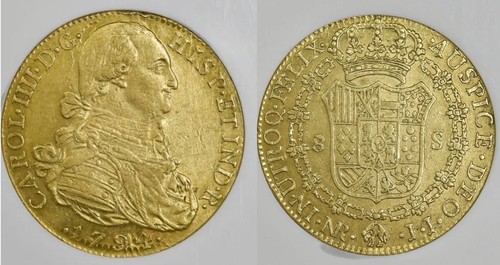
8 Escudos (Carolus)
The largest Spanish gold coin of the age, the 8 Escudos or doubloon, struck under the Habsburg Carolus rulers with the crowned quartered royal arms.
Early Modern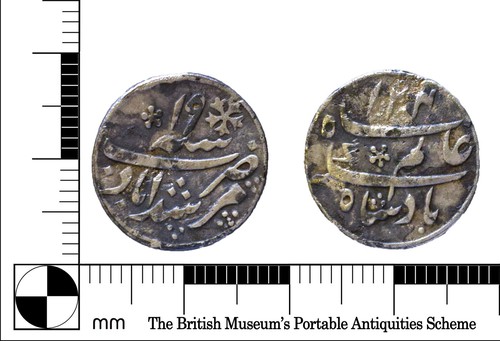
Mughal Islamic Rupee
A hand-struck silver rupee of the Mughal Empire, filled edge to edge with Persian and Arabic script naming the emperor, mint, and regnal year.
Islamic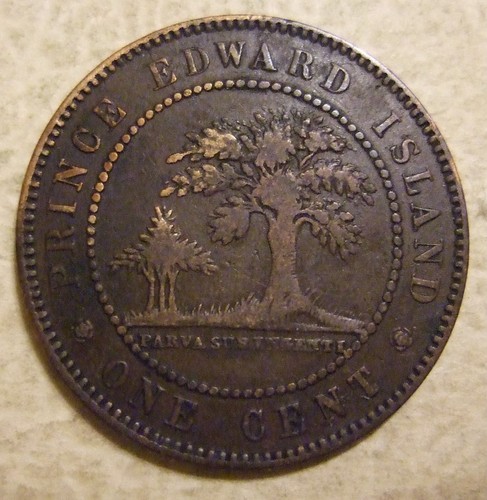
Prince Edward Island One Cent
Bronze one-cent coin struck in 1871 for the colony of Prince Edward Island, with Queen Victoria on the obverse and the island's name and date on the reverse.
Canadian & Provincial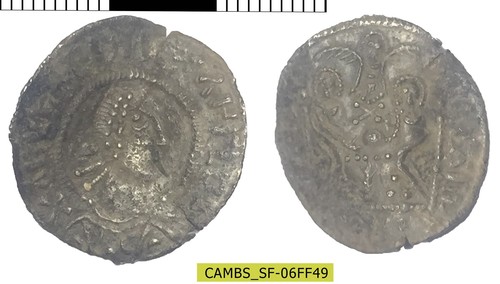
Penny of Alfred the Great
Hand-struck silver penny of Alfred the Great of Wessex, showing a right-facing royal bust and a cross-based reverse with a moneyer's inscription.
Medieval Coins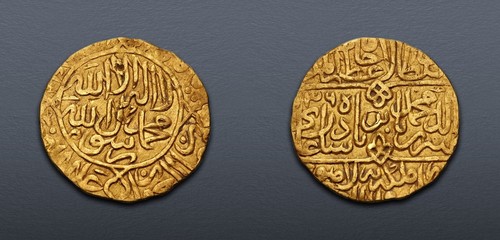
Mithqal (Tilla) of Babur
A hand-struck gold mithqal (tilla) of Babur, founder of the Mughal Empire, carrying his ruler titles in Persian and the mint-and-date on the reverse.
Mughal India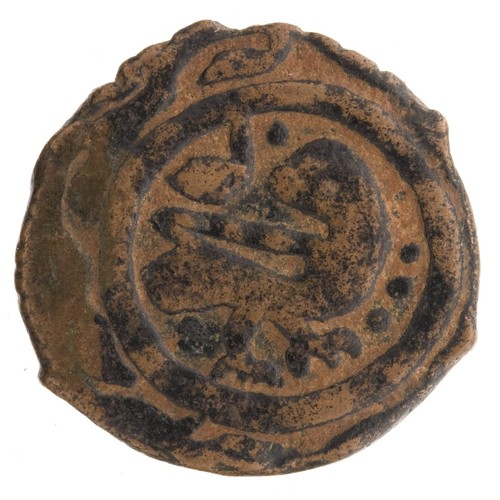
Copper Fals of as-Salih Salih
A hand-struck medieval Islamic copper fals attributed to as-Salih Salih, covered on both faces in Arabic calligraphy with no portrait or figural imagery.
Islamic (Medieval)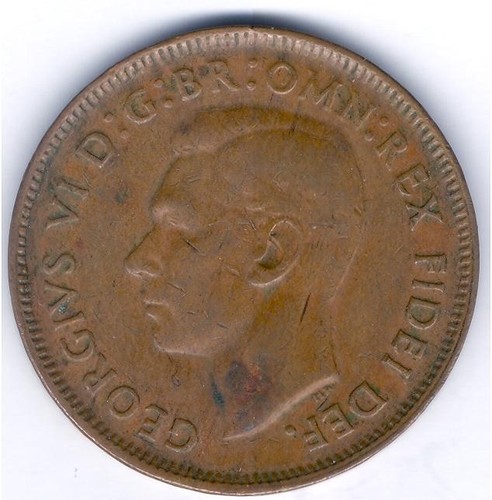
Australian Halfpenny
Small bronze pre-decimal Australian half penny; the George VI kangaroo type shown here was struck through the early 1950s.
Australian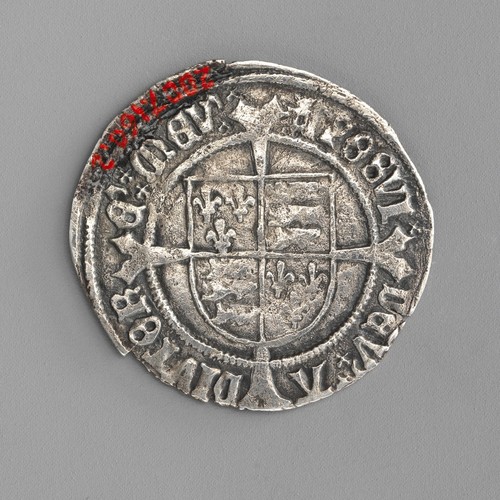
Groat of Henry VIII
A hand-struck Tudor silver groat (fourpence) of Henry VIII, showing the quartered royal arms within a circle and a long cross reverse.
Hammered
Voyageur Dollar
Canada's first circulating silver dollar, struck in 1935 for King George V's Silver Jubilee, showing a voyageur and guide paddling a canoe.
World Coins
Canadian 50 Cents
Canada's mid-century silver 50-cent piece bearing King George VI, struck in 80% silver with the Canadian coat of arms.
World Coins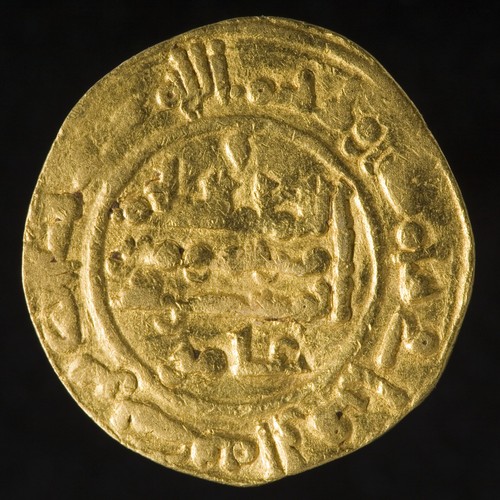
Islamic Gold Dinar (LACMA M.2006.143.8)
A medieval Islamic gold dinar in the LACMA collection, struck with purely calligraphic Arabic legends and a decorative border — the classic imageless coin of the caliphates.
Islamic (Medieval)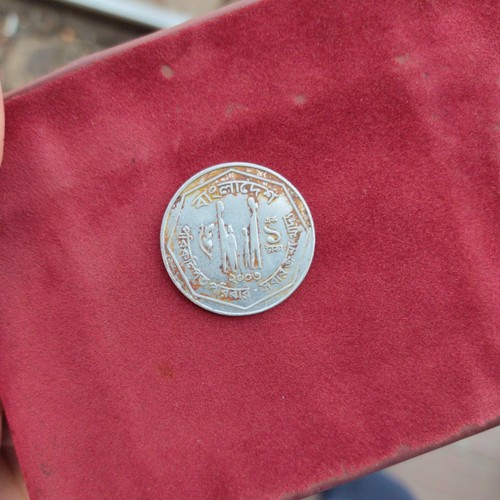
Bangladesh 5 Taka
A modern Bangladeshi circulation coin worth five Taka, struck in nickel-plated steel, with the national emblem on the obverse and the value in Bengali on the reverse.
South Asia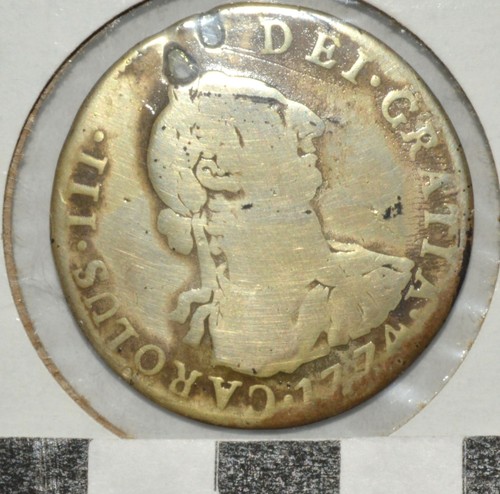
Spanish Colonial 4 Reales
A large silver colonial coin worth half a Spanish dollar, struck for Spain's American empire and bearing the crowned Spanish royal arms.
Colonial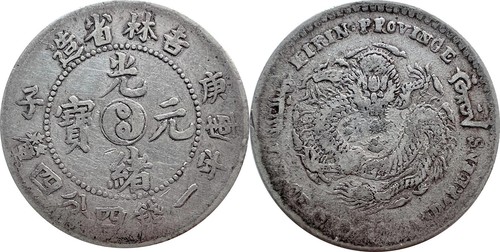
Guangxu Yuanbao 20 Cents
A machine-struck Qing silver 20 cents of the Guangxu era, with a coiled dragon on one face and a yin-yang (taiji) symbol on the other.
Circulation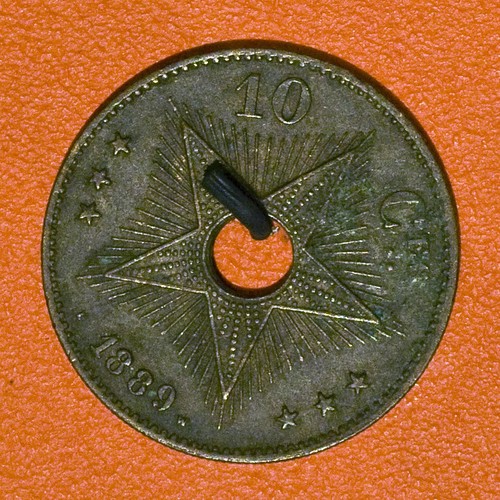
Congolese Commemorative Coin
An 1889 holed copper 10-centime coin of the Congo Free State, with a radiant five-pointed star, the value 10 C, and a ring of small stars.
World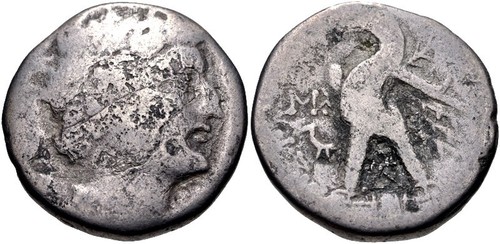
Tetradrachm of Ptolemy XII
Silver tetradrachm struck under Ptolemy XII of Egypt, father of Cleopatra VII, bearing a diademed royal Ptolemaic head and the dynasty's eagle-on-thunderbolt reverse.
Ancient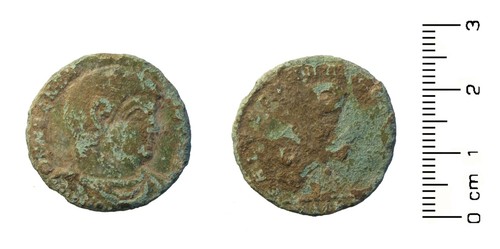
Nummus of Magnentius
A late Roman bronze struck for the usurper Magnentius (AD 350-353), noted for its bold bare-headed portrait and large Chi-Rho reverses.
Ancient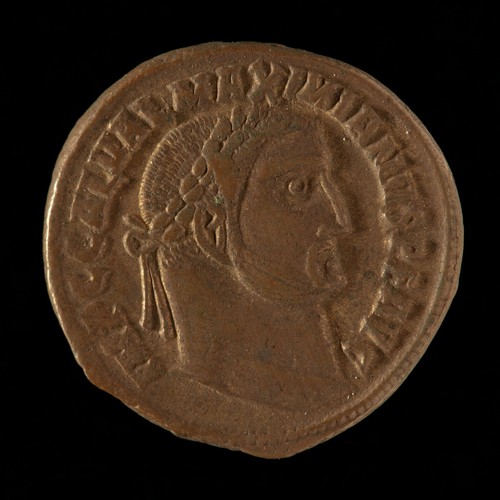
Follis of Galerius
A large silvered bronze follis of the emperor Galerius (Augustus AD 305-311), struck across the Tetrarchic mints with a laureate portrait and a standing deity reverse.
Ancient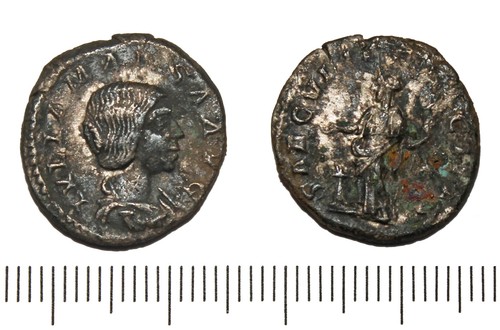
Denarius of Julia Maesa
Roman silver denarius struck for Julia Maesa (c. 218–222 CE), showing her draped bust with wavy hair and a standing deity on the reverse.
Ancient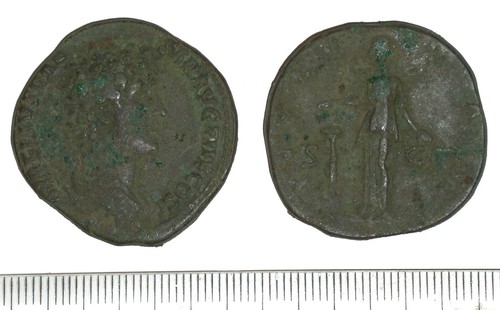
Sestertius of Marcus Aurelius
A large Roman bronze sestertius struck during the reign of Marcus Aurelius (161–180 CE), with his laureate portrait facing right and a Latin legend.
Ancient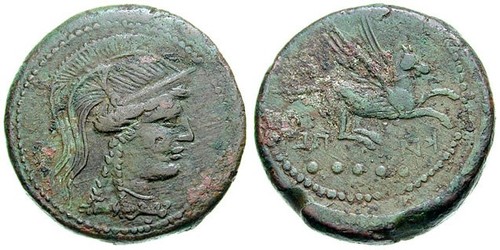
Quincunx of Capua
Bronze quincunx (5 unciae) struck by Capua in Campania in the 3rd century BC, pairing a diademed female head with a lion or griffin and five value pellets.
Ancient