
Coin Encyclopedia
Search and identify coins from around the world — with country, denomination, metal, mint, history, and how to tell them apart.
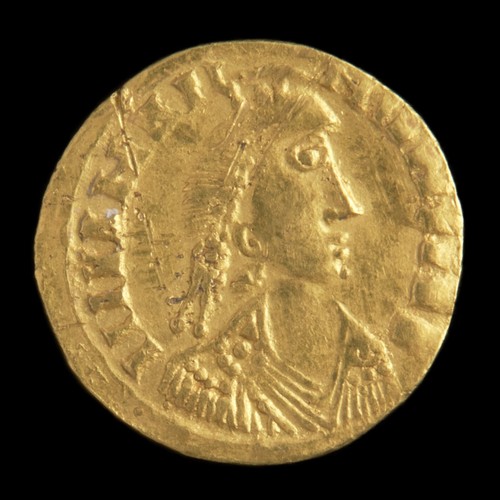
Solidus of Valentinian III
A gold solidus of the Western Roman emperor Valentinian III (AD 425-455), with his diademed profile and an imperial or military reverse.
Ancient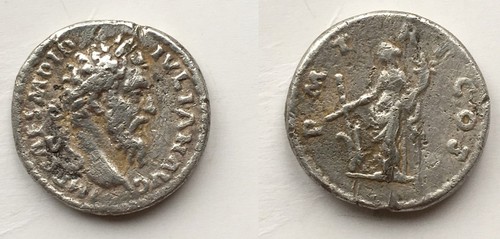
Denarius of Didius Julianus
A silver denarius of Didius Julianus, the short-lived emperor of 193 AD, bearing his laureate portrait and an imperial standing reverse.
Ancient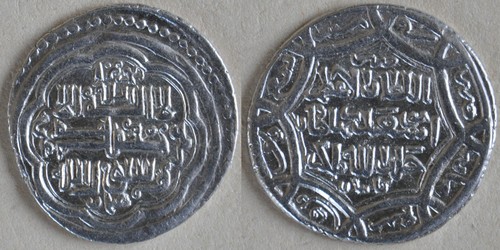
Ilkhanid Dirham of Abu Said
A hand-struck Mongol Ilkhanate silver dirham of Abu Sa'id Bahadur Khan, with the ruler's titles set in a cartouche and religious inscriptions in concentric bands.
Islamic (Medieval)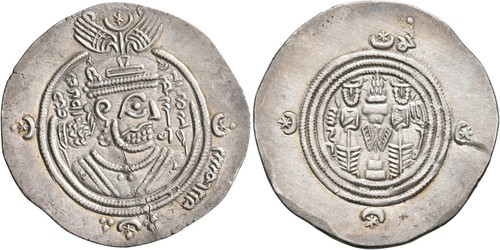
Dirham of Samura ibn Jundab
An Arab-Sassanian silver dirham struck in the name of the early governor Samura ibn Jundab, keeping the Persian Shah bust and fire-altar design with added Arabic.
Islamic (Medieval)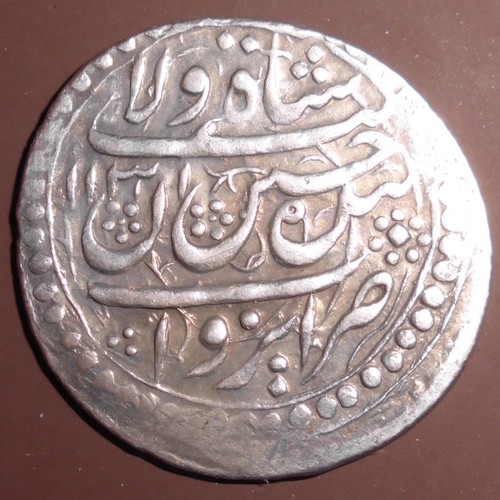
Abbasi of Shah Sultan Husayn
A hand-struck Safavid silver abbasi of Shah Sultan Husayn, covered entirely in flowing Persian-Arabic calligraphy with jeweled borders and no portrait.
Persia / Iran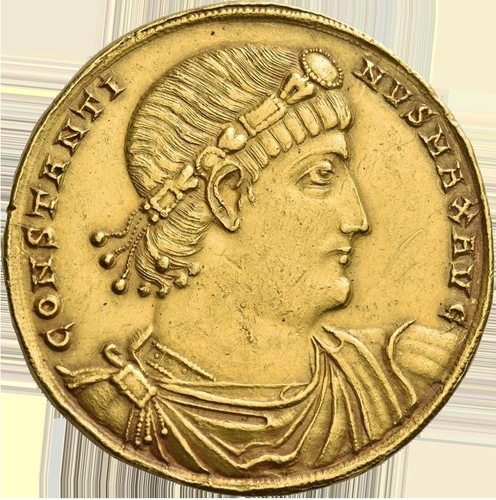
Solidus of Constantine I the Great
Constantine the Great's gold solidus, a high-purity coin struck from about AD 309 that became the standard of late Roman and Byzantine gold.
Ancient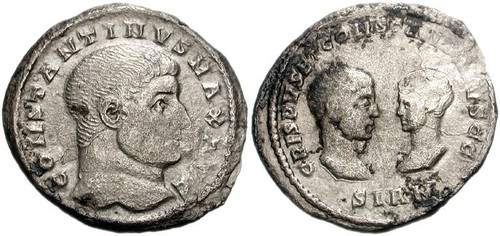
Follis of Constantine I and Crispus
A late-Roman bronze follis linking Constantine the Great to his son Crispus, with the emperor's right-facing portrait and a paired father-and-son bust reverse.
Ancient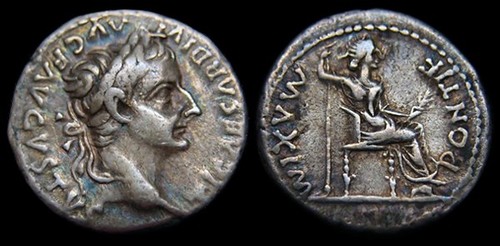
Denarius of Tiberius (Tribute Penny)
Silver denarius of Emperor Tiberius (14–37 AD), obverse his laureate head, reverse a seated female figure — the famous "Tribute Penny" of the Gospels.
Ancient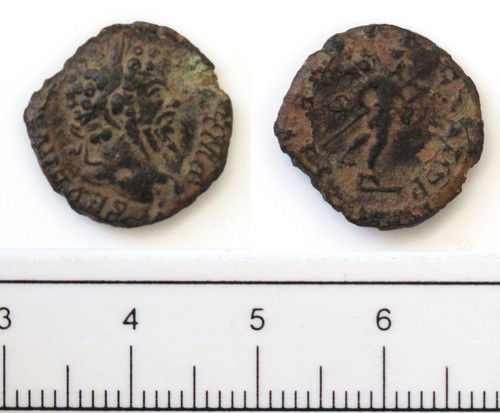
Denarius of Septimius Severus
Silver denarius of the Roman emperor Septimius Severus (193–211 AD), showing his laureate head and a standing reverse figure.
Ancient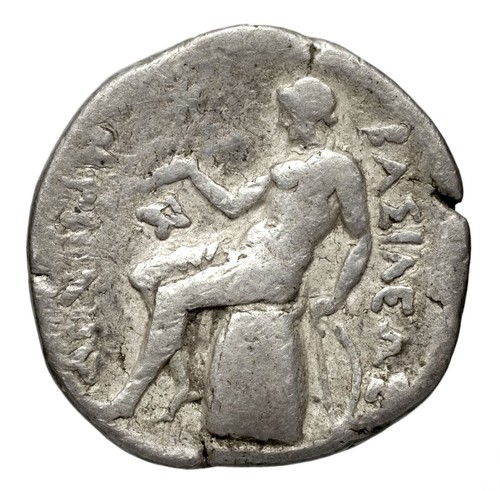
Drachm of Antiochos II Theos
Silver drachm struck under Antiochos II Theos of the Seleukid realm, showing a seated helmeted Athena and, on the reverse, Nike beside an altar.
Ancient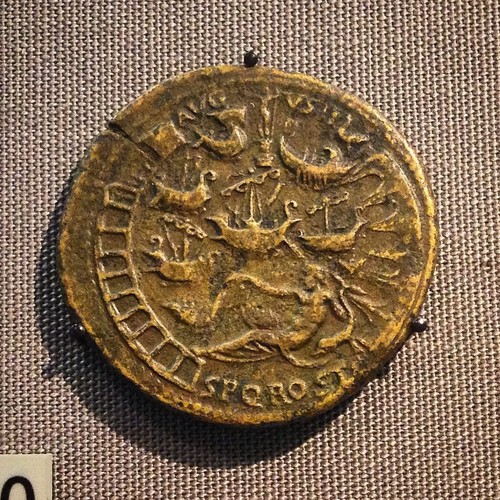
Sestertius of Nero (Port of Ostia)
A large brass sestertius of the emperor Nero (54–68 AD) showing his portrait on one side and a bird's-eye view of the harbour at Ostia on the other.
Ancient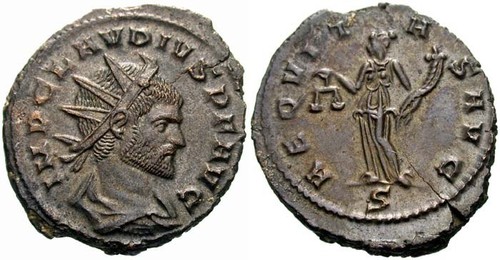
Antoninianus of Claudius II
A billon antoninianus of the Roman emperor Claudius II Gothicus (268–270 AD), showing his radiate bust on one side and a standing deity on the other.
Ancient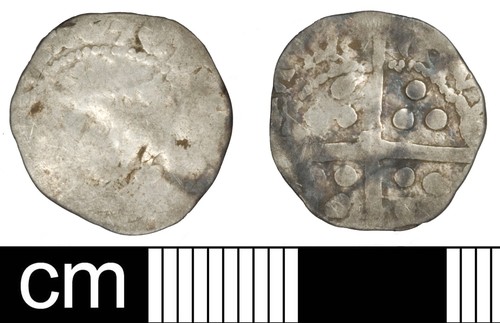
Medieval Penny of Edward III
A hammered silver penny of Edward III (1327–1377): a crowned facing royal bust on one side and a long cross with pellets on the other.
British Isles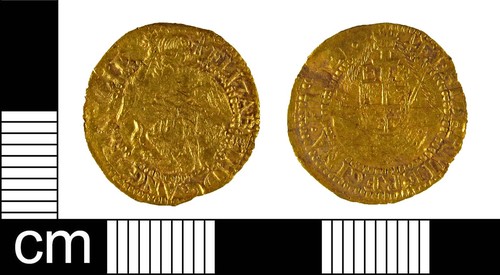
Quarter Angel of Elizabeth I
A small Elizabethan gold coin of the early 1580s showing a crowned portrait of the queen and a cross set with heraldic shields.
Hammered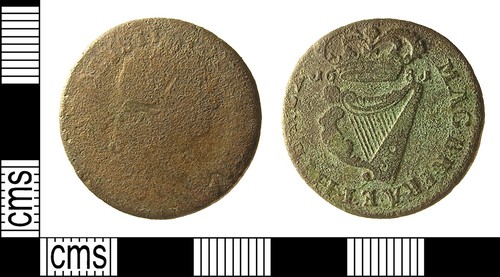
Irish Halfpenny of Charles II
A milled copper halfpenny struck for Ireland under Charles II, with his right-facing laureate bust and a crowned Irish harp on the reverse.
Milled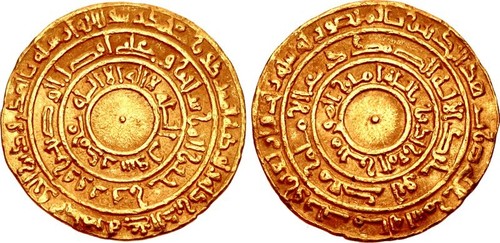
Gold Dinar of al-Mu'izz li-Din Allah
A gold dinar of the Fatimid caliph al-Mu'izz li-Din Allah dated AH 343, struck as concentric Arabic inscriptions with no image on either face.
Islamic (Medieval)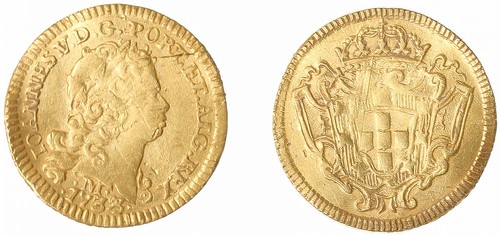
Half Escudo (800 Reis) of Joao V
A small Portuguese gold coin of King Joao V, valued at half an escudo (800 reis), with his laureate bust and a crowned Portuguese shield.
Colonial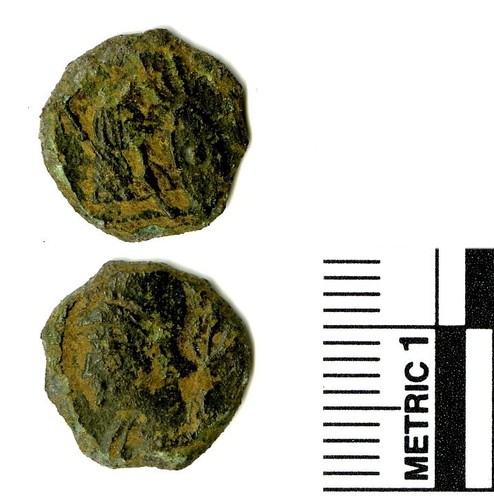
Commemorative Follis of Constantinople
Bronze city-commemorative of Constantine's era (330-340 AD): helmeted Constantinopolis on the obverse, a Victory standing on a ship's prow on the reverse.
Ancient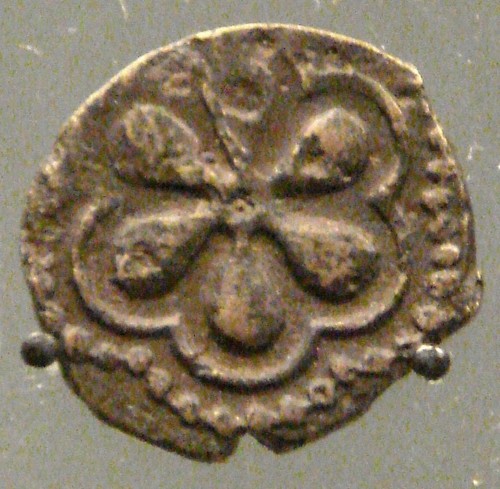
Copper Fals of Muhammad ibn Qalawun
A hand-struck Mamluk copper fals of Sultan al-Nasir Muhammad ibn Qalawun, covered in geometric ornament and Arabic inscriptions, struck about 1310–1341 CE.
Islamic (Medieval)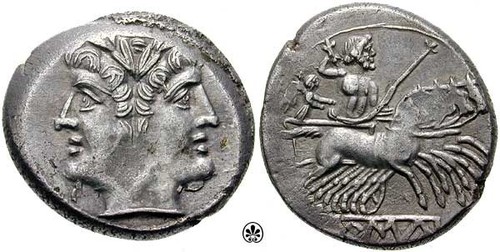
Roman As
A base-metal As of ancient Rome, showing the double-faced head of Janus on one side and a chariot with ROMA on the other.
Ancient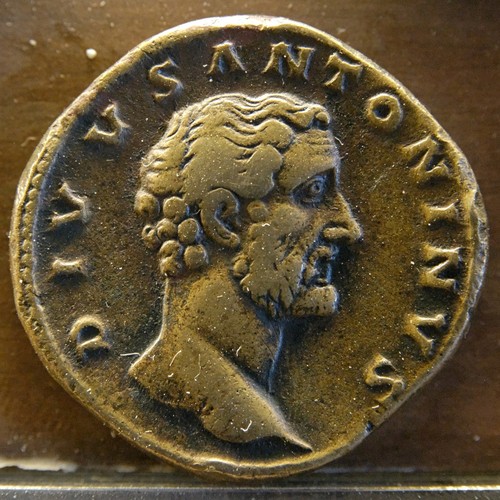
Sestertius of Antoninus Pius
Large Roman bronze coin of Emperor Antoninus Pius, with his bearded profile head and a standing deity or figure on the reverse.
Ancient Coins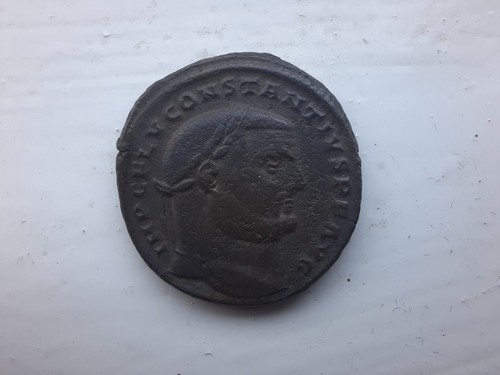
Follis of Constantius Chlorus
Large silvered-bronze follis of Constantius I (Chlorus), the Tetrarchic emperor and father of Constantine, showing his laureate portrait facing right.
Ancient
Bronze Coin of Corinth (Augustan)
A Roman colonial bronze struck at Corinth during the reign of Augustus, showing a laureate imperial portrait; the example here has a badly corroded reverse.
Ancient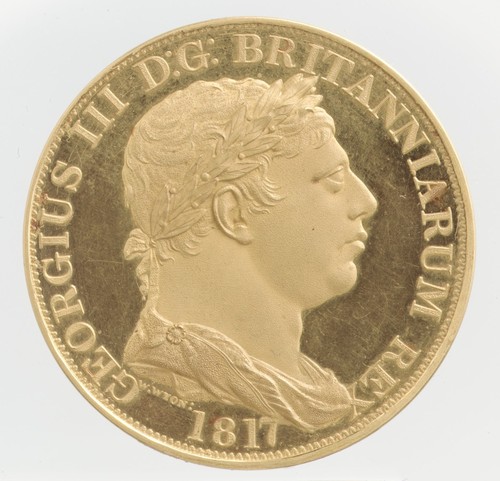
Crown of George III (Incorrupta)
A milled crown of George III dated 1817, named for its INCORRUPTA reverse legend, showing a laureate draped bust and crowned royal arms.
Milled