
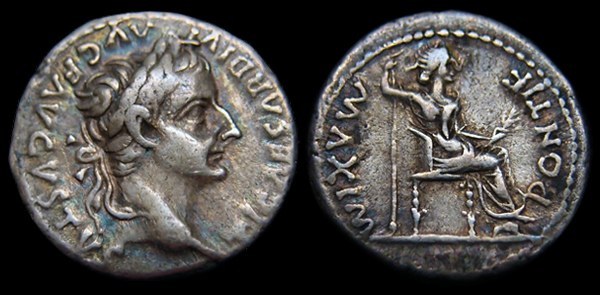
Denarius of Tiberius (Tribute Penny)
Silver denarius of Emperor Tiberius (14–37 AD), obverse his laureate head, reverse a seated female figure — the famous "Tribute Penny" of the Gospels.
- Country
- Roman Empire
- Denomination
- Denarius
- Metal
- Silver
Got a coin like this?
Identify any coin from a photo, free.
Overview
The Denarius of Tiberius, popularly called the "Tribute Penny," is a silver coin struck during the reign of the Roman emperor Tiberius (14–37 AD). The coin you are viewing shows the laureate head of Tiberius facing right on the obverse and, on the reverse, a seated female figure holding an olive branch and a long scepter or staff — traditionally identified as Livia, the emperor's mother, in the guise of Pax (Peace).
Its fame comes from a long-standing association with the Gospel passage in which Jesus is shown a coin and says "Render unto Caesar the things that are Caesar's." Because Tiberius was the reigning emperor during that period, this denarius is the type most commonly identified as the coin of that story — which is why it carries the nickname "Tribute Penny" among collectors and in religious tradition.
History & Background
Tiberius succeeded Augustus as the second emperor of Rome in 14 AD and reigned until 37 AD. Throughout his reign the imperial mint — for this type usually attributed to Lugdunum (modern Lyon, in Gaul) — produced a remarkably consistent silver denarius bearing his portrait and the seated female reverse. Because the design changed very little over more than two decades, the type is difficult to date precisely within his reign and is generally cataloged simply as a Tiberius denarius of 14–37 AD.
The coin's biblical nickname arose from centuries of Christian tradition rather than any inscription on the coin itself. Scholars have debated whether this exact denarius, an issue of Augustus, or a provincial coin was the actual "tribute" coin, but the Tiberius denarius remains the type overwhelmingly linked to the Gospel account. As a result it has been collected, mounted in jewelry, and sought after by both numismatists and devotional collectors for generations.
How to Identify
The obverse shows a bare, laureate head of Tiberius facing right, surrounded by the legend TI CAESAR DIVI AVG F AVGVSTVS ("Tiberius Caesar, son of the deified Augustus, Augustus"). The reverse depicts a seated female figure facing right on a chair with ornate legs, holding an olive or laurel branch in one hand and a long vertical scepter/staff in the other, with the legend PONTIF MAXIM ("Pontifex Maximus," high priest). This branch-and-scepter seated figure is the single most diagnostic feature of the type.
In hand the coin is a silver denarius of roughly 18–20 mm diameter and about 3.5–3.9 g, thick and slightly irregular as hand-struck ancient coins typically are. There are variations recognized by specialists (for example, differences in the chair legs, the footstool, and the ornamentation), but all share the Tiberius portrait and the seated Livia/Pax reverse. Genuine ancient examples show honest wear, granular surfaces, and toning consistent with age.
Value & Collectibility
The Tiberius "Tribute Penny" is one of the most consistently in-demand ancient Roman silver coins, sought both by ancient-coin collectors and by buyers drawn to its biblical association. This steady dual demand keeps prices firmer than for many comparable denarii of the period.
Value depends heavily on grade, centering, strike quality, and eye appeal. Well-worn but genuine examples are relatively affordable entry-level ancients, while sharply struck, well-centered coins with a strong portrait and clear reverse command substantial premiums. Because of the type's fame, it is also frequently counterfeited and reproduced, so certification or a trusted dealer matters. Treat any single figure with caution and consult recent auction results and a specialist rather than relying on a fixed price.
Frequently asked questions
Why is this coin called the "Tribute Penny"?
It gets the nickname from the Gospel story in which Jesus, shown a coin, says "Render unto Caesar the things that are Caesar's." Tiberius was emperor at that time, so his denarius is traditionally identified as that coin, though scholars debate whether it was this exact type.
Who is the seated figure on the reverse?
She is traditionally identified as Livia, the mother of Tiberius, portrayed in the guise of Pax (Peace). She sits holding an olive or laurel branch and a long scepter, with the legend PONTIF MAXIM.
What is the coin made of and how big is it?
It is a silver denarius, roughly 18–20 mm across and about 3.5–3.9 grams, hand-struck and slightly irregular as is normal for ancient Roman coinage.
Is a Tiberius denarius rare or valuable?
It is not rare in absolute terms, but demand from both ancient-coin and religious collectors keeps it desirable. Value ranges widely with grade — worn examples are affordable, while well-struck, well-centered coins bring strong premiums.
Are there fakes of this coin?
Yes. Because of its biblical fame, the Tribute Penny is one of the most reproduced and counterfeited ancient coins. Buy from reputable dealers and favor examples authenticated by a recognized grading service.
Denarius of Tiberius (Tribute Penny) guides
In-depth guides for identifying, valuing, and collecting Denarius of Tiberius (Tribute Penny).
Other coins you may enjoy
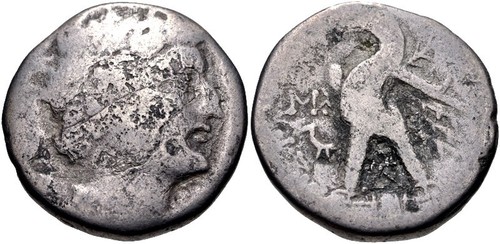
Tetradrachm of Ptolemy XII
80-51 BC
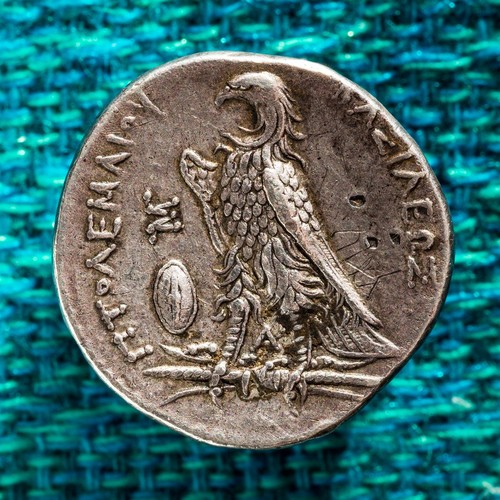
Tetradrachm of Ptolemy I
305-283 BC
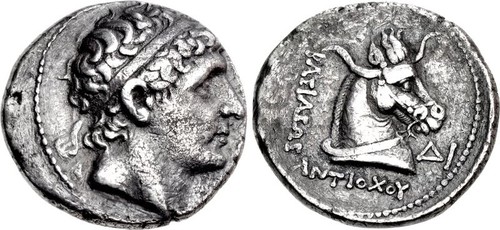
Tetradrachm of Antiochos I Soter
281-261 BC
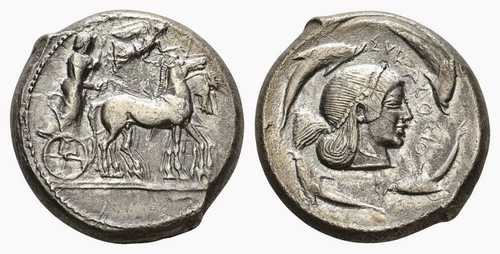
Syracuse Tetradrachm
c. 5th-4th century BC (Classical period)
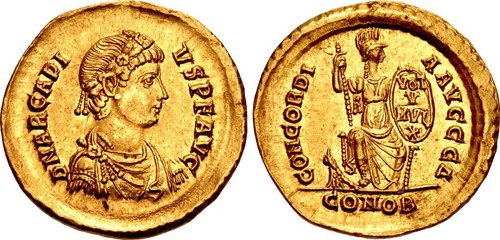
Solidus of Arcadius
AD 395-402
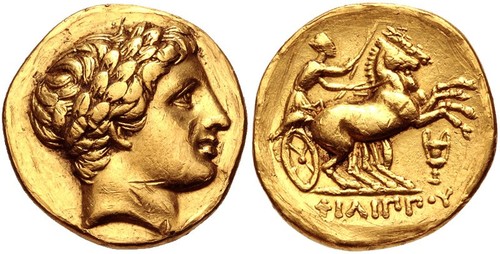
Philip III Gold Stater
323-317 BC
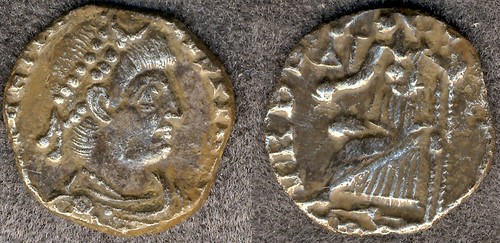
Siliqua of Gratian
AD 367-383
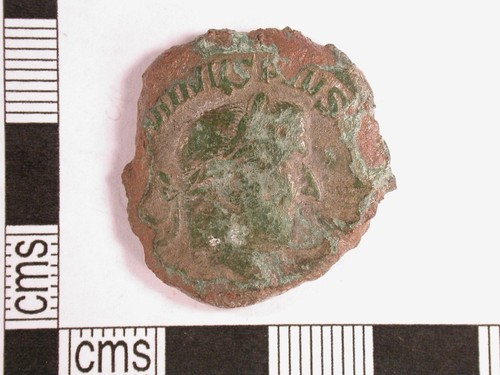
Sestertius of Maximinus Thrax
235-238 AD
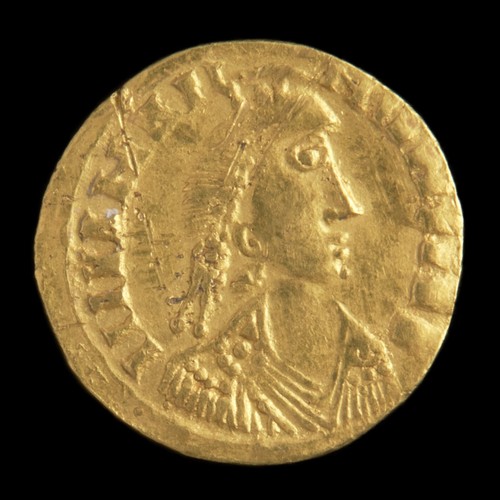
Solidus of Valentinian III
AD 425-455
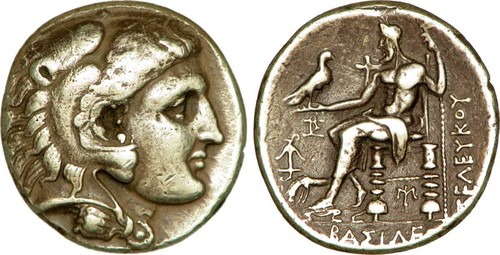
Seleucus I Nicator Tetradrachm
Late 4th-3rd century BC
Nummus of Magnentius
AD 350-353
Follis of Galerius
AD 308-310