
How to Identify the Denarius of Tiberius (Tribute Penny)
Collector diagnostics for the Tiberius "Tribute Penny": the laureate portrait, the seated branch-and-scepter reverse, size and metal, and fake warnings.
Read the full Denarius of Tiberius (Tribute Penny) encyclopedia entry →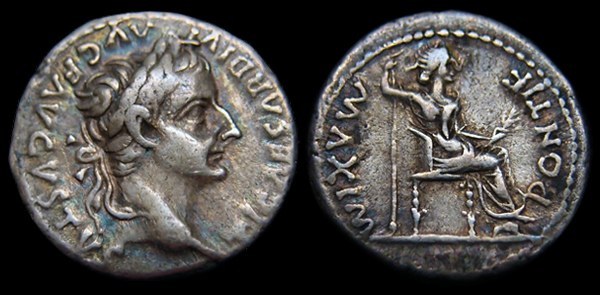
Read the two sides together. A genuine Tribute Penny pairs a laureate head of Tiberius facing right (legend TI CAESAR DIVI AVG F AVGVSTVS) with a seated female figure facing right holding a branch and a long scepter (legend PONTIF MAXIM). If either the portrait or that specific seated reverse is missing, you are looking at a different denarius. The seated Livia/Pax figure with the vertical scepter and outstretched branch is the key motif to confirm.
Check size, weight, and fabric. The coin should be a silver denarius of about 18–20 mm and roughly 3.5–3.9 g. Ancient hand-struck coins are slightly irregular in shape, often off-center, and show a thick, sometimes uneven flan. Surfaces should have natural toning and fine granularity, not the smooth, glossy uniformity of a modern casting. A coin that is perfectly round, unusually light or heavy, or has a visible casting seam is suspect.
Note the sub-varieties without over-relying on them. Specialists distinguish variants by details such as the style of the chair legs (plain vs. ornate), the presence or absence of a footstool, and the arrangement of the drapery. These affect catalog attribution and desirability but all remain the same basic Tiberius/seated-figure type — useful for pinning down a specific issue, not for deciding authenticity on their own.
Beware look-alikes and reproductions. Denarii of Augustus and other Julio-Claudian silver can be mistaken for this type at a glance — confirm the Tiberius obverse legend and the PONTIF MAXIM reverse. More importantly, the Tribute Penny is one of the most heavily reproduced ancient coins, sold as replicas, tourist pieces, and outright forgeries; many were also mounted in jewelry, leaving solder or loop marks. For any coin of value, weigh and measure it, compare style against published examples, and prefer coins certified by a reputable ancient-coin grading service or bought from an established dealer.
Frequently asked questions
What legends should a genuine Tribute Penny carry?
The obverse reads TI CAESAR DIVI AVG F AVGVSTVS around the laureate head of Tiberius, and the reverse reads PONTIF MAXIM around the seated female figure. Both legends together help confirm the type.
How do I tell it apart from an Augustus denarius?
Check the obverse legend and portrait — Tiberius is named as son of the deified Augustus (DIVI AVG F) — and confirm the PONTIF MAXIM seated figure on the reverse. Augustus issues carry different legends and reverse designs.
Should I worry about buying a fake?
Yes, be careful. This is among the most counterfeited ancient coins. Verify weight (~3.5–3.9 g) and diameter (~18–20 mm), look for natural ancient surfaces, and favor coins authenticated by a recognized grading service or reputable dealer.
Do mounting or jewelry marks affect the coin?
Many Tribute Pennies were set in pendants and rings, leaving solder residue, loop attachments, or smoothing on the rim. Such marks reduce numismatic value even on a genuine coin, so inspect the edges closely.