
Coin Encyclopedia
Search and identify coins from around the world — with country, denomination, metal, mint, history, and how to tell them apart.
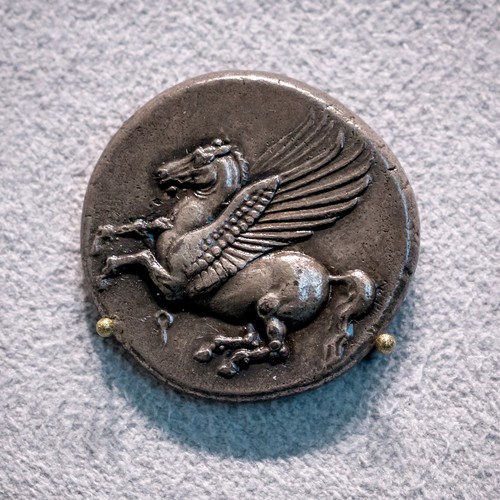
Corinthian Stater
Silver stater of ancient Corinth showing the winged horse Pegasos on one side and the helmeted head of Athena on the other.
Ancient Coins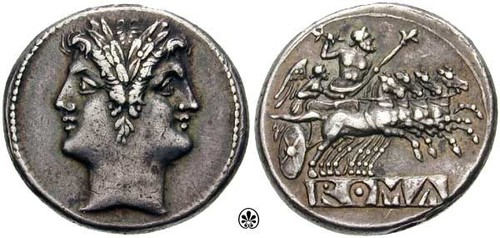
Roman As/Dupondius (Uncertain)
An uncertain Roman bronze As or Dupondius: a double-faced Janus head on one side and a ship (galley/prow) with ROMA below on the other.
Ancient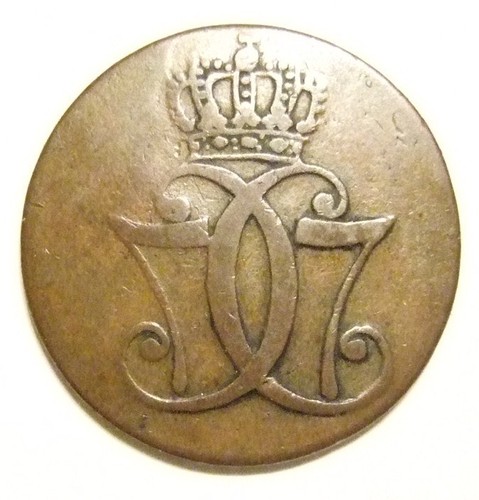
1 Skilling
A copper 1 skilling of Denmark dated 1771, with a royal crown over ornament on one side and an inscribed value design on the other.
Early Modern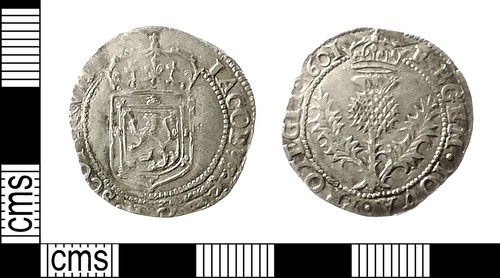
Half Thistle Merk
A hammered Scottish silver half merk of James VI, showing a crowned coat of arms on one side and a crowned thistle on the other.
Hammered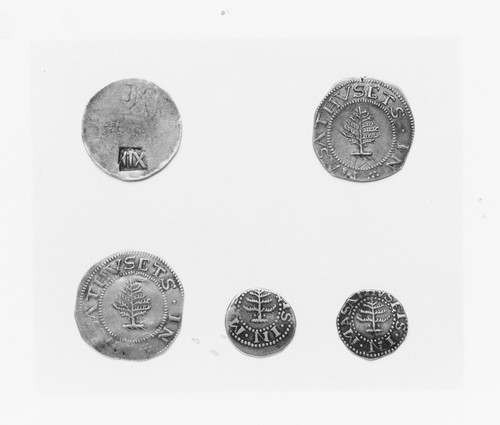
Scottish Shilling
A historical Scottish silver shilling featuring the thistle, Scotland's national emblem, in a heraldic design on one face and as a growing plant on the other.
World Coin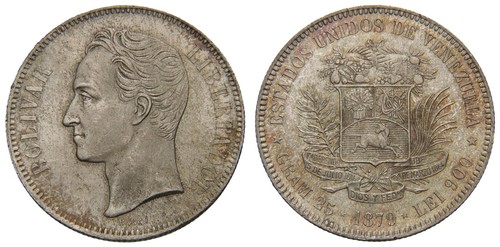
Venezuelan Silver Coin (1879)
An 1879 Venezuelan silver coin: the left-facing head of Simón Bolívar on one side and the national coat of arms in a wreath on the other.
Circulation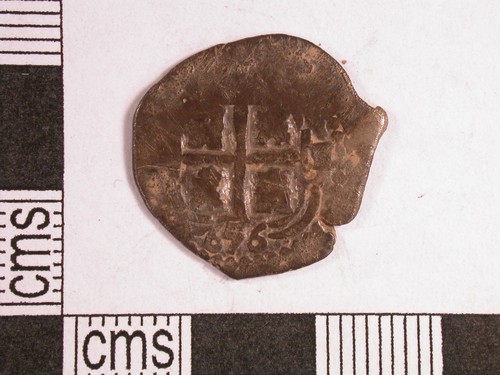
Spanish Colonial Cob 1 Real
A small, crudely hand-struck silver cob of one real, made in Spain's American colonies with heraldic shield-and-cross designs.
Cob Coinage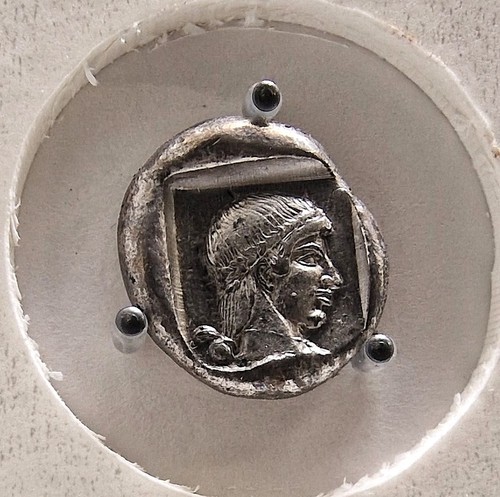
Cnidian Drachm
An archaic hand-struck silver drachm of the Greek city of Cnidus, showing the goddess Aphrodite on one side and an eagle on the other.
Ancient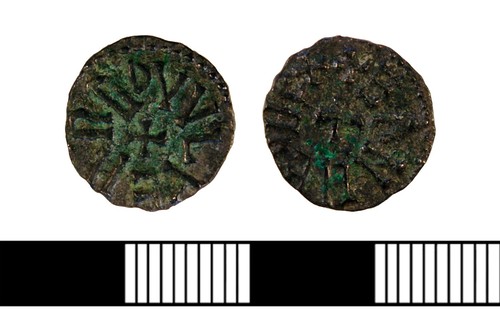
Styca of Eanred
Small base-metal coin of King Eanred of Northumbria, with a cross and legend on one face and a central symbolic motif on the other.
Medieval Coins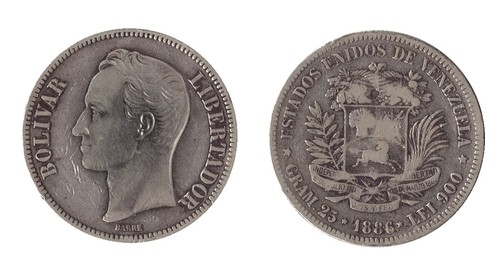
5 Bolivares
A crown-sized silver 5 bolivares of Venezuela: the head of Bolivar the Liberator on one side and the national coat of arms on the other.
Circulation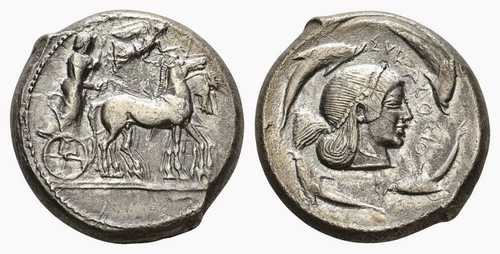
Syracuse Tetradrachm
Classical silver tetradrachm of Syracuse in Sicily, showing a racing four-horse chariot on one side and a right-facing nymph's head on the other.
Ancient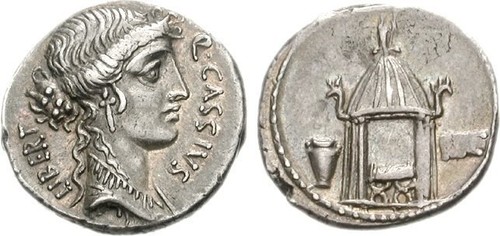
Denarius of Cassius Longinus
Silver denarius struck in 42 BC by Gaius Cassius Longinus, one of Caesar's assassins, to pay his legions before the Battle of Philippi.
Ancient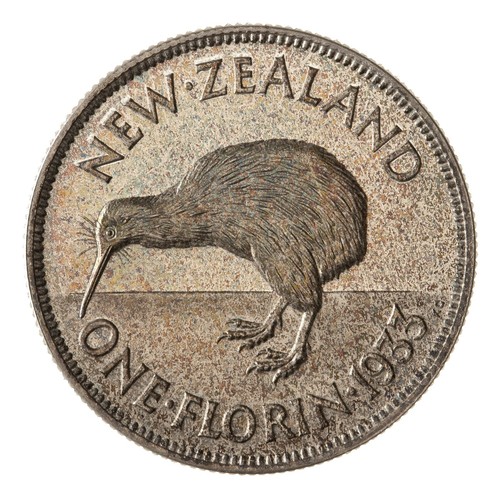
New Zealand Florin
New Zealand's silver two-shilling coin; this 1933 first-year example shows a kiwi and the legend NEW ZEALAND ONE FLORIN.
New Zealand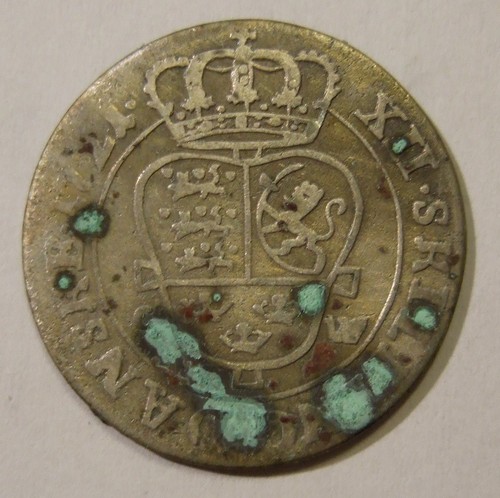
12 Skilling
An early-modern Danish 12 skilling dated 1721, showing a crowned shield with a lion on one face and ornamental legend and value on the other.
Early Modern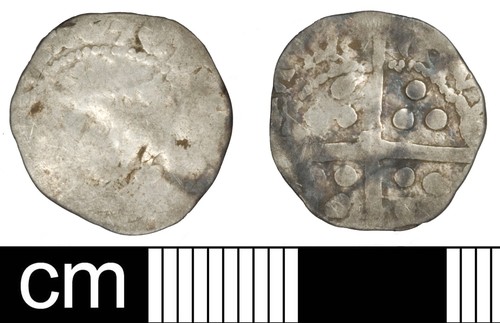
Medieval Penny of Edward III
A hammered silver penny of Edward III (1327–1377): a crowned facing royal bust on one side and a long cross with pellets on the other.
British Isles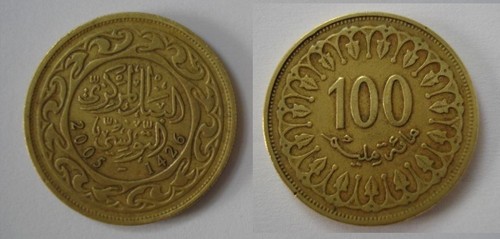
Tunisia 100 Millimes
A brass Tunisian coin worth 100 millimes, with flowing Arabic calligraphy inside an ornate border on one side and a large 100 on the other.
World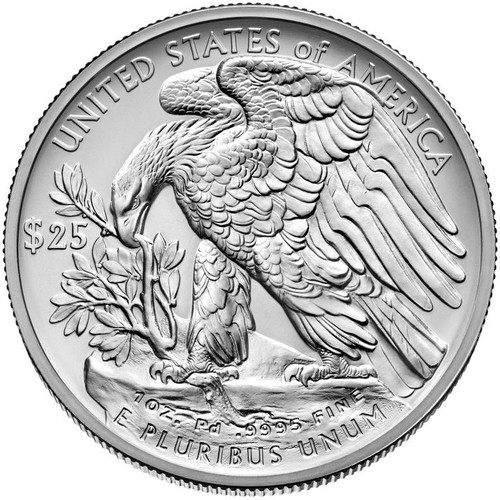
American Palladium Eagle
The U.S. Mint's one-ounce .9995 fine palladium bullion coin, launched in 2017 with classic Weinman Mercury dime and eagle designs.
Bullion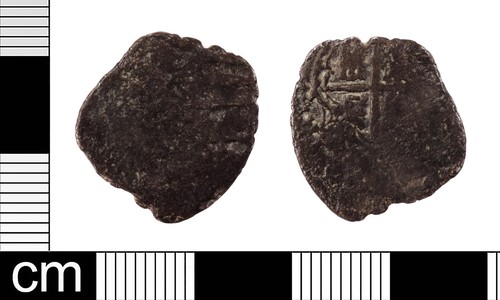
Spanish Colonial Cob 2 Reales
A crude hand-struck silver cob worth a quarter of a piece of eight, showing a cross on one side and the Habsburg Spanish arms on the other.
Cob Coinage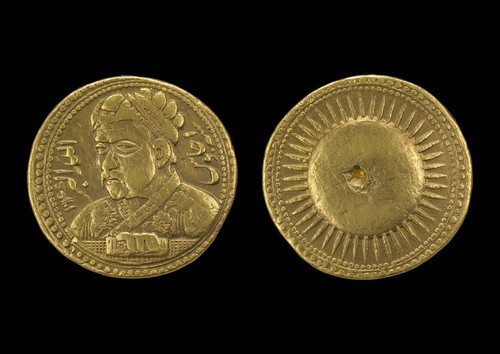
Unattributed Gold Coin
A gold-colored coin of uncertain origin: a portrait with East Asian calligraphy on one face and a radiating sunburst within a decorative border on the other.
Unknown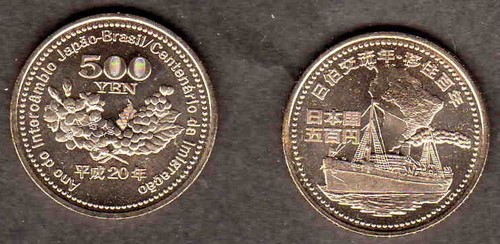
500 Yen Japanese Immigration Commemorative
A 2008 Japanese 500 yen commemorative marking 100 years of Japanese immigration to Brazil, with two figures on one side and a ship on the other.
Commemorative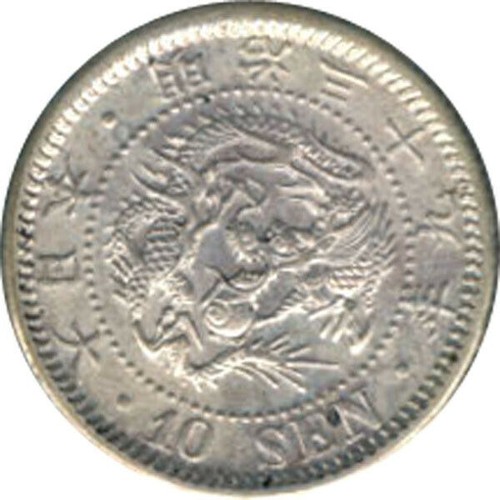
10 Sen
A small Meiji-era Japanese silver 10 Sen: a coiled dragon and characters on one face, a rayed sunburst framed by branches on the other.
Circulation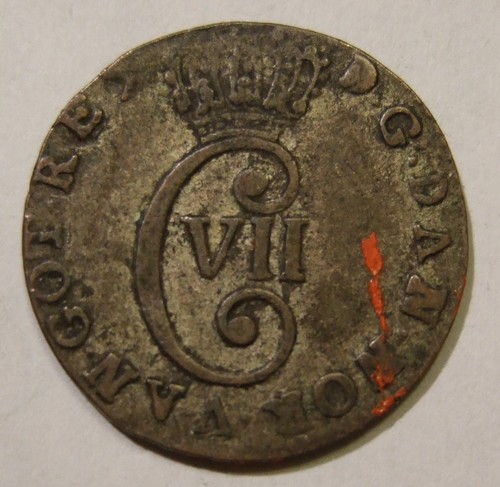
4 Skilling
A Danish copper 4 skilling of 1783, with a crown above a numeral on one face and an ornamental circular pattern framing the date on the other.
Early Modern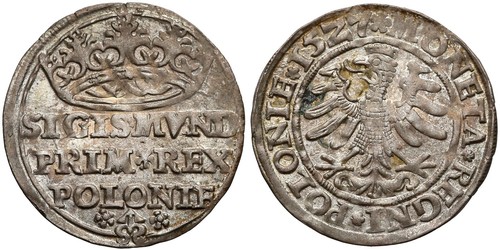
Grosz Koronny
A silver Crown grosz of the Kingdom of Poland, dated 1527, with a royal crown above a shield on one side and the Polish Eagle on the other.
Early Modern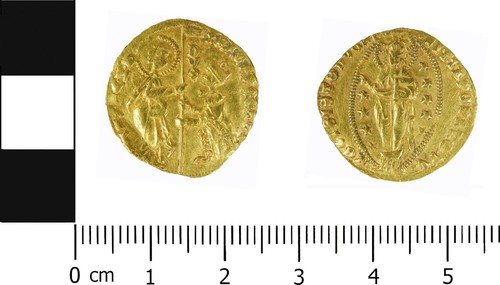
Venetian Ducat
A medieval gold ducat of the Republic of Venice, showing Saint Mark presenting a banner to the kneeling Doge on one side and Christ on the other.
Medieval