
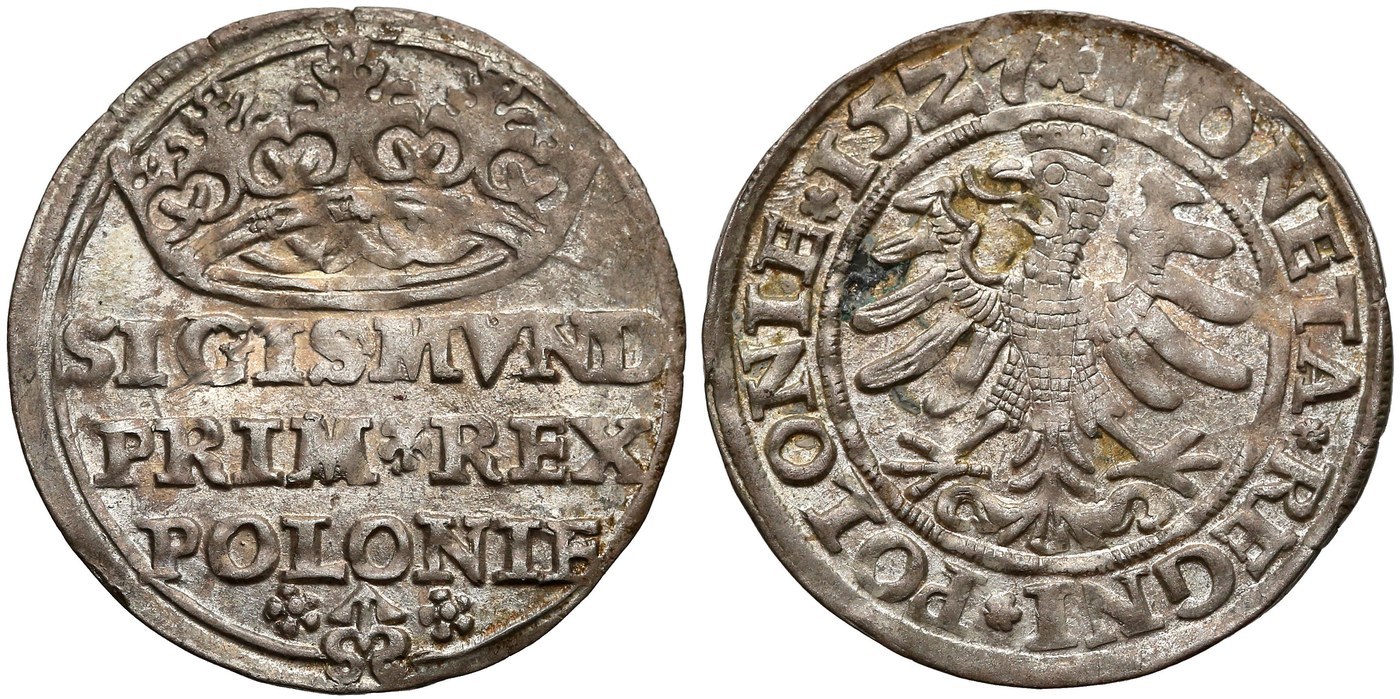
Grosz Koronny
A silver Crown grosz of the Kingdom of Poland, dated 1527, with a royal crown above a shield on one side and the Polish Eagle on the other.
- Country
- Poland
- Denomination
- Grosz
- Metal
- Silver
Got a coin like this?
Identify any coin from a photo, free.
Overview
The Grosz Koronny, or Crown grosz, is a small silver coin of the Kingdom of Poland struck in the reign of King Sigismund I the Old (Zygmunt I Stary). The example seen here is dated 1527 and shows a Polish royal crown set above a coat of arms on one face, with the crowned Polish Eagle (Orzeł) and a Latin rim inscription on the other.
The grosz was a workhorse denomination of Polish money in the early sixteenth century, larger in value than the small denar but modest compared with the heavier silver pieces of the day. As a Crown issue it belongs to the coinage of the Polish Crown proper, distinct from the parallel coinages of Lithuania and of the towns and duchies within the wider realm.
For collectors, a dated grosz of this period is an accessible and tangible piece of Renaissance-era Poland, prized for its clear heraldry, its early date, and its association with the long, monetarily important reign of Sigismund I.
History & Background
Sigismund I the Old ruled Poland from 1506 to 1548, a period that saw a major reform and standardization of the Polish coinage. His monetary reforms of the early 1520s reorganized the Crown coinage around a consistent system of denars, groszy, and larger silver pieces, and the grosz became a central everyday coin of the realm.
A 1527 Grosz Koronny falls squarely within this reformed coinage. The date is spelled out in the Latin manner typical of the era, and the legends and heraldry proclaim royal authority: the crown and shield emphasize kingship, while the Eagle asserts the identity of the Polish Crown.
Coins like this circulated during a confident, prosperous chapter of the Polish kingdom, when Kraków was a leading Renaissance capital. Surviving groszy from Sigismund I's reign are a common and studied part of Polish numismatics, documenting the currency that underpinned the kingdom's commerce.
How to Identify
One face carries a Polish royal crown positioned above a coat of arms or shield, an emphatically royal design that identifies the piece as a Crown (Koronny) issue. The other face shows the Polish Eagle, the Orzeł, with wings spread, encircled by a Latin inscription running around the rim that typically names the king and his titles.
The date 1527 appears in the legends, confirming the year of striking. The coin is small silver, on the order of roughly 20 mm across and only a couple of grams, so it is thin and light in hand, with the somewhat irregular, hand-struck look characteristic of early modern hammered coinage rather than a perfectly round machine-made blank.
Key identifiers are the pairing of a crown-over-shield design with the spread-winged Polish Eagle, the Latin royal legend, the 1527 date, and the small silver format. The word GROSSVS or a related grosz spelling and abbreviated royal titles of Sigismund I are the kinds of legend one expects to read on a genuine Crown grosz of this type.
Value & Collectibility
As a common but genuinely old silver coin, a 1527 Grosz Koronny carries modest collector value that rests on age, legibility, and condition rather than on rarity of the basic type. Worn but identifiable examples are affordable, while sharply struck, well-centered pieces with full legends and clear heraldry command higher premiums.
Because these are hammered coins, strike quality varies enormously: many surviving pieces are off-center, weakly struck in places, or clipped, and such flaws lower value. Coins where both the crown-and-shield side and the Eagle side are clear, with a readable date and legend, are the ones collectors pay more for.
Exact prices depend on grade, eye appeal, any rarer variety, and the wider market, so treat figures as ranges rather than fixed quotes. Cleaned, holed, corroded, or counterfeit pieces trade well below sound original examples, and certified or particularly choice coins can bring substantially more.
Frequently asked questions
What does "Koronny" mean on this coin?
Koronny means "of the Crown." It marks the piece as a coin of the Polish Crown proper, as opposed to the separate Lithuanian or regional coinages within the wider Polish realm.
Who was king when this 1527 grosz was struck?
Sigismund I the Old (Zygmunt I Stary), who ruled Poland from 1506 to 1548. His reign included major coinage reforms, and the grosz was a standard denomination of that reformed money.
What is the bird on the reverse?
It is the Polish Eagle, the Orzeł, the national emblem of Poland shown with wings spread. It is surrounded by a Latin rim inscription naming the king and his titles.
Is it made of real silver?
Yes. The grosz of this period is a small silver coin. It is thin and light because of its size, and its silver content is part of why worn examples still hold modest collector value.
Why does the coin look slightly irregular?
It is a hammered coin, struck by hand between dies on a hand-cut blank. That process gives early modern coins their uneven edges, occasional off-center strikes, and variable detail.
Grosz Koronny guides
In-depth guides for identifying, valuing, and collecting Grosz Koronny.
Other coins you may enjoy
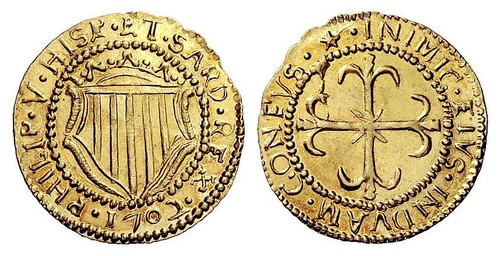
Scudo (Philip V)
c. 1701–1708
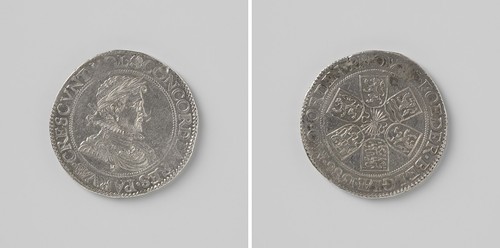
Rijksdaalder van Leicester
1580s-1590s
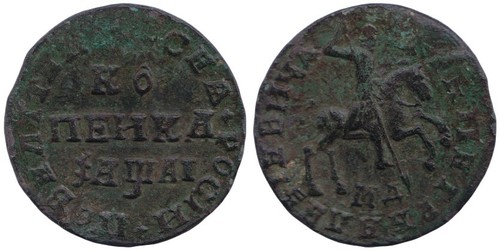
Kopek (Peter I)
c. 1704–1718 (observed 1711)
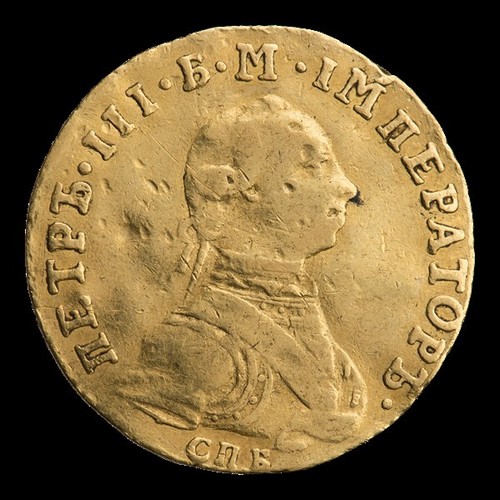
Imperial Chervonets
1762
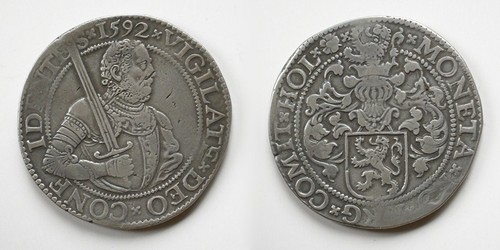
Prinsendaalder (Rijksdaalder)
1592
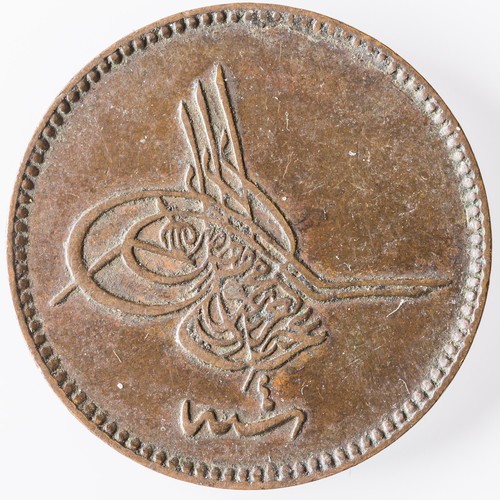
10 Para
AH 1280 (1863-1864 CE)
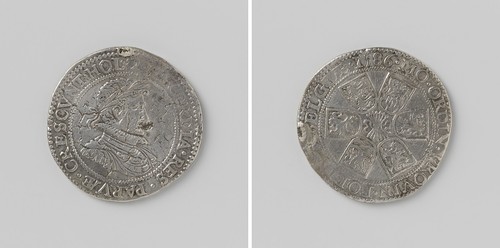
Halve Rijksdaalder van Leicester
1580s-1590s
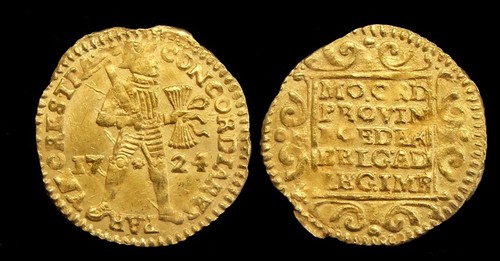
Gouden Dukaat
1724
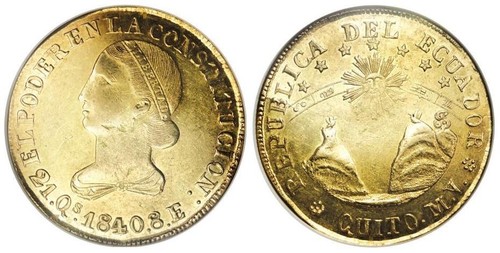
Escudo (Joanna and Charles V, contemporary copy)
1516-1558
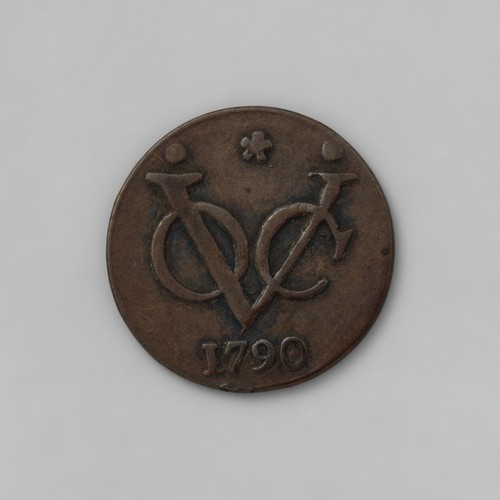
Duit (VOC)
1790
4 Escudos
1780s
Tymf
1663