
Coin Encyclopedia
Search and identify coins from around the world — with country, denomination, metal, mint, history, and how to tell them apart.
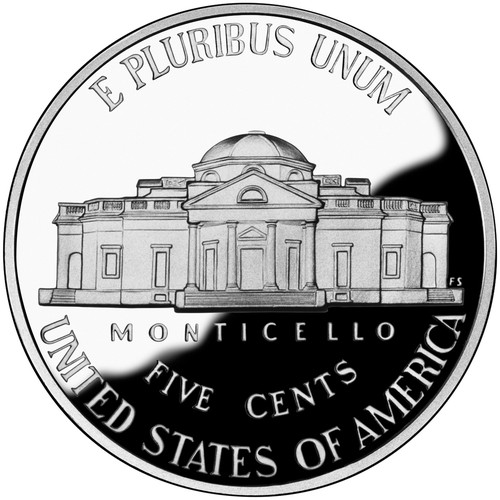
Jefferson Nickel
U.S. five-cent piece introduced in 1938, showing Thomas Jefferson on the obverse and his Monticello home on the reverse. 1942–1945 issues are 35% silver.
Nickel Five Cent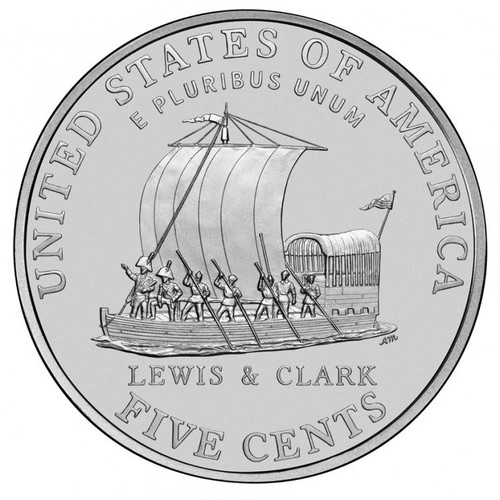
Westward Journey Nickel
A 2004 Jefferson nickel from the Westward Journey series, showing the Lewis & Clark keelboat under sail on the reverse to mark the expedition's bicentennial.
Nickel Five Cent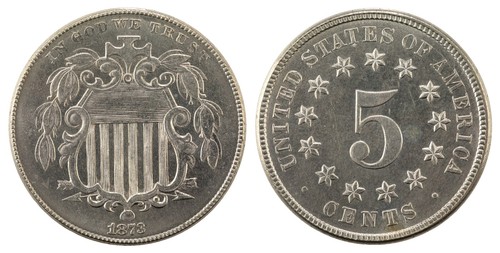
Shield Nickel
The first U.S. five-cent piece struck in copper-nickel, showing a Union shield on the obverse and a large numeral 5 on the reverse, made 1866–1883.
Nickel Five Cent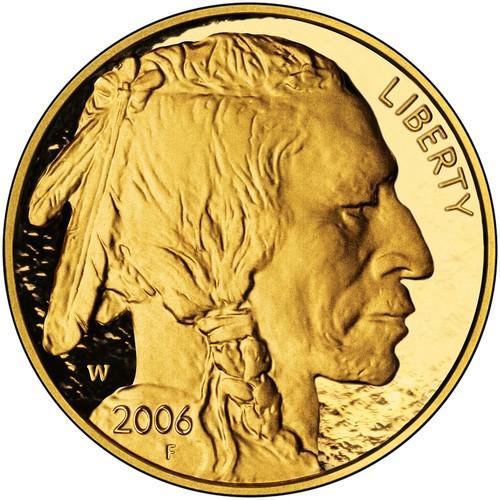
Buffalo Nickel
Iconic U.S. five-cent coin struck 1913–1938, with a Native American profile on the obverse and a standing American buffalo on the reverse.
Nickel Five Cent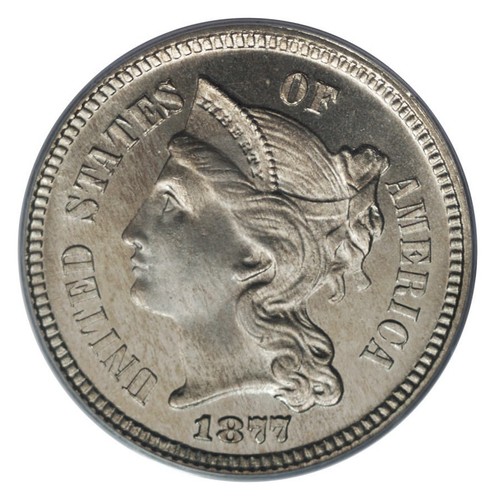
Three Cent Nickel
A small copper-nickel three-cent coin with a Liberty head obverse and a Roman numeral III inside a wreath; struck at Philadelphia from 1865 to 1889.
Three Cent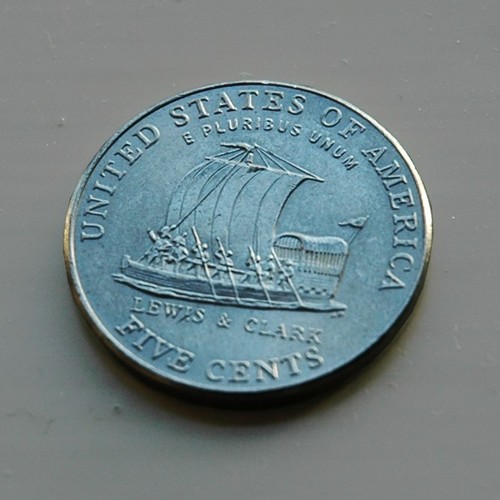
Westward Journey Nickel - Lewis and Clark Keelboat
A 2004 Jefferson five-cent piece from the Westward Journey series, its reverse showing the keelboat that carried the Lewis and Clark expedition upriver.
Nickel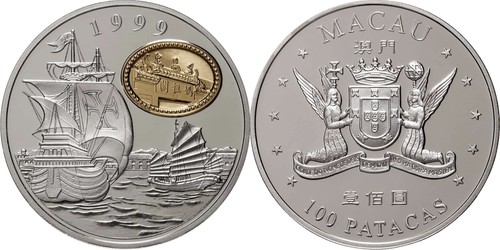
Macao 100 Patacas Return to China Commemorative
A 1999 Macao 100 patacas commemorative marking the return to China: a Portuguese ship with a gold center on one side, the Macao coat of arms on the other.
Commemorative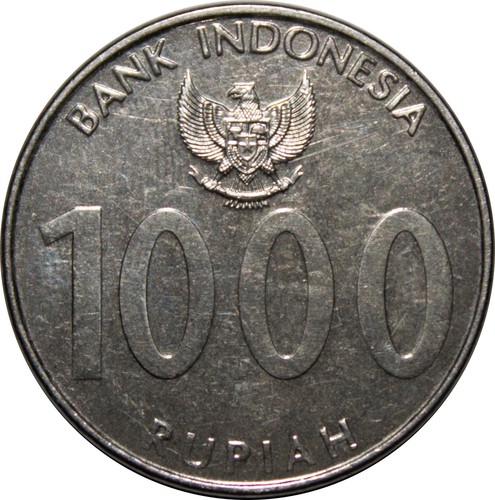
Indonesia 1000 Rupiah
A 2010 Indonesian 1000-rupiah circulation coin, its obverse bearing the Garuda Pancasila emblem and Bank Indonesia legend, its reverse a traditional monument design.
Southeast Asia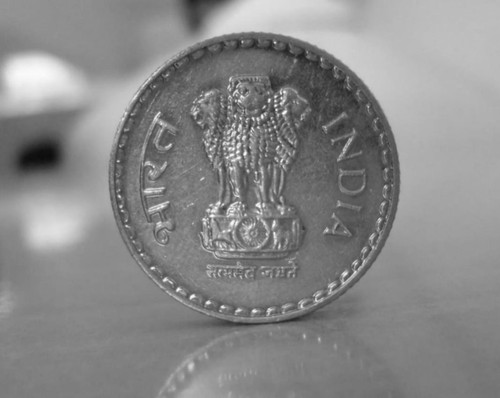
India One Rupee (Cupronickel)
A 1947 British India one rupee in cupro-nickel, its obverse bearing King George VI's crowned bust and its reverse a striding lion above ONE RUPEE INDIA.
Modern India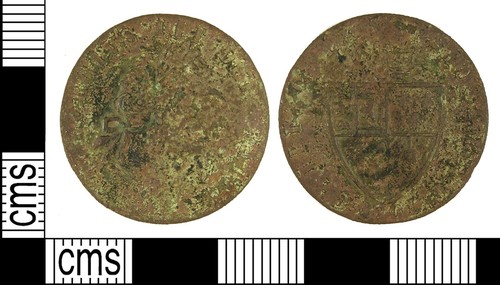
Spade Guinea Token
A base-metal imitation of the George III spade guinea, made as a gaming counter or advertising token, with a male profile obverse and a spade-shaped shield reverse.
Token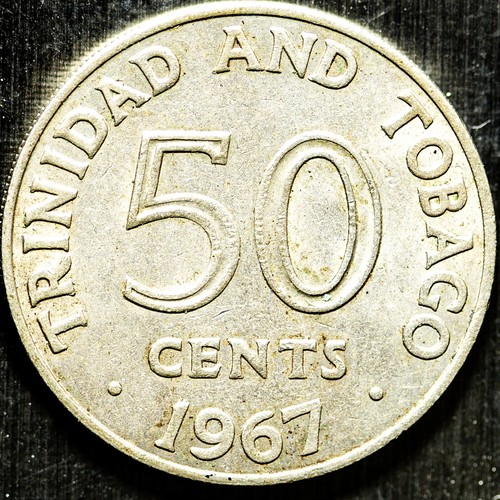
Trinidad and Tobago 50 Cents
A large copper-nickel Caribbean circulation coin; the 1967 example carries the national coat of arms and country name on the obverse and the 50-cent value on the reverse.
Circulation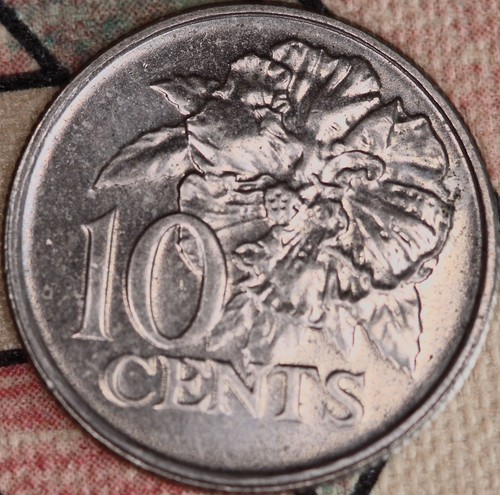
Trinidad and Tobago 10 Cents
A copper-nickel 10-cent coin of Trinidad and Tobago: the national coat of arms on the obverse and the denomination on the reverse.
Circulation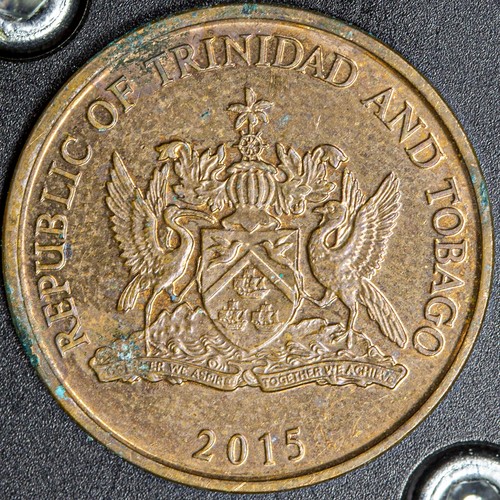
Trinidad and Tobago Dollar
A Trinidad and Tobago one-dollar circulation coin dated 2015, showing the national coat of arms on the obverse and national emblems on the reverse.
Circulation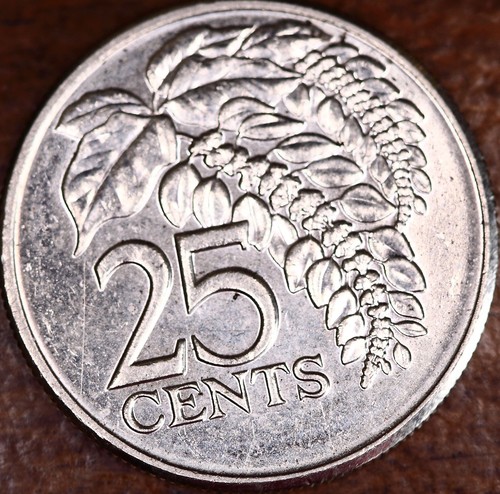
Trinidad and Tobago 25 Cents
A copper-nickel 25-cent coin of Trinidad and Tobago: a leafy national-flower plant design on one face and the value TWENTY FIVE CENTS on the other.
Circulation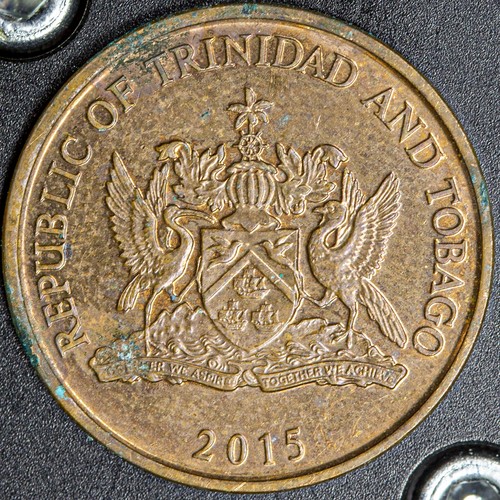
Trinidad and Tobago 1 Dollar
A nickel-plated steel one-dollar coin of Trinidad and Tobago, carrying the national coat of arms and heraldic emblems, dated 2015.
Circulation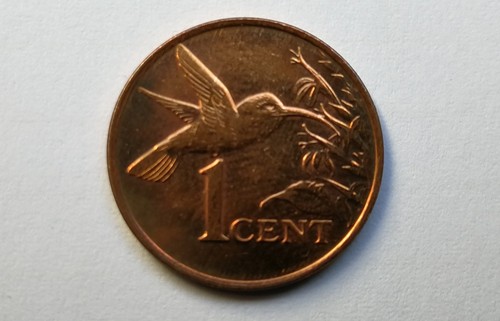
Trinidad and Tobago 1 Cent
The small copper-colored one cent of Trinidad and Tobago, with a hummingbird obverse and a plain value-and-name reverse.
Circulation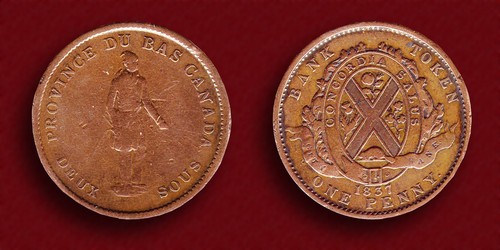
Lower Canada Bank Penny Token
Copper 1837 penny token of Lower Canada with a standing habitant and PROVINCE DU BAS CANADA obverse and a crowned heraldic-arms reverse.
Canadian & Provincial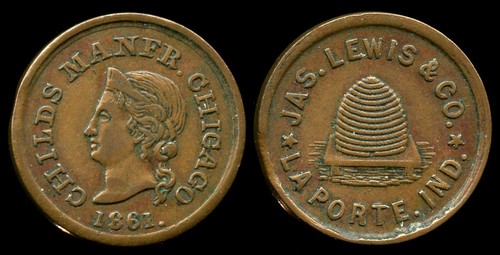
James Lewis and Company Civil War Token
A privately struck Civil War store card advertising Jas. Lewis & Co. of La Porte, Indiana, with a classical head obverse and a beehive reverse.
Token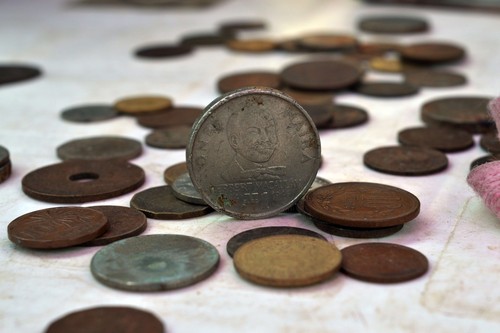
Nigeria 1 Naira
Nigeria's copper-nickel 1 Naira showing the nationalist Herbert Macaulay on the obverse and the national coat of arms on the reverse.
World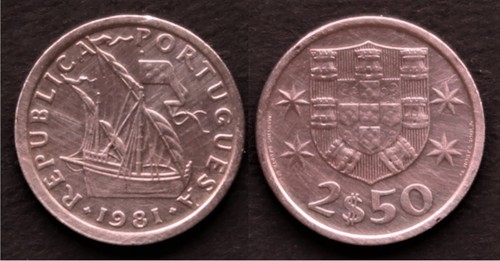
2.5 Escudos
A copper-nickel 2.5 Escudos of the Portuguese Republic, showing a sailing caravel on the obverse and the national shield with the value 2$50.
Modern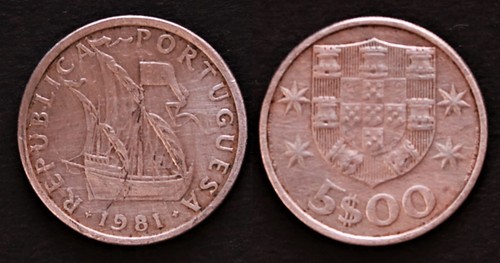
5 Escudos
Portugal's copper-nickel 5 Escudos, showing a caravel sailing ship on the obverse and the national shield with the value 5$00 on the reverse.
Modern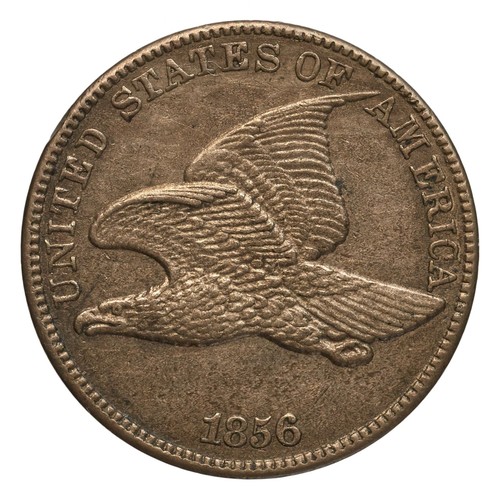
Flying Eagle Cent
America's first small cent, showing an eagle in flight on the obverse and an agricultural wreath on the reverse; struck 1856–1858 in copper-nickel.
Small Cent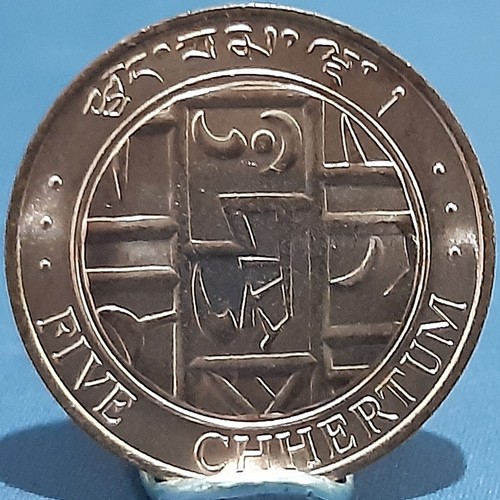
Bhutan 5 Sengtrum
A small cupro-nickel Bhutanese coin of 1979 worth five Sengtrum, with the national emblem on the obverse and a traditional architectural gateway on the reverse.
Himalayan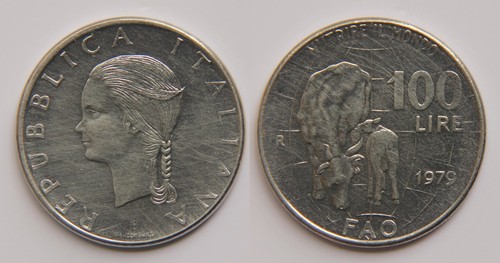
100 Lire
Italy's 1979 100 Lire, a nickel-hued FAO commemorative with a woman's profile on the obverse and an allegorical figure beside the value on the reverse.
Modern