
Coin Encyclopedia
Search and identify coins from around the world — with country, denomination, metal, mint, history, and how to tell them apart.
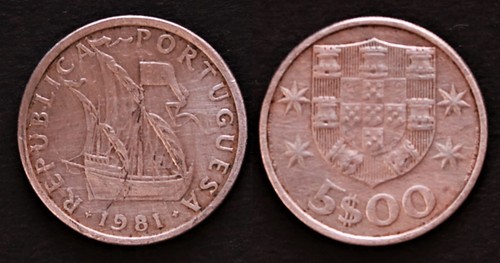
5 Escudos
Portugal's copper-nickel 5 Escudos, showing a caravel sailing ship on the obverse and the national shield with the value 5$00 on the reverse.
Modern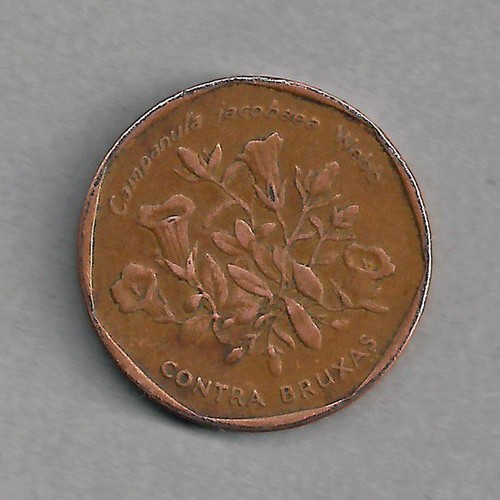
Cape Verde 5 Escudos
A small brass-toned Cape Verde circulation coin whose botanical face depicts the endemic Campanula jacobaea flower with legends around the rim.
World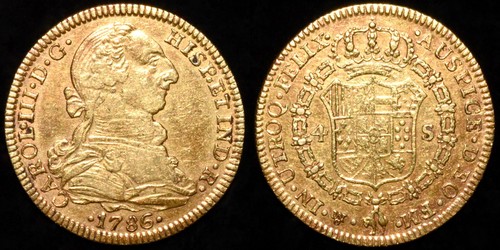
4 Escudos
Spanish Bourbon gold 4 Escudos of the 1780s, with an armored royal bust facing right and a crowned coat of arms on the reverse.
Early Modern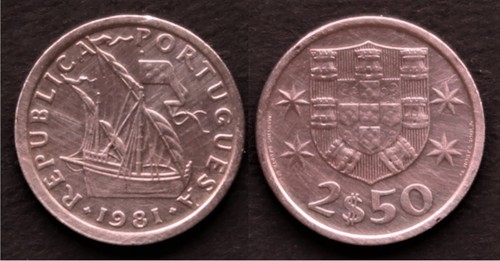
2.5 Escudos
A copper-nickel 2.5 Escudos of the Portuguese Republic, showing a sailing caravel on the obverse and the national shield with the value 2$50.
Modern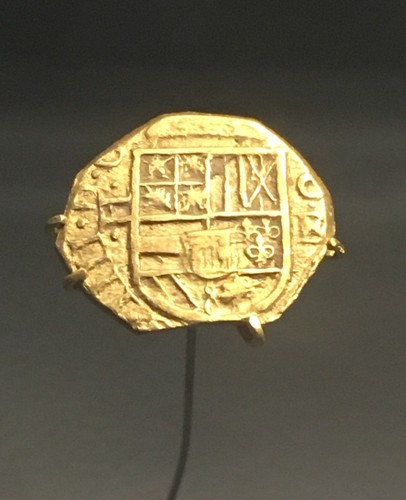
2 Escudos
A gold 2 Escudos of Habsburg Spain, the classic 'doubloon,' struck with a crowned coat of arms of castles and lions on both faces.
Early Modern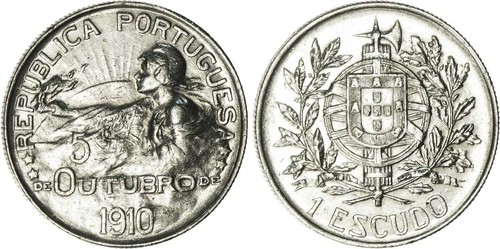
1 Escudo
Portugal's first silver escudo, struck in 1910 to mark the founding of the Republic, with an allegorical female head and the crowned national shield.
Modern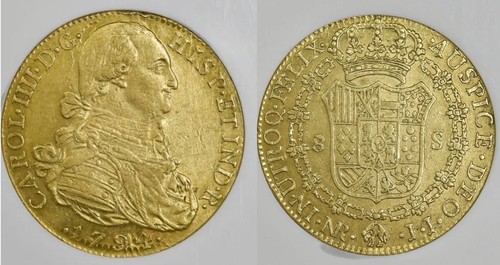
8 Escudos (Carolus)
The largest Spanish gold coin of the age, the 8 Escudos or doubloon, struck under the Habsburg Carolus rulers with the crowned quartered royal arms.
Early Modern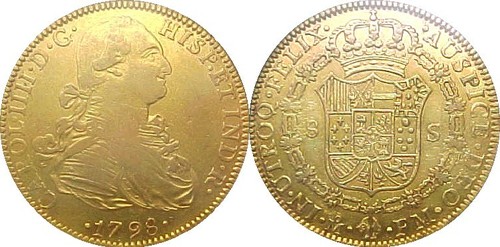
Spanish Doubloon (8 Escudos)
Large Spanish gold coin worth eight escudos, showing the right-facing bust of King Charles IV and a crowned Spanish shield with a cross.
World Coins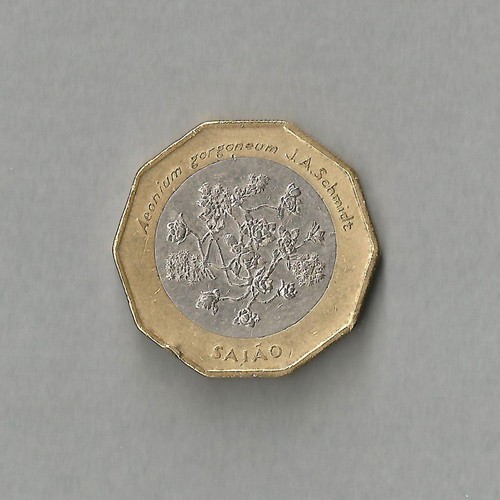
Cape Verde 100 Escudos
A bi-metallic Cape Verde 100 escudos with a botanical theme, its silver-colored center showing the endemic Aeonium gorgoneum plant.
World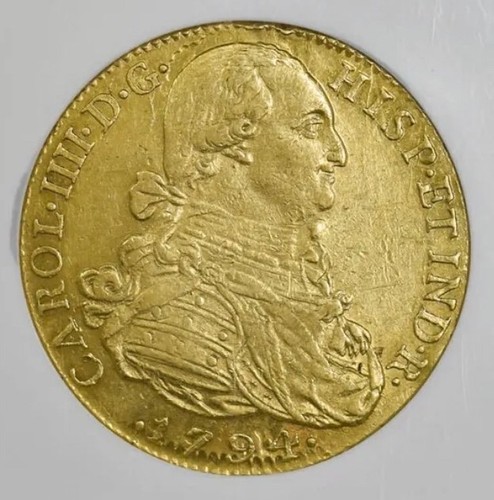
Colombia 8 Escudos (Base Metal)
A base-metal (copper-alloy) piece styled after the colonial Colombian 8 escudos gold onza, with a Charles III profile and crowned heraldic arms dated 1760.
Colonial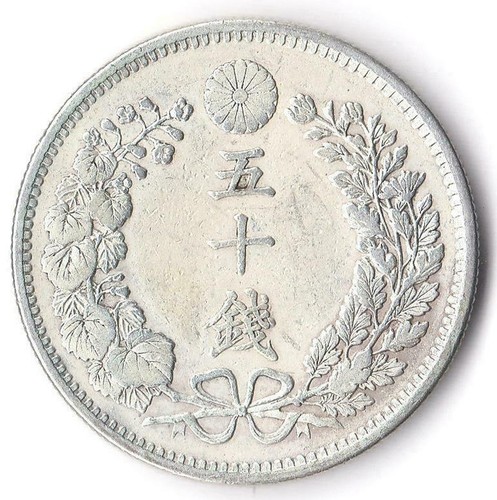
50 Sen (Dragon Type)
A Meiji-era Japanese silver 50 sen: a coiled dragon on one face, a sunburst-and-wreath value design on the other, dated Meiji 4 (1871).
Circulation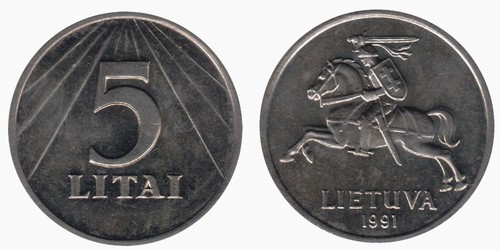
5 Litai
A nickel-alloy 5 litai of newly independent Lithuania dated 1991, showing the value with radiating lines on one side and the armored knight Vytis on horseback on the other.
Modern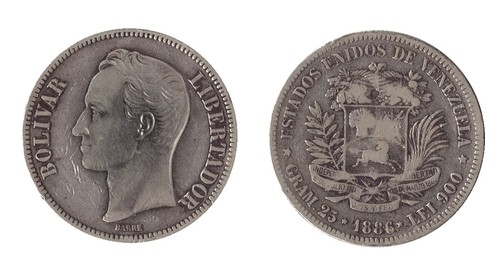
5 Bolivares
A crown-sized silver 5 bolivares of Venezuela: the head of Bolivar the Liberator on one side and the national coat of arms on the other.
Circulation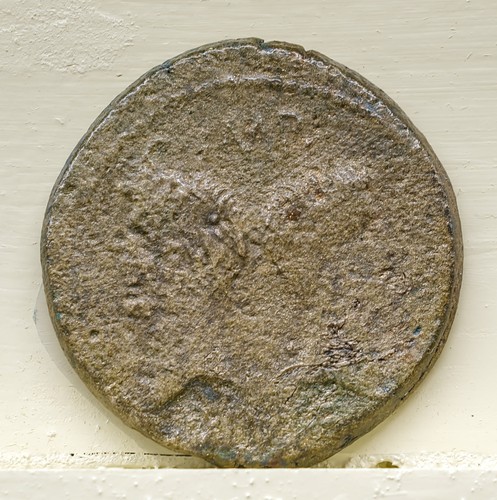
Nemausus As/Dupondius (Crocodile Type)
The famous crocodile of Nimes: a large Roman provincial bronze with paired heads of Agrippa and Augustus and a crocodile chained to a palm.
Ancient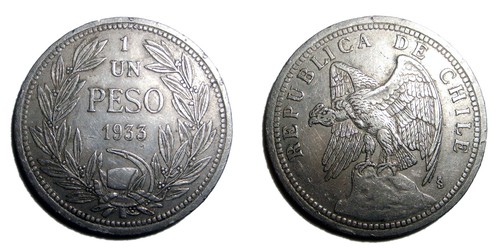
Chilean Peso (1875 Type)
A silver one-peso coin of Chile: the national coat of arms with its lone star and laurel wreaths on one side, and a large bird in flight on the other.
Circulation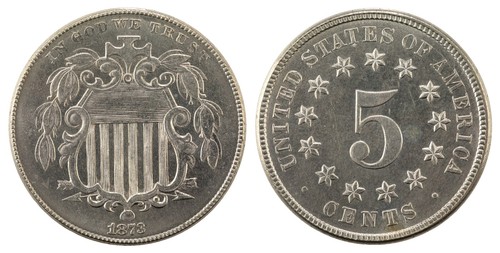
Shield Nickel
The first U.S. five-cent piece struck in copper-nickel, showing a Union shield on the obverse and a large numeral 5 on the reverse, made 1866–1883.
Nickel Five Cent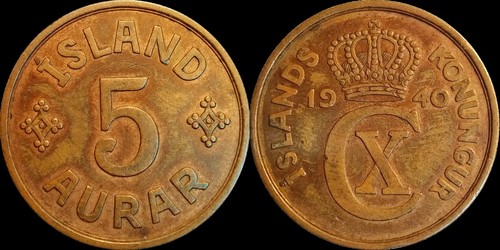
5 Aurar
Icelandic bronze 5 aurar of the Kingdom era, marked ÍSLAND with a crowned KONUNGDÓMUR ÍSLANDS reverse, struck 1926-1942.
World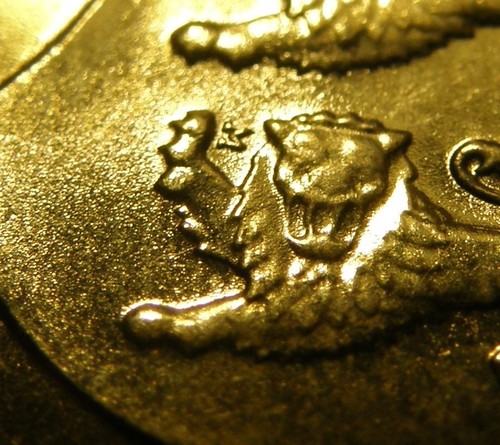
5 Krooni
A silver 5 krooni of the Republic of Estonia dated 1993, carrying the national coat of arms with its three heraldic lions.
Modern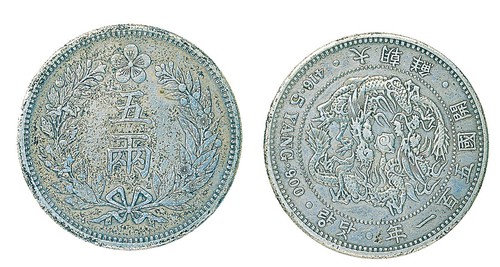
5 Yang
A late-Joseon Korean 5 Yang in bronze: a floral, chrysanthemum-and-taegeuk obverse paired with a coiled dragon and ornamental characters on the reverse.
Historic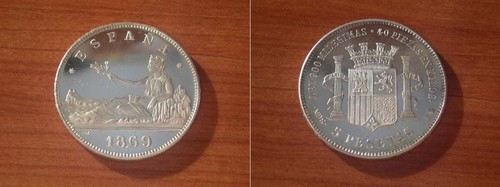
Duro (5 Pesetas)
A large .900 silver five-peseta crown struck under Spain's Provisional Government, with a profile head personifying Hispania and a crowned coat of arms reverse.
Modern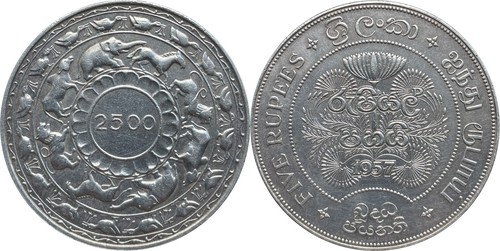
Ceylon 5 Rupees
A 1957 Ceylon silver 5 Rupees marking 2500 years of Buddhism, with a large 2500 on one side and RUPEES CEYLON with the 1957 date on the other.
Commemorative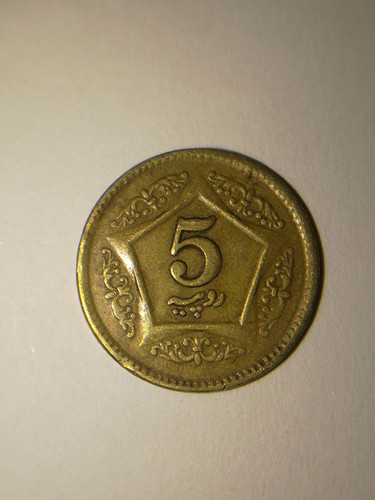
Pakistan 5 Rupees
A brass Pakistani five-rupee coin with a large numeral 5 set in an ornamental frame and Islamic-style Urdu calligraphy around both faces.
South Asia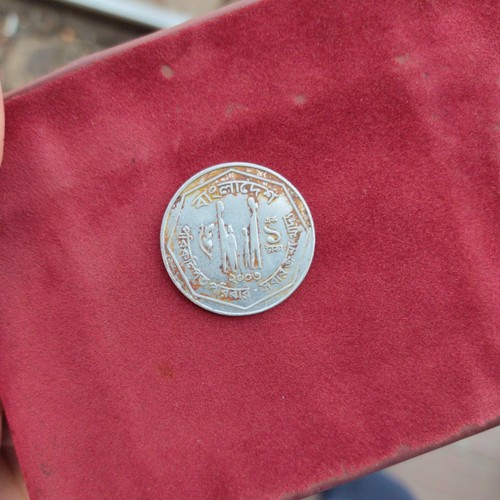
Bangladesh 5 Taka
A modern Bangladeshi circulation coin worth five Taka, struck in nickel-plated steel, with the national emblem on the obverse and the value in Bengali on the reverse.
South Asia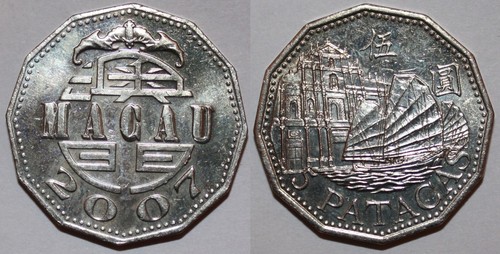
Macao 5 Patacas
A distinctive octagonal Macao 5 Patacas circulation coin dated 2007, showing a denomination-marked face and a sailing ship over a harbor scene.
Circulation