
Coin Encyclopedia
Search and identify coins from around the world — with country, denomination, metal, mint, history, and how to tell them apart.
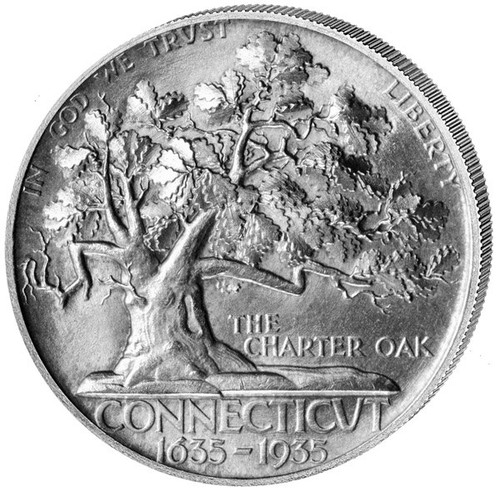
Connecticut Tercentennial Half Dollar
A 1935 U.S. silver half dollar marking 300 years of Connecticut, with a standing eagle on the obverse and the storied Charter Oak on the reverse.
Classic Commemorative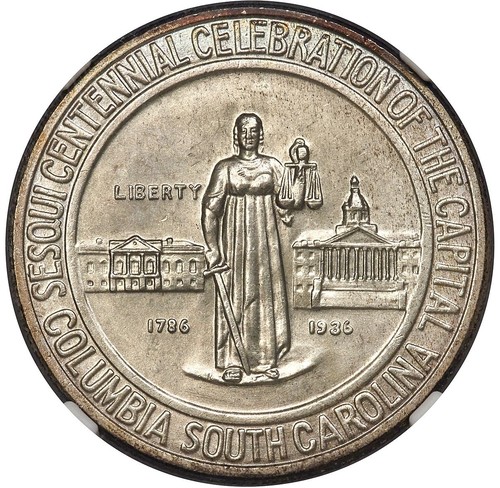
Columbia South Carolina Sesquicentennial Half Dollar
A 1936 U.S. silver half dollar marking 150 years of Columbia as South Carolina's capital; Justice with scales between two statehouses, palmetto reverse.
Classic Commemorative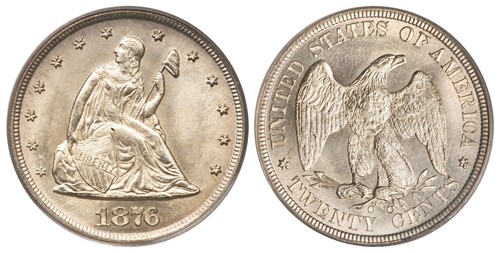
Twenty Cent Piece
A short-lived U.S. silver coin worth twenty cents, showing a seated Liberty and a soaring eagle, struck only from 1875 to 1878.
Twenty Cent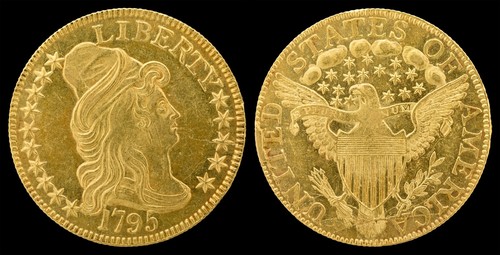
Turban Head Half Eagle
First U.S. gold $5 coin, 1795: Liberty in a soft cap facing right, with a heraldic shield-breasted eagle reverse struck in 22-karat gold.
Half Eagle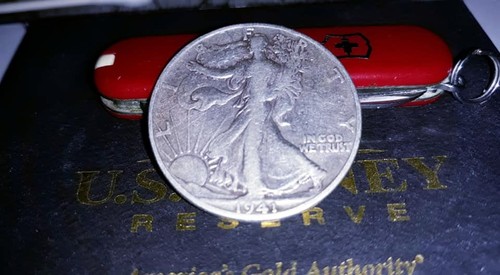
Walking Liberty Half Dollar
A classic U.S. silver half dollar struck 1916–1947, showing Liberty striding toward the sunrise on the obverse and a perched eagle on the reverse.
Half Dollar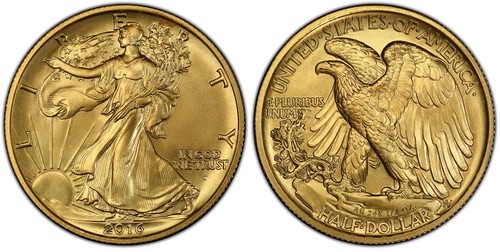
Walking Liberty Half Dollar Centennial Gold
A 2016-W gold collector coin marking the centennial of the 1916 Walking Liberty half dollar, struck in 1/2 oz of 24-karat gold at West Point.
Half Dollar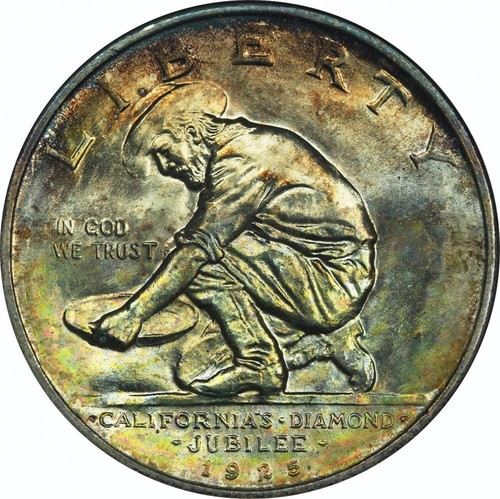
California Diamond Jubilee Half Dollar
A 1925 U.S. silver commemorative half dollar marking California's 75th year of statehood, designed by Jo Mora with a gold miner and a grizzly bear.
Classic Commemorative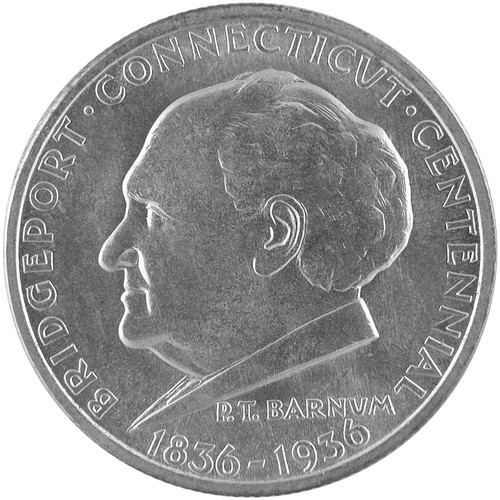
Bridgeport Centennial Half Dollar
A 1936 U.S. silver commemorative half dollar for Bridgeport, Connecticut's centennial, with a P.T. Barnum portrait and a bold Art Deco eagle.
Classic Commemorative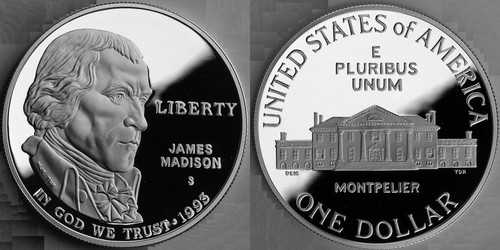
Bill of Rights Silver Dollar
A 1993 U.S. silver dollar honoring the bicentennial of the Bill of Rights, showing a Liberty figure with torch and flags and an eagle above Montpelier.
Modern Commemorative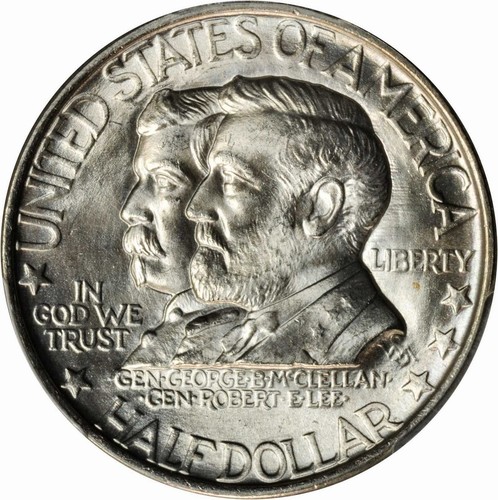
Battle of Antietam Half Dollar
A 1937 U.S. silver half dollar marking 75 years since the Civil War Battle of Antietam, with jugate busts of Lee and McClellan and Burnside Bridge on the reverse.
Classic Commemorative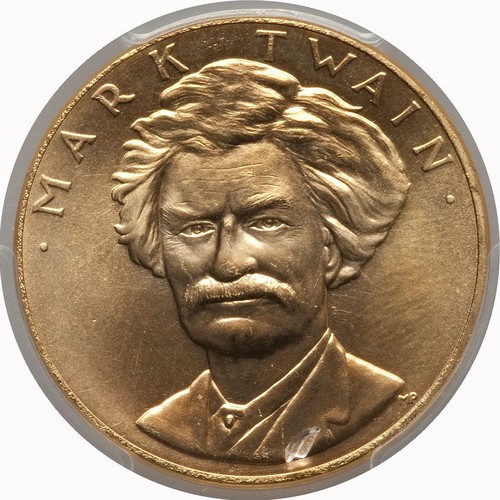
American Arts Commemorative Series Gold Medallion
A U.S. Treasury gold bullion medallion series (1980–1984) honoring American artists; the photographed 1981 one-ounce piece features author Mark Twain.
Bullion Medallion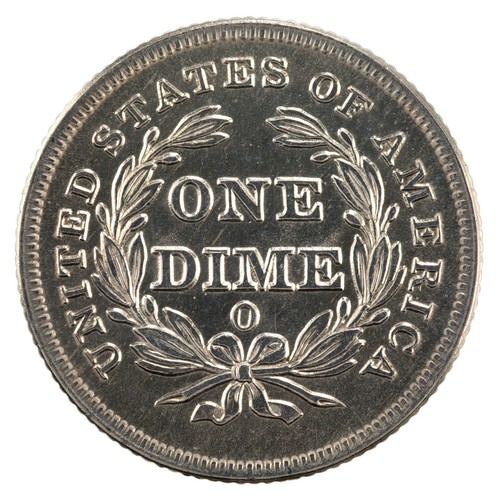
Seated Liberty Dime
A U.S. silver ten-cent coin showing Liberty seated with a pole and shield; the early No Stars type has a plain obverse and a laurel-wreath ONE DIME reverse.
Dime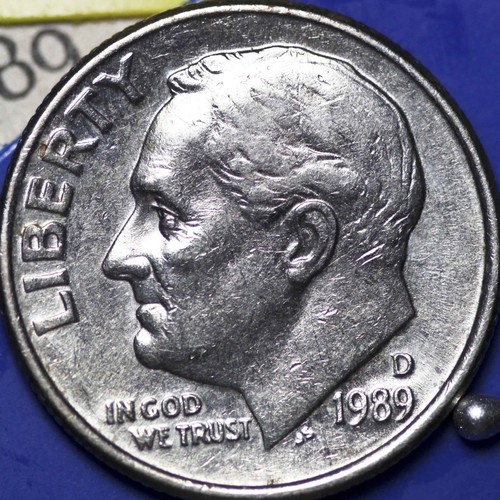
Roosevelt Dime
The circulating U.S. ten-cent coin honoring Franklin D. Roosevelt, shown here as a 1965 copper-nickel clad issue with a torch, olive, and oak reverse.
Dime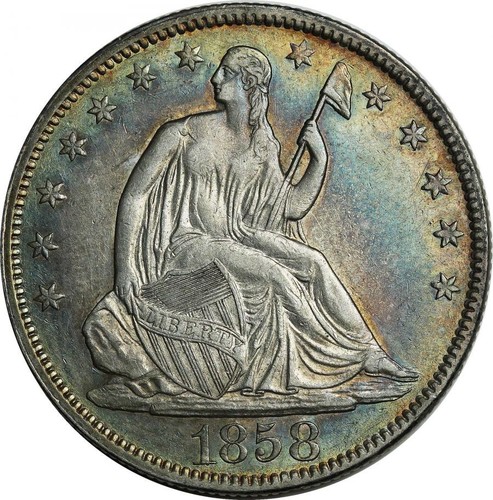
Seated Liberty Half Dollar
U.S. 90% silver fifty-cent piece struck 1839–1891, with a seated figure of Liberty by Christian Gobrecht and a heraldic eagle reverse.
Half Dollar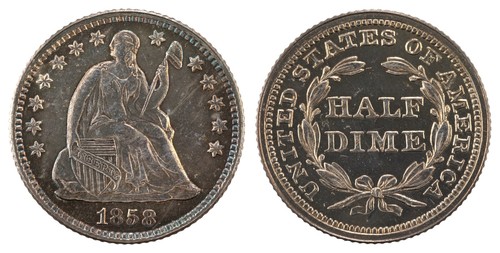
Seated Liberty Half Dime
A tiny 90% silver five-cent piece showing Liberty seated with a shield and Liberty pole; the reverse wreath frames HALF DIME. First struck 1837.
Half Dime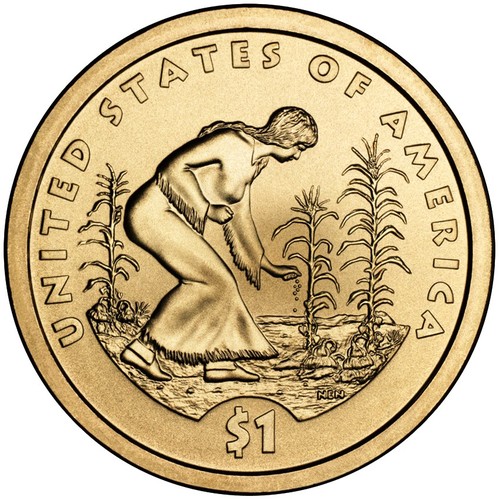
Native American Dollar
U.S. golden dollar with the Sacagawea obverse and a yearly-changing reverse; the 2009 issue shows Native American agriculture and three corn stalks.
Dollar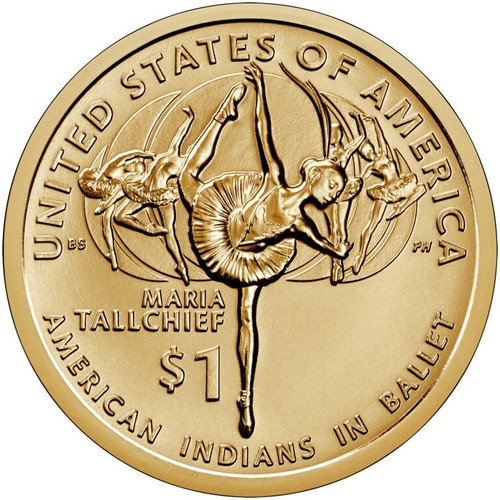
Native American Dollar - Tallchief
2023 Native American $1 Coin whose reverse honors Maria Tallchief and the five Osage ballerinas, struck in golden manganese brass.
Dollar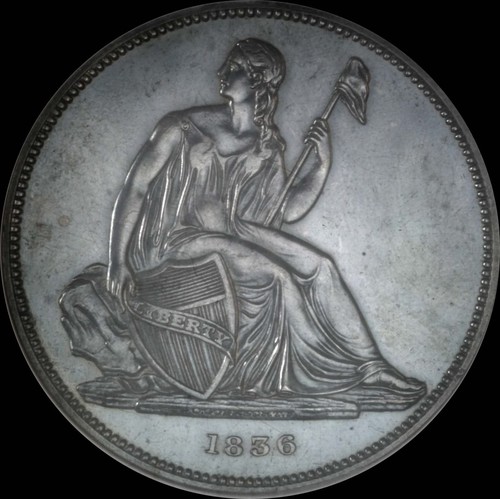
Gobrecht Dollar
U.S. silver dollar of 1836 by engraver Christian Gobrecht, pairing a Seated Liberty obverse with a flying-eagle reverse; a rare pattern-era issue.
Dollar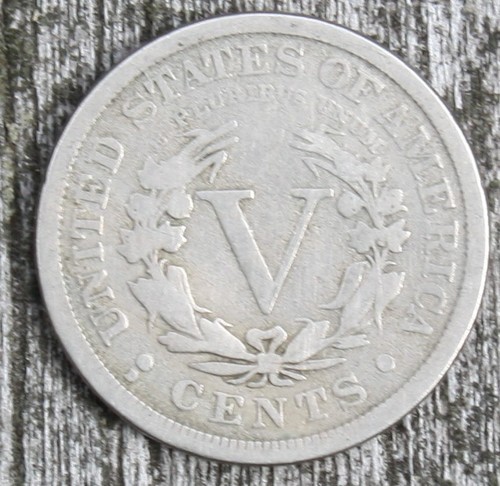
Liberty Head Nickel
U.S. five-cent piece struck 1883–1912, showing a left-facing Liberty head ringed by stars, with a Roman-numeral "V" reverse; the 1913 issue is a legendary rarity.
Nickel Five Cent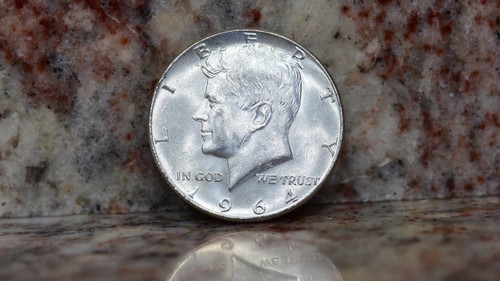
Kennedy Half Dollar
U.S. fifty-cent piece introduced in 1964 to honor President John F. Kennedy; the first-year 1964 coins were struck in 90% silver.
United States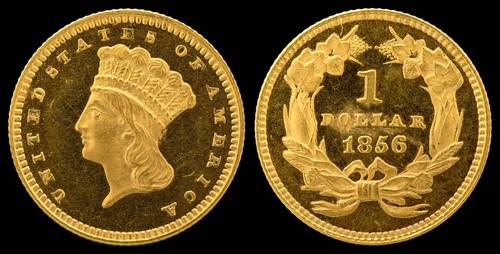
Indian Head Gold Dollar
Tiny U.S. one-dollar gold coin (1854–1889) with an Indian-princess Liberty in a feathered headdress and a denomination-and-date wreath reverse.
Gold Dollar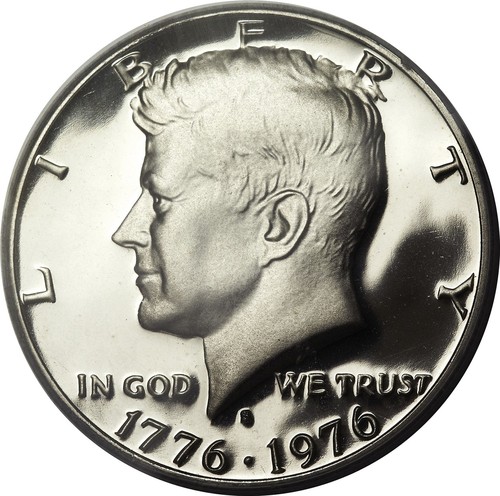
Kennedy Half Dollar Bicentennial
U.S. fifty-cent piece issued for the 1976 Bicentennial, pairing the Kennedy portrait with a Liberty Bell reverse and the dual date 1776-1976.
Half Dollar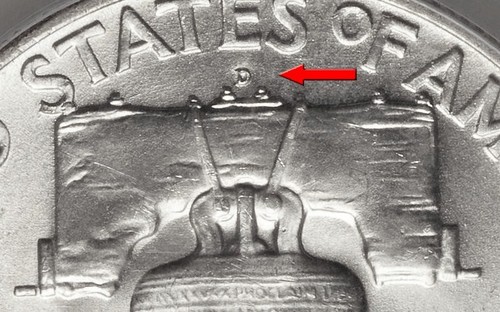
Franklin Half Dollar
U.S. 90% silver fifty-cent piece struck 1948–1963, with Benjamin Franklin's profile and a Liberty Bell reverse flanked by a small eagle.
Half Dollar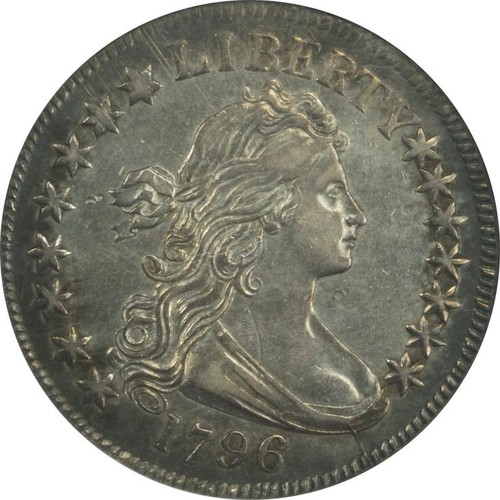
Draped Bust Half Dollar
Early U.S. silver fifty-cent piece of 1796–1807. The pictured 1796 Small Eagle with 15 stars is among the rarest of all American coins.
Half Dollar