
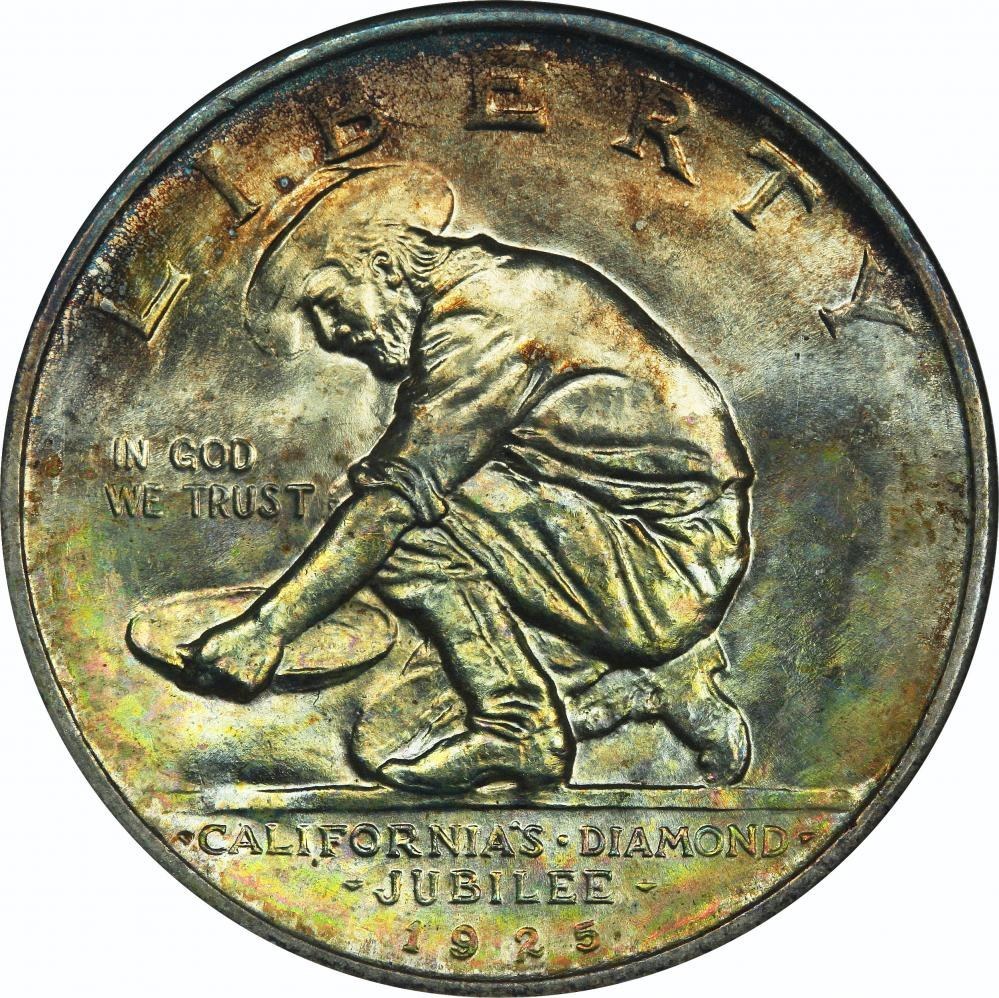
California Diamond Jubilee Half Dollar
A 1925 U.S. silver commemorative half dollar marking California's 75th year of statehood, designed by Jo Mora with a gold miner and a grizzly bear.
- Country
- United States
- Denomination
- 50¢
- Metal
- Silver
Got a coin like this?
Identify any coin from a photo, free.
Overview
The California Diamond Jubilee Half Dollar is a classic United States commemorative fifty-cent piece issued in 1925 to celebrate the seventy-fifth anniversary — the diamond jubilee — of California's admission to the Union in 1850. It was struck in the same 90% silver alloy and half-dollar size as regular circulating coinage of the era, but was sold to the public at a premium during the jubilee celebrations rather than released into circulation.
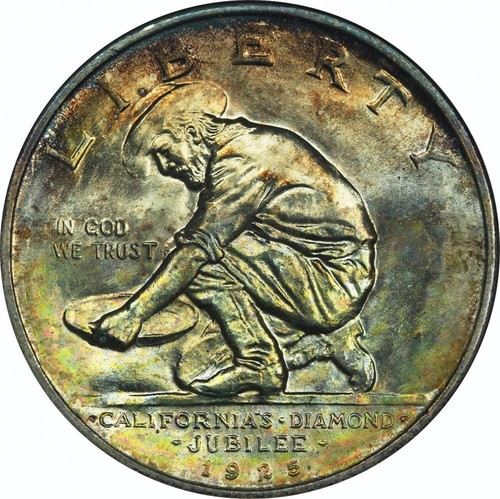
The coin was designed by California sculptor Jo Mora and is widely regarded as one of the more artistically accomplished pieces in the classic commemorative series. The obverse shows a kneeling forty-niner gold prospector working a pan, while the reverse depicts a California grizzly bear, the animal that appears on the state flag. The dual imagery ties the Gold Rush to the state's identity in a single design.
All examples are dated 1925 and were struck at the San Francisco Mint. Today the coin is a popular and readily collected type, valued both for its history and for Mora's distinctive Art Deco–influenced sculpting.
History & Background
California entered the Union on September 9, 1850, and in 1925 the state marked the seventy-fifth anniversary of statehood with a jubilee. Congress authorized a commemorative half dollar for the occasion, and the coins were sold to the public — typically for one dollar each — to help fund the celebration.
The design was entrusted to Jo Mora, a Uruguay-born sculptor and artist long associated with California and the Monterey region. It was his only United States coin design, and the modeling of both the crouching miner and the striding grizzly earned lasting praise for its liveliness compared with the more static allegory common on coins of the period.
Roughly 150,000 pieces were struck at San Francisco, but a substantial portion went unsold and was returned to the Mint and melted, leaving a distributed total well under six figures. Because the surviving population is modest but not scarce, the coin has remained a steadily collected classic commemorative rather than a rarity.
How to Identify
Identify the type from its two-sided imagery and legends. The obverse shows a bearded forty-niner gold miner kneeling and swirling a gold pan, with surrounding inscriptions naming the United States and the commemorative occasion. The reverse features a walking California grizzly bear in left profile, accompanied by the text CALIFORNIA DIAMOND JUBILEE and the date 1925. The grizzly, drawn from the state flag, is the single most recognizable diagnostic of the type.
Physically the coin follows standard U.S. half-dollar specifications: 90% silver and 10% copper, about 12.5 grams, and roughly 30.6 mm in diameter, with a reeded edge. The metal shows the neutral gray-white tone of coin silver, often with the golden or iridescent toning typical of well-preserved silver commemoratives.
All genuine examples are dated 1925 and were struck at the San Francisco Mint, but the coin does not carry a visible S mint mark. The absence of a mint mark is normal for this issue and should not be read as a warning sign.
Value & Collectibility
As a widely produced classic commemorative, the California Diamond Jubilee Half Dollar is affordable and available, and its value is driven mainly by condition rather than rarity. Circulated and lightly worn examples generally trade for a low-to-mid two-figure to low three-figure premium over the coin's silver content, while attractive uncirculated pieces command more.
Mint State examples rise in price with grade: pleasing MS-63 to MS-64 coins are common and moderately priced, while high-grade gems and exceptionally toned pieces can sell for several times that. Original toning, strong luster, and clean surfaces add meaningful premiums.
Because silver content underlies every example, values move with the bullion market at the low end, while collector demand and third-party grade set prices for choice coins. For any specific piece, check recent auction results and dealer listings for the matching grade, since prices vary with condition and eye appeal.
Frequently asked questions
What does the California Diamond Jubilee Half Dollar commemorate?
It marks the seventy-fifth anniversary — the diamond jubilee — of California's admission to the Union in 1850. The coins were issued in 1925 and sold at a premium to help fund the statehood celebration.
Who designed the coin?
It was designed by sculptor Jo Mora, a longtime California and Monterey-area artist. It was his only U.S. coin design and is admired for the lively modeling of the gold miner and the grizzly bear.
What is on the obverse and reverse?
The obverse shows a kneeling forty-niner gold miner panning for gold. The reverse depicts a California grizzly bear — the animal on the state flag — with the text CALIFORNIA DIAMOND JUBILEE and the date 1925.
Is the coin made of silver?
Yes. It is struck in the standard U.S. coinage alloy of 90% silver and 10% copper, weighs about 12.5 grams, and measures roughly 30.6 mm across, the same as a regular half dollar of the era.
Does it have a mint mark?
No. Although the coins were struck at the San Francisco Mint, this issue does not display an S mint mark, so its absence is normal and not a sign of a problem.
California Diamond Jubilee Half Dollar guides
In-depth guides for identifying, valuing, and collecting California Diamond Jubilee Half Dollar.
Other coins you may enjoy
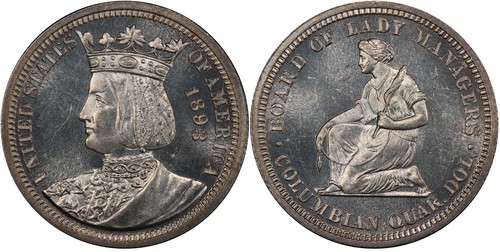
Isabella Quarter
1893
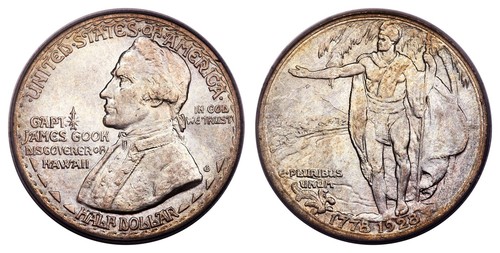
Hawaiian Sesquicentennial Half Dollar
1928
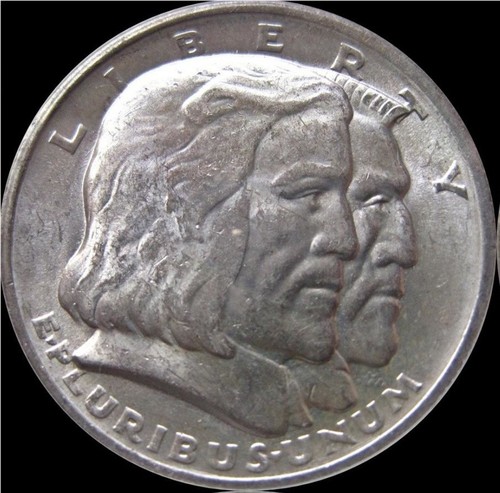
Long Island Tercentenary Half Dollar
1936
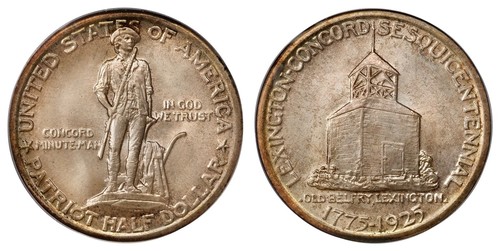
Lexington-Concord Sesquicentennial Half Dollar
1925
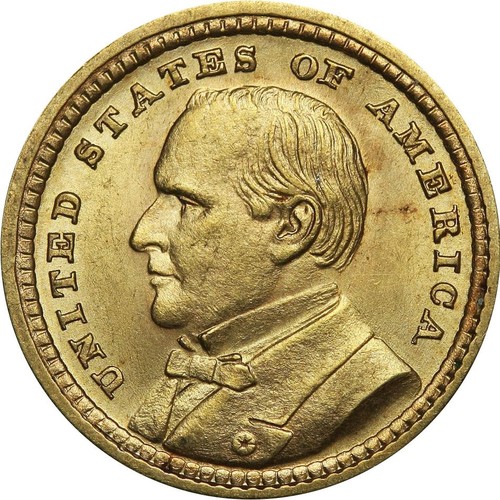
Louisiana Purchase Exposition Dollar (Jefferson)
1903
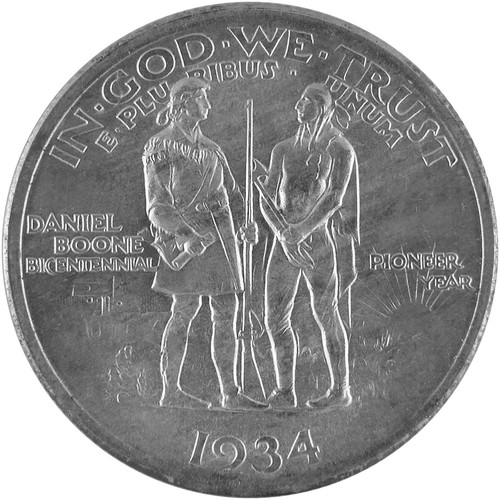
Daniel Boone Bicentennial Half Dollar
1934–1938
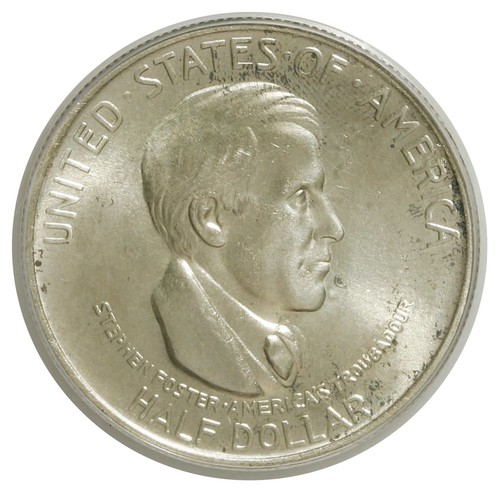
Cincinnati Music Center Half Dollar
1936
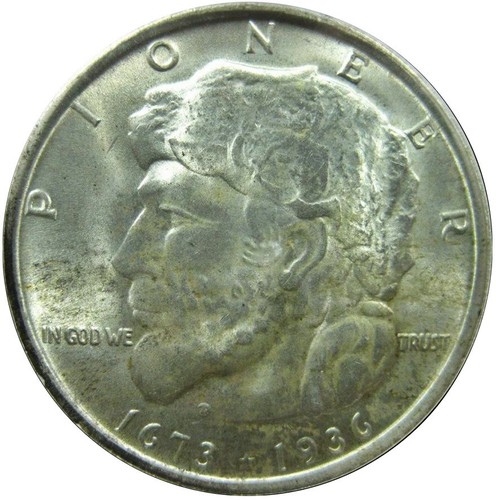
Elgin Illinois Centennial Half Dollar
1936
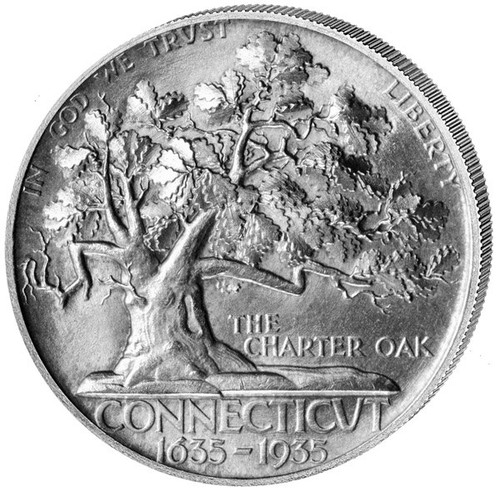
Connecticut Tercentennial Half Dollar
1935
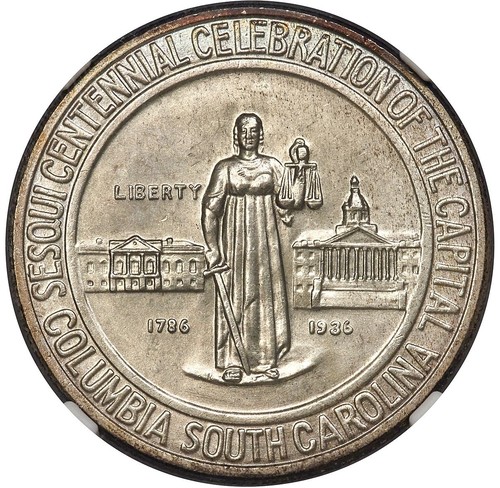
Columbia South Carolina Sesquicentennial Half Dollar
1936
Sesquicentennial of American Independence Quarter Eagle
1926
Pilgrim Tercentenary Half Dollar
1920-1921