
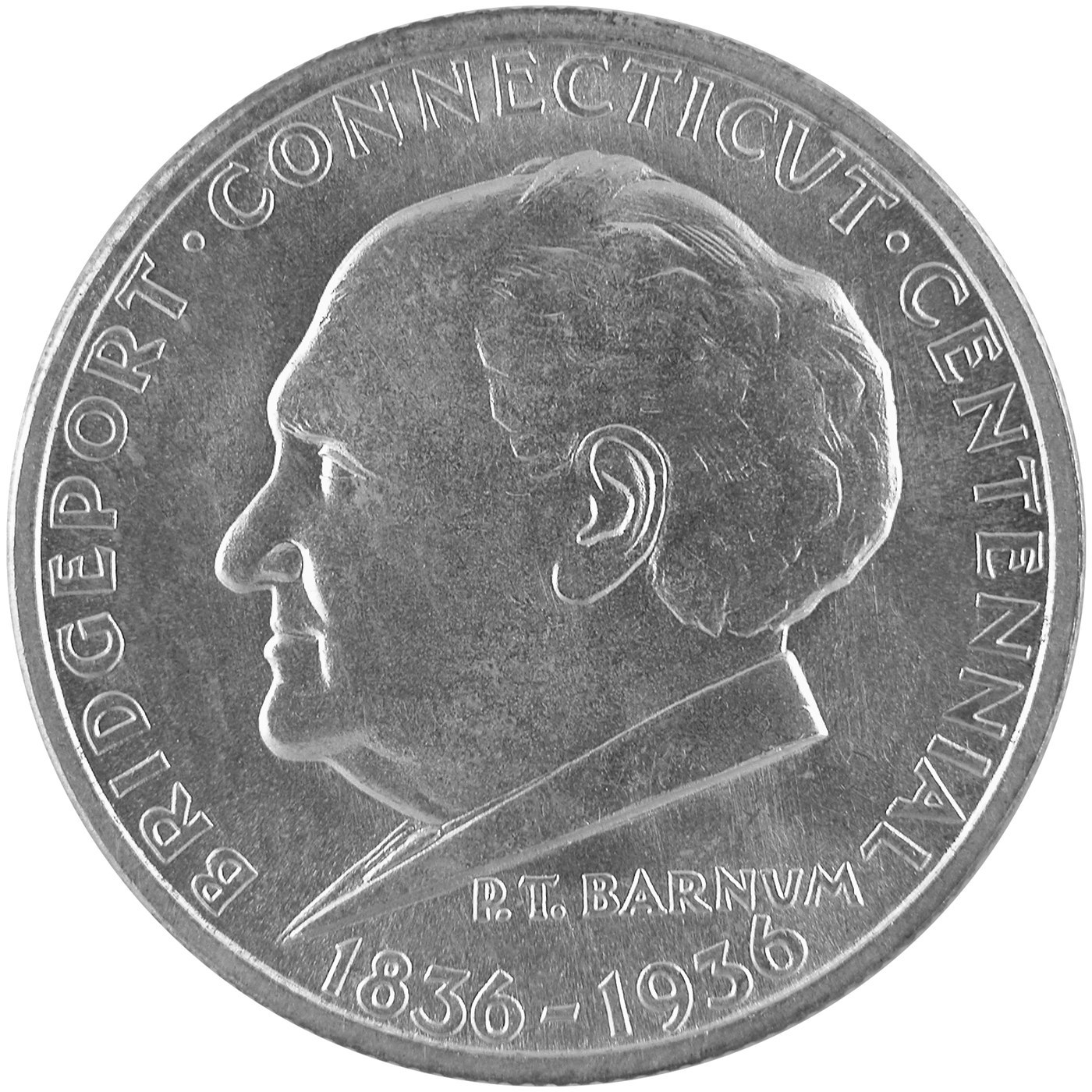
Bridgeport Centennial Half Dollar
A 1936 U.S. silver commemorative half dollar for Bridgeport, Connecticut's centennial, with a P.T. Barnum portrait and a bold Art Deco eagle.
- Country
- United States
- Denomination
- 50¢
- Metal
- Silver
Got a coin like this?
Identify any coin from a photo, free.
Overview
The Bridgeport Centennial Half Dollar is a classic United States commemorative fifty-cent piece issued in 1936 to mark the one-hundredth anniversary of the incorporation of Bridgeport, Connecticut, as a city in 1836. Like other classic commemoratives, it was struck in the standard 90% silver alloy and half-dollar format of the era but was sold to the public at a premium rather than released into general circulation.
The coin was designed by sculptor Henry G. Kreis and is best known for its striking pairing of a realistic portrait head of showman Phineas Taylor (P.T.) Barnum with a highly stylized, modernistic eagle. The angular, Art Deco eagle on the reverse is one of the more distinctive designs in the classic commemorative series and is the feature most collectors remember.
All examples are dated 1936 and were struck at the Philadelphia Mint. With a comparatively small issue, the type is a recognized and steadily collected member of the 1930s commemorative half dollar series.
History & Background
Bridgeport, Connecticut, was incorporated as a city in 1836, and in 1936 the community marked its centennial. Congress authorized a commemorative half dollar for the occasion, and the coins were distributed to the public — typically at two dollars each — with proceeds supporting the anniversary observance.
The design was the work of Henry G. Kreis, the sculptor also associated with the Connecticut Tercentenary half dollar of 1935. His choice to feature P.T. Barnum, the celebrated showman, circus promoter, and one-time mayor of Bridgeport, made this one of the relatively few U.S. coins to carry the portrait of a well-known entertainer, and the decision drew comment at the time.
The authorized issue was modest — on the order of twenty-five thousand pieces struck at Philadelphia — which is small compared with the most common commemoratives of the decade. Because the coins were sold to collectors rather than circulated, surviving examples are typically found in Mint State, and the type is scarcer than high-mintage issues without being a great rarity.
How to Identify
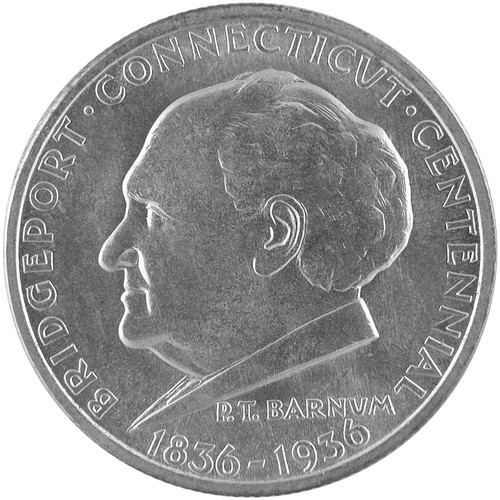
Identify the type from its two contrasting sides. The obverse shows a bare portrait head of P.T. Barnum facing left, accompanied by inscriptions naming Bridgeport and the centennial along with IN GOD WE TRUST. The reverse presents a bold, geometric, forward-leaning eagle rendered in an unmistakably modernistic Art Deco style, with the wing and body reduced to sweeping angular planes, above the denomination and the date 1936. That stylized eagle, paired with the Barnum portrait, is the single most reliable diagnostic of the type.
Physically the coin follows standard U.S. half-dollar specifications: 90% silver and 10% copper, about 12.5 grams, and roughly 30.6 mm in diameter, with a reeded edge. The metal shows the neutral gray-white tone of coin silver, frequently with the golden or iridescent toning common on carefully stored silver commemoratives.
All genuine examples are dated 1936 and were struck at the Philadelphia Mint, so the coin carries no mint mark. The absence of a mint mark is normal for this issue and is not a sign of a problem.
Value & Collectibility
As a lower-mintage classic commemorative, the Bridgeport Centennial Half Dollar trades at a meaningful premium over its silver content, with value driven mainly by grade and eye appeal. Because the coins were sold to collectors rather than circulated, most survivors are uncirculated, and pleasing Mint State examples are the norm in the market.
Typical MS-63 to MS-64 pieces generally bring a low-to-mid three-figure price, while choice and gem coins in MS-65 and above command more, and exceptional, well-toned examples can sell for several multiples of common grades. Cleaned, scuffed, or dull pieces sell for less.
Silver content sets a floor at the bullion end, but collector demand and certified grade drive prices for choice coins. For any particular piece, check recent auction results and dealer listings for the matching grade, since values vary with condition, luster, and toning.
Frequently asked questions
What does the Bridgeport Centennial Half Dollar commemorate?
It marks the one-hundredth anniversary of Bridgeport, Connecticut's incorporation as a city in 1836. The coins were issued in 1936 and sold to the public at a premium to support the centennial celebration.
Who is on the obverse of the coin?
The obverse features a portrait head of P.T. Barnum, the famous showman and one-time mayor of Bridgeport. It is one of the few U.S. coins to depict a well-known entertainer.
Why does the eagle look so unusual?
Designer Henry G. Kreis rendered the reverse eagle in a bold, angular Art Deco style. The stylized, geometric eagle is intentional and is one of the most distinctive designs in the classic commemorative series.
Is the coin made of silver?
Yes. It is struck in the standard U.S. coinage alloy of 90% silver and 10% copper, weighs about 12.5 grams, and measures roughly 30.6 mm across, the same as a regular half dollar of the era.
Does it have a mint mark?
No. The coins were struck at the Philadelphia Mint, which used no mint mark on this issue, so the absence of a mint mark is normal and not a cause for concern.
Bridgeport Centennial Half Dollar guides
In-depth guides for identifying, valuing, and collecting Bridgeport Centennial Half Dollar.
Other coins you may enjoy
Isabella Quarter
1893
Hawaiian Sesquicentennial Half Dollar
1928
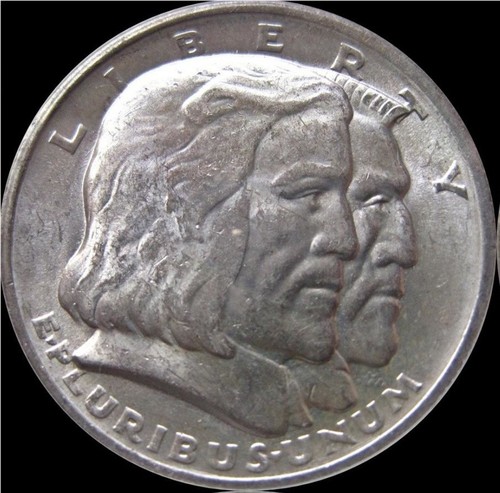
Long Island Tercentenary Half Dollar
1936
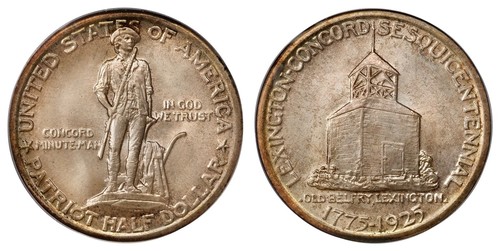
Lexington-Concord Sesquicentennial Half Dollar
1925
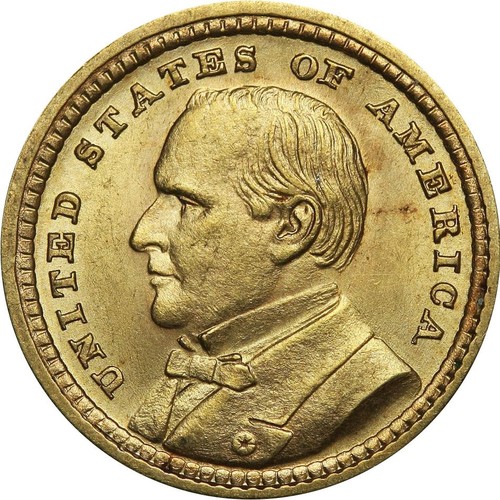
Louisiana Purchase Exposition Dollar (Jefferson)
1903
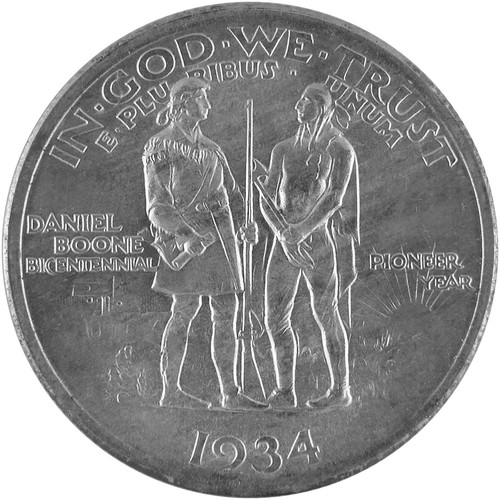
Daniel Boone Bicentennial Half Dollar
1934–1938
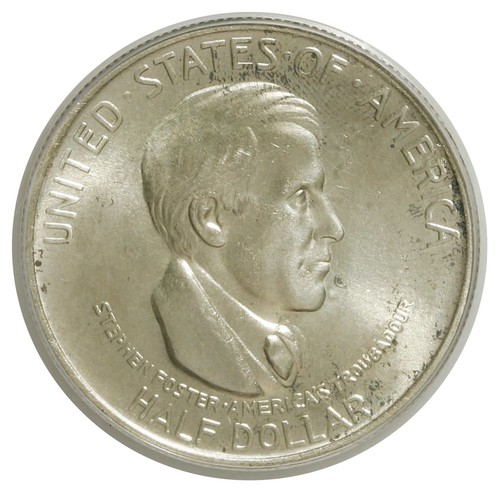
Cincinnati Music Center Half Dollar
1936
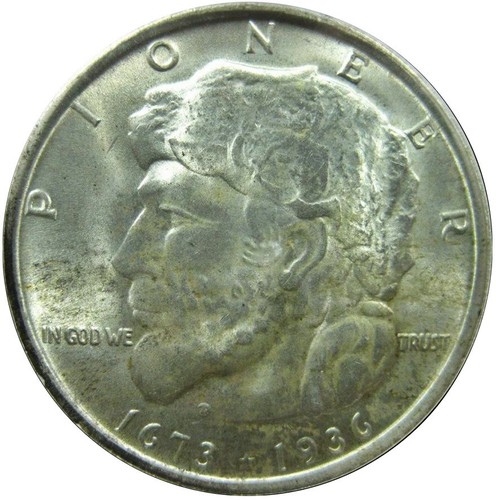
Elgin Illinois Centennial Half Dollar
1936
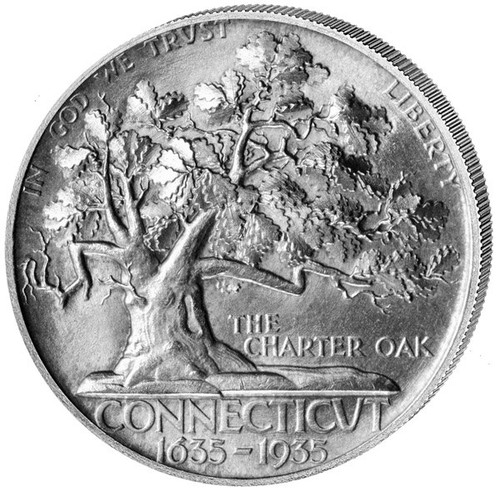
Connecticut Tercentennial Half Dollar
1935
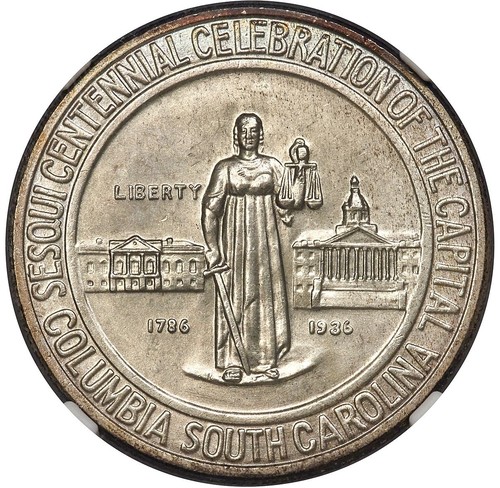
Columbia South Carolina Sesquicentennial Half Dollar
1936
Sesquicentennial of American Independence Quarter Eagle
1926
Pilgrim Tercentenary Half Dollar
1920-1921