
Coin Encyclopedia
Search and identify coins from around the world — with country, denomination, metal, mint, history, and how to tell them apart.
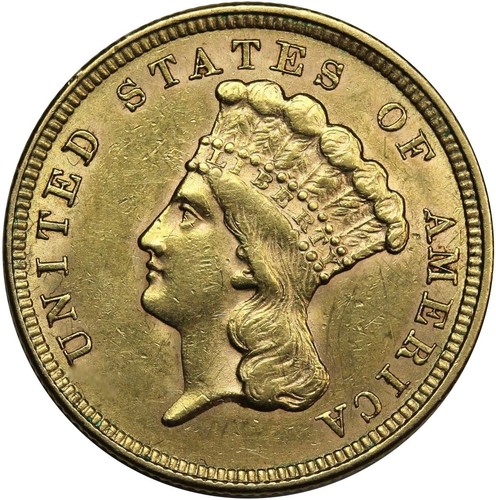
Three-Dollar Gold Piece
An unusual U.S. gold coin of the $3 denomination struck 1854–1889, showing a Liberty head in a feathered Indian-style headdress. The photo shows the 1854 first year.
Gold Type Coin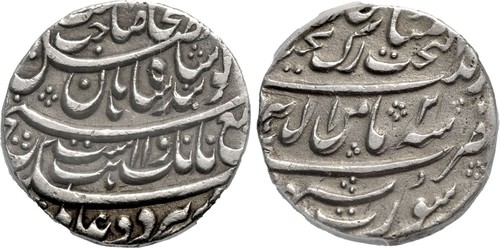
Banda Singh Bahadur Sikh Rupee
A hand-struck silver rupee of the early Sikh Khalsa, issued in the name of the Sikh Gurus during Banda Singh Bahadur's short-lived sovereignty, dated Khalsa Era Year 2.
Asian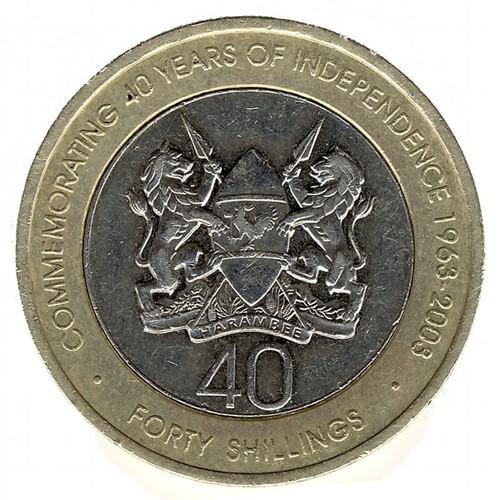
Kenya 40 Shillings
A bimetallic Kenyan commemorative coin denominated 40 shillings, pairing a presidential portrait with the national coat of arms.
World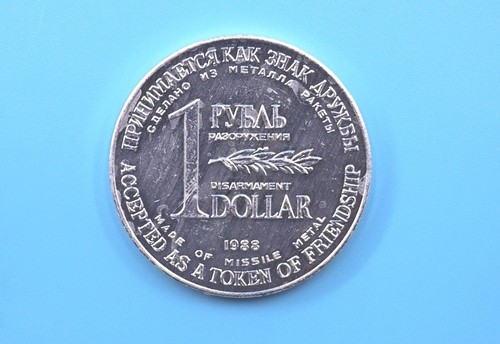
Disarmament Commemorative Ruble
A 1988 Soviet copper-nickel commemorative ruble marking the US-Soviet treaty that scrapped intermediate- and shorter-range nuclear missiles.
World Coins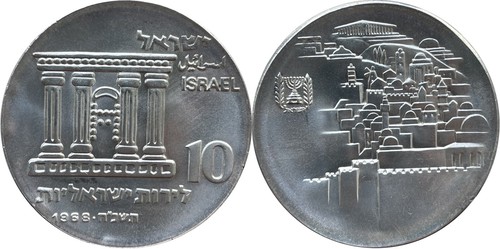
Israel 10 Lirot
Israel's 1968 silver 10 Lirot, struck for the 20th anniversary of independence, pairing a menorah emblem with a view of Jerusalem.
World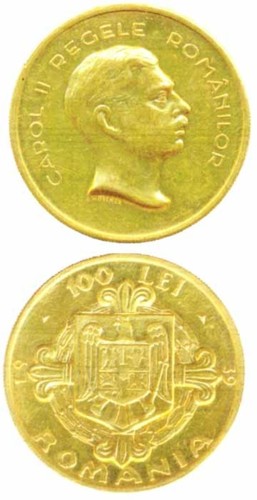
100 Lei
A scarce Kingdom of Romania gold 100 Lei of 1939, showing King Carol II in profile on the obverse and the crowned Romanian coat of arms on the reverse.
Modern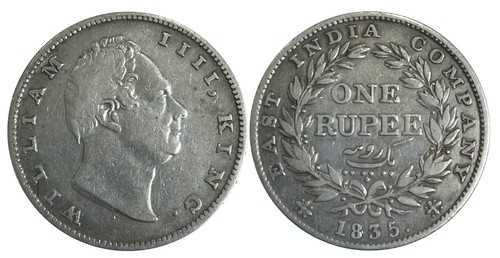
William IV One Rupee
Silver one-rupee coin of British India struck in 1835 under the East India Company, bearing the right-facing bust of King William IV.
British India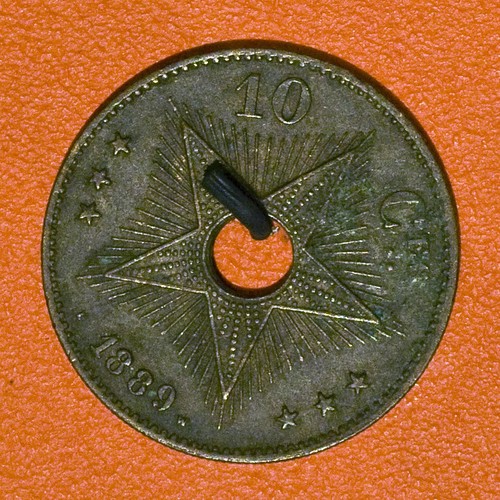
Congolese Commemorative Coin
An 1889 holed copper 10-centime coin of the Congo Free State, with a radiant five-pointed star, the value 10 C, and a ring of small stars.
World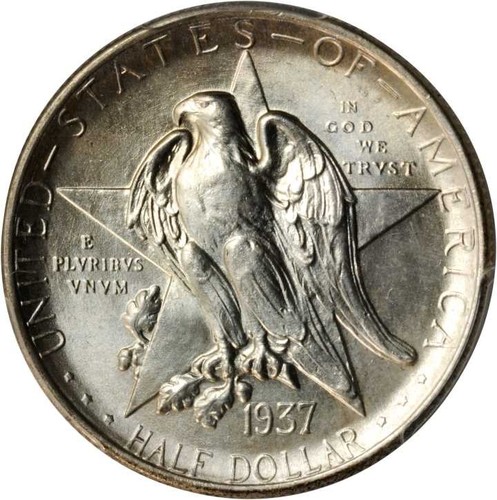
Texas Centennial Half Dollar
A U.S. silver commemorative half dollar (1934–1938) marking a century of Texas independence, with a spread-winged eagle over a large star on the obverse.
Classic Commemorative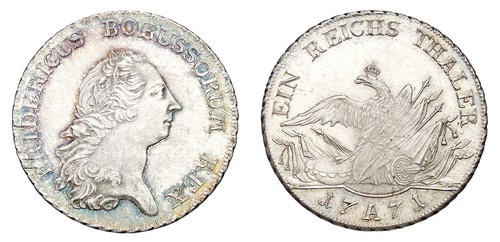
Prussian Taler
A large silver taler of the Kingdom of Prussia showing the crowned profile of Frederick II and a heraldic coat of arms, struck through the mid-to-late 1700s.
German States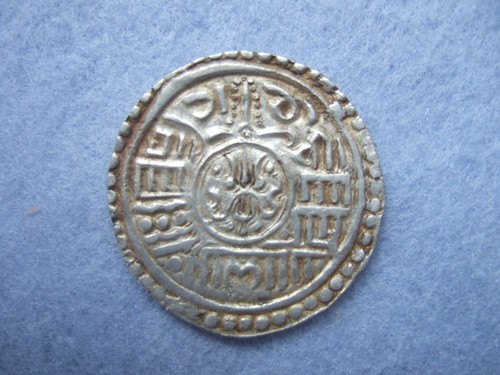
Nepalese Mohar
Silver mohar of the Nepalese Shah kingdom, with ornate Devanagari legends and auspicious symbols arranged around a mandala-style central design on both faces.
Himalayan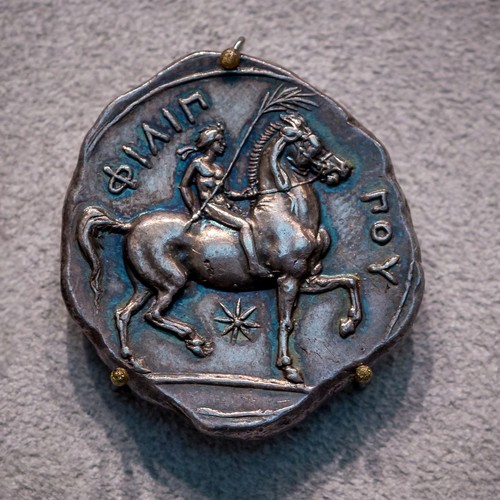
Philip II Tetradrachm
A large silver coin of the Macedonian kingdom showing the laureate head of Zeus and a youthful horseman, struck under and after Philip II.
Ancient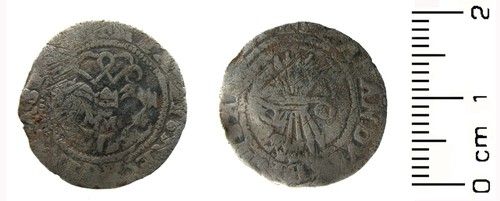
Real (Medieval)
A medieval Spanish silver real carrying the heraldic arms of the Iberian kingdoms — a lion for León paired with a castle or cross design.
Medieval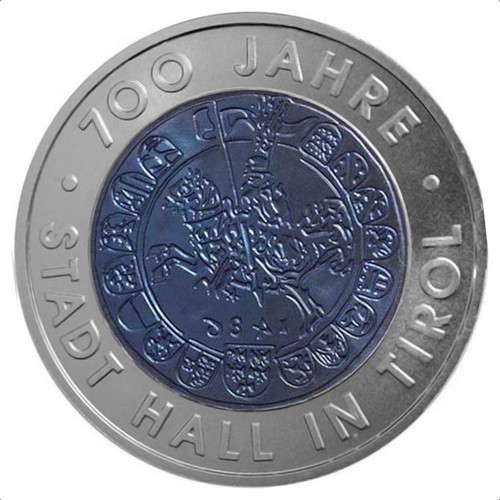
Austria 25 Euro Silver-Niobium Commemorative
Bi-metallic 25 Euro of the Austrian Mint with a silver outer ring and a colored niobium core; the 2003 first issue honored the town of Hall in Tirol.
Commemorative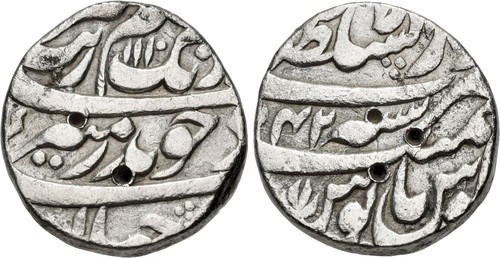
Aurangzeb Rupee
A broad, hand-struck silver rupee of the Mughal emperor Aurangzeb (Alamgir), carrying a Persian couplet and mint-and-year data rather than the usual Islamic creed.
Asian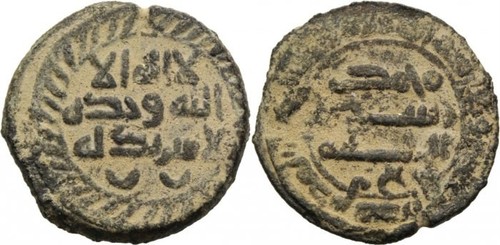
Abbasid Copper Fals
A hand-struck Abbasid copper fals dated AH 219 (834–835 CE), covered entirely in linear Arabic inscriptions with no portrait or figural imagery.
Islamic (Medieval)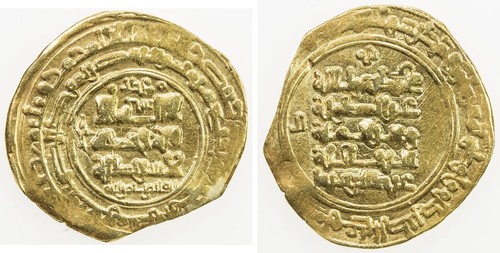
Ghaznavid Dinar
Gold dinar of the Ghaznavid dynasty (c. 10th–11th century), an epigraphic Islamic coin struck at Ghazna and allied mints in Afghanistan.
Medieval Islamic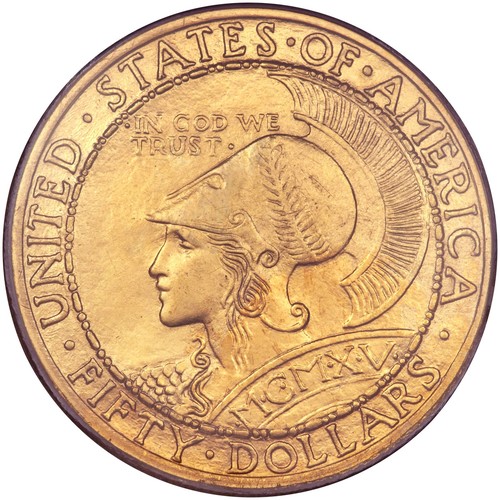
Panama-Pacific Exposition $50 (Octagonal)
An eight-sided $50 gold commemorative struck for San Francisco's 1915 world's fair, showing Minerva and her owl — the largest U.S. coin of its era.
Classic Commemorative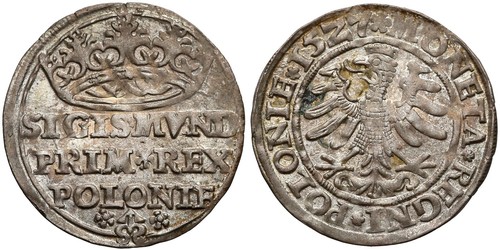
Grosz Koronny
A silver Crown grosz of the Kingdom of Poland, dated 1527, with a royal crown above a shield on one side and the Polish Eagle on the other.
Early Modern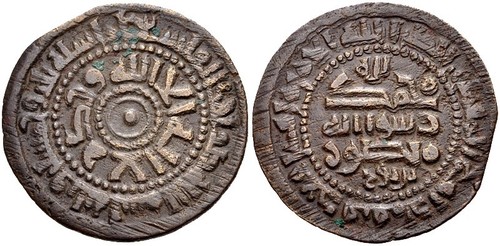
Samanid Dirham
A hand-struck silver dirham of the Samanid dynasty, covered on both sides in Arabic Kufic script naming God, the caliph and the mint — no images at all.
Islamic (Medieval)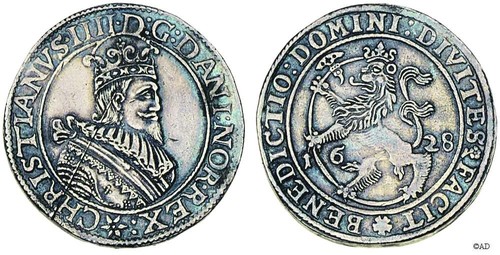
Speciedaler
Large early-modern Norwegian silver crown of the Dano-Norwegian kingdom, showing a crowned royal bust and the Norwegian lion shield, dated 1628.
Early Modern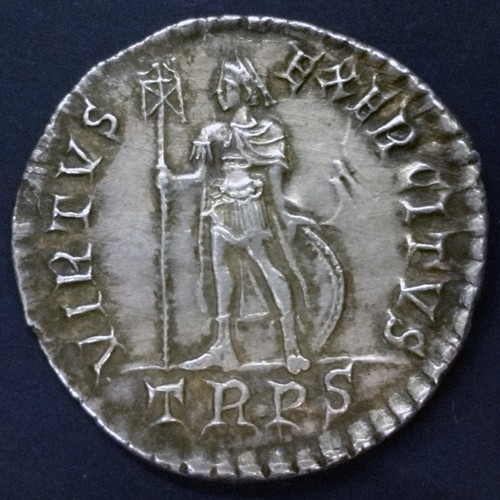
Hoxne Hoard Siliqua
A small late-Roman silver siliqua of the type found in Britain's Hoxne Hoard, with an imperial portrait and a standing figure or personified virtue.
Ancient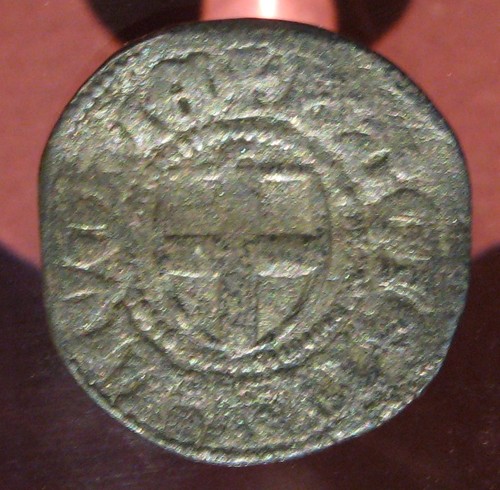
Livonian Order Schilling
A small hammered silver schilling of the medieval Livonian Order, showing heraldic shields and a cross, struck in the Baltic around 1410–1415.
Medieval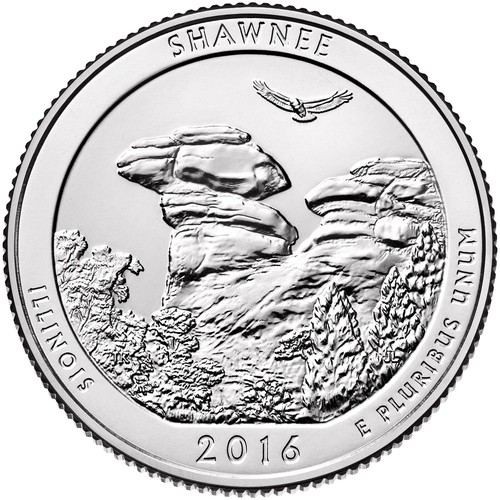
Shawnee Quarter
2016 U.S. America the Beautiful quarter honoring Shawnee National Forest in Illinois, showing the rock formations at Garden of the Gods.
Quarter