
Coin Encyclopedia
Search and identify coins from around the world — with country, denomination, metal, mint, history, and how to tell them apart.
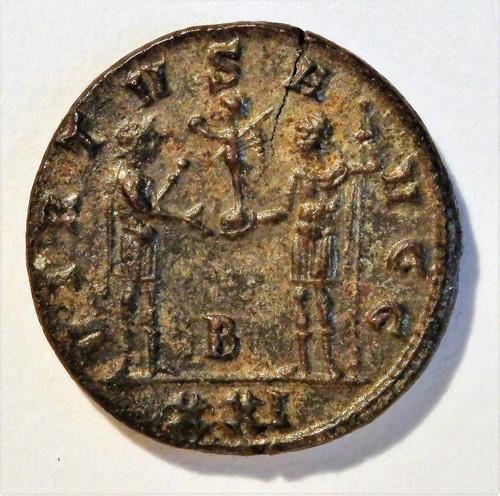
Antoninianus of Carinus
Bronze radiate coin of the emperor Carinus (283-285 AD), recognizable by his spiked crown and a standing or seated deity on the reverse.
Ancient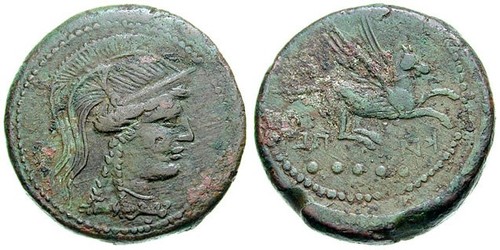
Quincunx of Capua
Bronze quincunx (5 unciae) struck by Capua in Campania in the 3rd century BC, pairing a diademed female head with a lion or griffin and five value pellets.
Ancient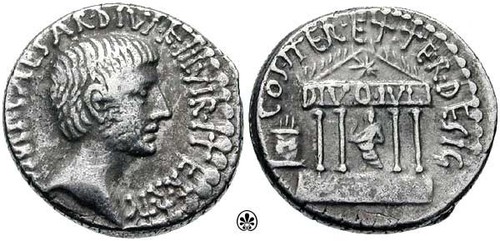
Denarius of Cordius
Roman Republican silver denarius struck by the moneyer Manius Cordius Rufus, with a right-facing head on the obverse and a standing figure and CORDIVS legend on the reverse.
Ancient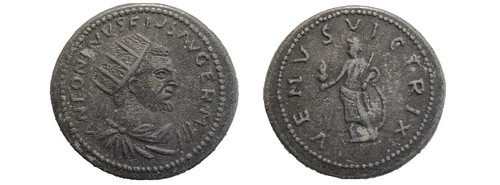
Antoninianus of Caracalla
The antoninianus introduced by Caracalla around AD 215, a radiate-crowned double denarius in debased silver that reshaped Roman coinage.
Ancient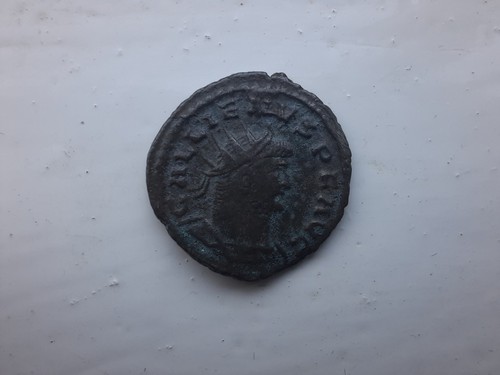
Antoninianus of Gallienus
Billon double-denarius of the emperor Gallienus, marked by a radiate crown; this piece shows a radiate male head and a standing deity on the reverse.
Ancient Coins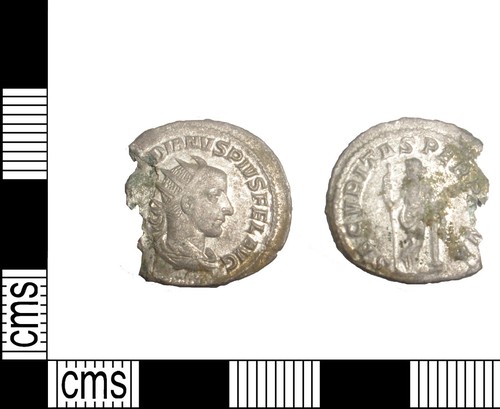
Antoninianus of Gordian III
Silver double-denarius of the young emperor Gordian III (238-244 AD), marked by his radiate crown and a standing deity on the reverse.
Ancient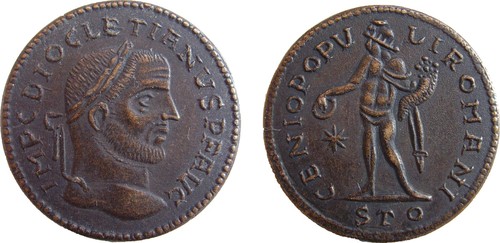
Follis of Diocletian
A large silver-washed bronze coin of the Tetrarchy, introduced by Diocletian's currency reform around AD 294 with a stern laureate portrait.
Ancient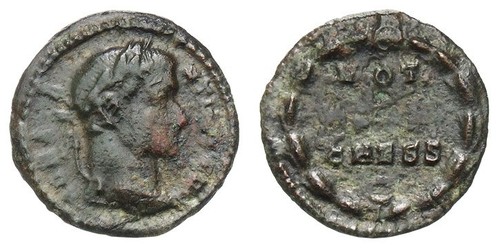
Nummus of Constantine I
Small late Roman bronze nummus (follis) of Constantine I the Great (306-337 CE), identified by his right-facing imperial portrait on the obverse.
Ancient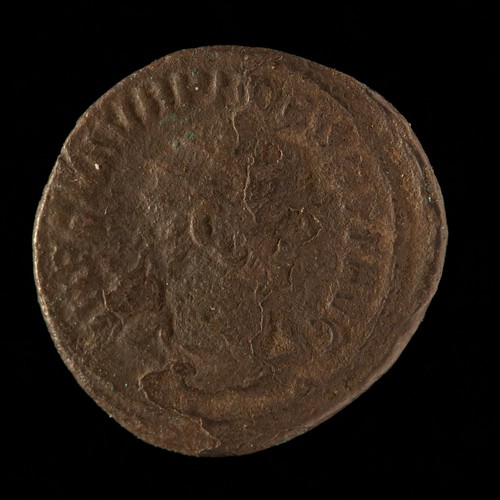
Antoninianus of Probus
Late Roman billon antoninianus of Emperor Probus (276-282 AD), identified by his radiate crown portrait on the obverse.
Ancient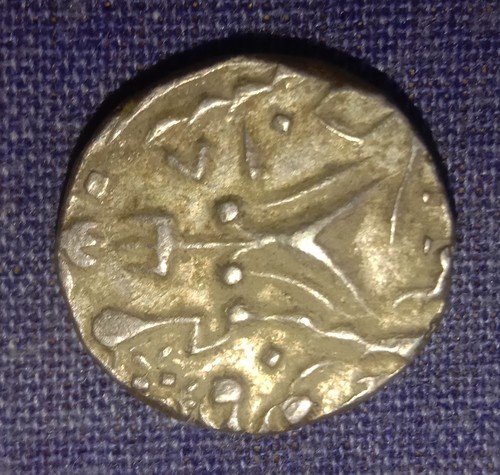
Silver Rupee of Bhopal State
Silver rupee of the princely state of Bhopal, struck at the Daulatgarh mint in the name of Mughal emperor Muhammad Akbar II, marked by a trident symbol.
Princely & Presidency States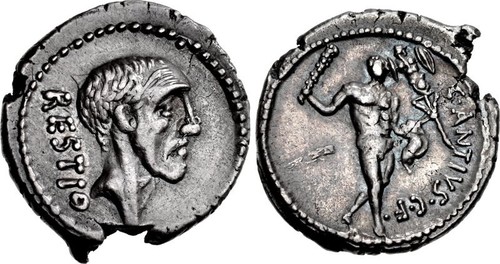
Denarius of C. Antius Restio
Silver Roman Republican denarius struck at Rome in 47 BC by the moneyer C. Antius Restio, pairing an ancestor's portrait with a striding figure and trophy.
Ancient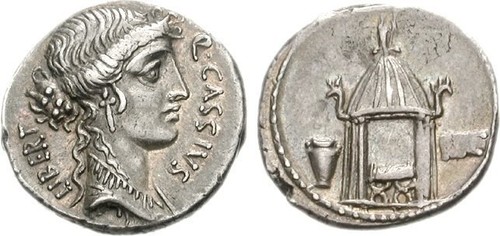
Denarius of Cassius Longinus
Silver denarius struck in 42 BC by Gaius Cassius Longinus, one of Caesar's assassins, to pay his legions before the Battle of Philippi.
Ancient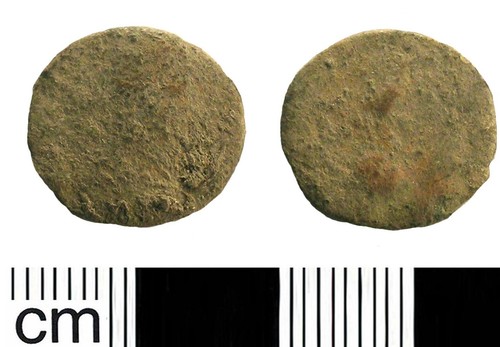
Half Centenionalis of Constans or Constantius II
A small mid-4th-century Roman bronze attributed to Constans or Constantius II, sons of Constantine the Great, worn but identifiable by its imperial portrait and era.
Ancient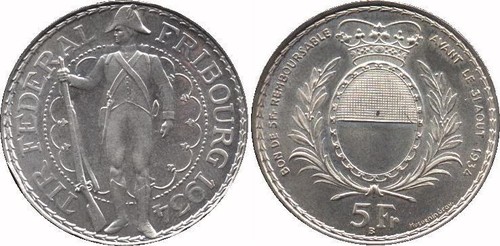
Swiss Shooting Thaler
A silver Swiss 5-franc shooting thaler dated 1934, struck for a federal shooting festival, with a standing female Helvetia figure and a heraldic shield.
Commemorative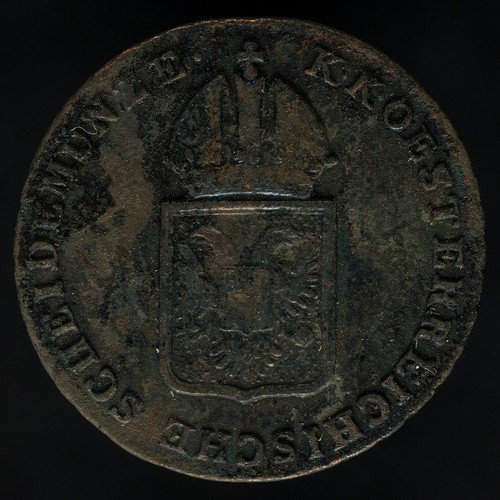
Austria-Hungary 1/4 Kreuzer
A small copper 1/4 Kreuzer of the Austrian Empire dated 1816, showing Emperor Franz I in crowned right-facing profile.
Circulation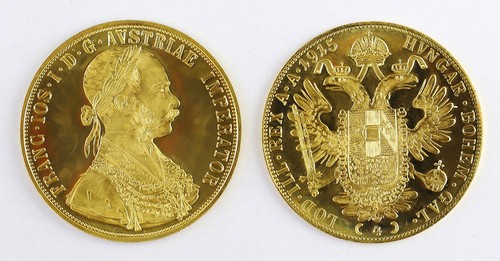
Austrian 4-fold Ducat
A large Austrian gold 4 Ducat dated 1915, showing Emperor Franz Joseph I in uniform and the crowned double-headed imperial eagle.
Bullion/gold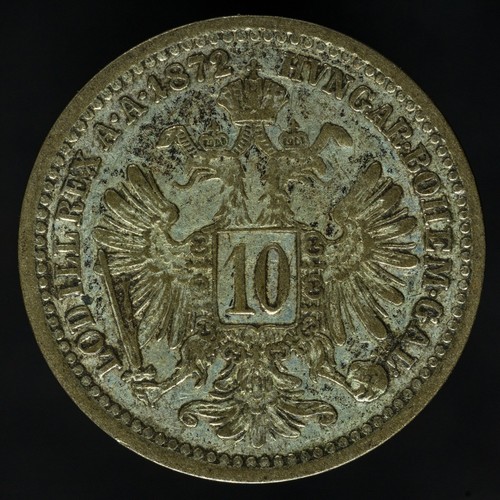
Austria-Hungary 10 Kreuzer
A small low-grade silver 10 Kreuzer of Emperor Franz Joseph I, pairing his laureate portrait with a crowned double-headed imperial eagle and a 10 value shield.
Circulation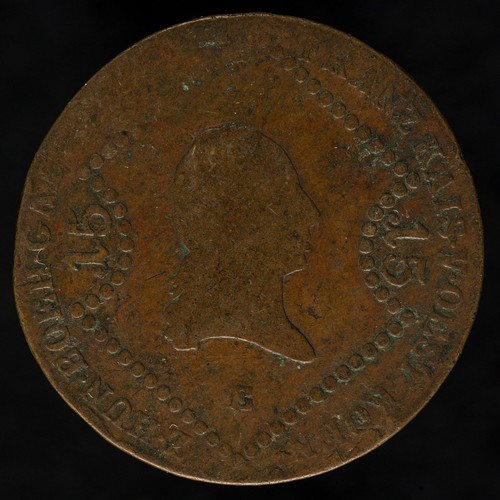
Austria-Hungary 15 Kreuzer
A large copper 15 Kreuzer of 1807 struck under Emperor Franz I, showing his crowned laureate profile on the obverse.
Circulation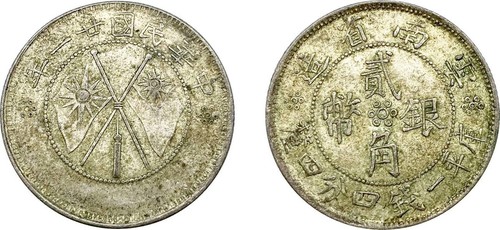
Yunnan 20 Cents
A 1932 provincial silver 20 Cents from Yunnan, China, with a radiant sun and rays on one face and central Chinese value characters framed by ornament on the other.
Circulation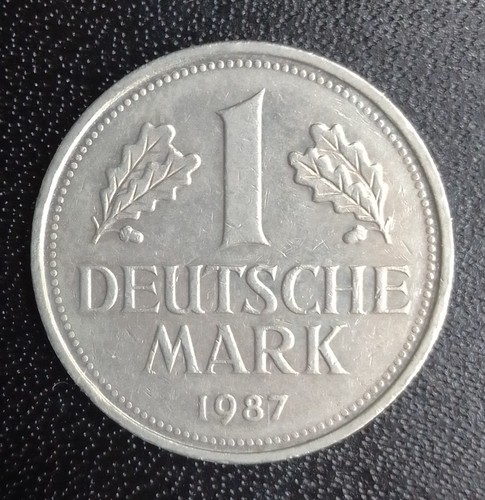
German 1 Deutsche Mark
The workhorse 1-Mark coin of West Germany and reunified Germany, showing a large numeral 1 framed by oak leaves and the words DEUTSCHE MARK.
Circulation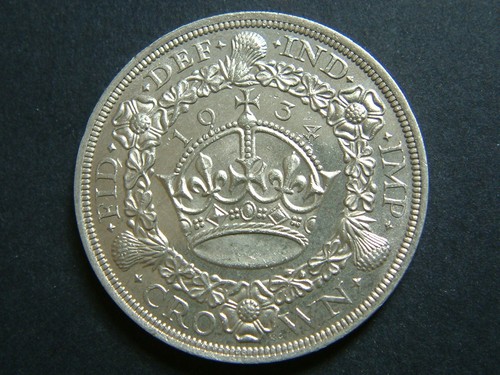
British Crown
A large George V silver crown of the 1927–1936 'wreath' type, showing the king's profile and a royal crown framed by an ornamental wreath.
British Isles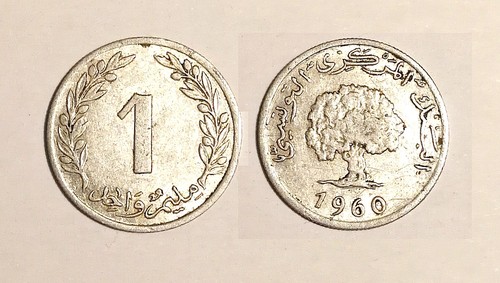
Tunisia 1 Millime
Tunisia's smallest post-independence coin, a tiny aluminum-bronze 1 millime of 1960 showing the value 1 framed by laurel and a numeral in profile.
World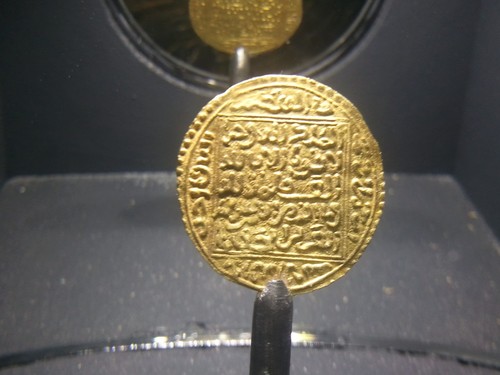
Marinid Gold Dinar
Aniconic Islamic gold dinar of the Marinid dynasty of Morocco, its faces filled with Arabic religious inscriptions framed by geometric border bands.
Medieval Islamic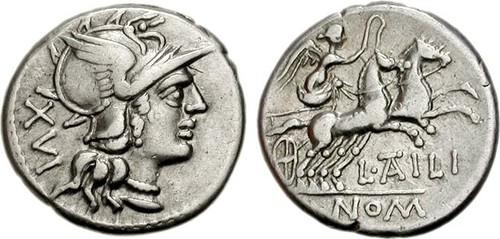
Atilia Denarius
Roman Republican silver denarius struck by a moneyer of the gens Atilia, with a helmeted head on the obverse and a deity or figure with the family name on the reverse.
Ancient