
Coin Encyclopedia
Search and identify coins from around the world — with country, denomination, metal, mint, history, and how to tell them apart.
8 Reales (Portrait/Bust Type)
Large silver Spanish Empire dollar showing the bust of King Carlos III and a crowned coat of arms with lions and castles.
World Coins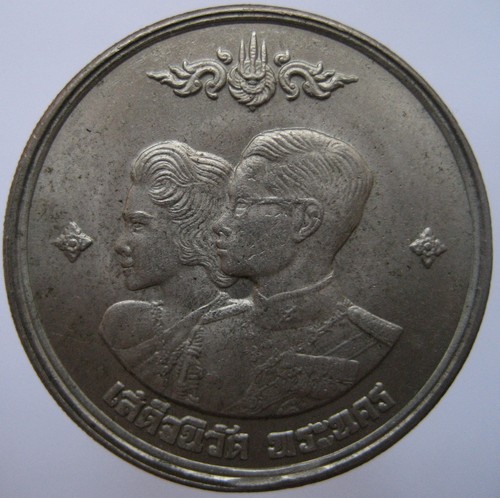
Thailand One Baht Commemorative
A 1961 Thai one-baht commemorative bearing the conjoined profiles of King Rama IX and Queen Sirikit, paired with the Thai royal arms on the reverse.
Southeast Asia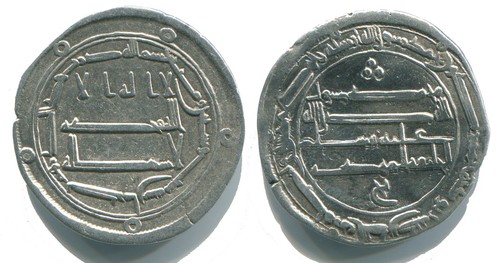
Dirham of al-Mahdi
A silver Abbasid dirham struck under Caliph al-Mahdi in AH 166 (783 CE), its faces filled with linear Kufic Arabic legends declaring the Islamic faith.
Islamic (Medieval)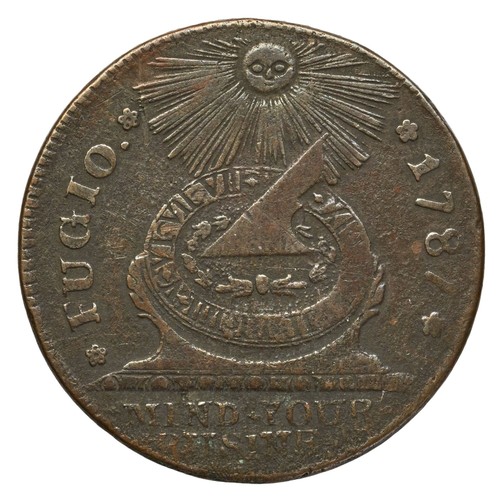
Fugio Cent
1787 copper cent, among the first coins issued under the United States, with a sundial and sun on the obverse and thirteen linked rings on the reverse.
Colonial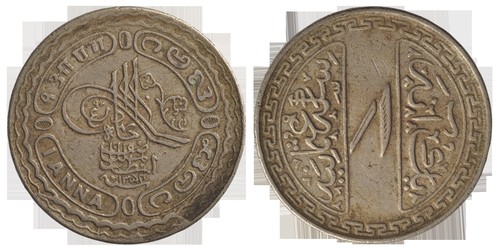
Hyderabad One Anna
A copper-nickel 1-anna coin of Hyderabad State under Nizam Osman Ali Khan, with Urdu inscriptions and floral borders, dated AH 1354 (c. 1935).
Princely & Presidency States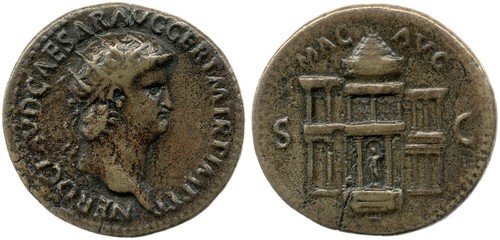
Bronze As of Nero
A Roman bronze as struck under the emperor Nero (54–68 AD), bearing his laureate portrait on the obverse and an imperial reverse type.
Ancient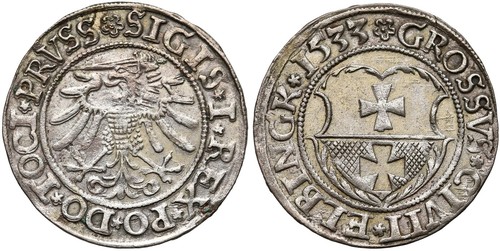
Grosz Miejski
A silver city grosz struck at Elbląg in 1533, pairing the town's crowned coat of arms with an eagle and civic inscriptions under the Polish crown.
Early Modern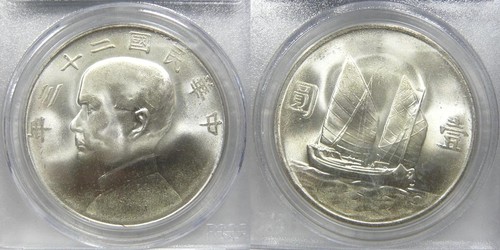
Junk Dollar
China's Republic-era silver dollar with Sun Yat-sen facing left and a Chinese junk under sail on the reverse; the pictured coin is Year 23 (1934).
Circulation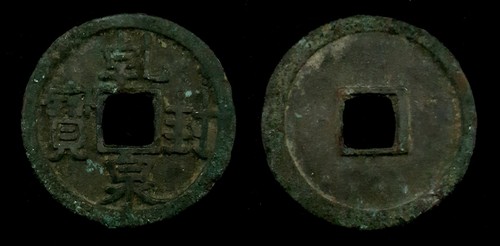
Qian Feng Quan Bao
A round bronze Tang cash coin with a square center hole, cast under Emperor Gaozong in the short-lived Qianfeng era and worth ten ordinary cash.
Cash Coin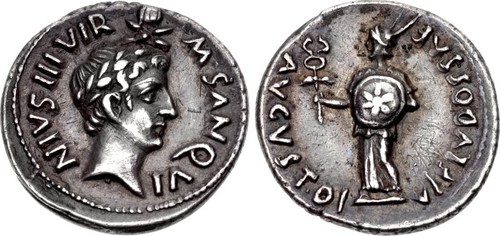
Denarius of M. Sanquinius
A silver denarius struck at Rome in 17 BC by the moneyer M. Sanquinius under Augustus, tied to the Secular Games, with a male portrait and a standing herald.
Ancient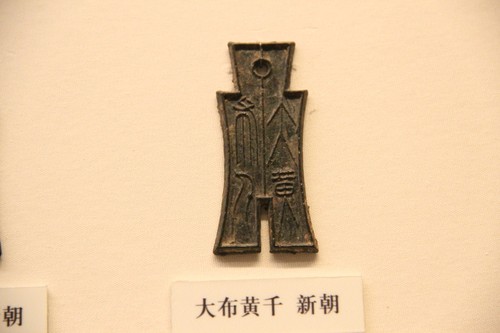
Wang Mang Spade Money
A cast bronze spade-shaped coin of the Xin Dynasty, issued under the reformer Wang Mang, its flat blade bearing raised Chinese inscriptions.
Ancient
Canadian 50 Cents
Canada's mid-century silver 50-cent piece bearing King George VI, struck in 80% silver with the Canadian coat of arms.
World Coins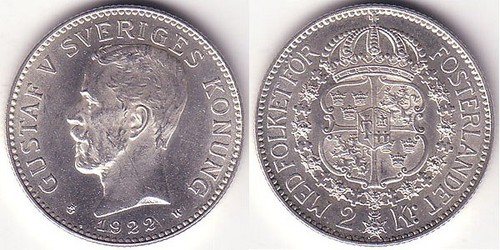
2 Kronor
Silver 2 kronor of Sweden showing King Gustaf V in left profile and the crowned national arms, this piece dated 1922.
World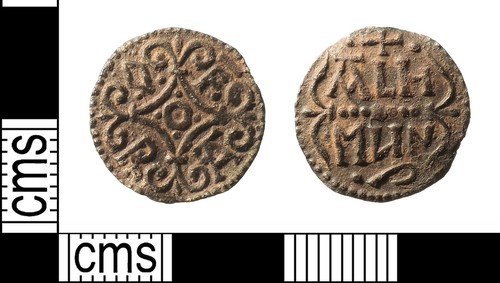
Penny of Offa
Thin silver penny of King Offa of Mercia, showing a portrait or name inscription and a cross with geometric ornament on the reverse.
Medieval Coins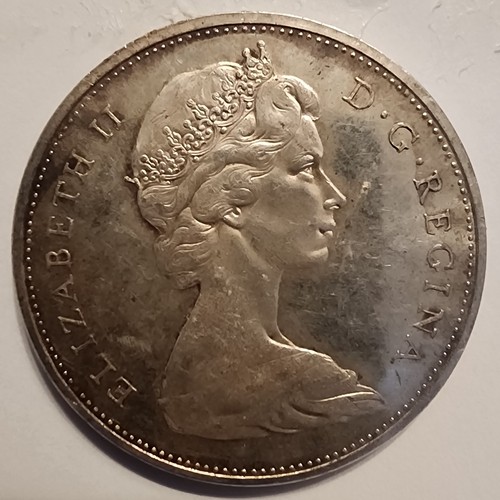
Voyageur Dollar
Canada's first circulating silver dollar, struck in 1935 for King George V's Silver Jubilee, showing a voyageur and guide paddling a canoe.
World Coins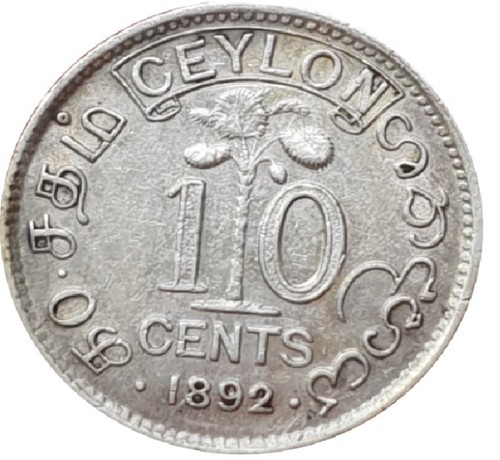
Ceylon 10 Cents (Cupronickel)
A wartime 1944 British Ceylon ten-cent piece in cupronickel, its obverse bearing the uniformed left-facing bust of King George VI and the legend GEORGE VI KING.
South Asia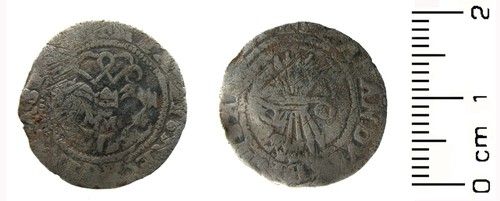
Real (Medieval)
A medieval Spanish silver real carrying the heraldic arms of the Iberian kingdoms — a lion for León paired with a castle or cross design.
Medieval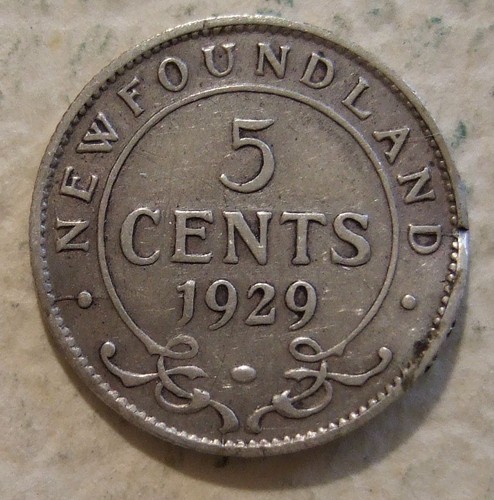
Newfoundland Five Cents
Tiny sterling-silver 5-cent piece of the Dominion of Newfoundland; the 1929 issue bears King George V and a crowned denomination reverse.
Canadian & Provincial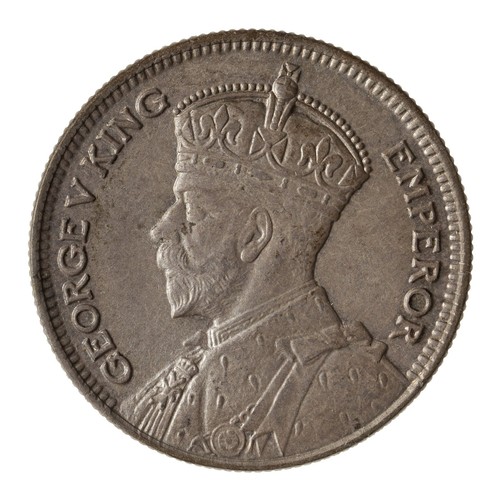
New Zealand Sixpence
New Zealand's small silver sixpence, famed for its native-bird reverse. This 1934 example shows King George V and the bird design with NEW ZEALAND SIXPENCE.
New Zealand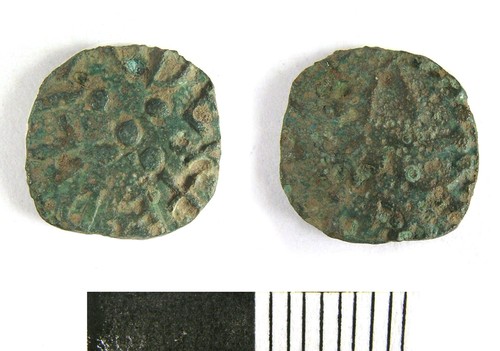
Anglo-Saxon Styca
A tiny base-metal coin of the Anglo-Saxon kingdom of Northumbria, struck in the 8th-9th century with a head and inscription on one side and a cross on the other.
Medieval Coins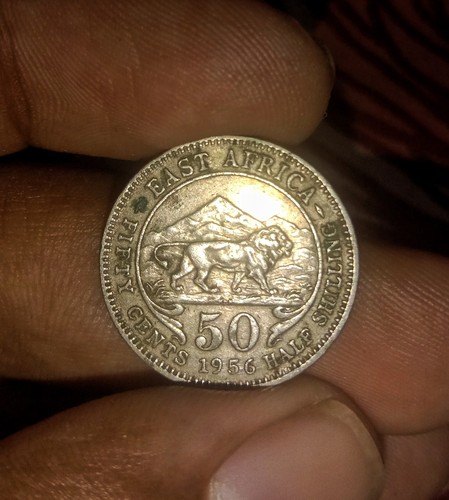
British East Africa Half Shilling
A small low-fineness silver coin of British East Africa bearing King George VI; the half shilling equalled fifty cents in the East African system.
World