
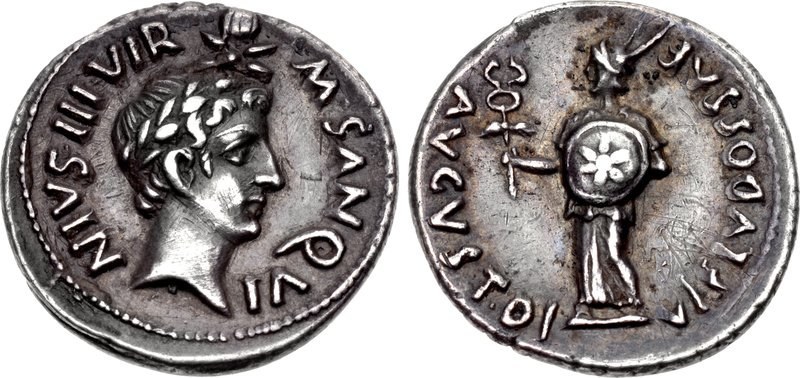
Denarius of M. Sanquinius
A silver denarius struck at Rome in 17 BC by the moneyer M. Sanquinius under Augustus, tied to the Secular Games, with a male portrait and a standing herald.
- Country
- Rome
- Denomination
- Denarius
- Metal
- Silver
Got a coin like this?
Identify any coin from a photo, free.
Overview
This is a Roman silver denarius issued at the mint of Rome in 17 BC by Marcus Sanquinius, one of the annual moneyers (tresviri monetales) serving under the emperor Augustus. It belongs to a small, celebrated group of coins connected with the Ludi Saeculares, the Secular Games that Augustus revived that year as a grand religious spectacle marking the dawn of a new age.
The example shown here has a male portrait facing right with an accompanying inscription on the obverse, and a standing figure beside an altar with a star in the field on the reverse. The standing figure is understood to be the herald (praeco) of the Secular Games, while the star recalls the sidus Iulium, the comet associated with the deified Julius Caesar. The coin is a favorite of collectors of the Roman Imperial series for its direct link to a documented state ceremony.
History & Background
In 17 BC Augustus staged the Ludi Saeculares, an ancient purificatory festival held only once in a very long interval (traditionally reckoned in saecula, or generations). The games were a centerpiece of Augustan propaganda, presenting the new regime as the beginning of a renewed and blessed era, and the poet Horace composed the Carmen Saeculare to be sung during the celebrations.
The moneyers of that year, including M. Sanquinius, produced coinage referencing the festival. Little is recorded of Sanquinius himself beyond his office as a member of the board of three moneyers responsible for striking Rome's precious-metal coinage. The imagery of the herald and the Julian star ties the issue both to the announcement of the games and to the divine ancestry Augustus claimed through Julius Caesar.
These coins were struck in silver (denarii) and gold (aurei) during a brief window around 17 BC, so the type is closely dated. Surviving pieces are studied through standard references to the Roman Imperial coinage of Augustus, where the Sanquinius issues are catalogued among the moneyer coinage of the period.
How to Identify
Confirm first that the coin is an ancient hand-struck silver denarius, not a milled modern coin: expect a slightly irregular, somewhat thick flan, a portrait in relief, and Latin lettering formed by hand-cut dies rather than machine-perfect edges. A genuine denarius of this era is a small silver coin, typically around 18–20 mm and roughly 3.5–4 g when unworn.
The obverse shows a male head facing right with a surrounding legend. The reverse shows a standing figure (the herald of the Secular Games), often robed and helmeted, positioned near an altar, with a star in the field. The presence of the moneyer's name Sanquinius in the legend, together with references to the games and to Augustus (AVGVST DIVI F) as the deified Caesar's son, is the decisive identifier.
Because die-cutting was done by hand, individual examples vary in centering, style, and how much of the legend is present. Read the surviving letters carefully and compare against catalogued Augustan moneyer types before assigning a specific reference number.
Value & Collectibility
As a securely dated Augustan issue with an attractive historical theme, the M. Sanquinius denarius is a desirable but not unattainable ancient coin. Value depends heavily on grade, centering, the sharpness of the portrait and reverse figure, surface quality (toning, porosity, cleaning), and completeness of the legend. Well-worn or off-center pieces sit at the lower end, while sharp, well-centered examples with clear detail command substantial premiums.
In broad terms, presentable circulated silver examples of Augustan moneyer denarii like this trade in the low-to-mid hundreds of dollars, with exceptional, high-grade, or particularly well-styled specimens reaching well into four figures. Gold aurei of related Sanquinius types are far rarer and more valuable.
Because ancient silver of Augustus is widely faked and because condition and authenticity drive price so strongly, buyers should treat any specific figure as indicative only and rely on reputable dealers, auction records, and third-party authentication rather than a fixed catalog price.
Frequently asked questions
Who was M. Sanquinius?
Marcus Sanquinius was one of the annual moneyers (tresviri monetales) at Rome under Augustus, responsible for striking the state's precious-metal coinage. He served in 17 BC, and his name appears in the coin's legend as the issuing magistrate rather than the ruler.
Why is this coin linked to the Secular Games?
It was struck in 17 BC, the year Augustus revived the Ludi Saeculares (Secular Games), and its imagery—including the herald who proclaimed the festival—references that celebration, which marked the start of a new age in Augustan ideology.
What does the star on the reverse mean?
The star is generally read as the sidus Iulium, the comet associated with the deified Julius Caesar. It underscores Augustus's descent from Caesar, whom the legend calls a god (DIVI F, 'son of the deified').
Is a denarius of M. Sanquinius valuable?
It is a collectible ancient coin whose value ranges widely with condition and authenticity, from roughly the low hundreds of dollars for worn silver examples to four figures for exceptional pieces. Treat any single figure as indicative and verify authenticity before buying.
Denarius of M. Sanquinius guides
In-depth guides for identifying, valuing, and collecting Denarius of M. Sanquinius.
Other coins you may enjoy
Tetradrachm of Ptolemy XII
80-51 BC
Tetradrachm of Ptolemy I
305-283 BC
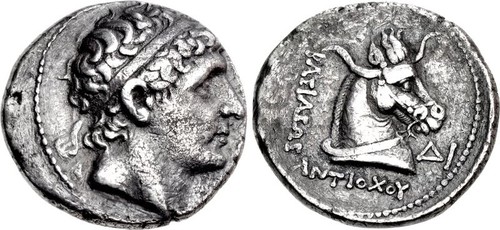
Tetradrachm of Antiochos I Soter
281-261 BC
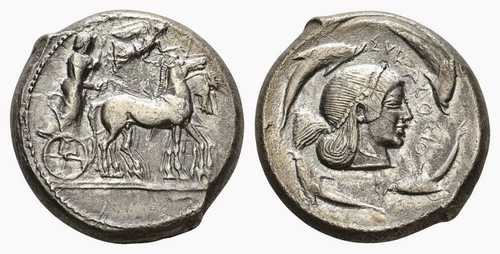
Syracuse Tetradrachm
c. 5th-4th century BC (Classical period)
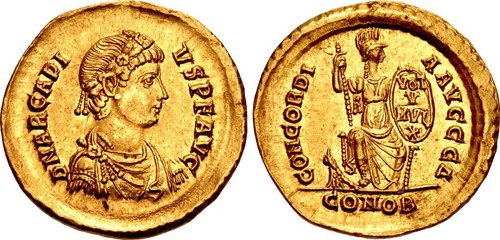
Solidus of Arcadius
AD 395-402
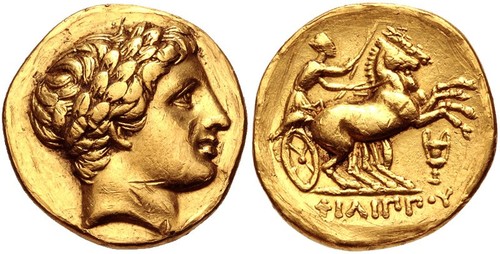
Philip III Gold Stater
323-317 BC
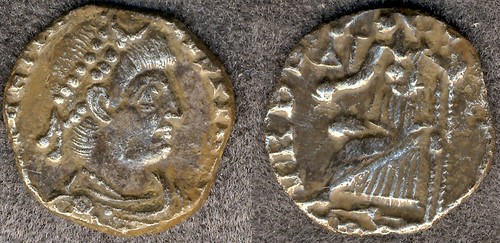
Siliqua of Gratian
AD 367-383
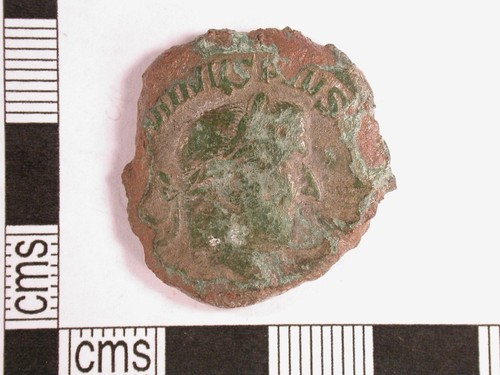
Sestertius of Maximinus Thrax
235-238 AD
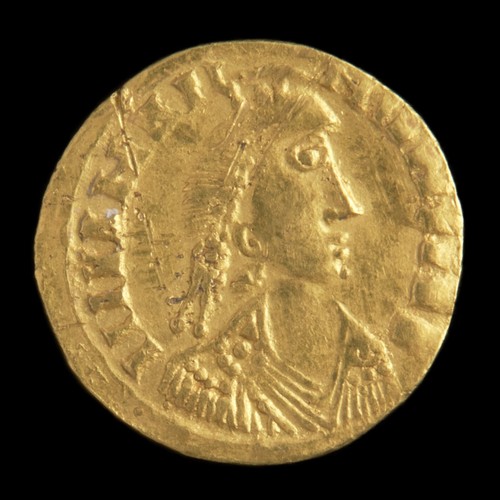
Solidus of Valentinian III
AD 425-455
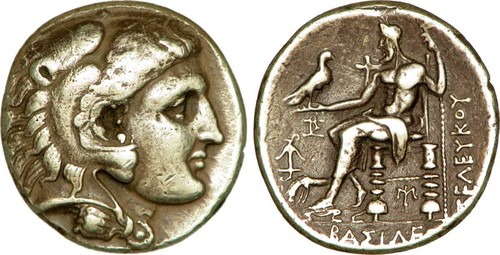
Seleucus I Nicator Tetradrachm
Late 4th-3rd century BC
Nummus of Magnentius
AD 350-353
Follis of Galerius
AD 308-310