
Coin Encyclopedia
Search and identify coins from around the world — with country, denomination, metal, mint, history, and how to tell them apart.
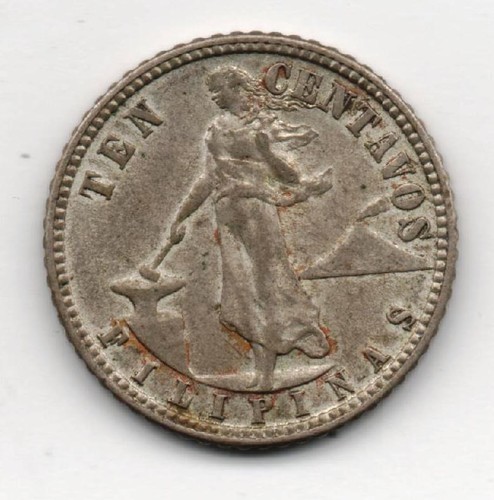
Philippines 10 Centavos
A small silver 10 centavos of the American-era Philippines: a standing Liberty figure and Mayon volcano on one side, the U.S. eagle and shield on the other.
Southeast Asia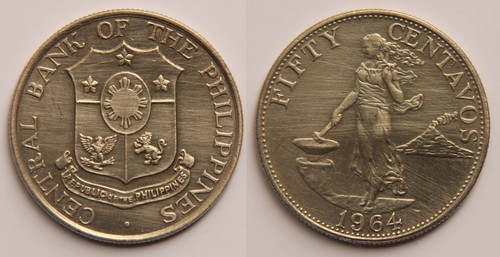
Philippines 50 Centavos
A 1960s Philippine 50-centavos coin in copper-nickel, its obverse showing an allegorical woman with a torch and its reverse the national coat of arms.
Southeast Asia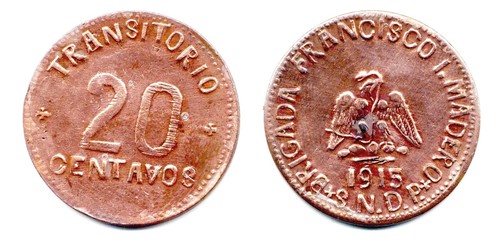
Chiconcuautla 20 Centavos
A 1915 copper 20 centavos struck as a local Revolutionary-era issue at Chiconcuautla, with a numeral 20 on one side and the Mexican national eagle on the other.
Revolutionary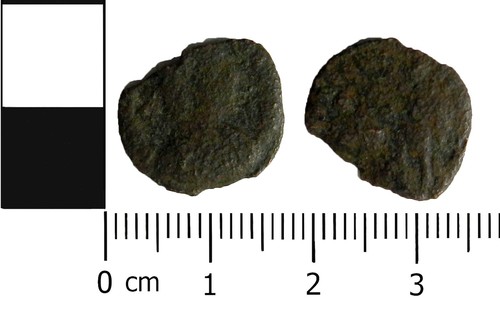
Roman Centenionalis
A small fourth-century Roman bronze coin, part of the reformed low-value currency struck across the empire's mints during a period of frequent monetary change.
Ancient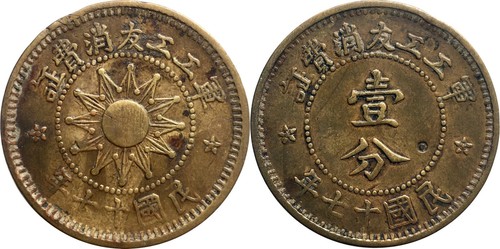
Shansi Arsenal 1 Fen
A holed copper 1 Fen struck by the Shansi Arsenal in 1928, with Chinese inscriptions and numeral '1' around a central square hole.
Circulation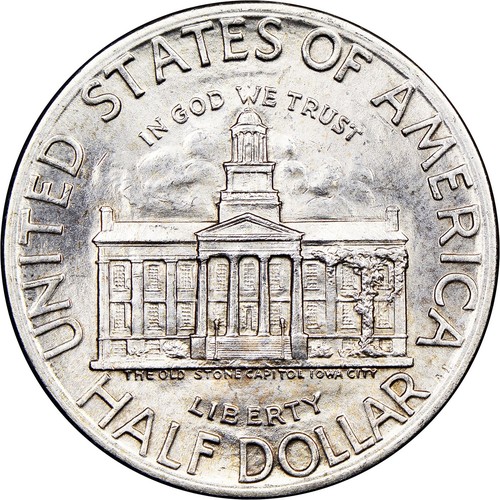
Iowa Centennial Half Dollar
A 1946 U.S. silver half dollar marking a century of Iowa statehood, showing the Old Stone Capitol at Iowa City and the state eagle with the Iowa motto.
Classic Commemorative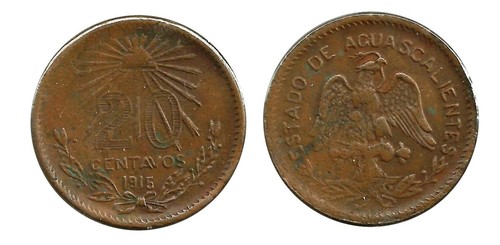
Aguascalientes 20 Centavos
A copper 20 centavos struck in Aguascalientes during the Mexican Revolution in 1915, showing the denomination on one side and a large numeral 20 with the national eagle on the other.
Revolutionary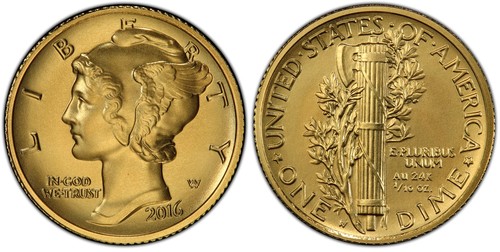
Mercury Dime Centennial Gold
A 2016-W gold collector coin marking the centennial of the 1916 Mercury dime, struck in 1/10 oz of 24-karat gold at West Point.
Dime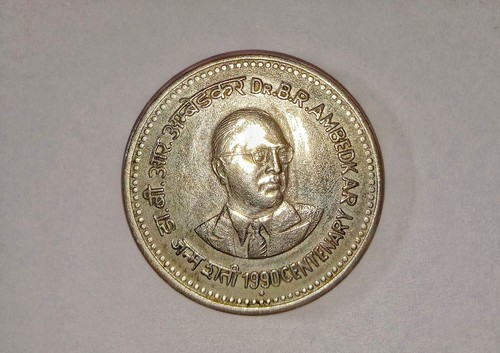
Ambedkar Centenary One Rupee
A 1990 Indian one-rupee commemorative honoring the birth centenary of Dr. B.R. Ambedkar, its obverse bearing his bespectacled portrait and bilingual legend.
Modern India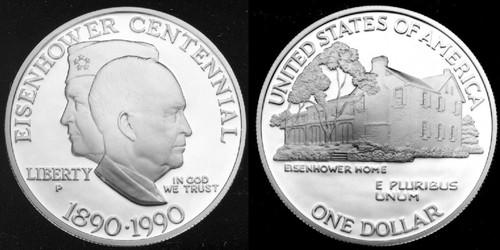
Eisenhower Centennial Dollar
A 1990 U.S. commemorative silver dollar marking 100 years since Dwight D. Eisenhower's birth, with his left-facing profile and his Gettysburg home on the reverse.
Dollar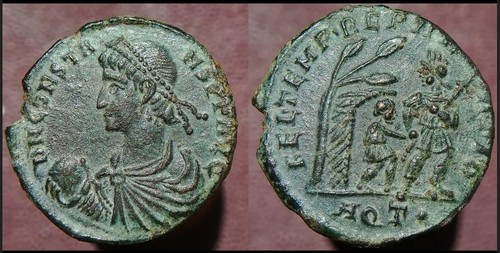
Centenionalis of Constans
A mid-4th-century Roman bronze of Constans bearing the FEL TEMP REPARATIO reform reverse, showing a soldier lifting a small captive from a hut.
Ancient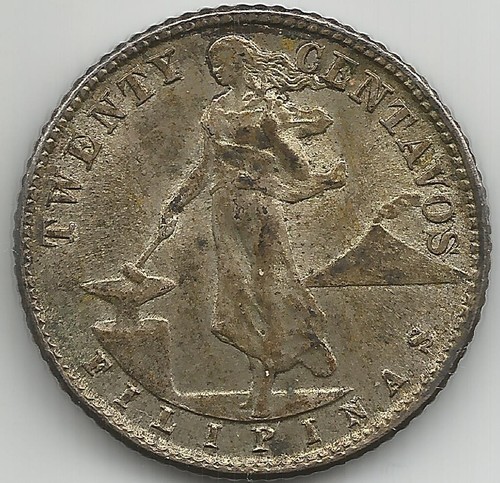
Philippines 20 Centavos
A small wartime silver 20 centavos of the Commonwealth-era Philippines: a standing Liberty figure and Mayon volcano, with an eagle over a shield on the reverse.
Southeast Asia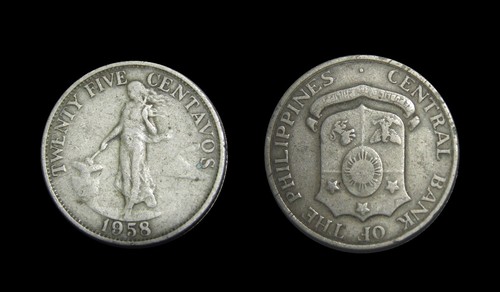
Philippines 25 Centavos
Silvery base-metal 25 centavos of the young Republic of the Philippines, dated 1958: a standing figure with a liberty torch and the Republic's sunburst coat of arms.
Southeast Asia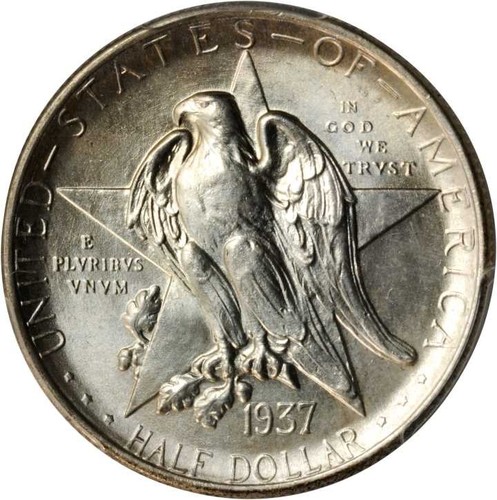
Texas Centennial Half Dollar
A U.S. silver commemorative half dollar (1934–1938) marking a century of Texas independence, with a spread-winged eagle over a large star on the obverse.
Classic Commemorative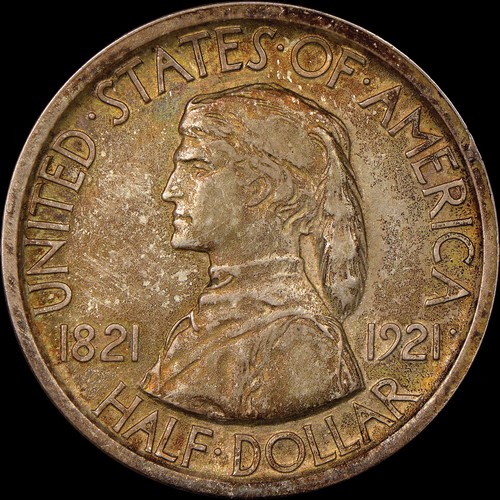
Missouri Centennial Half Dollar
A 1921 U.S. silver commemorative half dollar marking 100 years of Missouri statehood, with a coonskin-capped frontiersman facing left and a frontier-scene reverse.
Classic Commemorative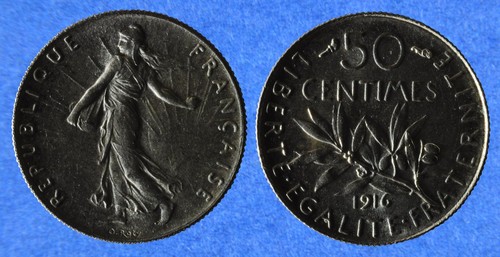
French Semeuse 50 Centimes
A small French silver coin showing the striding Semeuse (Sower) with a liberty cap; the reverse frames the value 50 CENTIMES in an oak-and-olive wreath.
Circulation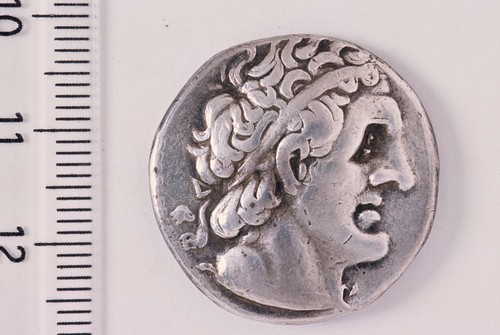
Ancient Hellenistic Tetradrachm
A large Hellenistic silver tetradrachm with a bearded, curly-haired head on the obverse and an eagle standing on a thunderbolt on the reverse.
Ancient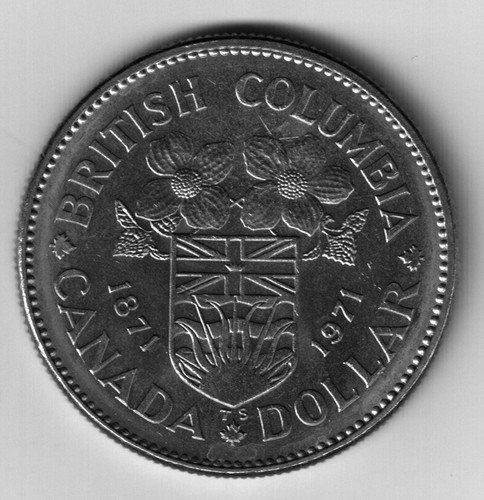
British Columbia Centennial Dollar
A 1958 Canadian silver dollar marking British Columbia's centennial, showing a Pacific Northwest totem pole and the dates 1858–1958.
Canadian & Provincial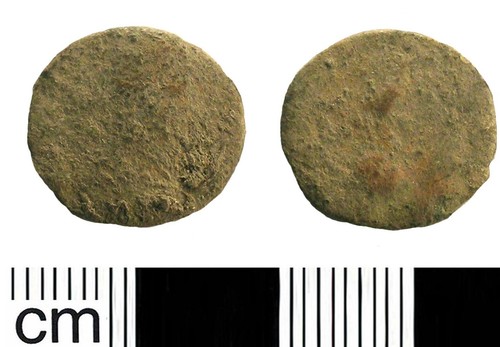
Half Centenionalis of Constans or Constantius II
A small mid-4th-century Roman bronze attributed to Constans or Constantius II, sons of Constantine the Great, worn but identifiable by its imperial portrait and era.
Ancient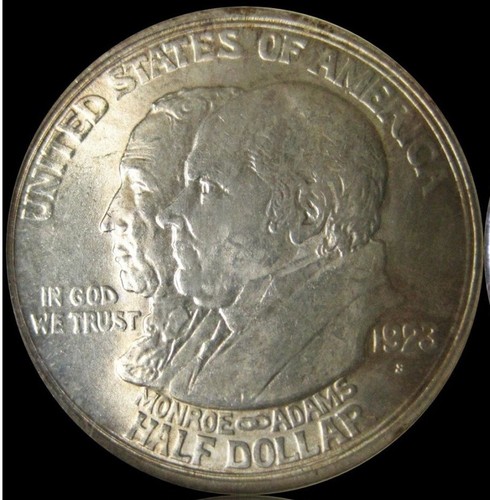
Monroe Doctrine Centennial Half Dollar
A 1923 U.S. silver commemorative half dollar marking the centennial of the Monroe Doctrine, with jugate portraits of James Monroe and John Quincy Adams.
Classic Commemorative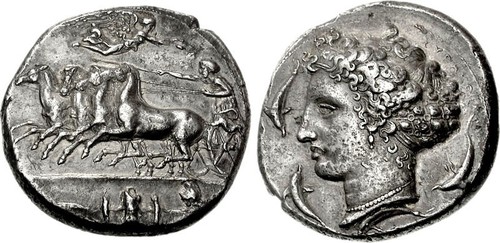
Syracuse Dekadrachm
Large silver dekadrachm of Syracuse, c. 405-380 BC, showing a racing quadriga crowned by Victory and a head of the nymph Arethusa with flowing hair.
Ancient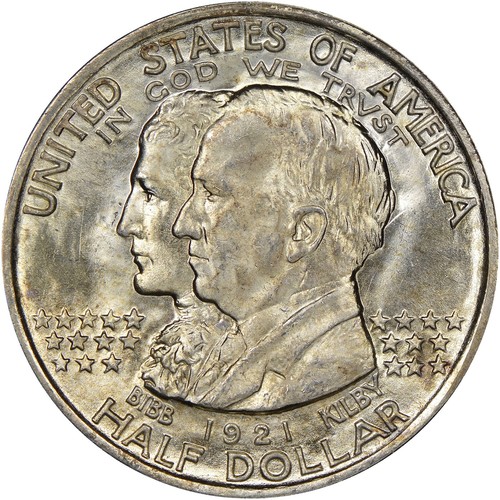
Alabama Centennial Half Dollar
A 1921 U.S. silver half dollar marking a century of Alabama statehood, with jugate governor busts and a state eagle; issued in plain and scarcer 2×2 varieties.
Classic Commemorative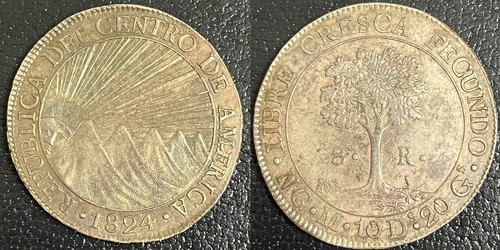
Central American Republic 8 Reales
A silver 8 reales of the Central American Republic, showing a rayed sun rising over mountains on one side and a tree on the other, dated 1824.
Circulation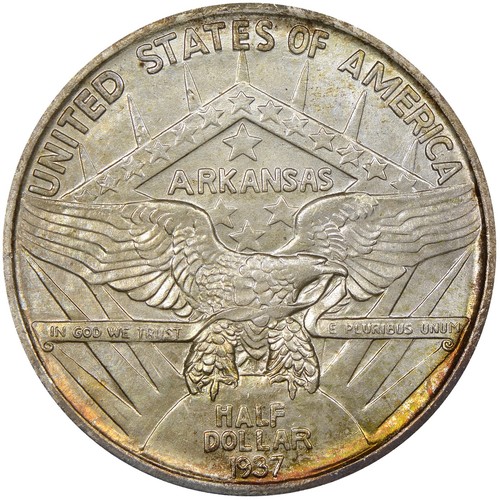
Arkansas Centennial Half Dollar (Robinson)
A 1936 U.S. silver commemorative half dollar pairing a portrait of Senator Joseph T. Robinson with the Arkansas Centennial eagle; a scarce one-year Philadelphia issue.
Classic Commemorative