
Coin Encyclopedia
Search and identify coins from around the world — with country, denomination, metal, mint, history, and how to tell them apart.
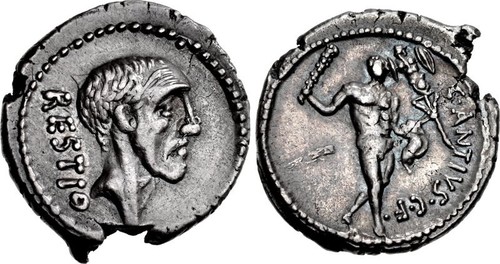
Denarius of C. Antius Restio
Silver Roman Republican denarius struck at Rome in 47 BC by the moneyer C. Antius Restio, pairing an ancestor's portrait with a striding figure and trophy.
Ancient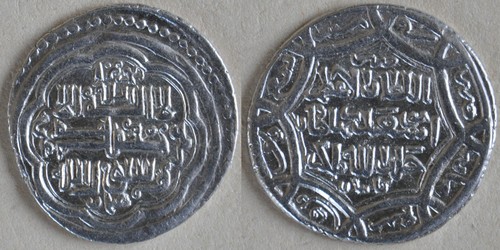
Ilkhanid Dirham of Abu Said
A hand-struck Mongol Ilkhanate silver dirham of Abu Sa'id Bahadur Khan, with the ruler's titles set in a cartouche and religious inscriptions in concentric bands.
Islamic (Medieval)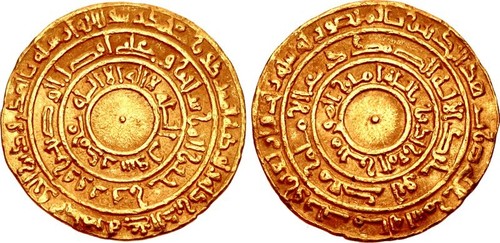
Gold Dinar of al-Mu'izz li-Din Allah
A gold dinar of the Fatimid caliph al-Mu'izz li-Din Allah dated AH 343, struck as concentric Arabic inscriptions with no image on either face.
Islamic (Medieval)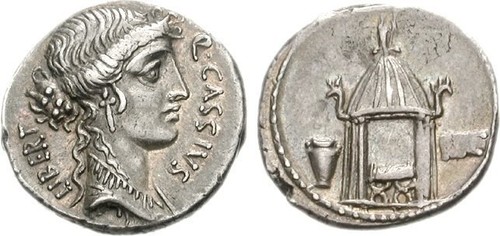
Denarius of Cassius Longinus
Silver denarius struck in 42 BC by Gaius Cassius Longinus, one of Caesar's assassins, to pay his legions before the Battle of Philippi.
Ancient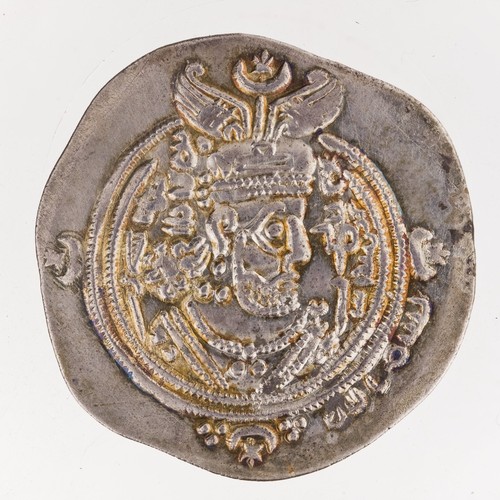
Silver Dirham of Salm ibn Ziyad
An Arab-Sasanian silver dirham struck for the Umayyad governor Salm ibn Ziyad, with a Sasanian-style bust and fire-altar reverse plus Arabic marginal inscriptions.
Islamic (Medieval)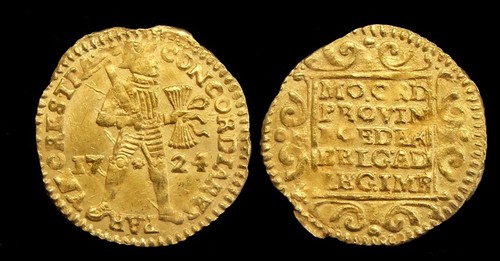
Gouden Dukaat
A Dutch gold trade ducat of the United Provinces, showing an armored standing knight and an inscribed heraldic tablet; this example is dated 1724.
Early Modern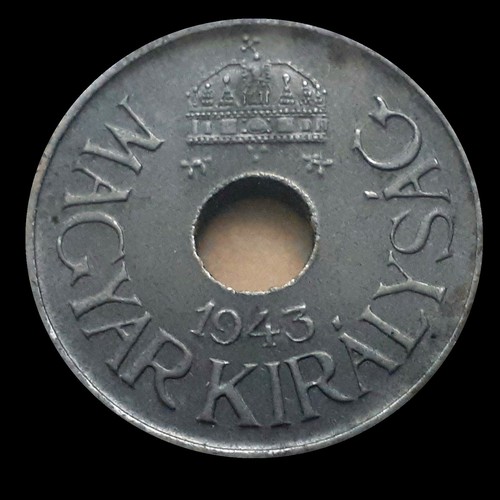
20 Fillér
An early 20th-century Hungarian 20 fillér, a small base-metal coin showing the crowned Hungarian coat of arms and the FILLÉR minor denomination.
Modern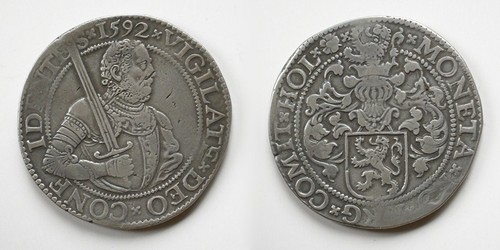
Prinsendaalder (Rijksdaalder)
A large silver rijksdaalder of the Dutch Republic showing an armored bust with sword, popularly named the Prinsendaalder after the Prince of Orange.
Early Modern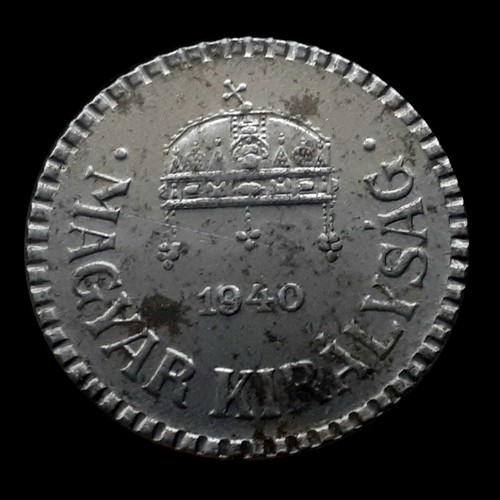
2 Fillér
A small early-20th-century Hungarian 2 fillér in copper-based bronze, showing the crowned Hungarian coat of arms on the obverse and the value with date on the reverse.
Modern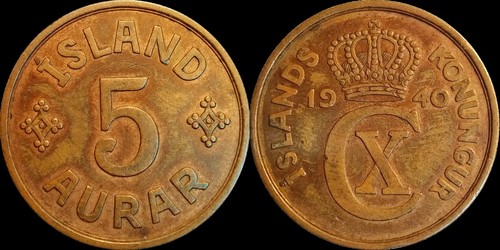
5 Aurar
Icelandic bronze 5 aurar of the Kingdom era, marked ÍSLAND with a crowned KONUNGDÓMUR ÍSLANDS reverse, struck 1926-1942.
World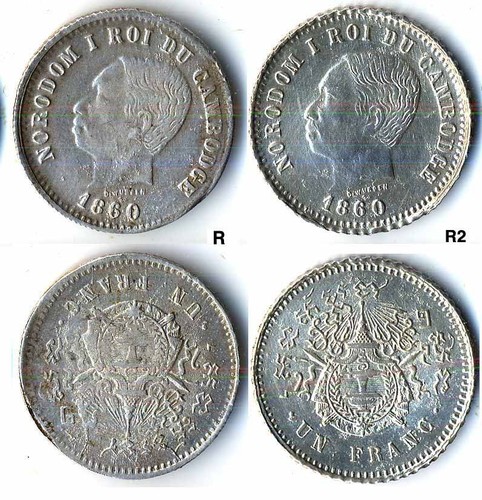
Cambodia One Franc
A mid-20th-century one-franc coin of the Kingdom of Cambodia, its obverse bearing a royal Norodom profile and its reverse a heraldic coat of arms.
Southeast Asia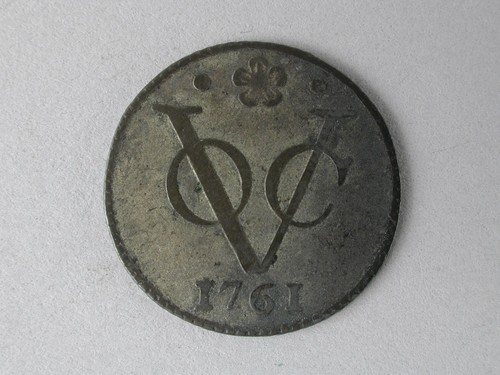
Halve Duit (VOC)
Small copper half-duit of the Dutch East India Company (VOC), bearing the crowned VOC monogram, struck in the 1700s for use in the Dutch trading world.
Early Modern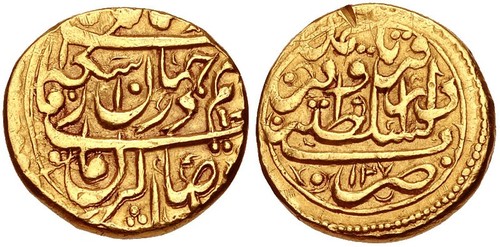
Gold Toman of Agha Mohammad Khan Qajar
A gold toman of Agha Mohammad Khan, founder of the Qajar dynasty, struck at Qazvin in AH 1206–1207 (1792–1793), covered in Persian calligraphy with no portrait.
Persia / Iran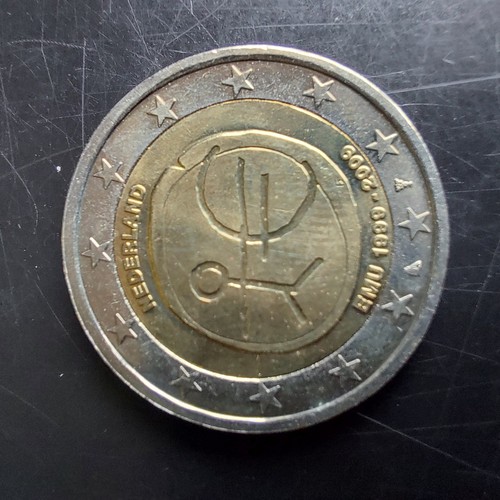
1 Euro (10 Years EMU)
Dutch bi-metallic 1 Euro marking ten years of Economic and Monetary Union, with a stylized integration design and the twin dates 1999 and 2009.
Commemorative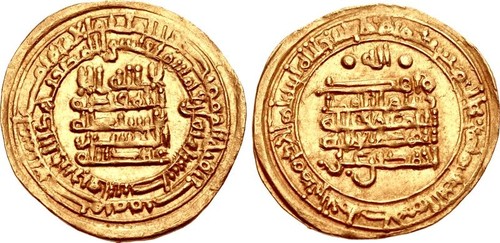
Gold Dinar of Abu'l-Fawaris Ahmad (Buyid)
A hand-struck gold dinar of the Iranian Buyid dynasty, naming the emir Abu'l-Fawaris Ahmad and dated AH 358, covered entirely in Kufic Arabic with no imagery.
Islamic (Medieval)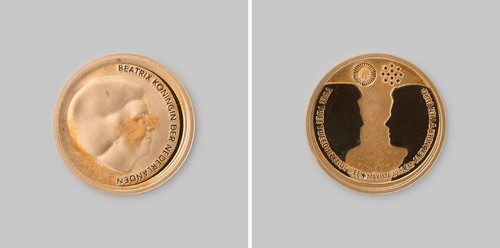
10 Euro (Royal Marriage)
A 2002 Netherlands gold 10 Euro commemorating the royal wedding, with Queen Beatrix on the obverse and the dual profiles of Willem-Alexander and Maxima on the reverse.
Commemorative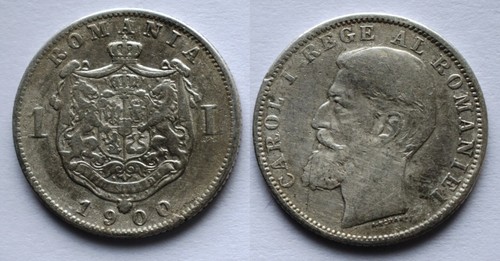
1 Leu (Carol I)
Silver 1 Leu of the Kingdom of Romania under King Carol I, with his left-facing portrait and the crowned national arms, dated 1900.
Modern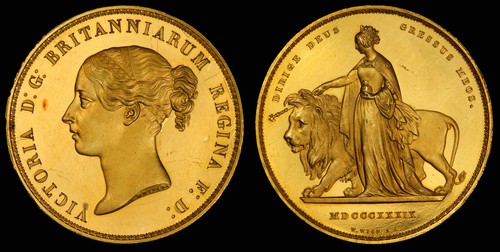
Una and the Lion Five Pounds
William Wyon's 1839 gold Five Pounds pairs a young Queen Victoria with Una guiding a lion — widely praised as one of the most beautiful British coins ever struck.
British Isles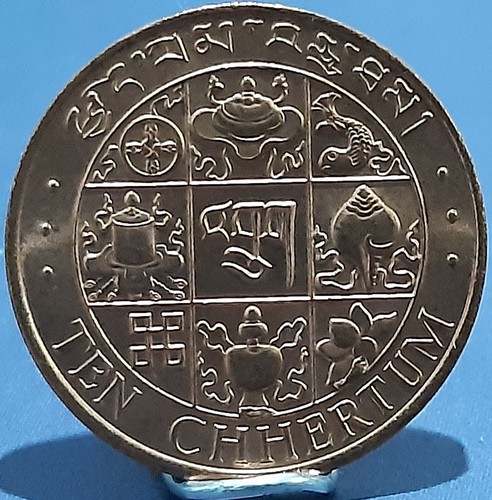
Bhutan 10 Sengtrum
A 1979 cupro-nickel minor coin of the Kingdom of Bhutan, worth one-tenth of a ngultrum, with the national arms on one face and an ornamental gateway on the other.
Himalayan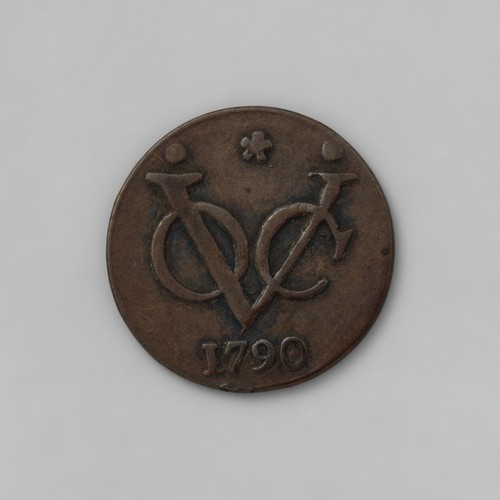
Duit (VOC)
A small copper duit struck for the Dutch East India Company (VOC), showing the crowned VOC monogram and the date 1790 on the obverse.
Early Modern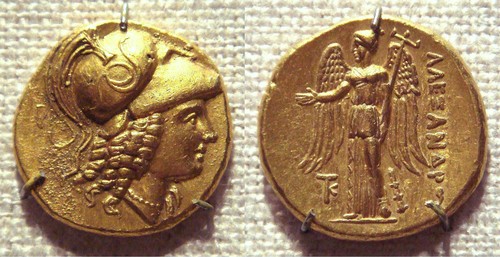
Alexander the Great Gold Stater
Gold stater struck in the name of Alexander the Great, with a helmeted Athena obverse and Nike holding a wreath on the reverse; this example c. 323-315 BC.
Ancient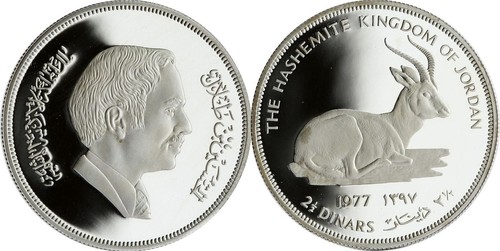
Jordanian 2½ Dinars
A crown-sized 1977 silver commemorative of the Hashemite Kingdom of Jordan, pairing King Hussein's portrait with a standing gazelle from the wildlife-conservation coin theme.
World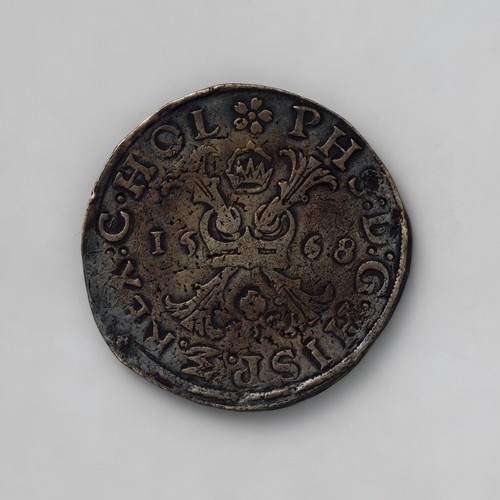
Bourgondische Rijksdaalder
A large silver rijksdaalder of the Habsburg Netherlands showing Philip II in helmeted armor, with a compartmented heraldic shield and the Golden Fleece collar.
Early Modern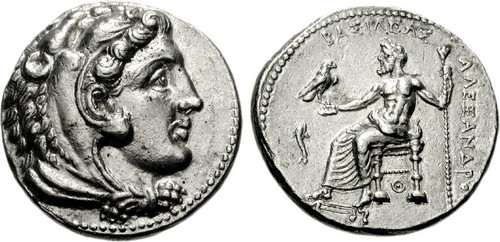
Alexander the Great Tetradrachm
Silver tetradrachm of Alexander III of Macedon with the head of Heracles in a lion skin and an enthroned deity holding an eagle on the reverse.
Ancient