1 Leu (Carol I)
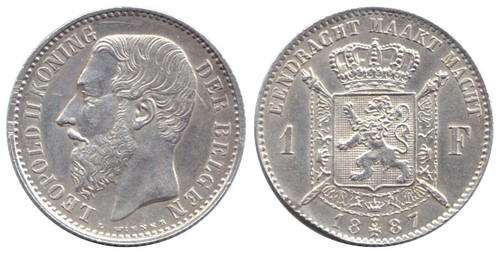
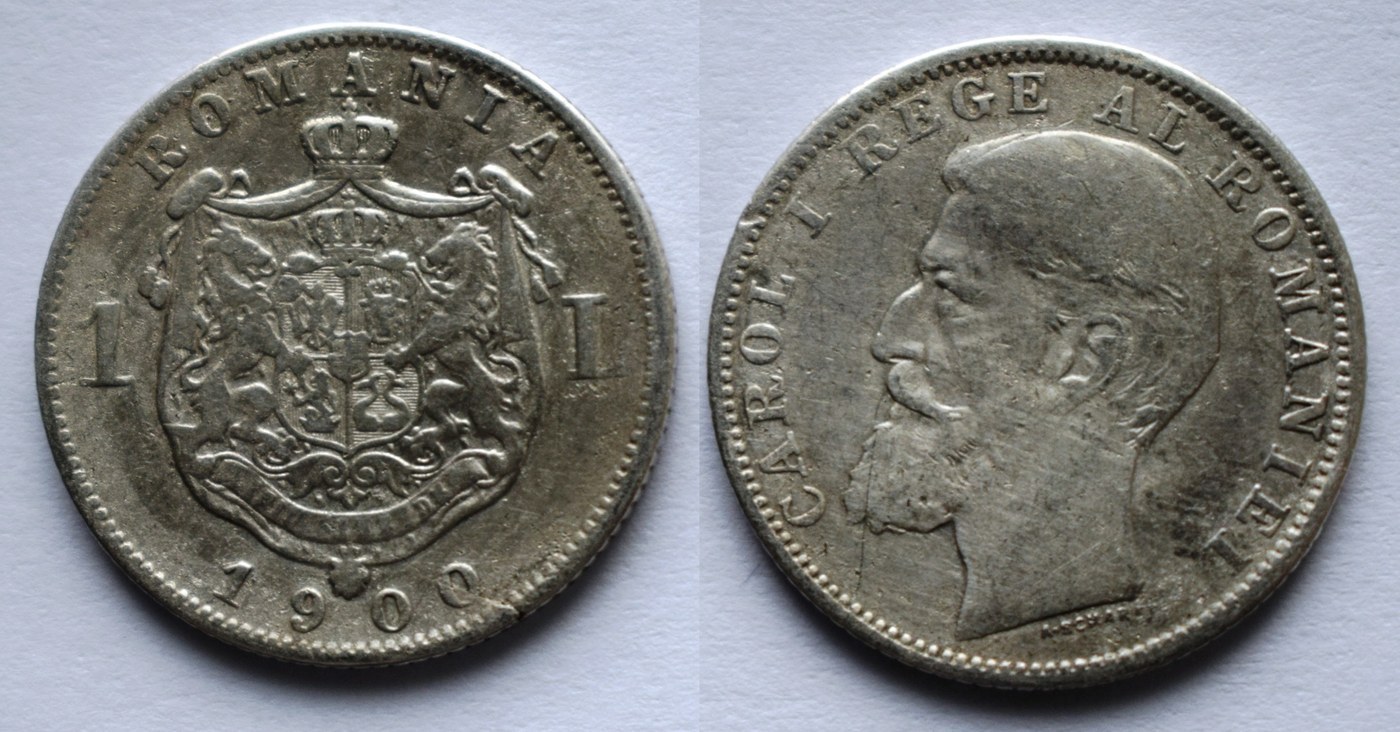
Silver 1 Leu of the Kingdom of Romania under King Carol I, with his left-facing portrait and the crowned national arms, dated 1900.
- Country
- Romania
- Denomination
- 1 Leu
- Metal
- Silver
Got a coin like this?
Identify any coin from a photo, free.
Overview
The 1 Leu of King Carol I is a small silver coin of the Kingdom of Romania, here in its 1900 dating. It pairs a left-facing bust of the king on the obverse with the crowned Romanian coat of arms on the reverse, and states the value plainly as 1 LEU.
This is a genuine precious-metal issue, a modest silver piece from the era when the leu was Romania's established monetary unit. Its portrait style and crowned shield place it firmly within the standard royal coinage of Carol I, whose long reign spanned Romania's transition from principality to kingdom.
Collectors value the type as an affordable and attractive representative of turn-of-the-century Romanian silver. Well-struck, high-grade examples with clean surfaces are the most sought after, and the coin fits naturally into type sets of the Carol I series and of European silver minors.
History & Background
Carol I, a prince of the House of Hohenzollern-Sigmaringen, came to the Romanian throne in 1866 and reigned until 1914, becoming the country's first king when Romania was proclaimed a kingdom in 1881. Under his rule Romania modernized its state institutions and adopted a decimal currency built on the leu, divided into 100 bani.
The 1 Leu formed part of this standardized royal coinage, struck in silver alongside larger denominations such as the 2 lei and 5 lei. The 1900-dated issue belongs to the mature phase of Carol I's reign, when Romania's coinage followed the weight and fineness conventions common to European silver of the period.
The leu remained Romania's currency through the twentieth century and beyond. The silver 1 Leu of Carol I stands near the start of that long monetary history, and it is remembered today as a tangible link to the founding decades of the modern Romanian kingdom.
How to Identify
The obverse shows the bare head of Carol I in profile facing left, surrounded by a Romanian legend naming him as king, typically reading CAROL I with wording along the lines of REGE AL ROMANIEI. The left-facing royal bust, rather than an allegory or a coat of arms, is the primary marker of the obverse.
The reverse carries the Romanian coat of arms, a shield bearing the quartered national emblems set beneath a royal crown and often framed by a mantle or supporters, with the value 1 LEU and the date 1900. The design is a heraldic royal arms rather than a plain wreath or figure.
Key identifiers are the king's name in the legend, the left-facing portrait, the crowned Romanian shield, the 1 LEU denomination, and the 1900 date. The metal is silver, so the coin is a small, dense piece with the tone and ring of struck silver, distinguishing it from later base-metal lei.
Value & Collectibility
As a small historic silver coin, the Carol I 1 Leu carries modest collector value together with a little intrinsic silver worth. Circulated examples generally trade in the single digits to low tens of dollars, while sharp, lightly worn, and lustrous pieces bring higher premiums as desirable type coins.
Condition drives most of the price spread. Wear shows first on the high points of the king's portrait and on the crowned shield, so problem-free coins with strong detail and original surfaces are worth clearly more than heavily circulated or cleaned examples. Attractive natural toning adds appeal.
Exact prices vary with grade, market conditions, and silver spot, so treat these as general ranges rather than fixed quotes. Cleaned, damaged, or counterfeit pieces trade well below genuine problem-free coins, and higher-grade certified examples can command notable premiums.
Frequently asked questions
Who is on the 1 Leu Carol I coin?
The obverse shows King Carol I of Romania in profile facing left. He reigned from 1866 to 1914 and was Romania's first king, and the legend names him as king of Romania.
Is the 1900 1 Leu made of silver?
Yes. This type is a genuine silver coin, which gives it the weight, tone, and ring of struck silver and contributes a small intrinsic value alongside its collector interest.
What is on the reverse?
The reverse shows the Romanian coat of arms, a quartered shield beneath a royal crown, together with the value 1 LEU and the date 1900.
What does 'leu' mean?
Leu is the Romanian monetary unit, meaning 'lion,' divided into 100 bani. The 1 Leu is the single-unit denomination within that decimal system.
Is this coin valuable?
It is an affordable historic silver type. Circulated pieces are inexpensive, while high-grade, original examples bring higher premiums. Value depends on grade, eye appeal, and silver price.
1 Leu (Carol I) guides
In-depth guides for identifying, valuing, and collecting 1 Leu (Carol I).
1 Leu (Carol I) identified by the community
Real coins identified with Coin Identifier.